Claire Watkins - Battleborn
Здесь есть возможность читать онлайн «Claire Watkins - Battleborn» весь текст электронной книги совершенно бесплатно (целиком полную версию без сокращений). В некоторых случаях можно слушать аудио, скачать через торрент в формате fb2 и присутствует краткое содержание. Город: New York, Год выпуска: 2012, ISBN: 2012, Издательство: Riverhead Books, Жанр: Современная проза, на английском языке. Описание произведения, (предисловие) а так же отзывы посетителей доступны на портале библиотеки ЛибКат.
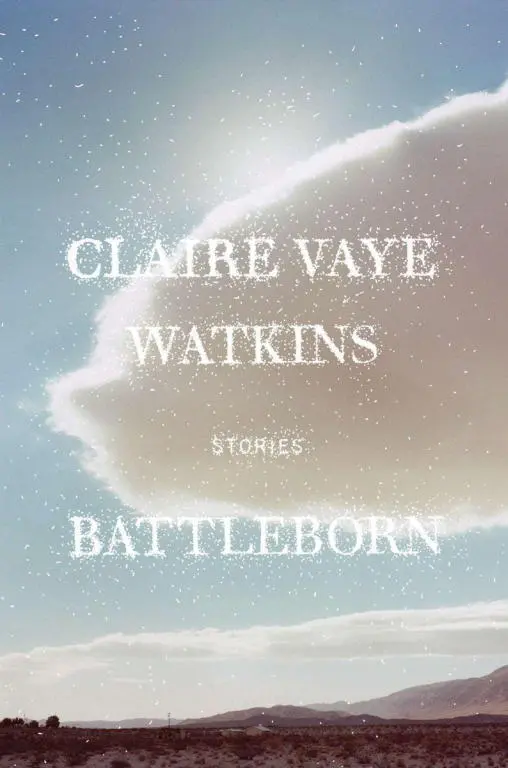
- Название:Battleborn
- Автор:
- Издательство:Riverhead Books
- Жанр:
- Год:2012
- Город:New York
- ISBN:978-1-101-59675-3
- Рейтинг книги:4 / 5. Голосов: 1
-
Избранное:Добавить в избранное
- Отзывы:
-
Ваша оценка:
Battleborn: краткое содержание, описание и аннотация
Предлагаем к чтению аннотацию, описание, краткое содержание или предисловие (зависит от того, что написал сам автор книги «Battleborn»). Если вы не нашли необходимую информацию о книге — напишите в комментариях, мы постараемся отыскать её.
,
, and
Best Book of the year, and more… Like the work of Cormac McCarthy, Denis Johnson, Richard Ford, and Annie Proulx,
represents a near-perfect confluence of sensibility and setting, and the introduction of an exceptionally powerful and original literary voice. In each of these ten unforgettable stories, Claire Vaye Watkins writes her way fearlessly into the mythology of the American West, utterly re-imagining it. Her characters orbit around the region’s vast spaces, winning redemption despite—and often because of—the hardship and violence they endure. The arrival of a foreigner transforms the exchange of eroticism and emotion at a prostitution ranch. A prospecting hermit discovers the limits of his rugged individualism when he tries to rescue an abused teenager. Decades after she led her best friend into a degrading encounter in a Vegas hotel room, a woman feels the aftershock. Most bravely of all, Watkins takes on—and reinvents—her own troubled legacy in a story that emerges from the mayhem and destruction of Helter Skelter. Arcing from the sweeping and sublime to the minute and personal, from Gold Rush to ghost town to desert to brothel, the collection echoes not only in its title but also in its fierce, undefeated spirit the motto of her home state.
Battleborn — читать онлайн бесплатно полную книгу (весь текст) целиком
Ниже представлен текст книги, разбитый по страницам. Система сохранения места последней прочитанной страницы, позволяет с удобством читать онлайн бесплатно книгу «Battleborn», без необходимости каждый раз заново искать на чём Вы остановились. Поставьте закладку, и сможете в любой момент перейти на страницу, на которой закончили чтение.
Интервал:
Закладка:
“Morning,” said Magda, startling Harris as she joined him on the porch. She caught sight of the dust cloud unfurling below them and squinted. “What’s that?”
“You tell me,” said Harris. “Probably been crossing the lake bed since sunup. Circling right about where I found you.”
“Oh, fuck,” she said. “It’s my dad.” She began to pace the porch like a wild animal. “Fuck, fuck. Fuck.” She looked as though she might cry.
Then, as if it had heard her, the truck turned toward Route 40, toward Red’s Road, the washed-out path that dead-ended at Harris’s driveway. His heart beat like a herd of mustangs charging at his rib cage.
“Get in the house,” he told her. “He doesn’t know you’re here. Go to the bedroom. Shut the door. Don’t come out. I’ll take care of it.” He half believed this.
The truck lumbered up the long, steep gravel driveway, the way you’d drive if you were concerned about dusting out your neighbors. Harris rummaged frantically through a wheelbarrow. He found a large hunk of iron ore, heavy and angular, easy to grip.
He kept the ore in his right hand and sorted through the rocks with his left, wanting to seem busy when the man arrived. He organized the rocks in piles on the ground according to size. The truck was halfway up the driveway—close enough to see them—when Harris heard the swing and schwack of the screen door. He tried not to turn too quickly, but jerked his head, panicked, only to see Milo ambling out to him. He almost hit her.
The truck—a black Ram, a dually with some sort of decal looping across the rear window—stopped at the edge of what Harris considered his yard. A man climbed out. He wore a rodeo buckle the size of a serving platter, a wide cream-colored Stetson, sunglasses and ornately tooled caiman shit kickers.
Harris knew the man. His name was Castaneda. Juan, Harris thought, though he couldn’t be sure. He’d worked with him at the mine. He was a foreman, like Harris.
They’d spoken. On breaks in the pit. On the Newmont bus back into town. They’d talked sports—Pack football, March Madness. They’d discussed the fine tits on the teenage girl behind the counter at the Shell station where they parked. Castaneda had talked about his kids. Harris had seen pictures, grimy creased things pulled from a leather billfold. All girls. Beautiful, Harris had said, and meant. And this man, he’d smiled wide as the ocean and said, I know. Harris gripped the ore so tight his fingertips went white.
“Morning,” said Harris. Then, too quickly, “Help you?”
“Morning,” said Castaneda, removing his hat but leaving his sunglasses. There was not a gray hair on his head. “Hope so.” He approached with a bounce. “Harris, right? How’s the sweet life, brother?”
“Can’t complain.”
“You strike it rich yet?”
Harris kept sorting, kept his wieldy rock in his right hand. He lifted his head and looked to the man, then to the white-hot lake bed and then, squinting against the sun, to the hill behind his house. At its crest he could just make out the PVC pipes from last night, toppled and scorched. “You come out here to prospect?” he said. “’Cause this is BLM land on all four sides. You’d be digging for Uncle Sam.”
“Prospect? Ha. No, sir. I’m no rock hound,” said Castaneda. “I’m hunting chukar. Thought an old-timer like you might know the good spots.” Castaneda nodded to his truck.
“Chukar.” Harris stood upright and faced the man. He wiped sweat from his top lip and caught the acridity of nicotine on his fingers. “Don’t know of no chukar around here.” Because there weren’t any chukar around here, not until White Pine County at least. Only thing you could hunt out here was rattlesnake.
“Well, shit,” said Castaneda. He reached behind him and adjusted his belt. “Probably got the wrong gun for chukar anyway.” He brought around a revolver, a .44 glinting in the summer sun. He held it limp in his palm, as if he only wanted to show it off. But Harris knew better than that. Standing there with a rock in his hand like a goddamn child, he at least knew better than that.
Just then, Milo began to snarl and bark. But she didn’t bark at Castaneda, with the gun flat in his palm, looking earnestly to Harris. She was disoriented, maybe heat blind. The dog was barking at Harris.
Castaneda raised his voice above the dog. “I don’t know what she told you,” he said.
“Who?” said Harris.
Milo kept on.
“Don’t make this hard,” said Castaneda. “She’s a good girl. She’s just got an overactive imagination.”
A sudden tinny blood taste came to Harris’s mouth. “There’s nobody else here.”
“Oh?” said Castaneda, smiling now. “You lighting off fireworks all night by yourself then?” He began to laugh. This was where Magda got her laugh. “There’s nowhere else for her to be, brother.”
Harris took a step toward the man, the ore hot in his hand.
Castaneda nodded to the rock. “Don’t.”
“You son of—”
He raised the hand that held the gun. “You don’t want to take that thought any farther.” Harris stopped.
Castaneda tucked the gun into the waist of his Wranglers. He walked past Harris, stepping carefully over the piles of specimens where they’d been set in the dirt. An oily aftershave smell followed him. He went into the house. Minutes later—too fast—Castaneda emerged with Magda, his hand on the small of her back. Her face was limestone; it was granite. She did not look at Harris. Castaneda walked her around to the passenger side of the truck and opened the door in the manner of a perfect gentleman.
“Wait,” she said before getting in. “I want to say good-bye.” Her father nodded and took his hand from her. She walked over to Milo. The dog went quiet. Magda squatted and rustled both her hands behind Milo’s limp ears. She put her mouth to the dog’s muzzle and said something Harris could not hear.
“She wants to stay,” Harris called in a strange-sounding voice.
Casteneda grinned and turned to Magda. “Is that so?”
Magda shook her head and looked to Harris pityingly, as though it was he who needed her.
Harris gripped the iron ore. Why not? he wanted to ask her. But he knew. What could this place give to anyone?
Magda returned to her father’s truck. Castaneda took her hand and helped her in. Before he shut the door he smiled at his daughter and rubbed his hand along the back of her neck. It was brief—an instant—but Harris saw everything in the way the man touched her. His hand on her bare neck, the tips of his stout fingers along the black baby hairs at her nape, then under the collar of her shirt. His shirt. From where he stood, he saw all this and more.
The truck pulled away and began its descent to the bald floor of the valley. Milo resumed her barking. Harris told her to shut up, but she went on. Rhythmic, piercing, incessant. The old man had never heard anything so clearly. He felt a steady holy pressure building in him, like a vein of water running down his middle was freezing and would split his body in two. He lunged at the dog. He wanted ore to skull. He wanted his shoulder burning, his hand numb. He wanted the holes that had been her ear and eye growing wider, becoming one, bone crumbling in on itself like the walls of a canyon carved by a river. He wanted wanted wanted.
He took hold of the scruff of the dog’s neck. He tried to pin her beneath his legs but she yelped and wormed free, and instead he fell back on his ass. He dropped the ore in the dirt. Milo scrambled behind the wheelbarrow where he’d been sorting. He reached up and grabbed the wheelbarrow’s rusted lip and tried to pull himself up. The wheelbarrow tilted toward him, then toppled, sending Harris to the dirt again. Rocks rained down on him. A flare of pain went off in his knee and in the fingers of his left hand, where a slab of schorl crushed them.
Читать дальшеИнтервал:
Закладка:
Похожие книги на «Battleborn»
Представляем Вашему вниманию похожие книги на «Battleborn» списком для выбора. Мы отобрали схожую по названию и смыслу литературу в надежде предоставить читателям больше вариантов отыскать новые, интересные, ещё непрочитанные произведения.




Обсуждение, отзывы о книге «Battleborn» и просто собственные мнения читателей. Оставьте ваши комментарии, напишите, что Вы думаете о произведении, его смысле или главных героях. Укажите что конкретно понравилось, а что нет, и почему Вы так считаете.