Claire Watkins - Battleborn
Здесь есть возможность читать онлайн «Claire Watkins - Battleborn» весь текст электронной книги совершенно бесплатно (целиком полную версию без сокращений). В некоторых случаях можно слушать аудио, скачать через торрент в формате fb2 и присутствует краткое содержание. Город: New York, Год выпуска: 2012, ISBN: 2012, Издательство: Riverhead Books, Жанр: Современная проза, на английском языке. Описание произведения, (предисловие) а так же отзывы посетителей доступны на портале библиотеки ЛибКат.
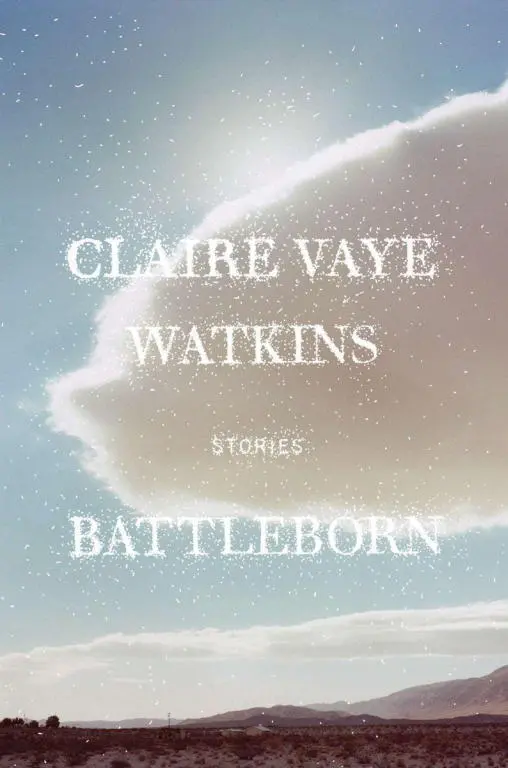
- Название:Battleborn
- Автор:
- Издательство:Riverhead Books
- Жанр:
- Год:2012
- Город:New York
- ISBN:978-1-101-59675-3
- Рейтинг книги:4 / 5. Голосов: 1
-
Избранное:Добавить в избранное
- Отзывы:
-
Ваша оценка:
Battleborn: краткое содержание, описание и аннотация
Предлагаем к чтению аннотацию, описание, краткое содержание или предисловие (зависит от того, что написал сам автор книги «Battleborn»). Если вы не нашли необходимую информацию о книге — напишите в комментариях, мы постараемся отыскать её.
,
, and
Best Book of the year, and more… Like the work of Cormac McCarthy, Denis Johnson, Richard Ford, and Annie Proulx,
represents a near-perfect confluence of sensibility and setting, and the introduction of an exceptionally powerful and original literary voice. In each of these ten unforgettable stories, Claire Vaye Watkins writes her way fearlessly into the mythology of the American West, utterly re-imagining it. Her characters orbit around the region’s vast spaces, winning redemption despite—and often because of—the hardship and violence they endure. The arrival of a foreigner transforms the exchange of eroticism and emotion at a prostitution ranch. A prospecting hermit discovers the limits of his rugged individualism when he tries to rescue an abused teenager. Decades after she led her best friend into a degrading encounter in a Vegas hotel room, a woman feels the aftershock. Most bravely of all, Watkins takes on—and reinvents—her own troubled legacy in a story that emerges from the mayhem and destruction of Helter Skelter. Arcing from the sweeping and sublime to the minute and personal, from Gold Rush to ghost town to desert to brothel, the collection echoes not only in its title but also in its fierce, undefeated spirit the motto of her home state.
Battleborn — читать онлайн бесплатно полную книгу (весь текст) целиком
Ниже представлен текст книги, разбитый по страницам. Система сохранения места последней прочитанной страницы, позволяет с удобством читать онлайн бесплатно книгу «Battleborn», без необходимости каждый раз заново искать на чём Вы остановились. Поставьте закладку, и сможете в любой момент перейти на страницу, на которой закончили чтение.
Интервал:
Закладка:
On the drive back, Magda unbuckled her seat belt and took off the slippers. She leaned against her door and stretched her bare legs across the seat between them. Soon she was asleep with her head against the window, one long line from her stretched neck down to the bottom of her bare feet. A damp mineral smell filled the cab. Their bodies bounced lightly from the washboard road, and her raisined toes sometimes touched his thigh. He went hard again. Good Lord, he thought, sixty-seven years old and behaving like an adolescent.
After a dinner of boiled hot dogs, Harris smoked his evening cigarette on the porch and watched the sunset burning in the distance. The sky settled into strata of pale blue atop gold and flame orange and a swath of clouds colored lavender and coral and an indigo so dark they seemed hunks of coal hovering above the range. Nearest the sun the sky was the wild red of a wound, like the thing had to be forced below the horizon. A single sandhill crane moved soundlessly across the sky. A sunset was nothing, Harris knew, dust particles, pollution, sunlight prismed by the slant of the world. Still, it was pretty.
Magda was trying with no luck to teach Milo to fetch a stick, oblivious to the dazzle going on behind her. When they’d dismounted from the truck that afternoon, Milo was sulking under the porch. It was Magda who finally coaxed her out. She’d used his Leatherman to cut the thorns off the mesquite branch she was now hurling into the rocky yard. But Milo only ambled over to the stick, lay down beside it and soothed her bloody gums by gnawing on it for a while. Magda was stubborn. She slapped her thighs and said, “Come, Milo. Milo, come!” over and over again. When the dog finally did come, she came slow and stickless. Finally, Magda lost hope. She sat beside Harris and looked out on the lake bed. “What were you doing out there?” she said.
“I live out here.”
“You live here. What were you doing out there ?”
He thought a while. “I’ll show you,” he said. “Stay right here. Don’t move.”
He went around the back of the truck and muscled the old tailgate down, an action that seemed to get more difficult each year. Harris had been coming out to the lake bed every July fifth, searching for fireworks near the burnt remains of plywood and grocer’s pallets, since 1968, when he was one of those wild jackasses. Since he woke up with an ache behind his eyes and realized he’d left a paycheck’s worth of Roman candles out on the lake bed and called his future ex-wife, Carrie Ann, and whispered into the phone so his mother wouldn’t hear, “Morning, Honeybee. Where’d you stash my keys?” He told Magda all this, more or less.
“You had a wife?” she said. “Where is she now?”
“Doesn’t matter,” he said. Then, “Sacramento.”
“City girl.”
“I guess.”
“I’m sorry.”
“Don’t be. It was a long time ago.” He turned to the girl, gripping a shell pack as big as his torso. The Man-O-War.
For the next forty minutes, Harris scrambled up and down the adjacent hill setting the fireworks, sometimes returning to the shed for a tube of PVC pipe, sandpaper or duct tape. His back flared as he bent to wedge a stub of pipe into the ground or twist two fuses together. His sinuses stung with the brackish smell of sulfur. He glanced down the hill at Magda. She sat on the first porch step, leaning back, her arms propped behind her. He saw Carrie Ann sitting in that same spot, waiting for him to get home, passing her time knitting or shucking corn. Harris pressed the image below the horizon of his mind. They were fine now, him and Carrie. She’d gotten her baby. Harris sent the child birthday cards with fifty-dollar savings bonds inside. Love, Uncle Bud , they read. He couldn’t complain, not in good conscience. They’d been given a second chance, Carrie and he, and were free to do with it what they pleased.
With the fuse hissing behind him, he hurried down the hill and sat beside Magda. She had her T- shirt lifted up under her breasts and one palm pressed to her bare stomach. She was bent, examining her midsection, looking for something.
“Watch,” he said, nodding to his handiwork on the hill.
But she kept her face turned down to her abdomen. “It’s probably dead, don’t you think?”
“Come on, now,” he said, too late to be of comfort. “Don’t think like that.”
“It is,” she said. “I know it.” He began to speak, but the first shell ignited then and shot into the air above them, sparks streaming behind it. They both started at the sound and Harris, with the quickness of a gasp, put his arm around Magda. The little comet went dark for a moment, then exploded— boom —into a sizzle so big it seemed to light the whole sky. The sound ricocheted around the valley and returned to them— boom .
“See that?” he said. “That green? That’s barium powder.” He pressed her into him and held her there. She did not pull away.
Another shell rocketed into the sky— boom— raining down a brilliant hissing red.
He bent his face to her ear. “Strontium,” he whispered.
“I’ll be glad,” she said. “If it’s dead, this will all be over.”
He held her tighter and said only, “Shh,” before the next shell shot up, even higher than the others, as if propelled by the sound. It expanded— boom. Multicolored tendrils radiated from the center and made loops in the air like buzzards, descending. Silence took root between them.
A fourth shell and a fifth shot from the hill. They burst— boom — boom —into two spheres of light, one a steady-burning fountain of blue, and the other wiry spokes of purple turning orange.
“What’s that one?” Magda whispered.
“The blue is copper,” he said. “Pure ground copper.”
The last four shells whizzed into the air, all at once. When they burst— boom—boom—boom—boom —Magda jumped a little and buried herself into him. Harris turned to see her face, his home, the whole wide valley lit by dazzling yellow light. He held her.
“And that one?” she whispered.
“That,” he said. “That’s gold.”
That night, Harris watched her sleep. His own worn bedsheet was roped around her, twisted through her arms and between her legs. Alone in his bed—he had insisted—she looked delicate as a salt crystal. Moonlight fell in through the window, catching the angles of the specimens on the nightstand. In this light her belly looked bigger. Was that possible? In these few days? Or was she right? His wife had said, I knew it. I felt the baby go. Had that stupid kid done the job? No. Though he’d seen what the boy did to her, saw with his own eyes the blood bloomed up under her skin—she looked bigger. She did. She would need a doctor. A hospital. He would make the calls. They would drive to Reno. The doctor would tell her, Yes, you are getting bigger. The doctor would tell her, It is not over. It is only just beginning. She would need vitamins. Though he knew better, deep down in the bedrock of himself, he couldn’t help it. He thought, She will need a stroller. She will need a car seat. How the barren cling to the fertile. We, he thought, we will need a crib.
Harris took one last pull on his cigarette and stubbed it out on the sole of his boot. It was morning. He dropped the butt into the Folgers can. He would wake Magda soon, tell her to get dressed, that they were going to Reno. But instead of going inside, he scanned the lake bed, as he had every day since she came to him. From where the house was perched, high up on the alluvial fan, the valley below seemed to unfurl and flatten like a starched white sheet. The sun was rising, illuminating the peaks of the Last Chance Range to the west, starting its long trip across the Black Rock. He stopped. Something was different in the distance. A small white cloud of dust billowed on the horizon. It grew. At its eye was a speck. A truck.
Читать дальшеИнтервал:
Закладка:
Похожие книги на «Battleborn»
Представляем Вашему вниманию похожие книги на «Battleborn» списком для выбора. Мы отобрали схожую по названию и смыслу литературу в надежде предоставить читателям больше вариантов отыскать новые, интересные, ещё непрочитанные произведения.








Обсуждение, отзывы о книге «Battleborn» и просто собственные мнения читателей. Оставьте ваши комментарии, напишите, что Вы думаете о произведении, его смысле или главных героях. Укажите что конкретно понравилось, а что нет, и почему Вы так считаете.