Péter Nádas - Parallel Stories
Здесь есть возможность читать онлайн «Péter Nádas - Parallel Stories» весь текст электронной книги совершенно бесплатно (целиком полную версию без сокращений). В некоторых случаях можно слушать аудио, скачать через торрент в формате fb2 и присутствует краткое содержание. Год выпуска: 2011, Издательство: Farrar, Straus and Giroux, Жанр: Современная проза, на английском языке. Описание произведения, (предисловие) а так же отзывы посетителей доступны на портале библиотеки ЛибКат.
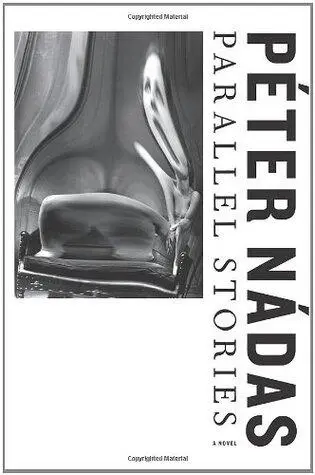
- Название:Parallel Stories
- Автор:
- Издательство:Farrar, Straus and Giroux
- Жанр:
- Год:2011
- ISBN:нет данных
- Рейтинг книги:5 / 5. Голосов: 1
-
Избранное:Добавить в избранное
- Отзывы:
-
Ваша оценка:
Parallel Stories: краткое содержание, описание и аннотация
Предлагаем к чтению аннотацию, описание, краткое содержание или предисловие (зависит от того, что написал сам автор книги «Parallel Stories»). Если вы не нашли необходимую информацию о книге — напишите в комментариях, мы постараемся отыскать её.
Three unusual men are at the heart of
: Hans von Wolkenstein, whose German mother is linked to secrets of fascist-Nazi collaboration during the 1940s; Ágost Lippay Lehr, whose influential father has served Hungary’s different political regimes for decades; and András Rott, who has his own dark record of mysterious activities abroad. The web of extended and interconnected dramas reaches from 1989 back to the spring of 1939, when Europe trembled on the edge of war, and extends to the bestial times of 1944–45, when Budapest was besieged, the Final Solution devastated Hungary’s Jews, and the war came to an end, and on to the cataclysmic Hungarian Revolution of October 1956. We follow these men from Berlin and Moscow to Switzerland and Holland, from the Mediterranean to the North Sea, and of course, from village to city in Hungary. The social and political circumstances of their lives may vary greatly, their sexual and spiritual longings may seem to each of them entirely unique, yet Péter Nádas’s magnificent tapestry unveils uncanny reverberating parallels that link them across time and space.This is Péter Nádas’s masterpiece — eighteen years in the writing, a sensation in Hungary even before it was published, and almost four years in the translating.
is the first foreign translation of this daring, demanding, and momentous novel, and it confirms for an even larger audience what Hungary already knows: that it is the author’s greatest work.
Parallel Stories — читать онлайн бесплатно полную книгу (весь текст) целиком
Ниже представлен текст книги, разбитый по страницам. Система сохранения места последней прочитанной страницы, позволяет с удобством читать онлайн бесплатно книгу «Parallel Stories», без необходимости каждый раз заново искать на чём Вы остановились. Поставьте закладку, и сможете в любой момент перейти на страницу, на которой закончили чтение.
Интервал:
Закладка:
I’m at your service, Bellardi called back readily.
Less than a year earlier the friar here had died; for his whole life he had been the spiritual advisor of the family’s men and boys, and he had been Bellardi’s confessor too.
It’s most embarrassing, but would you mind telling me, please, Lady Erna continued in a livelier and sharper tone, after the pause she had made for effect, how is it possible that when last winter, as you mentioned earlier, when you were good enough to take us to the Opera—
To the Erkel Theater, Bellardi corrected the woman.
Now it would be better not to hear the sharp Jewish voice.
He felt as if everything together in one mass were crashing down on his shoulders and chest, all his former happiness in love, turned to torture and anxiety, were falling on him, everything he couldn’t ever confess to the old friar. He had never wanted to ask questions the good friar could probably not have answered. He hated to disappoint the friar, because he felt closer to him than to his father or his father-in-law, whom he truly respected and loved.
He could not have endured the friar’s noncommittal silence.
You’re right, of course, to the Erkel Theater, not the Opera House. But as far as I remember, you did not talk to the professor at all. I can’t get it through my head how that could have been. You and I haven’t been introduced, but the two of you must have met many times in earlier years.
I can certainly confirm that, of course, Bellardi replied, with the boyishly charming smile he used as a substitute for contempt. This time he showed his still strong, white, and irregular teeth.
The professor several times honored me with his attention and engaged me in conversation. In earlier times, I must add.
But then how could it happen.
Bellardi did not reply right away, because he was thinking of something entirely different and didn’t understand how or why. It happened so long ago. And it was pointless to think of such things. And now he could never tell anybody about it; he had no confidant and never would have.
I learned with sorrow from my son about the professor’s critical condition, he said slowly a little later. He would have thought it improper to name the real reason, yet at the same time it would be arrogant and deceptive to remain silent.
And truth to tell, he continued reluctantly, after a while the professor no longer paid attention to me.
On the backseat, both women leaned forward a little and listened carefully, spines straight and heads up.
Bellardi hesitantly continued to weigh things, even though he had said what he said, and ultimately it was not he but his dead confessor who spoke from his mouth. The old Franciscan had been of the opinion that at times there’s no point in avoiding saying something that flaunts one’s virtues or is involuntarily rude. Absent such remarks, one is likely to flaunt something even more unpleasant.
There is nothing more embarrassing than flaunting one’s modesty and humility.
To be honest, I didn’t want to embarrass him, because there are very few people I respect more than him.
He grew weak the moment he said this, but that made him talkative, and for a while they barely let each other get a word in edgewise.
I understand, I do, I’m very grateful that you answered. It was a very nice gesture on your part, understanding my poor husband’s condition.
On the contrary, I regret I couldn’t do more then and can’t do more now.
But as a matter of fact what I really wanted was to ask what has happened to your boy over these many years. I don’t know, I’ve no right to expect answers to such questions. And I’ll understand if you don’t want to answer.
Me, you know, they took me away at dawn from my apartment, but in the morning, without any warning, they carried off my little son too.
You’re not serious.
What could I say that would be more serious than this.
Because in that case, what happened to you is exactly what happened to us. Forgive my incredulity. My older brother was also taken away at dawn. The next day they came back and took away my little nephew.
It took two years for my father-in-law and mother-in-law to find the little boy.
It seems that was their way of doing things.
If it hadn’t been for an influential woman friend of ours, who was in special contact with such circles, they could not have fished him out from where he was. They had changed his name, his mother’s name too; luckily they didn’t change the date and place of his birth.
You’re not serious.
It sounds improbable, I admit, legal nonsense, Bellardi exclaimed, and at that moment many different emotions stuck in his throat.
They did whatever came into their heads.
Legal nonsense, I admit.
Matches our own family story, word for word, believe me.
They spent everything they had on it, whatever they were left with. What they deigned to leave them. But at least they weren’t relocated. That was our great good luck. And our influential friend told my father-in-law whom to bribe.
But where on earth did they find the child, if I may ask. My God, you’ve no idea how similar the stories of the two children are.
They so upset each other with their careless words that they both forgot about Gyöngyvér.
Pardon me, Bellardi said impatiently. Excuse me, but because of the strong wind I couldn’t hear your question.
And only at this moment, after she had spoken, did Erna understand fully that the stories of the two boys were identical in all respects. She shuddered at the thought. After all, Kristóf’s mother also left her child because of a woman, and in that case, how was the story or history to be understood.
She stared the devil in the eye, as if in the bedroom of the house in Venlo she and Geerte had not planned to run away and escape together.
True, they wouldn’t have fled without the children; they planned to escape their familiar world and take all four children with them to the Dutch Antilles.
After all these years, her quondam cowardice and her own flight struck her as a curse. She comprehended for the first time what she had accomplished with this miserable betrayal, of what she had deprived herself. Of nothing, because she made herself a different life, and no matter how she looked at it, her fate and this life were one.
Where, she asked, alarmed, her voice barely audible, if I may ask, where did they find your dear little boy.
She should stop thinking about these women. It was about time that this overpampered Geerte disappeared from her mind.
What a wonderful young man he has turned out to be. My husband is literally amazed by his mental abilities.
You’ll laugh, Bellardi answered and laughed himself, though there was not much joy in the laughter. They looked for him everywhere, at least in Transdanubia, they went to every remote orphanage and reformatory.
They figured it had to be a secret out-of-the-way place and, in the end, they found him in Buda, on Rózsadomb Street, only a few blocks from our apartment.
No, it can’t be, that’s unbelievable.
But it’s true.
You can’t be serious.
Why would I lie. If anything, I’ve been making myself ridiculous with my openness.
The reason I’m asking, man, is exactly because my mother also found my older brother’s son at Emmi Pikler’s place.*
I think that was her name, yes, that was the famous woman’s name, Bellardi answered, contempt making him hesitate, though he was trying to remain cool and neutral when confronted with these bygone matters. Or maybe that was the name of her famous school, I don’t know, probably, but today it doesn’t mean anything anymore.
My mother had to dig our nephew out of the same place too. But Erna of course kept quiet about how they had left the boy’s mother alone in that struggle. Our little Kristóf also had a different name when our mother found him. But my older brother never turned up, we haven’t heard anything about him since.
Читать дальшеИнтервал:
Закладка:
Похожие книги на «Parallel Stories»
Представляем Вашему вниманию похожие книги на «Parallel Stories» списком для выбора. Мы отобрали схожую по названию и смыслу литературу в надежде предоставить читателям больше вариантов отыскать новые, интересные, ещё непрочитанные произведения.









Обсуждение, отзывы о книге «Parallel Stories» и просто собственные мнения читателей. Оставьте ваши комментарии, напишите, что Вы думаете о произведении, его смысле или главных героях. Укажите что конкретно понравилось, а что нет, и почему Вы так считаете.