Péter Nádas - Parallel Stories
Здесь есть возможность читать онлайн «Péter Nádas - Parallel Stories» весь текст электронной книги совершенно бесплатно (целиком полную версию без сокращений). В некоторых случаях можно слушать аудио, скачать через торрент в формате fb2 и присутствует краткое содержание. Год выпуска: 2011, Издательство: Farrar, Straus and Giroux, Жанр: Современная проза, на английском языке. Описание произведения, (предисловие) а так же отзывы посетителей доступны на портале библиотеки ЛибКат.
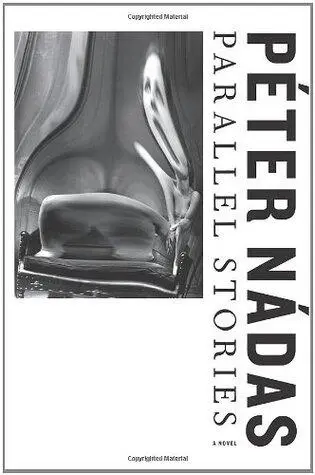
- Название:Parallel Stories
- Автор:
- Издательство:Farrar, Straus and Giroux
- Жанр:
- Год:2011
- ISBN:нет данных
- Рейтинг книги:5 / 5. Голосов: 1
-
Избранное:Добавить в избранное
- Отзывы:
-
Ваша оценка:
Parallel Stories: краткое содержание, описание и аннотация
Предлагаем к чтению аннотацию, описание, краткое содержание или предисловие (зависит от того, что написал сам автор книги «Parallel Stories»). Если вы не нашли необходимую информацию о книге — напишите в комментариях, мы постараемся отыскать её.
Three unusual men are at the heart of
: Hans von Wolkenstein, whose German mother is linked to secrets of fascist-Nazi collaboration during the 1940s; Ágost Lippay Lehr, whose influential father has served Hungary’s different political regimes for decades; and András Rott, who has his own dark record of mysterious activities abroad. The web of extended and interconnected dramas reaches from 1989 back to the spring of 1939, when Europe trembled on the edge of war, and extends to the bestial times of 1944–45, when Budapest was besieged, the Final Solution devastated Hungary’s Jews, and the war came to an end, and on to the cataclysmic Hungarian Revolution of October 1956. We follow these men from Berlin and Moscow to Switzerland and Holland, from the Mediterranean to the North Sea, and of course, from village to city in Hungary. The social and political circumstances of their lives may vary greatly, their sexual and spiritual longings may seem to each of them entirely unique, yet Péter Nádas’s magnificent tapestry unveils uncanny reverberating parallels that link them across time and space.This is Péter Nádas’s masterpiece — eighteen years in the writing, a sensation in Hungary even before it was published, and almost four years in the translating.
is the first foreign translation of this daring, demanding, and momentous novel, and it confirms for an even larger audience what Hungary already knows: that it is the author’s greatest work.
Parallel Stories — читать онлайн бесплатно полную книгу (весь текст) целиком
Ниже представлен текст книги, разбитый по страницам. Система сохранения места последней прочитанной страницы, позволяет с удобством читать онлайн бесплатно книгу «Parallel Stories», без необходимости каждый раз заново искать на чём Вы остановились. Поставьте закладку, и сможете в любой момент перейти на страницу, на которой закончили чтение.
Интервал:
Закладка:
Contrary to all his earlier vows to preserve his seed until the day he found the person worthy of it, whom he would marry, as was only proper, that night, for the first time since his demobilization, Schuer went with the other men to a brothel. He knew he was breaking his vows, but he excused himself on the grounds that he was doing so not for himself but because of the others. He did think of the Lüttwitz girl, the charming and educated Andria, but felt no special pangs on her account. He knew and no longer had any doubts that Willi had had to perish at his hand because of Providence, so that only the strong and mentally healthy would stay alive. He was repelled by the thought of having to marry a girl with a congenital hip dislocation just because of the obligatory propriety prevailing among his peers, and now, for the first time in his life, he accepted his revulsion. Willi was backing away from him, backing away and looking at him as he walked cheerfully with the others on the nighttime street, quietly dreading a future that he happened to be avoiding. I could not have done anything else then, and I cannot do anything else now. He no longer had to justify or feel ashamed about his natural revulsion at the cripple.
What happened to Willi hurt him more than what would happen to Andria, left to her fate.
That last lucid moment on the dirty face, its human flesh fried to a sooty black; that last look on his sweetly, trustingly shining face.
He felt that his terrific climax in a randomly selected woman was due to the tremendous strength and magical joy of belonging among survivors, and he ejaculated into her with a hitherto never experienced intensity.
He screamed and bellowed in the messy bed of the woman’s cubbyhole reeking with face powder and bleach, just as he had when being prepared for the removal of a bullet from his shoulder and the surgeon suggested that he not bite his lip, which would only damage more flesh, which he’d have to stitch up, that he not hold back but let all the pain pour out, but that he not move.
I told you not to move, Lieutenant, damn it.
In his infernal pleasure, his entire being was possessed by awareness of a power linking him to other people’s bodies. He knew well that neither the loins nor the unpleasant perfume of the cheap little woman from Marburg had anything to do with it. Because at the instant of ejaculation males freeze and do not move. Or rather, such a shattering gratification could have happened only in her, in such a depraved woman, whose hastily rinsed vagina was still sloppy with someone else’s seed — no denying that. The shock was so intense and so unprecedented, and he was drained for so many hours, that he wanted to know what had happened, or what was happening at times like this in the impassively functioning universe.
And he remained consistent throughout his subsequent scientific activities in his efforts to clarify this question.
In such activities, one becomes stuck on Creation, as if nailed to eternity.
As an experiment, the night before deployment, when the cars of the train were being hooked up and the freight wagons packed, almost a thousand volunteer students, horses, fodder, machine guns, and fourteen cannons ready to start for Thuringia at dawn on March 19, as if going to the front, Schuer went back to the woman, who was happy to see him, but the shocking pleasure could not be repeated. It became the usual forced, dull little gratification and in the circumstances humiliating rather than pleasurable — almost identical with those pale sensations, barely rising above the monotony of thrusts, that later accompanied him throughout his marriage.
However dubious this may sound, this turned out to be his first successful, though isolated and inconclusive, anthropological experiment.
When the students returned from Thuringia to the university in April, he once again stole into the brothel, as if to hide his scientific passion from himself, but he did not find the woman. The rest of the girls there, strangely, kept quiet. As if trying to avoid answering him, as if not hearing what this young man, a medical student well known in the city, was so curious about.
Or they could not comprehend what more he wanted when everything was already at his disposal.
The Order of the Lions of Zähring, its medal a numismatic rarity, worn by its recipients on a green-gold brocade ribbon on their dress uniforms or on immaculate shirtfronts when they were in tailcoats, had been founded a century earlier by the grand duke of Baden, Karl Ludwig. The chancellery appointed to grant the award commissioned Moscow’s most famous jeweler, Fabergé, to design and make the medal; later on Le MaÎtre too made a few exquisite samples in Paris that were perhaps more beautiful than their predecessors; and the requisite ribbons were always woven in the Venice workshop of the Montenuovo princes. The medal itself was made of finely and fastidiously combined elements: a lacy frame made of red and yellow gold imitated bizarre converging acanthus leaves and gave the impression of a jewel; on this frame was a cross, enameled with molten green glass and lined on both sides with silver foil, at the center of which, on a beautifully cambered heraldic shield decorated with hair-thin strands of spun gold, one could see a tiny masterpiece of enamel painting. The incredibly detailed miniature, painted under a magnifying glass, depicted the ruins of the Zährings’ fortified castle, richly overgrown with centuries of vegetation. They referred to it as their family castle, but it was a feared medieval eyrie, the kind of fortress surrounded by thick bastions that is believed to be impregnable and impossible to take. Obviously the award had to signify that lo and behold its valiant recipient had managed to prevent total ruination against all odds.
On the reverse of the cross, on the shield decorated with spun gold, the embossed miniature of a muscular rearing lion was depicted.
It became clear to Schuer — perhaps he concluded this from inexplicable signs — that the poor woman from Marburg must have killed herself, slit her veins or drunk caustic soda, who knows, so he could not count on further experimentation. For a long time he toyed with this notion — that she had committed suicide because of him. That she had done so because of the extreme and merciful good that Schuer had been compelled to experience in her specifically and in most ignominious circumstances. He was very curious to know whether the woman had experienced the same thing. After all, it was for that knowledge of hers that he wanted to return to her, he kept telling himself. And why would she not experience the same thing with him, even though she’d shown no signs of it. He wanted to know. Was the extent of pleasure a function of personal characteristics or a mechanism to ensure the dynamics and frequency of the reproductive act — thus disconnecting, or lifting, the individual from the system of his or her own characteristics. This question truly excited him.
For more than a century the grand duchy’s chancellery had debated its choices in the greatest anonymity. Given the delicate nature of the matter, to make their decision they needed information from as many sources as possible, and checked as thoroughly as possible. The candidates not only had to have accomplished exceptional military feats that helped to protect the country from ruin, but also had to be men of flawless reputation, which would guarantee that they would never disgrace the respectable knightly order. Otmar Baron von der Schuer not only had the reputation of being such a man but, despite some weaknesses and occasional lapses, was such a man.
The one thing that might have induced the chancellery to further deliberation would have been knowledge of Schuer’s regular visits to the brothel.
Читать дальшеИнтервал:
Закладка:
Похожие книги на «Parallel Stories»
Представляем Вашему вниманию похожие книги на «Parallel Stories» списком для выбора. Мы отобрали схожую по названию и смыслу литературу в надежде предоставить читателям больше вариантов отыскать новые, интересные, ещё непрочитанные произведения.









Обсуждение, отзывы о книге «Parallel Stories» и просто собственные мнения читателей. Оставьте ваши комментарии, напишите, что Вы думаете о произведении, его смысле или главных героях. Укажите что конкретно понравилось, а что нет, и почему Вы так считаете.