Péter Nádas - Parallel Stories
Здесь есть возможность читать онлайн «Péter Nádas - Parallel Stories» весь текст электронной книги совершенно бесплатно (целиком полную версию без сокращений). В некоторых случаях можно слушать аудио, скачать через торрент в формате fb2 и присутствует краткое содержание. Год выпуска: 2011, Издательство: Farrar, Straus and Giroux, Жанр: Современная проза, на английском языке. Описание произведения, (предисловие) а так же отзывы посетителей доступны на портале библиотеки ЛибКат.
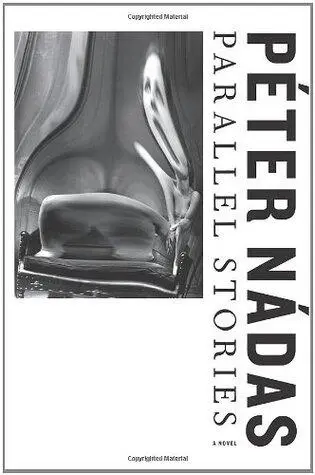
- Название:Parallel Stories
- Автор:
- Издательство:Farrar, Straus and Giroux
- Жанр:
- Год:2011
- ISBN:нет данных
- Рейтинг книги:5 / 5. Голосов: 1
-
Избранное:Добавить в избранное
- Отзывы:
-
Ваша оценка:
Parallel Stories: краткое содержание, описание и аннотация
Предлагаем к чтению аннотацию, описание, краткое содержание или предисловие (зависит от того, что написал сам автор книги «Parallel Stories»). Если вы не нашли необходимую информацию о книге — напишите в комментариях, мы постараемся отыскать её.
Three unusual men are at the heart of
: Hans von Wolkenstein, whose German mother is linked to secrets of fascist-Nazi collaboration during the 1940s; Ágost Lippay Lehr, whose influential father has served Hungary’s different political regimes for decades; and András Rott, who has his own dark record of mysterious activities abroad. The web of extended and interconnected dramas reaches from 1989 back to the spring of 1939, when Europe trembled on the edge of war, and extends to the bestial times of 1944–45, when Budapest was besieged, the Final Solution devastated Hungary’s Jews, and the war came to an end, and on to the cataclysmic Hungarian Revolution of October 1956. We follow these men from Berlin and Moscow to Switzerland and Holland, from the Mediterranean to the North Sea, and of course, from village to city in Hungary. The social and political circumstances of their lives may vary greatly, their sexual and spiritual longings may seem to each of them entirely unique, yet Péter Nádas’s magnificent tapestry unveils uncanny reverberating parallels that link them across time and space.This is Péter Nádas’s masterpiece — eighteen years in the writing, a sensation in Hungary even before it was published, and almost four years in the translating.
is the first foreign translation of this daring, demanding, and momentous novel, and it confirms for an even larger audience what Hungary already knows: that it is the author’s greatest work.
Parallel Stories — читать онлайн бесплатно полную книгу (весь текст) целиком
Ниже представлен текст книги, разбитый по страницам. Система сохранения места последней прочитанной страницы, позволяет с удобством читать онлайн бесплатно книгу «Parallel Stories», без необходимости каждый раз заново искать на чём Вы остановились. Поставьте закладку, и сможете в любой момент перейти на страницу, на которой закончили чтение.
Интервал:
Закладка:
Just because she missed him so, after only two days she did not suspect him.
Or this strange man.
Schuer indeed deserved the accolades due his sex; he was indeed a man’s man. He had been seriously wounded twice in 1917 in the western campaign, on battlefields in Flanders, and once earlier, with lighter wounds, at the siege of Gorlice, in Galicia, and on all three occasions he had received the silver medal for valor, along with the title vitéz ; for exceptional bravery, he had also been awarded the Iron Cross Second Class and First Class. At the end of the war he was honorably discharged with the rank of captain. Then, in truth, he was obliged to hide his experiences — Countess Imola was not mistaken about that — and his mind was much tortured by what he had to hide, even though he seemed to lead an orderly, cloudless life with his wife and three children in the sunny and lovingly tended directorial villa on Ihne Street.
With Germany’s enormous wartime collapse, he had to give up his plans for a military career, had to abandon the flag to which he had pledged eternal allegiance in the summer of 1914; he had no choice, he could not have continued. His earlier convictions evaporated or, rather, deserted him. Yet even after two decades, his war experiences pursued him in the form of menacing images, not picturelike images but mostly visions and apparitions. He could never tell whether he saw, imagined, or only envisioned in his memory the impact of the bomb that had lifted the torso of his machine gunner, along with muddy clumps of earth spraying the sky, high into the air from a spot now emptied and exuding only heat, and, while the torn-off arms flew off in different directions, the gunner’s trunk, pared down to its bare frame but still alive, was skewered on a tree branch.
Had that really happened; had he in fact seen it.
Put another way, fear of insanity quietly, almost imperceptibly transformed his patriotism, and his strict upbringing has not allowed him to speak of this terrible renunciation to this day, not even with his friends.
He has hardly any friends.
Because he could not afford to engage in what he might rightfully have assumed to be friendship.
On the one hand, a feeling of friendship doesn’t pick and choose solely among people of the same rank, or according to rank or title. On the other hand, neither religion nor tradition can explain the shy physical tenderness and cruel physical brutality he had seen and profoundly experienced in water-soaked trenches, among barbed-wire obstacles, in the miserable barracks of military hospitals, and in overheated whorehouses reeking of tobacco in small Galician towns. Everything was beyond what could be measured by any social standard. When he returned, neither his mother, coming toward him in her clouds of perfume, nor his father, having in his model austerity grown very thin, could have known anything about the wild animals dazed with hunger and thirst who wandered aimlessly in forests razed bare by bombs, and about the camaraderie patched together out of cruelty and brotherly feeling — yet their youngest son had seen it all and lived through it all.
Regarding him, they became unsuspecting.
He could not but feel that with his war experiences, with everything he had done for the homeland, he was basely misleading his parents, and that with the moral state of his inner life he was deeply disappointing them. He could not play the good boy for them much longer. He carried with him everywhere his life of lost innocence. Which is to say, he did not understand how he might come to love, passionately and irresponsibly, another person of any rank or sex — an injured comrade or an unkempt Ukrainian whore whom he twice used, with their smell, their weeks-old stench — if at the next moment he could hand them over to death without a second thought. He could not get over the dreadful shadows of his own bravery and steadfastness, over the mass slaughter that he had participated in from start to finish and that, for the first time in the history of warfare, technology had required as a condition for military victory. He always had to be conducting something — given his responsibility to others he had no choice — but what happened never turned out to be what he had intended. When five years later he returned to his completely unfamiliar civilian life, where to his great surprise everything was predictable, his difficulty was not in forgetting the fallen or the images of hand-to-hand combat, but in being unable to forget those of his own comrades who had been maimed by bullets and whom no one could help, or those who had gone insane and whom he had to shoot or have shot.
Willi, for example, who for two difficult years had been his orderly and whom he had been calling sweet little Willi ever since, even though the resourceful, round-faced, always grinning peasant from Eifel had been everything but sweet. He ate human flesh and not because he was hungry; he was fascinated by the taste and offered it to everyone, since they all, being cut off from their supplies, were starving; he did this because he had gone mad, or he went mad because he ate human flesh. Sometimes, when he was lost in these thoughts, Baroness Erika had to raise her voice and call her husband two or three times before he realized she had been invoking his name.
The barrel of the pistol raised for firing probably sobered up the madman for at least a second; with his arms spread wide, he clung to the slippery wall of the dugout, his alert eyes sparkling, hoping that Baron von der Schuer would not do it.
Not to him.
The baroness had to call him ever more loudly until he finally came around and not only saw but knew where he was. Luckily, the naturally lively little woman probably thought her husband was preoccupied with some scientific question. In fact, his thoughts ventured into areas not yet illuminated by the sciences precisely because he had been thinking of scientific questions.
He was looking for the basis on which he could build his science.
That he was a nobleman, scion of an ancient clan, raised to behave honorably and chivalrously, and that he had been entrusted with the lives and fate of others — these facts had lost their purpose and significance in the war he had left behind. There, bare undisguised fear of death ruled, a mere desire to survive; no discipline or self-discipline could spare anyone’s body from it.
He had not been afraid; his body was afraid in his stead. He began to search for God in this bodily fear, sitting inside the fear, desperate and full of doubts; he searched for God so that in the blood, snow, mud, and feverish shivering he should not falter or go insane.
In the mass fear and suffering, God seemed very different from the God of his hours of childhood gullibility and adolescent rebellion. This God probably had no place in human events, and for Him to be absent He did not have to leave the stumps of bombed-out trees or bodies abandoned in their pain. In the absence of gullibility, Schuer wanted first to understand the body — easily offended, exposed to desires, subject to feelings, in which it is so simple to silence or snuff out reason and soul. For theological reasons he had confidence in the sciences of human anatomy and biology. He was interested in the body’s mechanics and chemistry; he had confidence, one might say, only in his apostate mind’s ability to reach a higher sense of bodily functions and then, perhaps, to find a god higher in rank or more ancient than the God of Christianity. He had once enjoyed reading Silesius, and because of him he fantasized about the god who lived separately in individual bodies, about traces of this god that had been left in each organism and could be measured by natural-scientific or mathematical means. He wanted to find that quality which everyone chatters irresponsibly about because it’s the primal reason for everyone’s existence, but which has no palpable sign either in history or in any form of man-made matter. He was so confident that in the body he would find this ancient sign, a trace of its origin, that he was ready to transfer his faith and conscience to science.
Читать дальшеИнтервал:
Закладка:
Похожие книги на «Parallel Stories»
Представляем Вашему вниманию похожие книги на «Parallel Stories» списком для выбора. Мы отобрали схожую по названию и смыслу литературу в надежде предоставить читателям больше вариантов отыскать новые, интересные, ещё непрочитанные произведения.











Обсуждение, отзывы о книге «Parallel Stories» и просто собственные мнения читателей. Оставьте ваши комментарии, напишите, что Вы думаете о произведении, его смысле или главных героях. Укажите что конкретно понравилось, а что нет, и почему Вы так считаете.