Susan Barker - The Incarnations
Здесь есть возможность читать онлайн «Susan Barker - The Incarnations» весь текст электронной книги совершенно бесплатно (целиком полную версию без сокращений). В некоторых случаях можно слушать аудио, скачать через торрент в формате fb2 и присутствует краткое содержание. Год выпуска: 2014, Издательство: Doubleday, Жанр: Современная проза, на английском языке. Описание произведения, (предисловие) а так же отзывы посетителей доступны на портале библиотеки ЛибКат.
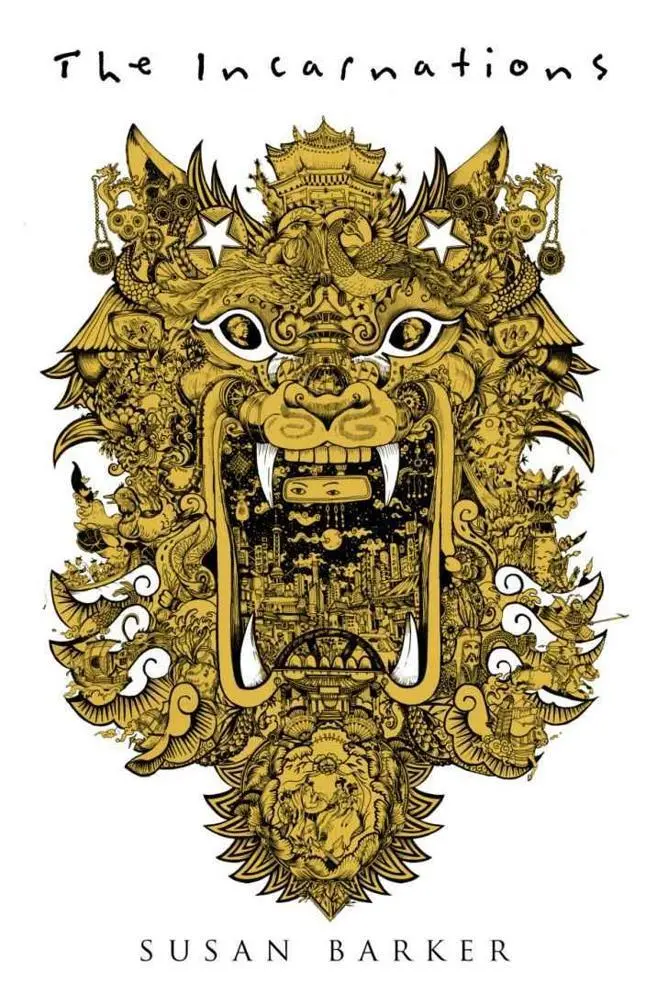
- Название:The Incarnations
- Автор:
- Издательство:Doubleday
- Жанр:
- Год:2014
- ISBN:нет данных
- Рейтинг книги:5 / 5. Голосов: 1
-
Избранное:Добавить в избранное
- Отзывы:
-
Ваша оценка:
The Incarnations: краткое содержание, описание и аннотация
Предлагаем к чтению аннотацию, описание, краткое содержание или предисловие (зависит от того, что написал сам автор книги «The Incarnations»). Если вы не нашли необходимую информацию о книге — напишите в комментариях, мы постараемся отыскать её.
I dream of sixteen concubines, plotting to murder the sadistic Emperor Jiajing.
I dream of the Sorceress Wu lowering the blade, her cheeks splattered with your blood.
I dream of you as a teenage Red Guard, rampaging through the streets of Beijing.
I am your soulmate, Driver Wang and now I dream of you.
You don't know it yet, but soon I will make you dream of me…
A stunning tale of a Beijing taxi driver being pursued by his twin soul across a thousand years of Chinese history, for fans of David Mitchell.
The Incarnations — читать онлайн бесплатно полную книгу (весь текст) целиком
Ниже представлен текст книги, разбитый по страницам. Система сохранения места последней прочитанной страницы, позволяет с удобством читать онлайн бесплатно книгу «The Incarnations», без необходимости каждый раз заново искать на чём Вы остановились. Поставьте закладку, и сможете в любой момент перейти на страницу, на которой закончили чтение.
Интервал:
Закладка:
Baldy Zhang clears his throat and admits, ‘We weren’t really friends. Your husband was a good man, but I don’t make friends easy. I’m a mean bastard, truth be told.’
A few knowing chuckles around the table. Yida is solemn as she waits for the laughter to die down. Then, her alcohol-limp tongue wrestling with words, struggling to shape them in her mouth, she says, ‘You are wrong. . He was not a good man.’
The drivers pause, then laugh uncertainly, spluttering smoke. A hysterical shrill to her voice, Yida continues, ‘He crashed that car on purpose to kill himself and the man in the passenger seat, who was his lover. He committed suicide, leaving his wife and child with not one fen to support themselves. So you are wrong, Baldy Zhang. My husband was not a good man.’
Yida looks around the table at the stunned and speechless drivers then stands up to leave. But no sooner has she risen, she keels over as the blood drains from her head and her knees buckle. Driver Liang leaps up, frowning as he catches her by the shoulders and supports her. Yida slumps in his arms, rolls her head towards him and smiles — her first smile in days. Driver Liang is two decades older than her late husband, but something about his strong arms and concerned expression agitates the itch of lust in Yida. Take me to the spare bedroom, Driver Liang, Yida thinks, and she laughs at the lewdness of her thoughts. The taxi drivers watch her uncomfortably.
‘ Oh my goodness! Is everything all right?’ Lin Hong rushes to drag Yida out of Driver Liang’s arms, and attempts to stand her upright. ‘Accept my apologies. My daughter-in-law is not quite herself today. She needs to lie down. I hope she was not disturbing you.’
The taxi drivers watch as Lin Hong steers Yida out of the kitchen. Out in the hall, Lin Hong throws open the door to the guest room and points at the single bed.
‘Get in there and lie down,’ she snaps. ‘You are making a fool of yourself.’
Yida sways in the doorway, woozy and unable to focus. Lin Hong pushes her inside and slams the door. Pathetic, she thinks. But at least the ignorant Anhui girl has the sense to do as she is told.
By four o’clock the incense has burnt to ashes and the candles melted to stumps. The guests start leaving their empty glasses on the sideboard or coffee table, saying their goodbyes and heading for the door. Lin Hong pursues them out to the hall, standing over them as they rummage through the shoe pile for the pair they came with, and making threats to invite them round again. Then she follows them to the lift, waving and calling, ‘Thank you for coming!’ like a party hostess who doesn’t want the party to end.
As the elevator pings shut on another group of guests, a woman in her late fifties or early sixties shuffles out of the door leading from the stairwell, a shabby woman, whose padded Mao jacket and worn trousers remind Lin Hong of the days when everyone owned one set of hand-sewn clothes. Lin Hong looks at the woman’s lined skin and thinning hair, brittle enough to break in the teeth of a comb. Who in their right mind would climb ten flights of stairs in the July heat? The woman, who is not breathless or perspiring from the climb, moves with a slightly arthritic gait towards the open door of Lin Hong’s home.
‘Excuse me. Who are you?’ Lin Hong asks, her eyes polite but her mind wanting to shoo the woman back down the stairs.
The woman does not answer, but wanders into the apartment as though Lin Hong is someone of no importance at all. She must be one of Yida’s relations from Anhui, Lin Hong thinks, wrinkling her nose as the woman traipses her mud-caked sandals down her hall. These peasants are so rude and uncivilized. Then the taxi drivers stumble out, headed to a local Sichuan restaurant for more booze and spicy food, and the unknown guest is forgotten as Lin Hong chases after them, calling her goodbyes and inviting them to come again.
On the sofa in her formal black dress, Echo watches the last of the guests gossiping and stuffing their mouths with the left-over snacks on the trays on the sideboard. She watches her grandfather squirming in his wheelchair as though his incontinence pad needs to be changed and she is wondering whether to raise the alarm when the downtrodden, grey-headed woman enters the room. Echo lurches with recognition and fear. What is the Watcher doing here? At her father’s wake? Echo hadn’t thought the Watcher could exist so openly out of the shadows, or the shrubbery in the park, or the shopping crowds. But here she is now. In her grandfather’s apartment, for everyone to see.
The Watcher gazes about the living room, but her eyes don’t widen in envy and admiration like the other guests’. She heads directly to the altar, nodding curtly at Wang Hu as she passes his wheelchair. Wang Hu wheezes as though with the onset of an asthma attack then keels over, wracked by choking, hacking coughs. The guests rush over, crowding him. ‘Slap him on the back!’ they cry. ‘Bring water!’ ‘Loosen his tie!’
The drama of the choking man does not distract the Watcher as she stands at the shrine and, like the guests before her, contemplates the young man in the photograph. But, unlike the other guests, the Watcher starts to weep. From the sofa, Echo watches, realizing that the Watcher is only the second person she has seen crying for her father. The first was her mother, who, when the police informed her of the ‘bad news’, crashed on the hospital floor and sobbed on her hands and knees, like a wounded animal. The Watcher, however, is silent in her grief, tears streaming down her cheeks. She weeps for a few moments longer then reaches into her Mao jacket for a large manila envelope. The Watcher stands with the envelope in front of the altar, as though debating whether to leave it as an offering or not. She decides against it and turns away.
The Watcher stares at Echo with her piercing gaze, and Echo shrinks back. Caught up in the commotion of Wang Hu’s seizure of hacking coughs (‘Call an ambulance! Wang Hu is choking!’), none of the guests notice the strange latecomer approaching the daughter of the deceased, who is wide-eyed with fright. Echo has never seen the Watcher close up before. She can see the crow’s feet wreathing her eyes and the tears glistening on her cheeks. She can see the large mending stitches on her jacket and her bedraggled trouser hems. The Watcher’s accent, when she speaks, is not what Echo expected. Not that of an uneducated migrant from the countryside, but that of a well-educated person from Beijing.
‘I knew your father,’ the Watcher says. ‘I knew him very well. Better than anyone.’
Echo does not believe this. If this woman knew her father better than anyone, then why did she only ever watch him from afar? Why didn’t she ever speak to him, or say hello? The Watcher is lying, but Echo holds her tongue.
‘I know you too, Echo,’ the Watcher says. ‘I know you better than you know yourself. Recently, I have been dreaming of you.’
Echo is silent. She dreams of the Watcher too. She dreams of the Watcher stalking her through the streets and lurking outside the door of 404. She dreams of the Watcher standing in the corner of her bedroom at night. And now the Watcher has stepped out of her dreams and into waking life, looming over Echo, smelling of old age and homelessness. Though her eyes are shrouded in wrinkles, they are sharp as knives, dissecting Echo with their gaze.
‘The dreams show me who you were in the past,’ the Watcher says. ‘Once, you were a sorceress, and then a Mongol warrior with a battleaxe-scarred face. Once, you were Emperor and ruler of all under heaven, and then a Red Guard called Long March.’
Echo shudders. The Watcher is mentally ill, she realizes. Though her eyes are shrewd and intelligent, her mind is deranged.
Читать дальшеИнтервал:
Закладка:
Похожие книги на «The Incarnations»
Представляем Вашему вниманию похожие книги на «The Incarnations» списком для выбора. Мы отобрали схожую по названию и смыслу литературу в надежде предоставить читателям больше вариантов отыскать новые, интересные, ещё непрочитанные произведения.





Обсуждение, отзывы о книге «The Incarnations» и просто собственные мнения читателей. Оставьте ваши комментарии, напишите, что Вы думаете о произведении, его смысле или главных героях. Укажите что конкретно понравилось, а что нет, и почему Вы так считаете.