Susan Barker - The Incarnations
Здесь есть возможность читать онлайн «Susan Barker - The Incarnations» весь текст электронной книги совершенно бесплатно (целиком полную версию без сокращений). В некоторых случаях можно слушать аудио, скачать через торрент в формате fb2 и присутствует краткое содержание. Год выпуска: 2014, Издательство: Doubleday, Жанр: Современная проза, на английском языке. Описание произведения, (предисловие) а так же отзывы посетителей доступны на портале библиотеки ЛибКат.
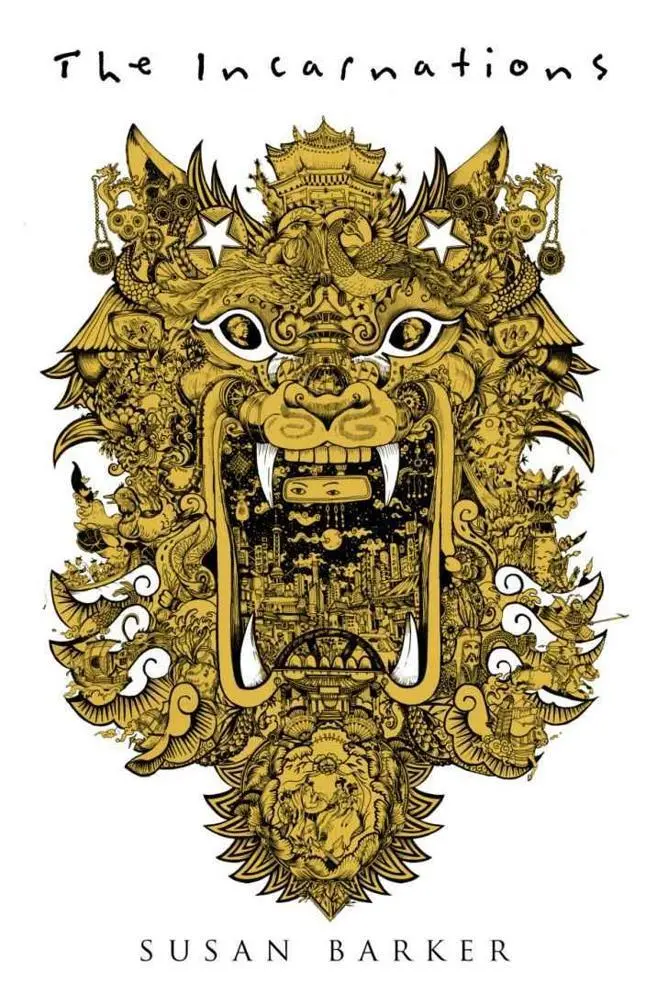
- Название:The Incarnations
- Автор:
- Издательство:Doubleday
- Жанр:
- Год:2014
- ISBN:нет данных
- Рейтинг книги:5 / 5. Голосов: 1
-
Избранное:Добавить в избранное
- Отзывы:
-
Ваша оценка:
The Incarnations: краткое содержание, описание и аннотация
Предлагаем к чтению аннотацию, описание, краткое содержание или предисловие (зависит от того, что написал сам автор книги «The Incarnations»). Если вы не нашли необходимую информацию о книге — напишите в комментариях, мы постараемся отыскать её.
I dream of sixteen concubines, plotting to murder the sadistic Emperor Jiajing.
I dream of the Sorceress Wu lowering the blade, her cheeks splattered with your blood.
I dream of you as a teenage Red Guard, rampaging through the streets of Beijing.
I am your soulmate, Driver Wang and now I dream of you.
You don't know it yet, but soon I will make you dream of me…
A stunning tale of a Beijing taxi driver being pursued by his twin soul across a thousand years of Chinese history, for fans of David Mitchell.
The Incarnations — читать онлайн бесплатно полную книгу (весь текст) целиком
Ниже представлен текст книги, разбитый по страницам. Система сохранения места последней прочитанной страницы, позволяет с удобством читать онлайн бесплатно книгу «The Incarnations», без необходимости каждый раз заново искать на чём Вы остановились. Поставьте закладку, и сможете в любой момент перейти на страницу, на которой закончили чтение.
Интервал:
Закладка:
Wang Hu’s former colleagues from the Ministry of Agriculture have come, ostensibly to offer condolences for the loss of his son, but mostly out of a morbid curiosity to see how the once larger-than-life Wang Hu, now semi-paralysed and wheelchair bound, is faring these days. Slumped in his chair, Wang Hu is miserable, doubly humiliated by the procession of witnesses to his debilitated state and the death of his son, unfilially passing away before him. The cadres slap him on the back, bantering and making witty jokes like back in the day, but Wang Hu, ashamed of his slurring, dribbling speech, doesn’t join in. Though in their sixties, the cadres are strong and in robust health from golfing and extramarital affairs, and the stark contrast with his crippled impotence is more than he can bear. He’s relieved when Lin Hong sashays over, hips swaying as though swinging a tail, and offers the cadres more drinks. ‘Tea? Beer? Anything you want. .’ The cadres’ wives narrow their eyes at Lin Hong’s convivial manner. Even to the most generous-minded of guests, the stepmother of the deceased looks in a celebratory mood.
A framed photograph of Wang, taken by Yida the year they were married, sits on an altar of burning candles and incense. The guests go to the altar and contemplate the handsome young man in the photograph — remembering him fondly, or not fondly, or not at all. Baldy Zhang chuckles at the photo and remarks, ‘When was that taken? Looks nothing like him! Where’s the eye bags? Why so much hair?’ There are no wailing mourners at the wake, or hired monks chanting verses of Buddhist scriptures, or burning of paper money for Wang’s prosperity in the afterlife. The ashes were left at the crematorium. The guests murmur about the break with tradition; the subdued, modest affair. It’s not as though Wang’s family can’t afford the expense.
Wang Hu and Lin Hong are nervous about the details of Wang’s death coming to light. The police had estimated his taxi was speeding at 140 km per hour when it crashed into the guard-rail of a vaulted flyover in the north-east of Beijing. The police had suspected more than reckless driving — that Wang had crashed intentionally. But the last thing Wang Hu wanted was the shame and embarrassment of a murderer and a suicide for a son. ‘Perhaps,’ Lin Hong had suggested to the investigator, ‘the man in the passenger seat attacked my son-in-law, causing him to lose control of the wheel? Perhaps the man attempted to rob him, and that is why Wang accidently crashed the car?’ Damage limitation. Both of them are used to limiting the damage Wang Jun has done to his father’s reputation over the years. They’ve been cleaning up his messes all his life. Why should his death be any different? They were fortunate that the passenger, who’d catapulted through the windscreen and soared twenty metres above the ground before thudding to his death, was no one of any significance. A drifter and male prostitute from Guangzhou. The Zeng family had been difficult at first, pestering the Beijing police with questions about the car crash. Then Lin Hong had contacted them, and offered to cover the funeral expenses, and generously compensate them for their loss. The Zengs had accepted the offer and shut up.
Wang’s taxi-driver friends are out of place at the wake, and hopeless at small talk. (‘Fucked if I care,’ one mutters, when Lin Hong asks if he is looking forward to the Olympics.) They retreat to the kitchen, where the caterers are preparing trays of snacks, and gather around a table with their cigarettes and smuggled bottles of baijiu. They talk fondly of Driver Wang, gallows humour soon kicking in.
‘Crashed off a bridge! What an idiot!’
‘Maybe he had an undiagnosed brain tumour. That would explain a lot. .’
‘Probably had a heart attack at the wheel. He was so out of shape. .’
‘His stepmother says his passenger robbed him at knifepoint. That’s how he lost control of the taxi. .’
Baldy Zhang pours Red Star baijiu into the other drivers’ cups. They drink to the memory of Driver Wang.
‘Seen his wife? She’s a weeping mess.’
‘Not bad, though, as far as weeping messes go,’ Baldy Zhang says slyly. ‘Should the poor widow be in need of comfort, she can come and weep on old Uncle Zhang’s shoulder. .’
‘Show some respect! At the dead man’s wake!’ Driver Liang laughs. He points to the kitchen ceiling. ‘Driver Wang is watching you now. He’s grinding his teeth and getting ready to punch your lights out!’
Baldy Zhang calls up to the ceiling, ‘Now now, Driver Wang. You wouldn’t want your wife to be lonely in her bed at night, would you? Old Uncle Zhang will keep her warm for you. .’
Laughter, another splash of baijiu in the cups, and they change the subject.
The widow and child of the deceased are on a sofa and, as a dazed spectacle of grief, Yida does not disappoint. ‘Poor Ma Yida,’ the guests whisper. ‘First her home burnt down, and now she’s widowed at thirty. It’ll be impossible for her to find another husband now. .’
Yida has been holding the same cup of tea on her lap for the past hour. Not sipped from once, the tea is stone cold. The wrinkled faces of elderly neighbours loom in and out of focus as they offer consoling words that Yida can’t hear. Echo is troubled to see her mother unable to hold a gaze, or finish a sentence. She looks sullenly at the middle-aged women who pat her on the head and say, ‘Oh, you poor child,’ and wills them to go away. They whisper to Lin Hong, ‘How your daughter-in-law is suffering. She looks like a ghost.’
Lin Hong nods, her chandeliers tinkling. ‘Looks awful, doesn’t she? Can’t eat or sleep and is barely functioning. I had to get my doctor to prescribe her some tranquillizers, just so she can shut down for a few hours each night. Still, how frightful she looks!’
Yida’s hair has not been washed in days, and her skin is blotchy and her eyes bloodshot from weeping. Lin Hong could advise Yida on how to reduce her eye swelling (with a few dabs of haemorrhoid cream), but she’ll be damned if she’ll pass on her beauty tips to the Anhui girl. Echo is the one Lin Hong is saving her advice for. She can’t wait to straighten Echo’s teeth and hair and give her lessons in how to use make-up to accentuate her eyes.
‘We heard the mother and child’s house burnt down. Where are they living now?’ a wife of one of Wang Hu’s former colleagues asks.
‘Why, here, of course!’ Lin Hong says. ‘Where else would they go? They are our responsibility now. The mother has plans to take Echo back to Anhui, but that won’t happen. Echo and I are very close and won’t be parted. She is like a daughter to me. Maybe the mother will return to Anhui alone.’
The cadre’s wife looks at Yida and shivers. What will become of this poor widow, now she has nothing left?
Yida rises from the sofa.
‘Ma, where are you going?’ asks Echo.
‘Kitchen,’ says Yida, and stumbles away. Echo can tell by her mother’s voice that she does not want her to follow.
Yida enters the kitchen. She walks up to the table of boozy taxi drivers, who look up at her in surprise.
‘I need a cigarette,’ she announces. ‘And a glass of whatever you are drinking.’
The six men leap to meet her need, nicotine-stained fingers fumbling for packs of cigarettes and lighters, proffering her the choice of three different brands. A glass is fetched and colourless grain alcohol poured in.
‘Mind if I join you?’ she asks.
They shake their heads and say they don’t, so Yida sinks into an empty chair, inhaling the fog of smoke and the musky odour that reminds her of her late husband. The drivers continue chatting awkwardly, but Yida is so quiet, they forget her after a few minutes and resume their sweary, bawdy banter. Yida smokes cigarette after cigarette down to the butt and knocks back glasses of liquor. Some of the guests, when they hear of this, couldn’t be more scandalized if the widow had squatted and peed on the kitchen floor. But Yida can’t see their disapproving looks from the doorway. The alcohol is mixing with the tranquillizers she took that morning and her vision is blurring, the kitchen slanting at a tilt. She slurs to Baldy Zhang, ‘You were my husband’s friend, weren’t you?’
Читать дальшеИнтервал:
Закладка:
Похожие книги на «The Incarnations»
Представляем Вашему вниманию похожие книги на «The Incarnations» списком для выбора. Мы отобрали схожую по названию и смыслу литературу в надежде предоставить читателям больше вариантов отыскать новые, интересные, ещё непрочитанные произведения.





Обсуждение, отзывы о книге «The Incarnations» и просто собственные мнения читателей. Оставьте ваши комментарии, напишите, что Вы думаете о произведении, его смысле или главных героях. Укажите что конкретно понравилось, а что нет, и почему Вы так считаете.