Susan Barker - The Incarnations
Здесь есть возможность читать онлайн «Susan Barker - The Incarnations» весь текст электронной книги совершенно бесплатно (целиком полную версию без сокращений). В некоторых случаях можно слушать аудио, скачать через торрент в формате fb2 и присутствует краткое содержание. Год выпуска: 2014, Издательство: Doubleday, Жанр: Современная проза, на английском языке. Описание произведения, (предисловие) а так же отзывы посетителей доступны на портале библиотеки ЛибКат.
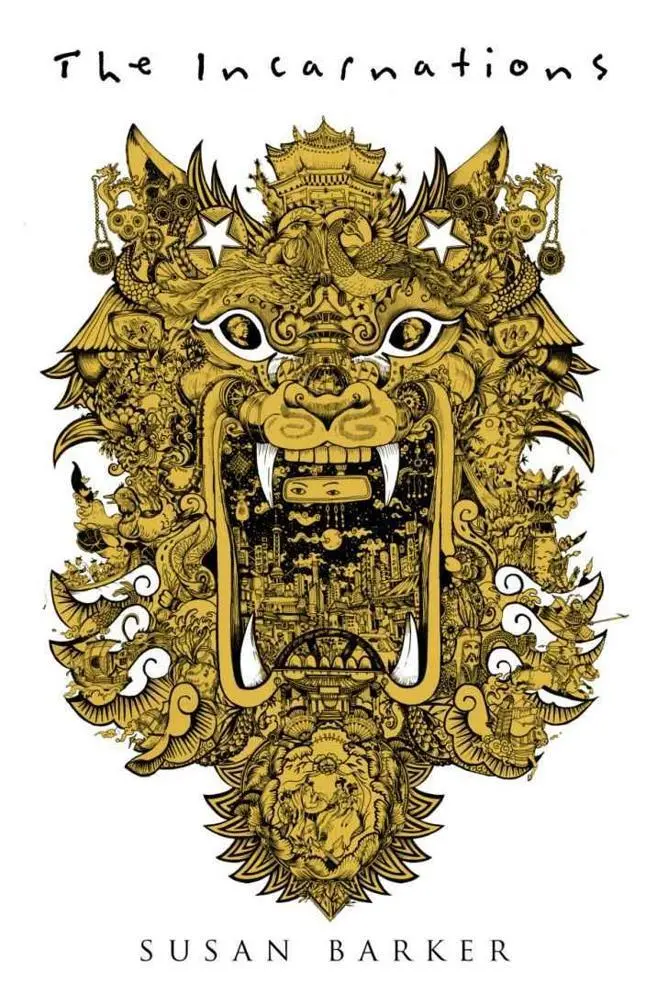
- Название:The Incarnations
- Автор:
- Издательство:Doubleday
- Жанр:
- Год:2014
- ISBN:нет данных
- Рейтинг книги:5 / 5. Голосов: 1
-
Избранное:Добавить в избранное
- Отзывы:
-
Ваша оценка:
The Incarnations: краткое содержание, описание и аннотация
Предлагаем к чтению аннотацию, описание, краткое содержание или предисловие (зависит от того, что написал сам автор книги «The Incarnations»). Если вы не нашли необходимую информацию о книге — напишите в комментариях, мы постараемся отыскать её.
I dream of sixteen concubines, plotting to murder the sadistic Emperor Jiajing.
I dream of the Sorceress Wu lowering the blade, her cheeks splattered with your blood.
I dream of you as a teenage Red Guard, rampaging through the streets of Beijing.
I am your soulmate, Driver Wang and now I dream of you.
You don't know it yet, but soon I will make you dream of me…
A stunning tale of a Beijing taxi driver being pursued by his twin soul across a thousand years of Chinese history, for fans of David Mitchell.
The Incarnations — читать онлайн бесплатно полную книгу (весь текст) целиком
Ниже представлен текст книги, разбитый по страницам. Система сохранения места последней прочитанной страницы, позволяет с удобством читать онлайн бесплатно книгу «The Incarnations», без необходимости каждый раз заново искать на чём Вы остановились. Поставьте закладку, и сможете в любой момент перейти на страницу, на которой закончили чтение.
Интервал:
Закладка:
‘Shuxiang, you are an unnatural woman!’ he barked on the rare occasions he was home. ‘Pick the damned child up when he cries!’
Was it my lack of maternal instinct that led to the otherness I sensed about you? Or was it your otherness that corrupted my maternal instinct? I told myself the post-natal anxiety was because of my inexperience with babies and, the more time I spent with you, the less strange you would seem. But, instead, time exaggerated my feelings of disquiet until they became an irrational fear that you weren’t my own flesh and blood.
Once, I was breastfeeding you, and as you were suckling I had the uncanny sense that someone other than my four-month-old child was staring out at me from behind your gaze. I pulled you from my nipple, and milk and spittle dribbled from your mouth as I held you at arm’s length. ‘Who are you?’ I asked, my voice shaking, half expecting the imposter behind your eyes to speak. You spoke back in baby babble and I was as embarrassed as I was relieved. Four months earlier I had pushed you out of my own womb. I had seen the umbilical cord being cut with my own eyes. How could I suspect that you weren’t my child?
The next time it happened you were six months old, and we were rolling a ball back and forth on the floor. You smiled and gurgled at the colourful ball, unaware of your mother’s deathly boredom. ‘Back to Mama,’ I said, rolling the ball to you. But a change came over you and you suddenly lost interest in our game. You stared at me with the unmistakable gaze of someone from my past, and my panic was similar to the time I was an hour’s hike from Three Ox Village and realized I was being stalked by a wild and rabid-eyed dog.
‘Liya?’ I whispered.
You stared back with cold, hostile, accusing eyes, still furious that I had betrayed you to the Red Guards, still furious I had taken your mother’s possessions out of the secret hiding place. I couldn’t stand it. I walked out of the living room. I put on my coat and left our apartment. I wandered the streets for hours, thinking, It can’t be. . It can’t be. . It can’t be. Yet it was. How long had Liya been lurking inside you, biding her time? I shuddered to think.
The apartment was dark when I returned, and harrowing with a small child’s crying. I went to the living room and turned on the light. You were a mess, crawling about in a puddle of urine, your cheeks and hands smeared with shit. When you saw me you threw back your head and bawled, your eyes accusing. But this time your accusation was that of an abandoned child. Liya had disappeared. Though I was wary of you still, I picked you up and washed you in a basin of lukewarm water. I towelled you dry and I fed you a bottle of formula milk. The whole time, I was nervous that Liya would reappear.
There were incidents like this throughout your babyhood, when I was overcome by the conviction that Liya, or some other imposter, was stalking me through your eyes. I would walk away from you. I would shut myself in the bedroom or bathroom. When you scrabbled at the door and called, ‘Mama. .’ I covered my ears. Sometimes my panic was so overwhelming I would leave you splashing in the plastic tub, or in the kitchen with pans boiling on the stove, and flee the apartment and walk the streets until my heart stopped pounding and I was brave enough to go back. Fight or flight, that was my reflex when I was menaced by others in your gaze. And though walking out on you was irresponsible, not walking out on you would have been worse. I would have screamed and shaken you. I would have beaten you and staved in your baby-sized skull.
Fortunately, it didn’t last. As you grew up into a chattering child, with a mind and character of your own, Liya and the others went away, and I soon forgot there was ever a time I suspected you weren’t my son. My skills as a mother did not improve, though. I still forgot to cook dinner. I still forgot to tell you to go to bed. Your teachers wrote me notes, saying that your clothes needed washing, and your toes poked through the holes in your shoes. I never beat you or was intentionally cruel. But I didn’t love you as a mother should love her son. And you, who loved me as a son should love his mother, could tell.
Life passed uneventfully, with my baijiu, cigarettes and novels (my love of ‘poisonous weeds’ had stayed with me from reading the toilet paper during the Cultural Revolution), and young son. I had no ambitions. In the eighties, as televisions and fridge-freezers and other appliances appeared in the stores, I had no desire to consume. I had no interest in men or love affairs and would have been celibate but for your father, drunkenly mounting me once in a while.
‘What other man would want you, Shuxiang?’ he’d grunt. ‘Not even a dog would take a sniff at you. You should be grateful you are mine.’
But your father was wrong. I wasn’t his. His wife was Li Shuxiang, not me. Your father didn’t know who I was. He didn’t even know my real name.
I don’t remember the breakdown. One day I was living with my son in Maizidian, and the next I was tranquillized and unable to go to the toilet without assistance. I don’t remember much about the hospital either. I remember the odour of disinfectant on the wards. I remember a kindly nurse brushing my teeth and baring her own teeth to encourage me to do the same. I remember lying on my back with a wad of cotton between my teeth and paddles against my temples. I remember lightning striking. Once. Twice. Thrice. I remember your father coming to visit me. He sat over by the window, looking formidable in his work suit. Other patients from my ward stood drooling in the doorway, staring at him in fascination.
‘Mister, haven’t I seen you on TV?’ one woman asked. ‘Aren’t you the prime minister of Taiwan?’
Your father paid as much attention to them as to stray cats. He sat up straight in his chair, stiff-backed and tense with his loathing of me. ‘You deserve to rot in Hell for what you did to our son,’ he said.
When he said this, I had only a vague memory of having a son. How old was he? A baby? A walking and talking child? What did he look like? I certainly couldn’t remember the thing I had done to him, for which I deserved to rot.
‘You are dead to him now anyway,’ your father went on. ‘He thinks you are ashes in an urn.’ Then he stared out the window as though he couldn’t stand the sight of me. He started smoking his way through another cigarette and muttering, ‘You are the sickest woman I know. . You are rotting. . You stink of death. .’ Then he looked right at me and sneered, ‘Hurry up and die, will you? We can’t wait .’
By ‘we’ I knew he meant himself and his teenaged mistress. Whether or not I lived or died was of interest to no one but them.
After your father had gone, I asked to borrow a mirror from a girl in my room. She opened her round powder compact and held it up, and I saw my reflection for the first time in over a year. I was not rotting, as your father had said, but I didn’t recognize the woman staring back with vacant eyes. That wasn’t me. Where had I gone? ‘Do I stink of death?’ I asked the girl. She leant closer and sniffed me. ‘No, Shuxiang, you smell nice,’ she said. Then she patted the fluffy puff in her compact and tenderly powdered my nose.
That evening I didn’t swallow my pills and, within hours, the medicated fog was clearing. I didn’t swallow my pills the next day or the next, but was careful to keep up appearances as a dribbler who couldn’t think for herself. After a week of no pills, I stole a wallet from one of the doctors’ coats and hid it in my underwear. Two days later I was on a long-distance bus headed north to Heilongjiang.
Secretary Lin had retired now. Though eighteen years had passed, he recognized me straight away. He was speechless for a while, tears standing out in his eyes.
Читать дальшеИнтервал:
Закладка:
Похожие книги на «The Incarnations»
Представляем Вашему вниманию похожие книги на «The Incarnations» списком для выбора. Мы отобрали схожую по названию и смыслу литературу в надежде предоставить читателям больше вариантов отыскать новые, интересные, ещё непрочитанные произведения.




Обсуждение, отзывы о книге «The Incarnations» и просто собственные мнения читателей. Оставьте ваши комментарии, напишите, что Вы думаете о произведении, его смысле или главных героях. Укажите что конкретно понравилось, а что нет, и почему Вы так считаете.