Susan Barker - The Incarnations
Здесь есть возможность читать онлайн «Susan Barker - The Incarnations» весь текст электронной книги совершенно бесплатно (целиком полную версию без сокращений). В некоторых случаях можно слушать аудио, скачать через торрент в формате fb2 и присутствует краткое содержание. Год выпуска: 2014, Издательство: Doubleday, Жанр: Современная проза, на английском языке. Описание произведения, (предисловие) а так же отзывы посетителей доступны на портале библиотеки ЛибКат.
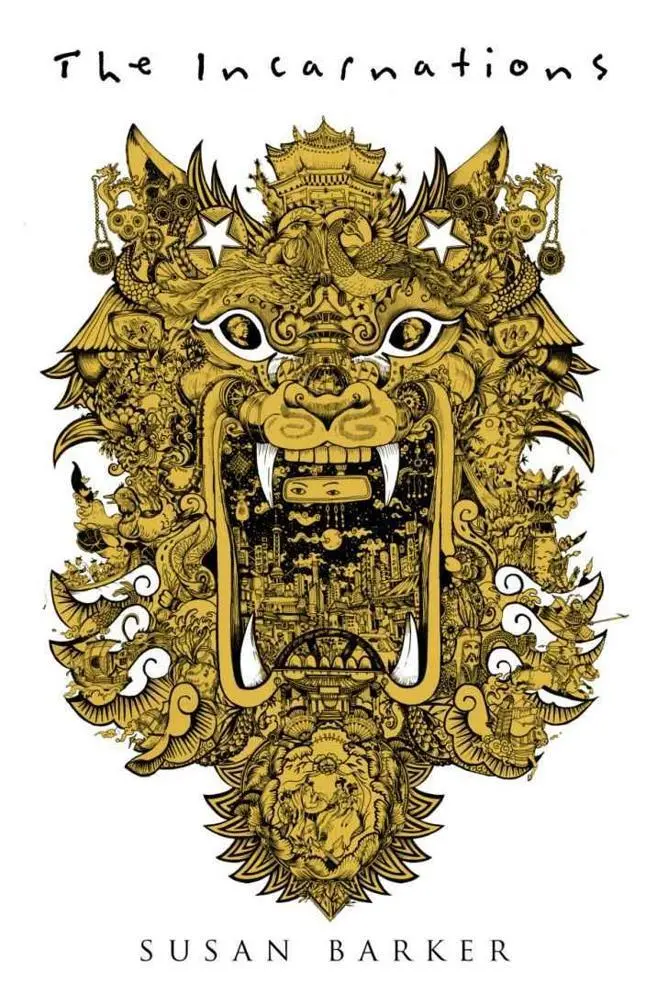
- Название:The Incarnations
- Автор:
- Издательство:Doubleday
- Жанр:
- Год:2014
- ISBN:нет данных
- Рейтинг книги:5 / 5. Голосов: 1
-
Избранное:Добавить в избранное
- Отзывы:
-
Ваша оценка:
The Incarnations: краткое содержание, описание и аннотация
Предлагаем к чтению аннотацию, описание, краткое содержание или предисловие (зависит от того, что написал сам автор книги «The Incarnations»). Если вы не нашли необходимую информацию о книге — напишите в комментариях, мы постараемся отыскать её.
I dream of sixteen concubines, plotting to murder the sadistic Emperor Jiajing.
I dream of the Sorceress Wu lowering the blade, her cheeks splattered with your blood.
I dream of you as a teenage Red Guard, rampaging through the streets of Beijing.
I am your soulmate, Driver Wang and now I dream of you.
You don't know it yet, but soon I will make you dream of me…
A stunning tale of a Beijing taxi driver being pursued by his twin soul across a thousand years of Chinese history, for fans of David Mitchell.
The Incarnations — читать онлайн бесплатно полную книгу (весь текст) целиком
Ниже представлен текст книги, разбитый по страницам. Система сохранения места последней прочитанной страницы, позволяет с удобством читать онлайн бесплатно книгу «The Incarnations», без необходимости каждый раз заново искать на чём Вы остановились. Поставьте закладку, и сможете в любой момент перейти на страницу, на которой закончили чтение.
Интервал:
Закладка:
‘Yi Moon, you came back,’ he whispered. ‘Finally, after all these years of waiting, you have come back to me.’
He was older and fatter, and walked with difficulty due to complications from diabetes and gout. And I had aged too. I was no longer the young girl who had gone away to Beijing. I was over forty, and wrinkled with grey in my hair, and dazed-looking from all the electricity that had seared through my brain.
‘I just got out of a mental hospital,’ I explained. ‘I look unwell.’
And the sentimental man shook his head and smiled. ‘Yi Moon, you look exactly the same as the day we first met.’
Secretary Lin rented a room for me on the outskirts of the town. Then, at my request, he bribed his friend at the local Public Security Bureau to contact your father with news of my passing and to forge a death certificate for Li Shuxiang, which I posted to Beijing. Your father accepted the lie. He didn’t bother to make further enquiries, or send for the ashes. I had escaped his punishment and I was free.
I lived in Langxiang as I had lived in Beijing before my breakdown. Baijiu, cigarettes and novels. Solitude. But I was not free.
At night I dreamt of you. I dreamt of you at the age of two, crouching in split pants to peer at a dead spider in a drain. I dreamt of you aged four, standing on a stool and watching me stir a pot on the stove. I dreamt of you aged twelve, chewing on a pencil, doing your homework in your pyjamas. I had been an indifferent mother. But now, hundreds of kilometres north of Beijing, I woke from dreams of you, aching with loss. But what could I do? I had died in Langxiang, and couldn’t come back from the dead. I had no choice but to stay beyond the grave, out of your life.
I had been in Langxiang for ten years when Secretary Lin was diagnosed with lung cancer. The doctors didn’t even prescribe chemotherapy, the prognosis was so bad. In desperation, I went to a shaman I knew of near Three Ox Village, a toothless old man with skin loosened from the bones of his face, rumoured to be over two hundred years old. After selling me some herbs to ‘fight the demons’ in my official’s lungs, the shaman asked me if I knew I was a ‘reincarnate’. Suspecting that he just wanted to sell me more medicine, I snapped, ‘I can’t afford to buy more of your herbs.’ The shaman laughed, toothless and sly, and gave me a potion free of charge. ‘Drink it,’ he said, ‘and you will dream of your past lives.’ I put the bottle in my bag then rushed back to Langxiang and my dying official, who over the years I had come to care about a great deal.
I forgot about the 200-year-old shaman and his herbal potion until after Secretary Lin’s funeral. It was late at night, and I was drinking in my room when I ran out of spirits. Searching for more alcohol, I found the shaman’s bottle in my bag, pulled out the stopper and drank it down, hoping it contained some intoxicating herbs that would knock me out, or at least numb my sadness. I passed out shortly afterwards and woke hours later from a dream so strange and disquieting that I had to turn on the light for reassurance that it wasn’t real. I had dreamt I was being chased out of a hut by a fierce-eyed woman with a knife. I had run into a forest and hidden in the trees, my heart thudding with the conviction that the woman would find me and slit my throat. The dream was too powerful to not be of any significance. So, later that day, I found a notebook and wrote it down.
The next night, without imbibing any potions, I dreamt I was in a boat out at sea with a wrinkled old man, casting out fishing nets. This time, the dream was peaceful and serene, and I woke up with the taste of saltwater in my mouth and waves crashing in my blood. Though it was still dark, I went and sat at my desk and wrote what I remembered down in my notebook, and by the time I had finished the sun had risen in the sky.
For years my life was centred around the dreams and their documentation. I recorded obsessively, emptying pen after pen of ink, as though the past incarnations themselves were pushing my writing hand across the pages. Though the dreams were nothing more than random scenes that resisted order and interpretation, the need to record them was as consuming as hunger or thirst, a need that had to be sated in order for me to survive.
When I understood every dream was from one of four perspectives, I divided the dreams amongst four journals, each of which came to form a disjointed, non-chronological biography of one life. I dreamt haphazardly. Sometimes I dreamt of one incarnation for nights on end. Sometimes I dreamt of each incarnation in nightly succession. The dreams were exhilarating. The dreams were horrifying. The dreams were, without exception, more real to me than waking life.
Awareness that I was dreaming not only of my own past lives but those of the soul I lived in tandem with came slowly. The revelation that the recurring soul was yours, however, struck like lightning one day. The epiphany sent me out into the streets, where I walked for hours, mindless of where I was going, colliding with strangers in my shock. I thought about you as a baby. The strangeness I had sensed about you was not a young mother’s paranoid imaginings. Those times I saw someone else lurking in the eyes of the four-month-old suckling at my breast, or the six-month-old playing on the floor, were not projections from my own mind. Your other selves were surfacing from the depths, rising into the void of your unintelligent, not-yet-formed baby’s mind. Your other selves were moving within the cavity of your skull and staring out through your eyes.
That day was a day of many regrets. Regret that I sent the death certificate to your father. Regret that I had stayed in Langxiang for fifteen years, thinking I could break with the past. That day I went to the bank and withdrew the last of Secretary Lin’s money. Then I stood in a queue to buy a ticket from the train station booth. You have been dead for sixteen years, my conscience warned me. You can’t go back. . But what does my conscience know? I thought as I returned to my room to pack. What does my conscience know about the bond of souls entwined for over a thousand years?
As the train moved through the night to Beijing, I thought that suddenly to reappear in your life would be irresponsible. I had to enlighten you of your past lives first, as the shaman near Three Ox Village had enlightened me. But how? I had no herbal potions, for the shaman had years ago died, and the task seemed as impossible as moving a mountain one spadeful at a time. Yet it had to be done.
The day I returned to Beijing was the day I began the first letter to you. It was winter then, and now it is summer and this letter will be the last. Whether you are enlightened or not, the time has come to move into the here and now.
Once there was a time, when you were seven or eight, when you woke up crying in the night. ‘Ma. .’ you called through the dark. ‘Ma. .’ I got up and went over to your bed. ‘I had a dream you were dead,’ you whispered. ‘I was on my own. .’ I stroked your damp forehead and reassured you, ‘I am here, Xiao Jun. I am not dead, little one. . I am here. .’ Then I tucked you back in, and stood over you until you were sleeping once more.
I am here, Xiao Jun. Are you ready to see me again? Or am I too late?
30. The Wake
LIN HONG PROWLS amongst the guests, her loud and empty voice possessive of the attention in the room. She parades her new dress, the black ruche fabric sliding from her shoulders and clinging to her curves. ‘Fifty per cent off in the sale,’ she boasts to those who compliment her, tossing her head and tinkling her chandelier earrings, as though showing off their deliberate bad taste.
News of the tragedy had spread about Maizidian. Though Wang hadn’t been more than a nodding acquaintance to most, he’d been polite, unassuming and well liked, and many neighbours have come to pay their respects. Some taxi drivers who’d grumbled over noodles and beer with Wang, about traffic cops and extortionate fines, have come too. Baldy Zhang walks in and lets out a low whistle at the grandeur of the high ceiling and marble floors. (‘Fuck me! Who knew that Wang’s folks were so rich? What the fuck was he driving a taxi for?’) The young girl from the convienience kiosk outside Building 12 comes and stands shyly at the door. ‘A pack of Red Pagoda Mountain, twice a week,’ she tells the other guests. ‘Mondays and Thursdays, usually. He always said thank you. Never forgot.’
Читать дальшеИнтервал:
Закладка:
Похожие книги на «The Incarnations»
Представляем Вашему вниманию похожие книги на «The Incarnations» списком для выбора. Мы отобрали схожую по названию и смыслу литературу в надежде предоставить читателям больше вариантов отыскать новые, интересные, ещё непрочитанные произведения.






Обсуждение, отзывы о книге «The Incarnations» и просто собственные мнения читателей. Оставьте ваши комментарии, напишите, что Вы думаете о произведении, его смысле или главных героях. Укажите что конкретно понравилось, а что нет, и почему Вы так считаете.