Gerald Murnane - Barley Patch
Здесь есть возможность читать онлайн «Gerald Murnane - Barley Patch» весь текст электронной книги совершенно бесплатно (целиком полную версию без сокращений). В некоторых случаях можно слушать аудио, скачать через торрент в формате fb2 и присутствует краткое содержание. Год выпуска: 2011, Издательство: Dalkey Archive Press, Жанр: Современная проза, на английском языке. Описание произведения, (предисловие) а так же отзывы посетителей доступны на портале библиотеки ЛибКат.
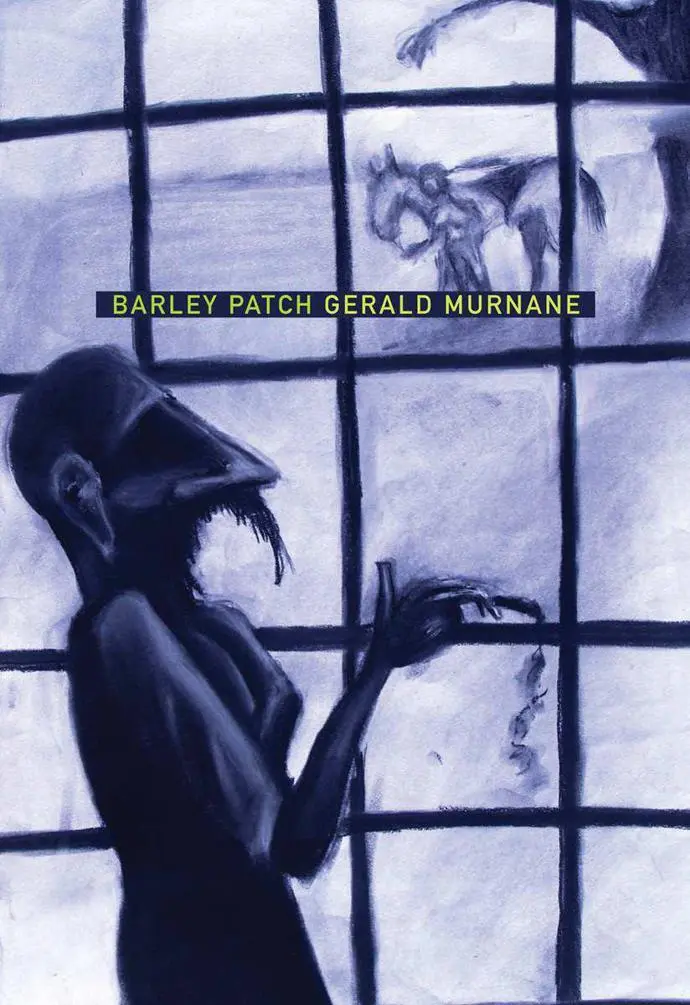
- Название:Barley Patch
- Автор:
- Издательство:Dalkey Archive Press
- Жанр:
- Год:2011
- ISBN:нет данных
- Рейтинг книги:5 / 5. Голосов: 1
-
Избранное:Добавить в избранное
- Отзывы:
-
Ваша оценка:
Barley Patch: краткое содержание, описание и аннотация
Предлагаем к чтению аннотацию, описание, краткое содержание или предисловие (зависит от того, что написал сам автор книги «Barley Patch»). Если вы не нашли необходимую информацию о книге — напишите в комментариях, мы постараемся отыскать её.
Barley Patch — читать онлайн бесплатно полную книгу (весь текст) целиком
Ниже представлен текст книги, разбитый по страницам. Система сохранения места последней прочитанной страницы, позволяет с удобством читать онлайн бесплатно книгу «Barley Patch», без необходимости каждый раз заново искать на чём Вы остановились. Поставьте закладку, и сможете в любой момент перейти на страницу, на которой закончили чтение.
Интервал:
Закладка:
Although the farm was without trees or scrub, it did not lack for birds, and the boy often observed them. While he was hiding in the swampy area, the boy heard from time to time the sounds of two sorts of bird that he thought of as his favourites. Twelve years later, when he had bought his first bird-book, he learned the scientific names of the two birds: anthus novaeseelandiae and alauda arvensis , but as a boy he knew the birds only as groundlark and skylark , although he did know that the groundlark was a native of Australia whereas the skylark had been introduced from England. The boy found it strange that these birds spent much time on the wing but made their nests on the ground. Even if tall trees had been growing on the farm, the groundlark and the skylark would still have made their nests on the ground, hidden among tussocks.
The boy in hiding looked out for the nests of groundlarks and skylarks whenever he was walking across a paddock on his father’s farm. He had found only one nest. It was a disused nest, but the boy had admired its snugness beneath the overhanging grass. He had left the nest in place, meaning to go back and to inspect it on later occasions, but he had never afterwards been able to find the nest. Later in the afternoon while the boy was in hiding, he began to pass the time by looking around the swampy area as though he had been one of his favourite birds in search of a site for a nest. Whenever he found such a site, he tried to make with his fist a snug hollow and then tried to imagine the nest and the eggs and the naked young.
The day when the boy went into hiding among the rushes was a Sunday. At the midday meal, which the family called dinner, the boy had sat quietly, as usual, among his parents and his older brothers and sisters. During the meal, the boy had heard much talk about a party of visitors that was going to arrive in the early afternoon. The head of the party was a brother of the boy’s mother and was well known to the boy, who was, of course, the man’s nephew. The uncle, as I intend to call him, had remained unmarried until almost his fortieth year and had worked at many different jobs in several states of Australia but had lately married. The uncle had married a widow, who was the mother of nine children. He had then taken up, as the saying went, a soldier-settlement block in a forested district inland from his brother-in-law’s coastal farm. During the meal mentioned above, the boy at the table had learned that his uncle was then on his way to visit the coastal farm and was bringing with him his wife and the four of her children who had still not left home. The boy had learned finally that all four children were daughters.
Early in the afternoon, one of the boy’s sisters had called out that she could see the visitors arriving at the front gate. The boy had then stood with his sisters on the front verandah and had watched the visitors approaching in their horse-and-buggy across the home paddock. The boy had made out the four persons with pale-coloured dresses and wide-brimmed straw hats who had recently become his step-cousins but had still not made out their faces when one of this sisters thrust an elbow against his ribs and told him that the youngest of the four was exactly the same age as himself. The boy had then gone into the kitchen and had filled a clean jam-jar with water and had set out for the swampy area at the far end of the farm. He had remained in hiding in that area during the rest of that afternoon and had not returned home until sunset, long after the visitors had gone.
The reader is surely waiting still to learn how the seemingly imagined events reported in the foregoing thirty-four paragraphs might be considered part of some seemingly imagined version of the narrator’s having been conceived.
I have read and forgotten, during the past forty and more years, countless statements by writers about the writing or the reading of fiction. A few statements I still remember, even if I cannot recall who first made the statements. Several times while I was writing the previous pages, I recalled the statement: fiction is the art of suggestion . This statement allows me to suppose that a person without imagination might still succeed in writing fiction so long as his or her reader is able to imagine.
The man who released the pheasants on the island became, a few years later, my father. A few years later again, when I was a small boy, he took my mother and me and my younger brother one Sunday afternoon from our rented weatherboard cottage in a south-eastern suburb of the largest city in northern Victoria to a building of two storeys in a north-western suburb of that city. We walked from our home to the centre of the city and then we travelled by electric tramway to the north-western suburb. We left the tram at the terminus and then we approached and entered the building of two storeys. Except for a few churches, this was the largest building that I could recall having entered.
I was impressed not so much by the size of the building as by the view that might have been available on clear days to a person occupying one or another of the rooms behind the north-facing windows that I had stared at while I walked through the front garden towards the building. I had never been further north than the city where I lived at that time, but I thought often of the districts that lay in that direction. I hoped that they consisted of mostly level grasslands and not the red sand or gravel that I saw sometimes in pictures of inland Australia.
My father had told me in the tram that the building of two storeys was a convent of an order of nuns founded especially to serve the country districts of Australia. (The teachers at my school were nuns but of an order founded in Ireland; nor had I ever seen the house where they lived.) The nun that we were going to meet would almost certainly have occupied a room on the upper storey. However, it would have been unthinkable for any male person, even a child as young as myself, to go beyond the front parlour of the convent.
In that front parlour, during our visit to the convent, which visit took place on some or another hot afternoon in the mid-1940s, my parents and my brother and I were received by a woman whose appearance I can hardly recall. Her brown robes covered all but her face, which appears to me now as no more than a pink blur. I understood that my father and the nun had known one another at some time before I had been born, and it came to me just now that my father had introduced her to me as someone who had been in her younger days a fearless rider of horses across paddocks and through swamps.
I remember no other visit to the convent, but for several years after our meeting with the nun my brother and I each received from her through the post at Christmas one of the cards called by Catholics of those days holy-cards. My family moved house twelve times between the mid-1940s and the last year of the 1950s, when I left home, and most of my keepsakes from those years were lost long ago. Just beyond the reach of my right arm, however, in the topmost drawer of my nearest filing cabinet, is an envelope containing the handful of holy-cards that I still possess. I have not looked at the cards for at least two years. When next I look at the cards they will all seem familiar, but as I write these words I am able to see in my mind only one of the cards. On the rear of that card is a greeting to me from my father’s nun-friend, written more than sixty years ago. On the front is a picture only. The card, so to call it, is unusual in that it has no pious message or prayer and not even a caption beneath the picture displayed on it. The picture shows a male child, perhaps five years of age, sitting with his chubby legs outstretched on the altar of a Catholic church. The child is leaning expectantly, so it seems, towards the tabernacle. (This was the domed container, about the size of a small milk-can, where was kept by day and by night in a gilt-lined ciborium the so-called Real Presence. The contents of the ciborium would have seemed to a non-believer a collection of small, circular white wafers. The nun and I and all believing Catholics considered each wafer to be the body of the personage that we usually named as Christ or Our Lord or, sometimes, Jesus . The domed container was made of bronze or of some such metal and was always draped on its outside with satin hangings the colour of which was determined by the liturgical season. The container had at its front a door that was always kept locked except during the few minutes when the priest celebrating Mass either took out the consecrated wafers — the Real Presence — for distribution to the faithful as Holy Communion, so called, or afterwards stored the remainder for the next Mass. As for the interior of the tabernacle, the average lay-person saw no more of it than he or she might have glimpsed if he or she had been kneeling in a front seat of a church and had happened to look towards the altar just when the priest was genuflecting out of respect for the Blessed Sacrament, so called, before he closed and locked the tabernacle door. Even I, during the two years when I served as an altar-boy at a parish church in an outer suburb of Melbourne in the early 1950s — even I, although I strained from only a few paces away, saw no more than the white curtain — was it of satin? silk? mere linen? — that hung in the doorway of the tabernacle. The priest reached through the pleated white cloth in order to take out or to put away the sacred vessel, so called, but the cloth seemed always to fall back into place a moment afterwards. I could only try to imagine the interior of the tabernacle, and whenever I thus tried I liked to suppose that the white curtain I often saw was only the outermost of a series of such hangings, so that the priest, whenever he pushed his fingers inwards towards the ciborium, felt his way through layer after layer of gently resisting plushness.) Even I, who was only a few years older than the pictured child, understood the message of the uncaptioned holy picture. At the same time, I understood the folly of the message.
Читать дальшеИнтервал:
Закладка:
Похожие книги на «Barley Patch»
Представляем Вашему вниманию похожие книги на «Barley Patch» списком для выбора. Мы отобрали схожую по названию и смыслу литературу в надежде предоставить читателям больше вариантов отыскать новые, интересные, ещё непрочитанные произведения.






Обсуждение, отзывы о книге «Barley Patch» и просто собственные мнения читателей. Оставьте ваши комментарии, напишите, что Вы думаете о произведении, его смысле или главных героях. Укажите что конкретно понравилось, а что нет, и почему Вы так считаете.