Gerald Murnane - Barley Patch
Здесь есть возможность читать онлайн «Gerald Murnane - Barley Patch» весь текст электронной книги совершенно бесплатно (целиком полную версию без сокращений). В некоторых случаях можно слушать аудио, скачать через торрент в формате fb2 и присутствует краткое содержание. Год выпуска: 2011, Издательство: Dalkey Archive Press, Жанр: Современная проза, на английском языке. Описание произведения, (предисловие) а так же отзывы посетителей доступны на портале библиотеки ЛибКат.
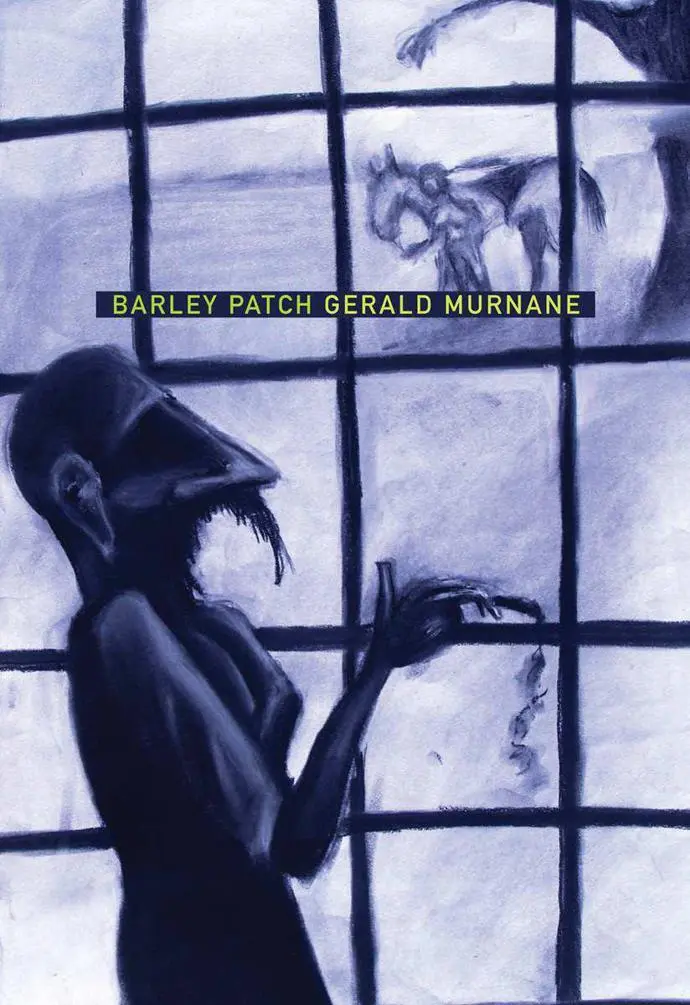
- Название:Barley Patch
- Автор:
- Издательство:Dalkey Archive Press
- Жанр:
- Год:2011
- ISBN:нет данных
- Рейтинг книги:5 / 5. Голосов: 1
-
Избранное:Добавить в избранное
- Отзывы:
-
Ваша оценка:
Barley Patch: краткое содержание, описание и аннотация
Предлагаем к чтению аннотацию, описание, краткое содержание или предисловие (зависит от того, что написал сам автор книги «Barley Patch»). Если вы не нашли необходимую информацию о книге — напишите в комментариях, мы постараемся отыскать её.
Barley Patch — читать онлайн бесплатно полную книгу (весь текст) целиком
Ниже представлен текст книги, разбитый по страницам. Система сохранения места последней прочитанной страницы, позволяет с удобством читать онлайн бесплатно книгу «Barley Patch», без необходимости каждый раз заново искать на чём Вы остановились. Поставьте закладку, и сможете в любой момент перейти на страницу, на которой закончили чтение.
Интервал:
Закладка:
The Patroness almost certainly made her first appearance in my mind at some time after I had received the holy-card mentioned often in the preceding paragraphs, but for as long as I went on trying to see her clearly in my mind, I understood that she was a personage or an entity in her own right and definitely not a memory in my mind of the pink face and the brown robes and the ingratiating presence of the nun that my father had taken me to visit in the north-facing building of two storeys. The Patroness, so I learned after much struggling to apprehend her image, was changeable in her attitudes towards me. Sometimes she seemed to assume the most forbidding of poses: she was the merest outline of a female; the transparent representation in ice or glass of the virgin-goddess of my religion or of my own mother as she might have been when my father had first courted her. Paradoxically, my patroness could seem closer to me during those periods when I was quite unable to visualise her than when I was repeatedly glimpsing her in my mind. I would give up for a few days all my straining after her image and would experience a period of calm and reassurance, as though what separated us was not distance but her prankish hiding behind this or that image in the foreground of my mind. Such tantalising periods would often end with my catching sight of a picture of a young woman in a magazine or even of an actual young woman in a street and then feeling for a few hours afterwards as though my patroness had thus arranged for me to be shown her approximate likeness.
My patroness would have first appeared in my mind, or would have first signalled her presence there, when I was puzzling over the picture of the boy who was leaning against the tabernacle. I am no more concerned nowadays, as I write this report, than was the boy who received the holy-card long ago with any such abstraction as character. I am only concerned to report that the boy felt from the beginning as though his patroness had come to him with the message that she herself, in certain moods, would not despise him and would not report him to his teachers or to the parish priest if it came to her knowledge that he had thought of touching the satin coverings of a tabernacle or even of trying its door. He even felt as though his patroness understood that his being interested in tabernacles was not an expression of his interest in the personages who presided over his religion. And at some unrecorded hour on an unrecorded but fateful day, the boy, in his daydreaming, felt as though he had succeeded in reporting to his patroness that he would have been no less eager to clamber up to a tabernacle and to prise open its door and to learn at last the details of its inner arrangements even if he had known beforehand that the place contained no sacred vessels, so called, and no Blessed Sacrament, so called.
After the boy had felt as reported in the previous paragraph, he felt for a few hours, or perhaps only for a few minutes, that his patroness understood him in such a way that he need hardly explain himself to her in words. He felt as though she understood that his wanting to see into tabernacles and such places had only ever arisen because he had lacked for a patroness and had been driven to look for such places as might console him for his lack. This feeling, of course, could not last, and in the daydreams that followed, he found in some or another church or convent a tabernacle that was no longer used for religious ceremonies but was still decorated and was still even locked. By some preposterous means, he found the key to the tabernacle. He opened the door, and if he had had more courage, he might have explored all of what lay behind it. But he did not so dare. All he dared to do was to leave in the dark space behind the outer curtains a written message to the patroness — or for some or another personage who might be disposed to read the message and to understand it.
It was never to be expected that any decisive event would take place: any event that might convince the boy of his patroness’s interest in him, let alone her indisputable existence in his mind or elsewhere. If he went back in his daydreams to the tabernacle where he had left the written message and if he found that the place behind the curtains was empty, could he be sure that she had understood the message? Had she even read the message? Had she merely removed it as a formality in the same way that priests of certain religions, so the boy would learn long afterwards, would consume in private the sacrificial food offered by the faithful to their non-existent gods?
While I was writing the previous paragraph, which is, of course, part of a work of fiction, I remembered for perhaps the first time in sixty years an event in the seventh or eighth year of the life of a person who can never be any more than a personage in the mind of any reader of this writing. I remembered my having found one afternoon on the way home from school in the largest city in northern Victoria a short tunnel of about the circumference of my index finger in the trunk of the tall grey-box tree that grew in the gravelly margin of the street outside the house where I lived with my brother and my parents. What was probably no more than a deep knothole seemed to me a phenomenon not to be ignored.
In the shabby rented house next to my parents’ hardly less shabby rented house was what my mother called a tribe of kids. The nearest to me in age of the tribe was a girl a year older than myself. If the reader of this paragraph could accept that certain fictional events may closely resemble remembered events, then I would be willing to report that the girl mentioned in the second sentence of this paragraph had the name Sylvia; that I sometimes felt urged to confide to Sylvia matters such as I would have confided to few other persons, and not just because I seemed to read from her face that she would have been a trustworthy confidant but also because the sound of her name when I pronounced it brought to my mind vague images of pleasant scenery; that I addressed to Sylvia, soon after I had discovered the short tunnel mentioned in the previous paragraph, a brief note telling her that I wanted to talk to her soon about certain matters; that I rolled the note into a cylindrical shape and pushed it as far as I could push it into the short tunnel in the grey-box tree but that I never afterwards informed the person addressed in the note of what I had done, although I often paused on my way past the tree and reached a finger into the tunnel, hoping to find that my message had been retrieved but always having my finger come up against a wad of unread paper. A day came, of course, when I walked past the tree without remembering my message; and when I learned, five years later, that silvus was the Latin for woodland , I had forgotten, so I thought, the name that had been at the head of my note and had forgotten even the grey-box tree.
I got hints sometimes of personages much more remote from me than my patroness but perhaps not wholly inaccessible if only I could have discovered the means of access. In a certain corner of a garden behind a spacious house that my father sometimes visited, I found a fish-pond full of shaggy water-plants and overhung by ferns. In another part of the same garden, an ornamental grapevine grew over the frosted-glass panels of a wall of the garage. Whenever I stood alone in these places, I felt nothing more subtle than a child’s anger and helplessness, and yet the cause of those feelings was too subtle almost for me to explain nowadays. I wanted to see or to hear or to touch some or another being who was able to comprehend and to enjoy and perhaps even to express in words what I was only vaguely aware of in those places. It seemed to me impossible that what I was caught up in consisted of no more than myself and a pool of water or panes of glass and a few garden-plants; I was one small part of a mystery that I myself could never hope to explicate. If only I had been granted as little as a glimpse in my mind of one of this remoter sort of personage, I would have devoted myself to her (she was much more likely to have been female than otherwise) as I never devoted myself during childhood or afterwards to the personages recommended to me by my teachers and priests.
Читать дальшеИнтервал:
Закладка:
Похожие книги на «Barley Patch»
Представляем Вашему вниманию похожие книги на «Barley Patch» списком для выбора. Мы отобрали схожую по названию и смыслу литературу в надежде предоставить читателям больше вариантов отыскать новые, интересные, ещё непрочитанные произведения.








Обсуждение, отзывы о книге «Barley Patch» и просто собственные мнения читателей. Оставьте ваши комментарии, напишите, что Вы думаете о произведении, его смысле или главных героях. Укажите что конкретно понравилось, а что нет, и почему Вы так считаете.