Boris Fishman - A Replacement Life
Здесь есть возможность читать онлайн «Boris Fishman - A Replacement Life» весь текст электронной книги совершенно бесплатно (целиком полную версию без сокращений). В некоторых случаях можно слушать аудио, скачать через торрент в формате fb2 и присутствует краткое содержание. Год выпуска: 2014, Издательство: Harper, Жанр: Современная проза, на английском языке. Описание произведения, (предисловие) а так же отзывы посетителей доступны на портале библиотеки ЛибКат.
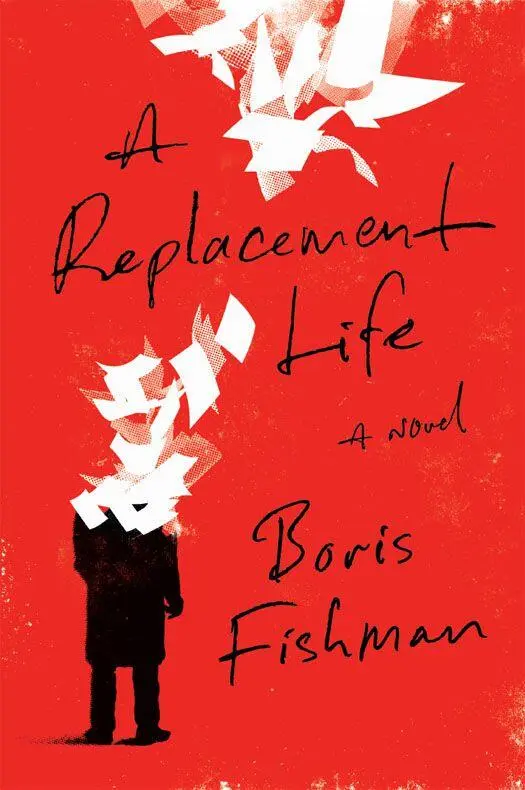
- Название:A Replacement Life
- Автор:
- Издательство:Harper
- Жанр:
- Год:2014
- ISBN:нет данных
- Рейтинг книги:3 / 5. Голосов: 1
-
Избранное:Добавить в избранное
- Отзывы:
-
Ваша оценка:
A Replacement Life: краткое содержание, описание и аннотация
Предлагаем к чтению аннотацию, описание, краткое содержание или предисловие (зависит от того, что написал сам автор книги «A Replacement Life»). Если вы не нашли необходимую информацию о книге — напишите в комментариях, мы постараемся отыскать её.
Yevgeny Gelman, grandfather of Slava Gelman, "didn't suffer in the exact way" he needs to have suffered to qualify for the restitution the German government has been paying out to Holocaust survivors. But suffer he has-as a Jew in the war; as a second-class citizen in the USSR; as an immigrant to America. So? Isn't his grandson a "writer"?
High-minded Slava wants to put all this immigrant scraping behind him. Only the American Dream is not panning out for him-Century, the legendary magazine where he works as a researcher, wants nothing greater from him. Slava wants to be a correct, blameless American-but he wants to be a lionized writer even more.
Slava's turn as the Forger of South Brooklyn teaches him that not every fact is the truth, and not every lie a falsehood. It takes more than law-abiding to become an American; it takes the same self-reinvention in which his people excel. Intoxicated and unmoored by his inventions, Slava risks exposure. Cornered, he commits an irrevocable act that finally grants him a sense of home in America, but not before collecting a price from his family.
A Replacement Life is a dark, moving, and beautifully written novel about family, honor, and justice.
A Replacement Life — читать онлайн бесплатно полную книгу (весь текст) целиком
Ниже представлен текст книги, разбитый по страницам. Система сохранения места последней прочитанной страницы, позволяет с удобством читать онлайн бесплатно книгу «A Replacement Life», без необходимости каждый раз заново искать на чём Вы остановились. Поставьте закладку, и сможете в любой момент перейти на страницу, на которой закончили чтение.
Интервал:
Закладка:
She laughed through her nose, shy and grateful. She took his arm, and he let it be held. “A necklace,” she said. “A necklace of stars.”
“White cherries.”
“Rice grains.”
“Rice grains in ink.”
“Tonight we are pleased to offer rice grains in squid ink.”
“Only the night sky has freckles.”
“The biopsy showed a profusion of light.”
“A celestial rash — heavenly spores.”
“Ew.”
“A placenta.”
“Who’s the father?”
“Only Jerry Springer can say.”
“And the children? The Seven Sisters?”
“No, the children are us.”
They kissed.
11
THURSDAY, AUGUST 24, 2006
The Rudinskys’ two-story brick slab squatted next to a disheveled pillbox belonging to Orthodox Jews. Half a dozen side-locked children in matching gabardine outfits spun around the singed grass on their side of the lawn. The Rudinskys’ half was treacherous with lawn product. To the shrieking children, the young man wending his way through their game was as invisible as a spirit.
Slava’s knock was answered with thundering feet, and then Vera swung open the door. He wore a miserable expression in deference to the awkwardness of their last encounter, but she issued a broad, bland smile. She wore a pair of velour shorts stamped with Hello Kitty characters. In the distance, past an ornate Persian-style runner and a lacquered flamingo sprouting a spume of pink tendrils, a large television jumped with Russian pop stars.
“Ver-ka!” boomed from upstairs. “Who is it?”
“Sla-va!” she shouted back.
Slava squeezed out a smile and stepped inside, Vera’s bare soles slapping the tile, tiny prints from the television remote on her thigh. Her legs had yet to slough off their adolescent plumpness. He felt a momentary sting — she hadn’t bothered to dress up. They stood in clumsy silence at the foot of the stairs. In the living room, chartreuse and puce vases of Bohemian crystal trembled in tune to the permed crooners thrusting on television. Finally, the upstairs voice made its heavy way down: Aunt Lyuba. Slava felt a second sting at being handed off to the adult. After all, it was Vera who had called and asked him to come, not that he hadn’t thought about picking up the phone himself many times.
“Slava!” Aunt Lyuba reached the first-floor landing and embraced Slava with soft, bunching arms. He answered, his arms reaching around the puckered bun of her. They stood grasping each other as if he’d just come home from the war. From Aunt Lyuba’s grip, Slava watched Vera steal off to the living room.
“Did you see my God-fearers next door?” Lyuba said, releasing him. “One year and three months since we bought this house, do you think that woman — Malka, Schmalka — has come by to say ‘Hello, welcome to the neighborhood’? I made the mistake of going over there once — I needed flour! Her face turned the color of snow. She just ferries that army of believers day and night, till Moshe comes home. Then you don’t see her. I’ve been asking Garik to please go over there; those children trample my lawn every day. But I have to do everything myself.”
Aunt Lyuba took Slava by the hand and strode into the kitchen. “You saw our Vera?” she said. “Darling?” she called out brutally into the living room. Vera peeked out. “ There she is.” Lyuba’s voice became tender again. “Not the girl you remember, eh?” Vera blushed.
Lyuba instructed Slava to sit down at the rose-colored banquette around the kitchen table and went shoulder-deep into the refrigerator, her rump struck outward. Vacuum-sealed ham emerged, smoked chicken thighs, a bowl of beet-colored vegetable vinaigrette. “Slava, you are half a meter taller than I saw you last,” she said from inside. “Tell me how things are. I haven’t seen you in years.”
“Nothing, Aunt Lyuba,” he said. “I work at a magazine—”
“Well, we’re making do,” she interrupted him. “Garik’s driving the cab. He wanted to start a limousine company”—she quit shuffling in the fridge to calibrate how much Slava knew about the argument, though only her rear end could judge—“but it didn’t work out. He’s a geologist by training, you know. Used to these large open spaces, rocks bigger than a house. Now he’s twelve hours a day in that box of a taxi. You should see his eyes when he comes home.” She closed the fridge and turned around. “You know what my husband the geologist does now? He sings for his fares. For extra tips. Russian war songs. He was chief geologist, State Institute of Earth Materials, Minsk.” She pointed to the cramped square of the backyard, where stones with pretty striations loomed in various sizes like bird droppings. “One day he got a ticket because he was lugging home that chunk of obsidian. God knows where he got it. Isn’t that a beautiful name, obsidian? It’s like an Armenian name. Vera!”
Vera reappeared in the doorway. “Yes, sweet Mother.”
“You have to get dressed,” Lyuba said. Then, to Slava: “Go up with her, Slavchik.”
“Up with her where?” he said.
“Well, don’t go in the room, Slava, you seducer,” Aunt Lyuba laughed, baring her teeth in satisfaction. “Stand outside the door and talk to her while she’s changing. You young people have a lot of catching up to do.”
“Leopard-print or the jean skirt with the blouse with the ruffles?” Vera said from the doorway.
“Let Slava decide,” Lyuba said.
He followed Vera up the stairs, the skin of her thighs near his nose. “It’s nice to see you again,” he said, to say something.
“You, too,” she said absentmindedly.
“I should let you get dressed,” he said. “We’ll talk downstairs.”
“No, it’s okay,” she insisted. “Talk to me.” She walked into a room decorated with a girl’s hearts and pinks. She jumped onto the bed, one leg folded under the other, and shelved her chin on her knee. In front of her was a binder filled with costume-party outfits: sailors, maids, prisoners. She motioned him inside. “Talk to me for two minutes, and then I’ll get dressed.”
He asked about the binder.
“Work.” She swatted the air. “Big event on Monday. So, leopard-print or jean skirt?” She leaped off the bed and rifled through a hundred hangers. A mound of shoes collapsed around her ankles. Kitten heels, stilettos, flats, pumps, platforms, sandals, boots, knee-high and ankle.
“But you don’t live with them,” he croaked, thinking of the place where Vova the Cruiserweight had dropped her off.
“What? Speak up.” The mass of clothes was like an enchanted wood: It killed sound.
“You live here?” he yelled.
“No, I got that place,” she said.
“Why did you call?” Slava shouted. The closet was as large as the rest of the room.
Her round face peeked out of the wardrobe. “What do you mean? We needed your help.” Slava saw tiny Vera’s eyebrows sitting together as she peered at Slava tracing out prices for the paper scallions and plums of their childhood supermarket. How odd that her parents recommended him — in his memory, she was the serious one. His hands were always clammy when she gave him an assignment. But she could be playful as well. One day on their way to the market, she found an opera record, a plump, heavily rouged sufferer weeping on the cover. Vera played it over and over, vocalizing soundlessly into his ear as the singers roared on their thirdhand stereo. Himself, he wasn’t enchanted by the music, but he loved watching her.
After coercing an opinion from Slava, Vera settled on the leopard-print dress. She squeezed into it while he stood outside her door. Her heels sank into the furry carpet as she made her way downstairs ahead of Slava, his eyes fixed on the geometrically essential sphere of her ass. Like a gentleman, he had insisted that she take the stairs first.
Читать дальшеИнтервал:
Закладка:
Похожие книги на «A Replacement Life»
Представляем Вашему вниманию похожие книги на «A Replacement Life» списком для выбора. Мы отобрали схожую по названию и смыслу литературу в надежде предоставить читателям больше вариантов отыскать новые, интересные, ещё непрочитанные произведения.










Обсуждение, отзывы о книге «A Replacement Life» и просто собственные мнения читателей. Оставьте ваши комментарии, напишите, что Вы думаете о произведении, его смысле или главных героях. Укажите что конкретно понравилось, а что нет, и почему Вы так считаете.