Boris Fishman - A Replacement Life
Здесь есть возможность читать онлайн «Boris Fishman - A Replacement Life» весь текст электронной книги совершенно бесплатно (целиком полную версию без сокращений). В некоторых случаях можно слушать аудио, скачать через торрент в формате fb2 и присутствует краткое содержание. Год выпуска: 2014, Издательство: Harper, Жанр: Современная проза, на английском языке. Описание произведения, (предисловие) а так же отзывы посетителей доступны на портале библиотеки ЛибКат.
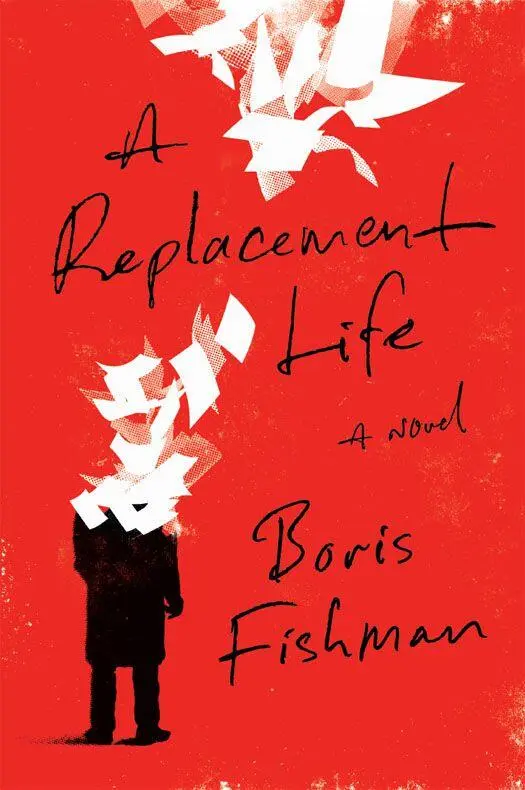
- Название:A Replacement Life
- Автор:
- Издательство:Harper
- Жанр:
- Год:2014
- ISBN:нет данных
- Рейтинг книги:3 / 5. Голосов: 1
-
Избранное:Добавить в избранное
- Отзывы:
-
Ваша оценка:
A Replacement Life: краткое содержание, описание и аннотация
Предлагаем к чтению аннотацию, описание, краткое содержание или предисловие (зависит от того, что написал сам автор книги «A Replacement Life»). Если вы не нашли необходимую информацию о книге — напишите в комментариях, мы постараемся отыскать её.
Yevgeny Gelman, grandfather of Slava Gelman, "didn't suffer in the exact way" he needs to have suffered to qualify for the restitution the German government has been paying out to Holocaust survivors. But suffer he has-as a Jew in the war; as a second-class citizen in the USSR; as an immigrant to America. So? Isn't his grandson a "writer"?
High-minded Slava wants to put all this immigrant scraping behind him. Only the American Dream is not panning out for him-Century, the legendary magazine where he works as a researcher, wants nothing greater from him. Slava wants to be a correct, blameless American-but he wants to be a lionized writer even more.
Slava's turn as the Forger of South Brooklyn teaches him that not every fact is the truth, and not every lie a falsehood. It takes more than law-abiding to become an American; it takes the same self-reinvention in which his people excel. Intoxicated and unmoored by his inventions, Slava risks exposure. Cornered, he commits an irrevocable act that finally grants him a sense of home in America, but not before collecting a price from his family.
A Replacement Life is a dark, moving, and beautifully written novel about family, honor, and justice.
A Replacement Life — читать онлайн бесплатно полную книгу (весь текст) целиком
Ниже представлен текст книги, разбитый по страницам. Система сохранения места последней прочитанной страницы, позволяет с удобством читать онлайн бесплатно книгу «A Replacement Life», без необходимости каждый раз заново искать на чём Вы остановились. Поставьте закладку, и сможете в любой момент перейти на страницу, на которой закончили чтение.
Интервал:
Закладка:
If ever Slava returned from Brooklyn before she was asleep, their late dinner together often ended with her heading out for a short walk. “To where?” he would say. “I just got here.” She never reminded him that she had spent hours waiting for him. “Just a little one,” she would say with a smile, and off she would go, her head already in the street. She would return a half hour later, coffee in hand — it didn’t keep her up — or a newspaper, or bananas, or nothing. Once she came back with a small painting that a late-night seller had insisted she take because he wanted to know that she had something of his. It depicted, in bright, tropical colors, a pigtailed girl jumping over a puddle.
Slava called for her from the couch one evening, her hands on the shoelaces of her sneakers. “I want to come with you,” he said guiltily. “Wherever you’re going.”
“Just to the park and back.”
“I’d like to come with.”
“Of course you can,” she said. “I didn’t know you wanted to.”
“Why would you think that?” he said.
“You don’t have to do what I do.”
“Don’t we?”
“Slava, let’s not argue. Do you want to come?” She paused, a knee on the floor, a sneaker untied. Her face brightened. “Can I take you somewhere? I think you’d love it.”
“To the park?”
“You’ll see. We need a flashlight.”
“A flashlight?”
“Just come with,” she said.
They walked east. He took her hand in his, and she answered: They were going to try. The streets of the Upper West Side were falling quiet with the temporary exception of Broadway. They crossed Amsterdam, then Columbus — they were going to Central Park. But when they reached its edge, she kept going: in, past the perimeter.
“In the dark, Arianna?” he said.
“Don’t be a codger.”
He tried to erase his discomfort. “Are we uncovering your high school time capsule?”
“You’d have to go to Brentwood School for that. The closest right-end bleacher if you have your back to the school.” She marched through the darkness as if it were daylight, twigs snapping under her sneakers.
Slava looked longingly at a vanishing streetlight. “What did you put there?” he said, his shoes crunching through Walden.
“A pack of Marlboro Lights. I can’t wait to have one when I dig them out in twenty years.” It wasn’t entirely dark, due to occasional streetlights, but Arianna was maneuvering away from the lights, looking for tree cover. “Do you know why I love the park?” she said. “It’s the only place in Manhattan with no street signs. This could be Eighty-Fifth or Ninety-Fifth. Now they’ve started putting maps on the lampposts, telling you where you are. I want to rip them down.”
Slava looked up at the trunk of a nearby streetlight: There it was, in laminate. Following impulse — he wanted to do something heroic for her — he sprinted toward the light and wedged the map out of the holder.
“Slava!” she yelled. “Put it back.” He knew the expression — an awkward surprise — even at a distance, and wedged the map back. They walked in silence the rest of the way. Finally, Arianna paused at the edge of a stand of oaks, the closest light three hundred yards behind them. “This is good as it’s going to get,” she said. “I haven’t done this in a while.”
“Could I be allowed in on the plan now?” he said.
She faced him. “Another thing about the park — the homeless have the best view in New York.” She pointed at Central Park West, whose peaks glowed dimly beyond the perimeter. “And us,” she added.
They walked through the oaks into a clearing, concealed from a bike path by a series of boulders. The grass sloped gently. Slava looked around uneasily.
“No, up,” she said.
He followed her eyes. It took him a moment to understand what she wanted him to see, but there they were, as nowhere else in the city: stars. Not many, and the ones you could make out were feeble, occasionally erased by a passing wisp of cloud, but then they emerged once more, charming in their earnest junior performance, like children playing at adulthood. Arianna was beaming — they were her children.
“You come here by yourself at night?” Slava said, incredulous.
“When I was young and stupid enough to walk in Central Park alone at night,” she said. “I haven’t done this in years. Come on the grass with me.”
Slava looked around. They hadn’t seen a soul since entering the park. His eyes were adjusting, the darkness turning from black to blue. Nervously, he settled next to her. The grass was careful, the mowers of the Parks Department reaching even this far.
“When I was little,” she said, “my father would take me in the backyard, we would lie down just like this, and he would make me find shapes in the clouds. A dinosaur, a briefcase, an apology. Or we would go to the beach and I would tell stories about the waves. The sea is a tongue spitting out seeds. The sea is a head rushing with thoughts. The first time I wrote a poem, it was from one of those days.”
“What does an apology look like?”
“Gnarled over. Hunched.”
“You miss him,” he said.
“He’s different now. He would be embarrassed to go look at waves with his daughter.”
“Why?”
“I don’t know. They don’t tell you why they change.”
They listened to the city hum somewhere out there, past the line of light that waited beyond the edge of the park. Waited like a bad thought, Slava thought, remembering Oleg, and smiled. In his sci-fi story, Oleg had unconsciously melded the Odysseus story and the failed 1991 anti-Gorbachev putsch, in which the leader of the unfree world learned, upon reaching his vacation site in the Crimea, that power had been seized in the capital. By the time Oleg’s hero, sleekly but rustically named John Strong in concert with the technological but agrarian future, had reached his mind destination of Usuria (a bizarre blend of “usury” and Illyria — Slava was getting an analyst’s glimpse into the writerly mind), the codes had been rewritten wherever they were written, temporarily suspending all mind travel and stranding in-transit “expeditioners” like John Strong. Slava had sent Oleg edits and, as promised, one of the false letters. Oleg sent back a revision, a second story about the manager of a Japanese café franchise on the moon, and an unshy suggestion on how to improve the Holocaust letter, amusing Slava. Fifteen miles south of Central Park, there labored newfound kin to Slava, a secret operative.
“They say that if you can make out the Seventh Sister, the tiniest one,” she said, “you have twenty-twenty vision. Up there.” Arianna extended a finger, but his vision was not twenty-twenty. “After Atlas had to carry the world, Zeus turned his seven daughters into stars so they could keep him company.”
Slava propped himself on an elbow, as if to get a better look, but really he was studying her. In sneakers, gray tights, and a hoodie, somehow cold even in this heat, she was more beautiful than a woman dressed up. Despite the confusing tenseness between them, this fact presented itself without reservations. He wished to embrace her, but he couldn’t bring himself to do it. If he kept his distance, at least he was being true to the fact of his betrayal, not pretending to give while he withheld so much.
He flopped back onto the grass and glared at the stars — where else to look? They would disappear as soon as he and Arianna reentered the light, though they would remain up there, something you had to believe without evidence.
“Saltshaker,” he said.
“Hm?” She looked over at him.
“The stars, like somebody shook out a saltshaker.” He looked back. “Your turn.”
Читать дальшеИнтервал:
Закладка:
Похожие книги на «A Replacement Life»
Представляем Вашему вниманию похожие книги на «A Replacement Life» списком для выбора. Мы отобрали схожую по названию и смыслу литературу в надежде предоставить читателям больше вариантов отыскать новые, интересные, ещё непрочитанные произведения.








Обсуждение, отзывы о книге «A Replacement Life» и просто собственные мнения читателей. Оставьте ваши комментарии, напишите, что Вы думаете о произведении, его смысле или главных героях. Укажите что конкретно понравилось, а что нет, и почему Вы так считаете.