Boris Fishman - A Replacement Life
Здесь есть возможность читать онлайн «Boris Fishman - A Replacement Life» весь текст электронной книги совершенно бесплатно (целиком полную версию без сокращений). В некоторых случаях можно слушать аудио, скачать через торрент в формате fb2 и присутствует краткое содержание. Год выпуска: 2014, Издательство: Harper, Жанр: Современная проза, на английском языке. Описание произведения, (предисловие) а так же отзывы посетителей доступны на портале библиотеки ЛибКат.
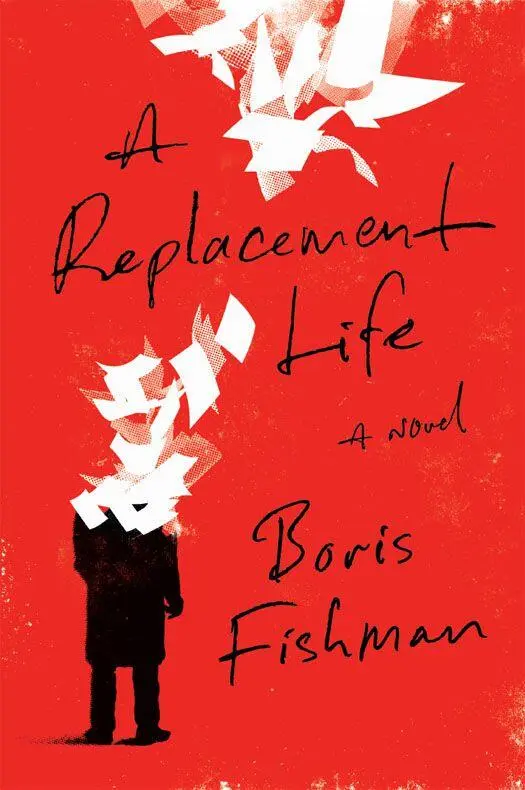
- Название:A Replacement Life
- Автор:
- Издательство:Harper
- Жанр:
- Год:2014
- ISBN:нет данных
- Рейтинг книги:3 / 5. Голосов: 1
-
Избранное:Добавить в избранное
- Отзывы:
-
Ваша оценка:
A Replacement Life: краткое содержание, описание и аннотация
Предлагаем к чтению аннотацию, описание, краткое содержание или предисловие (зависит от того, что написал сам автор книги «A Replacement Life»). Если вы не нашли необходимую информацию о книге — напишите в комментариях, мы постараемся отыскать её.
Yevgeny Gelman, grandfather of Slava Gelman, "didn't suffer in the exact way" he needs to have suffered to qualify for the restitution the German government has been paying out to Holocaust survivors. But suffer he has-as a Jew in the war; as a second-class citizen in the USSR; as an immigrant to America. So? Isn't his grandson a "writer"?
High-minded Slava wants to put all this immigrant scraping behind him. Only the American Dream is not panning out for him-Century, the legendary magazine where he works as a researcher, wants nothing greater from him. Slava wants to be a correct, blameless American-but he wants to be a lionized writer even more.
Slava's turn as the Forger of South Brooklyn teaches him that not every fact is the truth, and not every lie a falsehood. It takes more than law-abiding to become an American; it takes the same self-reinvention in which his people excel. Intoxicated and unmoored by his inventions, Slava risks exposure. Cornered, he commits an irrevocable act that finally grants him a sense of home in America, but not before collecting a price from his family.
A Replacement Life is a dark, moving, and beautifully written novel about family, honor, and justice.
A Replacement Life — читать онлайн бесплатно полную книгу (весь текст) целиком
Ниже представлен текст книги, разбитый по страницам. Система сохранения места последней прочитанной страницы, позволяет с удобством читать онлайн бесплатно книгу «A Replacement Life», без необходимости каждый раз заново искать на чём Вы остановились. Поставьте закладку, и сможете в любой момент перейти на страницу, на которой закончили чтение.
Интервал:
Закладка:
Having arrived at that evening’s home, Slava would be feted and fed, interrogated about his romantic situation (its inconclusiveness was then mourned over), and bitched to about his grandfather. He would steer the conversation back to the war, the endless war. The assembled — the families before him appeared in full — sat before him as before a judge, the children grasping the mottled hands of the old ones while listening to stories they never had the temerity to prod for themselves. The American dollar would force out the stories that love and consideration had elected not to elicit. Slava, working in concert with the philosophy of the nation that had taken them in — good works as the by-product of self-interest — was able to give the descendants at the table, the children and grandchildren, the gift of knowing, at last, the unknown corners of their forebears, all because the forebears stood to make money. How cheaply they fell — the heart’s greatest terrors for a bushel of euros. Slava wasn’t a judge: He was a middleman, a loan shark, an alchemist — he turned lies into facts, words into money, silence into knowledge at last.
Arianna had spoken of New York as a secret in her first months here. Now Slava had one of his own. It was a demotic secret. It didn’t concern a glorious city. The sharers of his secret were ugly and without taste, uninitiated and crude. Lumpy and bowed, foul-breathed, colored like eggplants, hairy and hairless. But he was writing every night — for a publication no one would see, a readership of no more than a handful, whomever the Claims Conference used to evaluate applications. But the knowledge that someone, somewhere , at a time unknown to him (Slava was brushing his teeth, or sitting on the toilet, or absentmindedly heating his lunch), was reading something he had written was erotic to him. Yes, it gave him arousal. He thought of Beau and Arch Dyson with indifference. So what if they didn’t know; he knew. Every word he put down, every letter he finished, he imagined walking into their offices and dropping them in a pile at their feet. He notched every letter—#7, #11, #20—like a don juan women on his bedpost.
The families didn’t want to let him go. They begged him to stay long after the work was finished. Ordinarily martyrs — a rain had soaked only their clothesline, the wafers increased in cost only at the store where they bought — finally they had been authorized (no, required) to speak, which lowered their guard and left them hollering recklessly, as if there were not inquiring neighbors one wall over. It fell to Slava — half listening to what those gathered around him had actually gone through during the war so that he could pillage it later for the oddly specific details he had come to learn made a narrative feel authentic —to make sure the windows were closed, and once he even tapped on a wall to test its thickness.
One night, returning to the Manhattan-bound subway from the Dolins in Gravesend (stuffed carp, herring under a fur coat, meat under aspic), Slava sensed that he was being followed. At first he brushed off the suspicion, but no, it was happening. Every turn he took, the leather jacket took with him. Slava took an unnecessary turn; so did the leather jacket. There was no one else on the late street, only televisions flickering behind curtains and the baths at Neck Road sending out steam from the vents. Slava couldn’t turn around and get a fair look without making himself obvious. His heart beat unhappily. He’d known this would happen, except it hadn’t happened, so maybe it wouldn’t. The map of those apartments for which he had written letters — they were dots in a sea of letterless souls, souls who wanted to know what 4C was getting and why. But why would he be followed to the subway instead of from? Wouldn’t they want to know whose house he was going to?
Finally, turning a needless corner, Slava ventured a peek. It was a boy, all of eighteen. Startled, Slava stopped without planning to, giving himself away. The boy stopped, too. They watched each other from half a block away, Slava’s fingers losing circulation from the bags of food with which he was always sent home, which he had to dump in some sufficiently distant garbage can because he couldn’t very well bring them to Arianna’s, though it broke his heart to throw out food. Not knowing his own plan, Slava spun on his heel and began to march toward the boy.
The boy didn’t run. Slava stopped three feet away. In the dim light, he saw a fuzz bristling above the young lips. The boy’s hands were stuffed into the jacket — what did he hold there?
“What do you want?” Slava barked in Russian.
The boy leaped back. He didn’t expect Russian. He hesitated.
Slava cocked his head, demanding an answer. He felt a heady lack of uncertainty. Let them come at me, he thought. But then his sense returned. His pursuer would be an eighteen-year-old boy?
“What is it?” Slava said warily.
“Do you write the letters?” the boy said.
“Says who,” Slava said.
“Down the hallway,” he said. “They said you were coming.”
Slava cursed the Dolins under his breath. When it came to their own secrets, a crowbar wouldn’t do it, but in other situations, they were guileless as schoolchildren.
“What is this, a bribe?” Slava said. “You don’t have proof.” He tried to manufacture a sneer but didn’t believe himself. One didn’t need proof to at least call the Claims Conference.
“A bribe?” the boy said, worried. “What for?”
“It doesn’t matter,” Slava said quickly.
The boy looked around and reached into the back pocket of his jeans. Slava stiffened, which only increased the boy’s nervousness. He strode toward Slava and thrust a stapled printout, folded in half, into his free hand.
Oleg Smeshko, the title page said. Slava flipped through the rest — twenty pages or so. The font was large and baroque. Slava saw a sentence he did not like: “His brain thought it would explode.” Then something with more promise: “The smoke curled from his cigarette like silver panty hose.”
“Can you read it?” Oleg said, studying the pavement.
“You wrote this?” Slava said.
Oleg nodded.
“Why didn’t you just knock on the door when I was there?” Slava said.
“They would tell my parents,” Oleg said. He rubbed a sleeve under his nose.
Slava looked again at the story. The bags in his other hand were a stone, though they produced a not unpleasant scent: rolls, chicken, pickles. It would all go in the trash. “You’re not hungry, are you?” Slava said.
“Hungry?” Oleg said, blinking. “I can eat at home.”
“Let’s sit down,” Slava said.
Oleg looked around. “Where?”
“On the curb.” Slava pointed. “Are they going to wonder where you are?”
“No, they think I went to my friend’s.”
“Have you called the friend and told him to cover for you?”
Oleg frowned and shook his head.
“Here,” Slava extended his cell phone.
While Oleg dialed, Slava sat down on the edge of the pavement and looked at the story. “Expensive Trips Nowhere” was the title; that could stay. Slava wrenched a scallion roll from one of his bags, a pickle from a plastic container, then a shred of chicken, stuffed it all together, and handed it to Oleg when he got off the phone.
“You’re not eating?” Oleg said.
“Not for several days,” Slava said. “They kill your body with this food. I was five pounds less before I started — you know.”
“Is it hard?” Oleg said, biting cautiously.
Slava looked over at him. “The letters? It’s hard to figure out what to write. But the writing makes up for it.”
“Do you get paid?” Oleg said, chewing.
Читать дальшеИнтервал:
Закладка:
Похожие книги на «A Replacement Life»
Представляем Вашему вниманию похожие книги на «A Replacement Life» списком для выбора. Мы отобрали схожую по названию и смыслу литературу в надежде предоставить читателям больше вариантов отыскать новые, интересные, ещё непрочитанные произведения.









Обсуждение, отзывы о книге «A Replacement Life» и просто собственные мнения читателей. Оставьте ваши комментарии, напишите, что Вы думаете о произведении, его смысле или главных героях. Укажите что конкретно понравилось, а что нет, и почему Вы так считаете.