Nasser Amjad - Land of No Rain
Здесь есть возможность читать онлайн «Nasser Amjad - Land of No Rain» весь текст электронной книги совершенно бесплатно (целиком полную версию без сокращений). В некоторых случаях можно слушать аудио, скачать через торрент в формате fb2 и присутствует краткое содержание. Год выпуска: 2014, Издательство: Bloomsbury Qatar Foundation Publishing, Жанр: Современная проза, на английском языке. Описание произведения, (предисловие) а так же отзывы посетителей доступны на портале библиотеки ЛибКат.
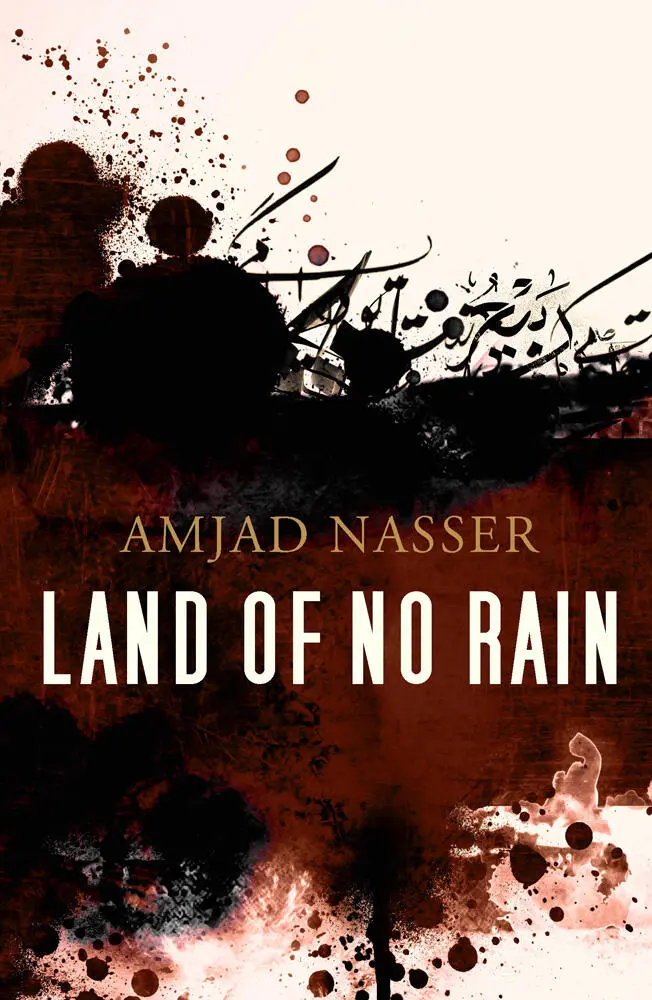
- Название:Land of No Rain
- Автор:
- Издательство:Bloomsbury Qatar Foundation Publishing
- Жанр:
- Год:2014
- ISBN:нет данных
- Рейтинг книги:4 / 5. Голосов: 1
-
Избранное:Добавить в избранное
- Отзывы:
-
Ваша оценка:
Land of No Rain: краткое содержание, описание и аннотация
Предлагаем к чтению аннотацию, описание, краткое содержание или предисловие (зависит от того, что написал сам автор книги «Land of No Rain»). Если вы не нашли необходимую информацию о книге — напишите в комментариях, мы постараемся отыскать её.
Land of No Rain — читать онлайн бесплатно полную книгу (весь текст) целиком
Ниже представлен текст книги, разбитый по страницам. Система сохранения места последней прочитанной страницы, позволяет с удобством читать онлайн бесплатно книгу «Land of No Rain», без необходимости каждый раз заново искать на чём Вы остановились. Поставьте закладку, и сможете в любой момент перейти на страницу, на которой закончили чтение.
Интервал:
Закладка:
When it started to take shape in your mind, you suppressed a question that countered what Mahmoud had said: ‘Did you come to this city in defeat?’ Invasion never occurred to you, neither in Mahmoud’s style nor in the style of the fictional hero. What kind of invasion would that be? But why did you think about defeat? Your damned friend planted a seed of doubt in you. Whenever you dodged the question of invasion and defeat, it stuck its head up again. Your old friend’s tasteless question and his embarrassing gesture towards the girls who were standing in front of the fast-food restaurant, oblivious of your existence, stirred an old question inside you, a question you avoided as usual by prevarication and obfuscation. It was the question that had started to nag like a whisper in your ear, faint but persistent, ever since you left the City of Siege and War. ‘What went wrong?’ it asked.
Mahmoud kept talking but you weren’t following. He put his hand on your shoulder, as he used to do, and you moved your shoulder aside, out of his way. In the City of Red and Grey a gesture like that might be misinterpreted, because the men in this city do not touch each other. But that’s not why you avoided his clammy hand. You were thinking back to the many days you had spent together since the two of you sat together at school in Hamiya, about how the two of you became caught up in underground work, and the dangers you faced in the City of Siege and War, where you lost six of your comrades. Apparently he had to ask you how you were several times before you noticed what he was saying. ‘OK. Whatever,’ you answered. It’s strange how your feelings towards him didn’t seem to have changed. But the way he spoke with such exaggerated confidence and gave the impression that nothing serious had happened to damage your relationship made you feel more detached. He seemed to be trying to get the better of you, and that irritated you further.
Someone who has lived through poverty and other ordeals, and has kept the flame alive through raging storms, would have a right to such self-confidence. That’s the natural superiority of the moral high ground.
Mahmoud spoke fluently as usual, without embarrassment, as if nothing had happened. Your indifference and your dry tone had no effect on the flow of his words. ‘I know you see me as a defeatist or perhaps an opportunist,’ he said, ‘but that doesn’t change what happened in any way. Besides, the world has changed. The whole world has changed around us. Walls have come down, ideologies have collapsed and great powers have fallen. The old dangers have vanished, replaced by new dangers that are more frightening and more complicated. Don’t you know that?’ ‘I know what I know,’ you said. Then, as if speaking to yourself, you added, ‘That’s not the problem. The problem is that we left home together and pledged to stick together through thick and thin. You were not just a senior member of the Organisation, but also my friend. What you did was not just a betrayal of our cause, whatever setbacks it may have faced, but also of our friendship. That’s what stung.’ He said you were still utopian, and that his friendship with you had nothing to do with what he had done. There was no contradiction between the two. He said that things were very different now, not just in the world but back home too. He spoke about the importance of change from the inside, about the futility of travelling only for the sake of the journey, because the journey has to end somewhere specific, as he put it. He said that you wanted the journey for itself, more than the destination. In fact you may be addicted to it. When he said the last words you thought of that line by the famous poet, to the effect that it is better to travel hopefully than to arrive. You shook your head to dismiss the idea. Mahmoud thought you were objecting to what he had said. He looked you straight in the eye and said, ‘Look. The Grandson is dead, and with his death a whole era is over. There’s a new commander who’s making reforms and opening the country up, whether from conviction or to keep pace with the changes taking place in the world, it doesn’t matter. The important thing is that the iron fist is a thing of the past. It can’t go on. The Organisation itself, at home, has changed its discourse and become more aware of the danger of the obscurantist tide, which hasn’t been defeated yet, despite the blows the security forces have inflicted on it. Those reactionaries with beards haven’t been uprooted yet. They’re still influential in the street, trying to bully everyone else. Posing as spokesmen for God and his laws and working to set up their theocracy through violence and by denouncing others as infidels. I don’t need to convince you that they’re hostile to everything you believe in: modernity, progress, freedom of speech and belief, even drinking a glass of beer. You know that and more.’ With one-tenth of your old comrade’s enthusiasm and fluency, you said, ‘I’m not speaking for anyone else now, not even for the Organisation, but evil is evil, with a long beard or with a close shave. I don’t have to choose between the lesser of two evils for the sake of a glass of beer. Hamiya will not change just because there are a few former leftists in government. Anyone who understands the nature of the regime knows it won’t change, because if it changed it wouldn’t be what it is. It would be something else. In fact the ones who’ll change are the ones who think they can change it.’ Then, quoting a concept he must have known, you told him that to accept reality just by interpreting it differently doesn’t mean changing it, but rather legitimising it. He didn’t respond. Had he perhaps forgotten the Organisation’s ideological training? Instead he gave you a meaningful look and said, ‘Do you think it’s a coincidence that the anthology includes poems by Younis al-Khattat? Haven’t you noticed there aren’t any poems by Khaled Rustum, Hamiya’s official poet?’ You didn’t respond because you really hadn’t noticed whether Rustum’s name was there or not, and because you had never considered him a poet anyway, although the radio station was always trumpeting his pretentious and sycophantic poems. Mahmoud clamped his large hand on your hand, which was lying on the table, and you couldn’t pull it back. Then, as if whispering a secret, he added, ‘It isn’t a coincidence. It was me who included Younis al-Khattat’s poems and left out those of Rustum, who is now begging meekly in the corridors of official institutes, reminding everyone of his work writing poems in praise of the Grandson. Do you know why?’ he asked. Without waiting for an answer, he added, ‘Not because Younis al-Khattat is a friend of mine, but for reasons of creativity. We want to offer the world a true impression of ourselves.’ I almost laughed when he said the last sentence. It sounded like one of those rants one used to hear in public speeches in the era of the iron fist, when fear was second nature to anyone who read a book or thought aloud, when petitions of eternal fealty, written in blood, circulated at artificial gatherings whenever someone tried to assassinate the Grandson. You remembered the chant of the mob: ‘We are with you for ever, protector of the country.’ You remembered the militaristic songs about swooping hawks, the men who drank the enemy’s blood, the children who could sleep in peace only under the benevolent wing of the Father Leader, how everyone rallied in single file behind the ‘Shield of the Homeland’. As if he had been eavesdropping on your internal monologue, he said, ‘I know you won’t agree with me, but I’ve come to this conclusion: it’s people who make rulers corrupt, not the other way round. The rulers start their reigns afraid of people, awed by the responsibility. They don’t know exactly who’s with them and who’s against. But the people, through their instinctive fear of authority and their automatic willingness to defer to the religious aura they attribute to their rulers, are the ones who turn them into pharaohs, Caesars, gods on earth: the opposite of your class-based analysis. Listen to this story I heard from the inside. In the beginning the Grandson protested against the excessive adulation, the panegyrics sung in his name. He told his aides, “I’m not like my father. I can’t stand false praise and I don’t understand these poems. I can’t bear the guttural language with which they recite their poems. I especially hate those songs about my glorious deeds and the heroism of my army, sung in that nauseating rustic style. I don’t want statues of myself in public squares or colour photographs of me in every house, nor operas on my birthday. I’d rather spend my birthday in the office or on a hunting trip. I want the people to respect me for what I do, not to acclaim what I haven’t done.” So he appointed a censor to throw proposals for sycophantic projects into the rubbish bin, without hesitation or consulting anyone. But when his development plans ran into trouble and people became disgruntled with the regime, the Grandson’s aides told him, “It’s not working this way. Without your pictures and the songs in praise of your reign, people have started to think that Your Excellency doesn’t exist. The reign of your late father was more difficult and he achieved less, but people now believe the opposite. Leave it to us to handle.” “What are you going to do?” he asked them in frustration. “We’ll change the censor, replace the editors of the newspapers and magazines, and step up the rhetoric about the dangers threatening the country. You don’t need to listen to the rustic songs that make you feel sick, but they have to be there. They’re part of the country’s identity and you are the inspiration for them. There’s no harm in reviving the old chorus of praises because in its absence people have started to incite the common people against your government in coffee shops and salons. Your Excellency’s picture has to be everywhere because Your Excellency has to have a place in the dreams of children, in public squares, in coffee shops, in the imagination of poets and artists, on racecourses, in the diaries of adolescents, in government offices and on postage stamps.” So the Grandson’s private photographer took pictures of him engaged in almost every conceivable profession, hobby or pastime. You remember those naive, staged photographs that we would try not to laugh at: the Grandson sipping a cup of tea in a café, the Grandson mounted on a horse at the race track, the Grandson sitting in the cockpit of a plane at the airport, the Grandson holding a spade on the farm, the Grandson reading a book at the public library, the Grandson riding a motorcycle, the Grandson in the uniform of each of the armed services — the army, the navy and the air force.’
Читать дальшеИнтервал:
Закладка:
Похожие книги на «Land of No Rain»
Представляем Вашему вниманию похожие книги на «Land of No Rain» списком для выбора. Мы отобрали схожую по названию и смыслу литературу в надежде предоставить читателям больше вариантов отыскать новые, интересные, ещё непрочитанные произведения.






Обсуждение, отзывы о книге «Land of No Rain» и просто собственные мнения читателей. Оставьте ваши комментарии, напишите, что Вы думаете о произведении, его смысле или главных героях. Укажите что конкретно понравилось, а что нет, и почему Вы так считаете.