Nasser Amjad - Land of No Rain
Здесь есть возможность читать онлайн «Nasser Amjad - Land of No Rain» весь текст электронной книги совершенно бесплатно (целиком полную версию без сокращений). В некоторых случаях можно слушать аудио, скачать через торрент в формате fb2 и присутствует краткое содержание. Год выпуска: 2014, Издательство: Bloomsbury Qatar Foundation Publishing, Жанр: Современная проза, на английском языке. Описание произведения, (предисловие) а так же отзывы посетителей доступны на портале библиотеки ЛибКат.
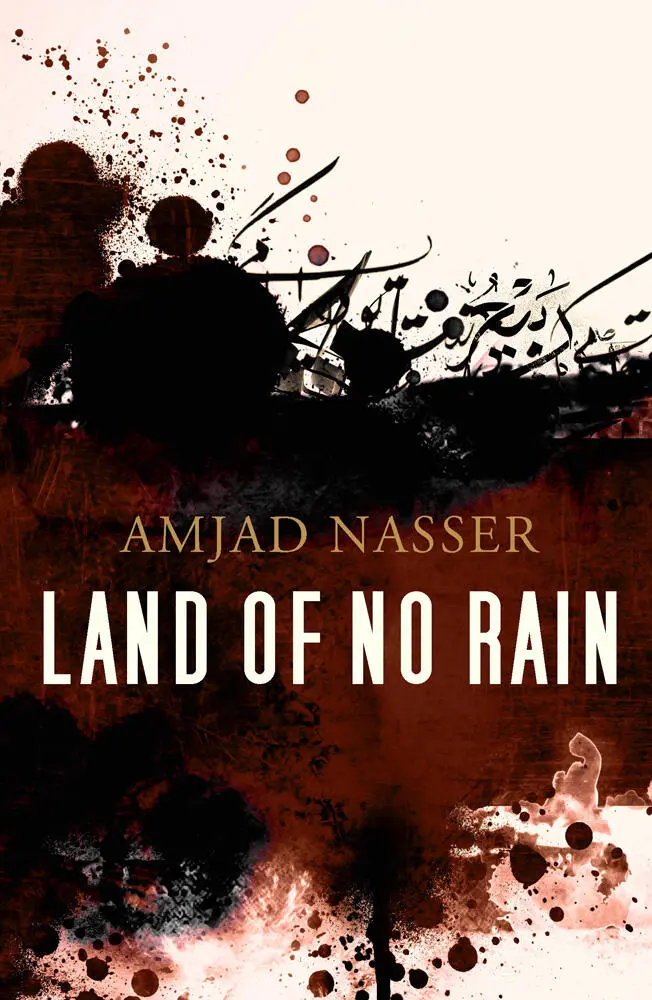
- Название:Land of No Rain
- Автор:
- Издательство:Bloomsbury Qatar Foundation Publishing
- Жанр:
- Год:2014
- ISBN:нет данных
- Рейтинг книги:4 / 5. Голосов: 1
-
Избранное:Добавить в избранное
- Отзывы:
-
Ваша оценка:
Land of No Rain: краткое содержание, описание и аннотация
Предлагаем к чтению аннотацию, описание, краткое содержание или предисловие (зависит от того, что написал сам автор книги «Land of No Rain»). Если вы не нашли необходимую информацию о книге — напишите в комментариях, мы постараемся отыскать её.
Land of No Rain — читать онлайн бесплатно полную книгу (весь текст) целиком
Ниже представлен текст книги, разбитый по страницам. Система сохранения места последней прочитанной страницы, позволяет с удобством читать онлайн бесплатно книгу «Land of No Rain», без необходимости каждый раз заново искать на чём Вы остановились. Поставьте закладку, и сможете в любой момент перейти на страницу, на которой закончили чтение.
Интервал:
Закладка:
Is invading a bed, you wondered, the same as invading a territory? Is a penis like an occupier? You were not unfamiliar with the practice of likening occupation to sexual assault, to ravishment, because in your language you do compare the occupation of territory to rape. In this respect you may be unique among nations. You don’t know of any other language that treats occupation as the equivalent of sexual violation. But, because of the drop of poison that the real invader had injected into the veins of history, the hero of the novel did not give free rein to his vengeful virility in front of the monuments to empire or in the corridors of power where the fate of nations was decided, but rather in the beds of the women who landed on him like flies. Landed on him like flies! You almost laughed when you remembered that phrase. Someone had used this tacky analogy when writing in praise of the fictional hero’s invasions. Clearly the person who wrote that, or dreamt it up in his sexually repressed imagination, had never set foot in the City of Red and Grey. You had not seen women landing like flies on men from your world, or on anyone else. Did that ever happen in the past? When a face like yours was not often seen in the city, before such faces had become everyday objects, so to speak? Days when the East really was amber and incense, a metaphor for gallantry and ardent desire, to an imagination shaped by the tales of travellers and of people seeking a pristine world of wilderness and outlandish languages. Was there really such a legend among the people here? I have heard something of it: the echo of the legend even reverberated in your country among young men who had never left Hamiya.
You remembered the old files a friend of yours used to thumb through in his memory. He had come to the City of Red and Grey long before you. He was rather like the hero of that novel. He was highly sexed and lecherous, crazy about firm white flesh. He would salivate at the sight of the calf of any woman who passed by. Although you had nothing in common, ‘the Hunter’ (not his real name but a nickname you invented to make fun of him) was your favourite companion in long drinking sessions that were cut short by the last-orders bell that rang at a quarter to eleven in the evening. In fact this friend of yours did not come to the city as an invader or seeking revenge, but rather as a fugitive from a military coup, along with the financial and political elite of his country. He opened a restaurant serving Middle Eastern dishes in the city centre, and had his share of success. A perpetual bachelor. Middle-aged but with the vigour of youth. He did not confuse his lust, which was insatiable judging by his own accounts, with symbolic revenge through the bodies of women. At least in what he said to you he did not connect the two, because sex for him was an act essential to life. Like food. Like water. The body’s rhythm incessantly revived the need for it. In his case the motive and starting point for sex was sex itself. Or perhaps the pleasure of the hunt. It may have been chronic repression. You’re not quite sure of all the motives that emerged from what he said. Sometimes you didn’t believe the stories of his pursuits, because the hunt seemed much too easy. ‘Hunt’, ‘chase’ and ‘prey’ were the exact expressions he used: you would reject them and discourage him from using them, but he would not mend his ways. He would say, ‘Forget about the veneer of culture and spurious refinement. Hunting is a perpetual human condition even if you wear the finest clothes. Because underneath the suit, or gown, and the neat hair there is the hunter and the prey, the male and the female, negative and positive. Men leave home in the morning as hunters, and women as prey. Men sharpen and unsheathe their weapons, women display the allure of the prey, cunningly defended. All our daily activities stem, without us knowing it, from this eternal root.’ Your friend’s stories about his sexual exploits sometimes sounded like fantasy to you. But you knew he wasn’t lying. He might have embellished his stories but he did not make them up. You would ask him, ‘So what happened, that people now walk past us without seeing us? Look. Here we are, sitting secluded in a dark corner that stinks of beer, and no one comes near us. We’re like pariahs or lepers. That’s not what happens in your stories about nights of passion.’ He would answer, ‘Firstly, you don’t have the instinct or the inclination for hunting. Politics and culture have rotted your brain and distorted your senses. Secondly, I came to this city long before you, at a time when life here was more relaxed, safer, more carefree. There weren’t these vast numbers of immigrants from all over the world. Most importantly, that horrible disease was still unknown.’ You would later remember, remember for a long time in fact, what your friend ‘the Hunter’ said about immigrants, disease and fear of strangers. In the city’s tunnels you would see large posters saying, literally, ‘Don’t speak to strangers.’ Like most who come to this city from your world, your friend — with his old memories that he would flick through in the corner of a dark bar stinking of beer — had read that novel with the hero who cries, ‘I came as an invader into your very homes.’ In fact he knew the writer, who used to frequent his restaurant. He told you that the hero of the novel and the author had nothing in common. That didn’t please him, because he had imagined they would share a common interest.
But you didn’t come to the City of Red and Grey in the same way as the hero of the novel. Your personal situation wasn’t the same, nor was his era your era. He came as a student, plucked from a tree at the height of the colonial age. You and your wife came as political refugees in the time of the nation state, when the authorities in the Island of the Sun asked your group to leave its territory, under pressure from your government, which wanted to make the world as uncomfortable for you as possible, to drive you away as far from the skies of your country as it could, to have you bark like stray dogs on cold and distant pavements. The difference between you and the hero of the novel was not just one of personality or epoch, but also ideological. Your idea of yourself and the world was different. You didn’t start with the idea of two worlds that are always separate, always in conflict and that never meet, but from another concept, a concept of history as the arena for power, social classes and exploitation, regardless of skin colour, brain size, religion, or whether one is circumcised or writes from right to left. This concept with which you came to the city was a different idea you can call internationalism. Now it’s called utopianism. Your concept has been shaken by the collapse of the models that tried to put it into practice, by the obsolescence that afflicts ideas just as it afflicts the real world, and by the fact that the journey grew longer and longer. But your concept did not collapse. You didn’t want it to collapse, as so many other things had collapsed along the way. The idea that the concept might collapse frightened you, because you personally had no alternative, and because the alternative, at the broader level, was to have worlds that were set apart for ever and that met only on the battlefield.
But what of the fate of that invader who adopted the bed as the arena for his quixotic battle? He went back to his birthplace and disappeared entirely. As though he had never existed. As though the struggles he had fought in bed were just a quick revenge, fragile, recorded in police reports rather than in the annals of liberation. If revenge on the invaders took the form adopted by the hero of the novel, then the grandchildren of the judges and jurors who put that sexual hero on trial hoped it would stay that way. Then they wouldn’t come to know suicide belts and men that embraced death in the way they embraced life. That’s the form of revenge now: blind suicide belts, planes that crash into buildings and towers with everyone in them, and pound them into dust. No words, no greeting, just death floating on the scent of paradise, with dancing phantasms of houris in the afterlife. What’s your stand on that fictional hero who invaded beds and cunts? What’s your stand on those young men with suicide belts, armed to the teeth against historical subjugation, thwarted aspirations and the decadence of the real world?
Читать дальшеИнтервал:
Закладка:
Похожие книги на «Land of No Rain»
Представляем Вашему вниманию похожие книги на «Land of No Rain» списком для выбора. Мы отобрали схожую по названию и смыслу литературу в надежде предоставить читателям больше вариантов отыскать новые, интересные, ещё непрочитанные произведения.





Обсуждение, отзывы о книге «Land of No Rain» и просто собственные мнения читателей. Оставьте ваши комментарии, напишите, что Вы думаете о произведении, его смысле или главных героях. Укажите что конкретно понравилось, а что нет, и почему Вы так считаете.