Joseph McElroy - Women and Men
Здесь есть возможность читать онлайн «Joseph McElroy - Women and Men» весь текст электронной книги совершенно бесплатно (целиком полную версию без сокращений). В некоторых случаях можно слушать аудио, скачать через торрент в формате fb2 и присутствует краткое содержание. Год выпуска: 1987, Издательство: Knopf, Жанр: Современная проза, на английском языке. Описание произведения, (предисловие) а так же отзывы посетителей доступны на портале библиотеки ЛибКат.

- Название:Women and Men
- Автор:
- Издательство:Knopf
- Жанр:
- Год:1987
- ISBN:нет данных
- Рейтинг книги:4.33 / 5. Голосов: 3
-
Избранное:Добавить в избранное
- Отзывы:
-
Ваша оценка:
Women and Men: краткое содержание, описание и аннотация
Предлагаем к чтению аннотацию, описание, краткое содержание или предисловие (зависит от того, что написал сам автор книги «Women and Men»). Если вы не нашли необходимую информацию о книге — напишите в комментариях, мы постараемся отыскать её.
McElroy rests a global vision on two people, apartment-house neighbors who never quite meet. Except, that is, in the population of others whose histories cross theirsbelievers and skeptics; lovers, friends, and hermits; children, parents, grandparents, avatars, and, apparently, angels. For Women and Men shows how the families through which we pass let one person's experience belong to that of many, so that we throw light on each other as if these kinships were refracted lives so real as to be reincarnate.
A mirror of manners, the book is also a meditation on the languagesrich, ludicrous, exact, and also Americanin which we try to grasp the world we're in. Along the kindred axes of separation and intimacy Women and Men extends the great line of twentieth-century innovative fiction.
Women and Men — читать онлайн бесплатно полную книгу (весь текст) целиком
Ниже представлен текст книги, разбитый по страницам. Система сохранения места последней прочитанной страницы, позволяет с удобством читать онлайн бесплатно книгу «Women and Men», без необходимости каждый раз заново искать на чём Вы остановились. Поставьте закладку, и сможете в любой момент перейти на страницу, на которой закончили чтение.
Интервал:
Закладка:
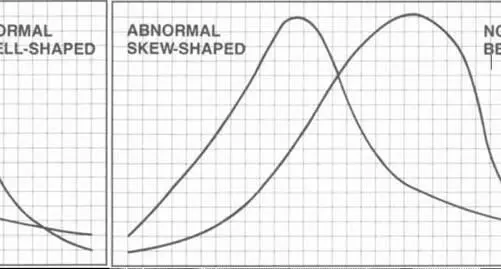
skew capturing the odds on oddity, yeah, those far-out deviations that may upset the science of one’s laws, her real job nine to five consumed one’s own ragged schoolkid schedule and one’s late bed and one’s eighteen-year-old unemployed pyjama cloth and until she then asked for information and one felt a flickering substitution of the older man in question for oneself, and one said, "James Mayn," etcetera, consumed even almost the black synthetic cloth of the amazing Rail’s shirt susceptible to butter more than bullets until now just nightfall at one’s roll-top desk angry that the phone was not Amy, hungry for peanut butter in the kitchen on the far side of one’s parents’ secret junta of sounds and lingering here to feel, if one can, one hand through all one’s assignments, one modulus through Music, Spanish, English, Physics, Eco, a curve (say) that’s coming from far off and that when it gets here doesn’t meet either of the two half-lines half-framing it notched vertical and horizontal which Dr. Roger Rail likes almost as much as his curve, a line with dots on it, scheduled stops on a crooked airline’s great arc of route, spots of double quantity where vertical and horizontal by thought’s invisible lines intersect on their way elsewhere.
"Ships in the night," one’s mother is heard to say to one’s father, who says, "Well, not quite," and then without warning, "Oh Suze!" Then, "Let go of dependence, Marv." "Oh Suze." "It’s hard, Marv, I can’t do it myself sometimes, it has to be hard." "Suze." "Friends." "Friends."
The husky voice is made naked of its huskiness — its husk, one adds, reading, "As population doubles and redoubles, it is exactly as if the globe were being halved in size," but wondering if the globe is not also a template constant and unbroken and even like the temple of one’s home limitless if understood — hearing, "Can I make you a cup of tea while you’re getting dressed?" and "But Marv, we’re surviving, and risk is always, you know, painful — no thanks, I’ve been on a juice trip all day — and Marv I don’t feel I’m being, you know, had any more — you know? — hey I am dressed, I’m going like this." So one thinks of the clothes of her date, wondering who phoned.
Fading down a warp into dark dimension not like humor, no, not like humor, a curve by the amazing aroused unsuited professor, but the curve itself maybe not amazing with dots on it, etcetera, then suddenly a new curve crossing the northwest-southeast curve southwest up to northeast, but, unlike Rail, his curves obvious, oh Amy the whole thing obvious to the point at which it might fade out on you — on one — into such a rolling tilt (trick of the eye or not) that the first curve’s point escaped up the black sleeve of the bald man’s shirt just as he said, "Concave," and was saying, "One may plot. ." and bringing the chalk toward his mouth so that concave became an elbow’s right angle at the instant that the unknown but not nameless girl (just a hair more voluptuous than likewise blonde twenty-three-year-old Amy who is worth a hundred of her who though unknown is also known elsewhere in the space-time of the classroom’s fall as Mary Minsky) outlining and again and again outlining her name, decorating her name in soft pencil in her notebook near one’s elbow so that one moved one’s desk closer to see, suddenly crossed her orange legs — snug orange tights for November — as if she were getting ready to start filling up an exam booklet: upon which instant of rising value the attention of the hunched vertical maestro (teacher) at the board and that of one’s sedentary own horizon met from two distances at what would have been an equilibrium (even given the difference between one’s own side perspective and Rail’s frontal) had not some doubt come into play as to the behavior of the variable in question, for had one here an instance of suddenly increased demand causing the price of equilibrium to travel right up the supply curve, or, since the quantity of what was available had perhaps (though one couldn’t tell for sure) not increased, had one here (had we here) a supply shift where the commodity or good becomes harder to get (whether really lessened or artificially lessened) so that equilibrium price now traveled leftward up the demand curve?
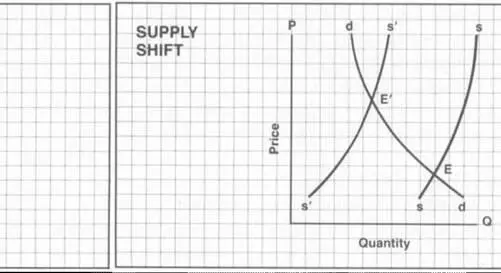
Was she, in short, more in demand or was there less of her available, as the eye ran neutrally landing here upon all her points curving always through the locus of all her possible points into the void of one’s own surplus shortage opening around one a space of fifty-minute hours bound into an autumn of weeks during which the class’s course deepened and was the same, was nothing next to all that came between each gradually numberless class meeting, was also one room one went on in from one point to another, straight or around, until against the trips between two parents in one home, between two homes instead of one, two domiciles with one empty ceiling on what to expect, between two parents become one-at-a-time-in-their-lives, the points thrown out by the amazing Rail could sometimes seem one conscious curve of all history — resources, costs, alternatives, the menu of choices along the production-possibility frontier — at the same time that as one smiled at his salt and gusto and the pomp of his sheer brain, his One everlasting and his fraction fractured by fractions, the incestuous blackboard deepening from rasure to rasa (while cielo raso, ceiling, is now not above but adelante, before), and his secret yen (he said) to open up the Rockefellers, dissolve the mysteries of distribution and oligopoly pricing to see strange profits rise during recession like energy made of nothing, new pride out of depression, one might fall inertly or grow into the inner or under concavity described by Rail’s waterfall contoured down the big blackboard with such alegria, such potencia, such Latin heat and so repente that the snap of the chalk split in mid-course released from the class en conjunto a laugh of relief that, across the cosmic vacancy of the board he had been moved to saltar de gozo, leap with joy— exalta-cionarse if one’s dictionary can hold such a word — pouring, precipitating, sending that curve down that slate sky to transcend, beat, swamp, wipe out points and show concavity itself, that the maestro may muestre how a bowed-out, concave curvature of the production-possibility frontier depicts the "law of increasing relative costs." But the waterfall was due to retract its short life, for the red-faced bearded student Donald — Donald Dooley — who came with knapsack crammed to the seams and topped by a tight-rolled down sleeping bag as if to pillow him against tripper’s whiplash was always challenging Rail.
Let there be curves for all events! cried Rail — the tool, though, has no more use than its user gives it.
I have a vision, however, Donald the knapsack man breaks in, I see a geographer in his tower formulating countries by their shape.
Meanwhile the economist, says Rail, cannot conduct controlled experiments.
But what, says Donald Dooley, will this neutral policy-science of yours do for those unknown statistics that don’t get their fair share of the gross national theory?
The question all in all joins one and one’s fellow students for a moment uneasily against the man in the black shirt and on behalf of the guy who with his knapsack has come in out of the urban wilderness to ask what he has to ask. But Rail has a southwest-northeast curve up his sleeve and out it comes. But not a curve at first sight — a straight line he calls a curve which then vibrates and loosens into local hammocks stretching and bowing while that straight line from corner to corner holds firm. For one has here (yes?) — the words are withheld for a moment of awful possibility during which someone at the controls on the other, the far, dark side of the blackboard seems to have thrown onto it the lines of this possibility that, having overlooked what will now be shown one, will reveal to one that one is a prisoner concentrated in one’s own home, though which home one hasn’t time to see — the one within striking distance of golf port and air course or the one near the long, narrow women’s restaurant with the big plate-glass window on a street in the City.
Читать дальшеИнтервал:
Закладка:
Похожие книги на «Women and Men»
Представляем Вашему вниманию похожие книги на «Women and Men» списком для выбора. Мы отобрали схожую по названию и смыслу литературу в надежде предоставить читателям больше вариантов отыскать новые, интересные, ещё непрочитанные произведения.






Обсуждение, отзывы о книге «Women and Men» и просто собственные мнения читателей. Оставьте ваши комментарии, напишите, что Вы думаете о произведении, его смысле или главных героях. Укажите что конкретно понравилось, а что нет, и почему Вы так считаете.