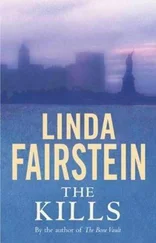
Richard House - The Kills
Здесь есть возможность читать онлайн «Richard House - The Kills» весь текст электронной книги совершенно бесплатно (целиком полную версию без сокращений). В некоторых случаях можно слушать аудио, скачать через торрент в формате fb2 и присутствует краткое содержание. Год выпуска: 2013, Издательство: Picador, Жанр: Современная проза, на английском языке. Описание произведения, (предисловие) а так же отзывы посетителей доступны на портале библиотеки ЛибКат.
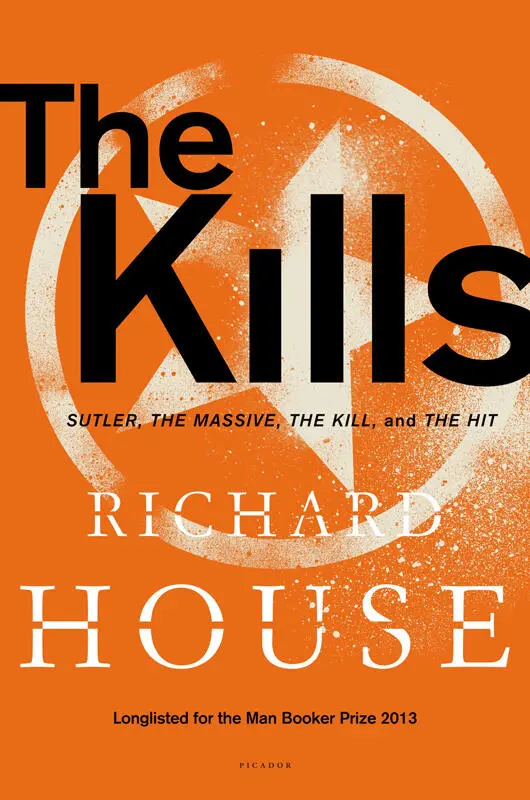
- Название:The Kills
- Автор:
- Издательство:Picador
- Жанр:
- Год:2013
- ISBN:нет данных
- Рейтинг книги:3 / 5. Голосов: 1
-
Избранное:Добавить в избранное
- Отзывы:
-
Ваша оценка:
The Kills: краткое содержание, описание и аннотация
Предлагаем к чтению аннотацию, описание, краткое содержание или предисловие (зависит от того, что написал сам автор книги «The Kills»). Если вы не нашли необходимую информацию о книге — напишите в комментариях, мы постараемся отыскать её.
The Kills — читать онлайн бесплатно полную книгу (весь текст) целиком
Ниже представлен текст книги, разбитый по страницам. Система сохранения места последней прочитанной страницы, позволяет с удобством читать онлайн бесплатно книгу «The Kills», без необходимости каждый раз заново искать на чём Вы остановились. Поставьте закладку, и сможете в любой момент перейти на страницу, на которой закончили чтение.
Интервал:
Закладка:
Luis Francesco Hernandez was buried without the family in attendance.
* * *
Before Luis, by eighteen years, came Clark, who’d had most of his tongue cut out and his voice box removed. Mathew Clark died unattended in a private room at the BVM Hospice in Albany. Allergic to penicillin, his throat sealed and he choked. A simple clerical error. Five minutes’ inattention. His funeral at the St Eustace Crematorium was small but attended by people who expected a more miserable demise, and were now faced with something sudden and inexplicable.
Clark’s daughter, Elizabeth, eulogized her father as an uncomplicated man, and passed over the details of his absences, how he would up and go without incitement, and how as a child she was convinced he had another family somewhere, another more fulfilling life. She did not speak about the cancer, about the lesions that peppered the soft skin on the back of his hands, his lower arms, his neck, behind his knees, and about how he often struggled for breath. Not many knew, she said, that her father was an artist. In Clark’s hands she tucked a photograph of herself taken when she was five: a small girl standing beside her mother on the banks of the placid Hudson. Her mother’s hand raised uncertainly to steady her hair or wave, clouds running wild in the sky behind them. She remembered that it snowed later that day, and there was something wonderful about how the photograph appeared so summery, when it was in fact her first memory of winter, her first remembered Thanksgiving. The photo was sent to him in Kuwait, or was it Iraq: the corners blunt and creased, where the sun of that hard country, whichever it was, had bleached the colour to milky whites and yellows.
* * *
Before Clark came Watts, who at forty-seven was struck by the downtown bus at a crossing in Kansas City: heading from the Holiday Inn to his car, Watts had his mind on a bottle of bourbon.
At Watts’ funeral his wife, Lara, confided to a work colleague that he wasn’t as likeable as everyone made out. Throughout the service she whispered bad stories about him. How, before the christening of their only child she discovered him leaning over the crib calling the baby a cunt. He’d kept it up for an hour, she said, a revolting rapid-fire cunt-cunt-cunt-cunt-cunt. Even as she told this story she knew, hand on heart, that he had uttered can’t — can’t — can’t in a whisper so low she’d had to kneel beside him to hear. He was sick when he came back, she said, and she was sick herself, had lost a child, carried it in her dead, and later, despite the birth of their son, their marriage had similarly perished. They lived in a small two-room apartment in Missoula, and his depression, his inactivity, had poisoned their lives. But some things you have to set in the past and leave well alone. He had lived his life and she had lived hers, each without regret. As a man of habit his infidelities ran to a timetable. And he was hung, she said, my god how he was hung. Looking back through the chapel she scanned the crowd and was grateful that the woman he was with on the day he died had the sense not to attend the service, and the better sense to clear away the foil, the glass tubes, the pellets of resin from both the hotel room and the car before the police came. A man with one lung who smoked. How dumb, she said, seriously, how stupid is that? The box of paraphernalia was left on her doorstep two days later, minus the drugs, as a hint that everything should be allowed to lie where it landed. The bus company sent flowers to the house. She had to buy a suit, the only one to her memory he’d ever worn, although secretly she harboured a desire to bury him in a novelty costume. Watts had once told her she had a wide and flat mouth: the mouth of a frog. He wasn’t saying she wasn’t pretty, especially her hazel eyes, so complex they sometimes appeared to be struck with gold. Her chestnut hair, her pale New England skin, gifts from her ancestors, but, my god, everything lower than her nose came right out of a cartoon. After he said such things he’d laugh a little as if it were only a tiny mischief, nothing of consequence. It wasn’t that Iraq changed him: he was always duplicitous, always cold, but he’d come back believing that she did not and would never understand him, although he could never say this directly. His behaviour wasn’t due to any syndrome, PTSD, or a result of his work at the burn pits. No, he was wilful, cruel, contemptful even before his departure. The only syndrome Watts suffered was asshole syndrome. As the curtains closed about the coffin, the sound of the rollers overwhelmed the music, she watched with a steady eye and whispered can’t, can’t, can’t.
* * *
Before Watts came Samuels, whose body was not discovered, and whose death went unrecorded. Two days before Christmas, Samuels bought a car with cash and a fake ID and drove from Illinois to Louisiana, joining Highway 10 at Baton Rouge. The last people he spoke with were a young couple from his hometown, Topeka, Kansas, he found loitering at the entrance to the services. For a moment he believed that they were summoning the courage to rob the diner, and when he realized that they were hesitating because they had no money, he gave them all the change he had, everything from his pockets, and they tried not to stare at the eczema on his arms, at how he shed his skin in fish-like scales. The coincidence of meeting a young couple from his hometown confirmed the rightness of what he was doing, and with the simple gesture of handing over a fistful of coins he felt that he was handing something on. Samuels, who was always short of breath, sat in his car and thought about how perfect this was, of how endings naturally meet beginnings, then got right back out and returned to the restaurant where he sat with the couple and spoke for an hour, uninterrupted, about the work at Camp Liberty in the southern desert of Al-Muthanna. He spoke at length about a member of their unit, Steven Kiprowski, and how you know you should stop something but you don’t, and you know, even as you do nothing, that this will corrode through you, ruin your life. Unbothered about the proper sequence of events, or whether he was or was not making sense, he told his story in full. Thirty minutes after he was done talking he turned off the highway and tipped the car into a swamp, the small doubt occurring to him that this would not be easy.
Four days after the mud had taken him, the upturned car was swept free and marooned on a high tide on the banks under the raised span of the highway. A storm hauled his body out into the Gulf, and Samuels came closer to what he wanted: to become unaccountably small, to disappear, dissipate, to become less than dust.
* * *
Pakosta shot himself in the elevator at the UC Santa Barbara Hospital. With his back against the mirror siding he faced the doors and placed the shotgun under his chin, certain that the damage would obliterate his face. His previous attempt, an overdose of whisky and diet and sleeping pills, caused nothing worse than diarrhoea and a restful sleep, and when he revived he blamed his actions on the weather. It wasn’t easy being poor in Santa Barbara, he said, and it wasn’t easy once the weather straightened out to have one day so similar to another. A handsome man with an open face, the nurses felt the tragedy deeply, unaware that Pakosta was a violent drunk who daily harangued the students and college types taking coffee outside the Flat Earth Café on Main Street with strange obscenities. This man would defecate on doorsteps and harass veterans at the town’s shelter: there was little to recommend him, little that remained decent. Like Samuels he suffered from a skin condition, a red blush at his throat which often coincided with a shortness of breath and the feeling that he was under deep water, separate from the world. Carl Pakosta disliked communists, Californians, and Mexicans, and believed that his neighbour, a schoolteacher and former union organizer from Oaxaca, had deliberately poisoned his dog, when he knew the responsibility for the animal’s death was his own. His body was cremated at the expense of the city of Santa Barbara. His ashes were scattered by a volunteer in the Garden of Remembrance because of an error that marked him in city records as a veteran.
Читать дальшеИнтервал:
Закладка:
Похожие книги на «The Kills»
Представляем Вашему вниманию похожие книги на «The Kills» списком для выбора. Мы отобрали схожую по названию и смыслу литературу в надежде предоставить читателям больше вариантов отыскать новые, интересные, ещё непрочитанные произведения.

Обсуждение, отзывы о книге «The Kills» и просто собственные мнения читателей. Оставьте ваши комментарии, напишите, что Вы думаете о произведении, его смысле или главных героях. Укажите что конкретно понравилось, а что нет, и почему Вы так считаете.