Robert Butler - The Hot Country
Здесь есть возможность читать онлайн «Robert Butler - The Hot Country» весь текст электронной книги совершенно бесплатно (целиком полную версию без сокращений). В некоторых случаях можно слушать аудио, скачать через торрент в формате fb2 и присутствует краткое содержание. Год выпуска: 2012, Издательство: Mysterious Press, Жанр: Современная проза, Триллер, на английском языке. Описание произведения, (предисловие) а так же отзывы посетителей доступны на портале библиотеки ЛибКат.
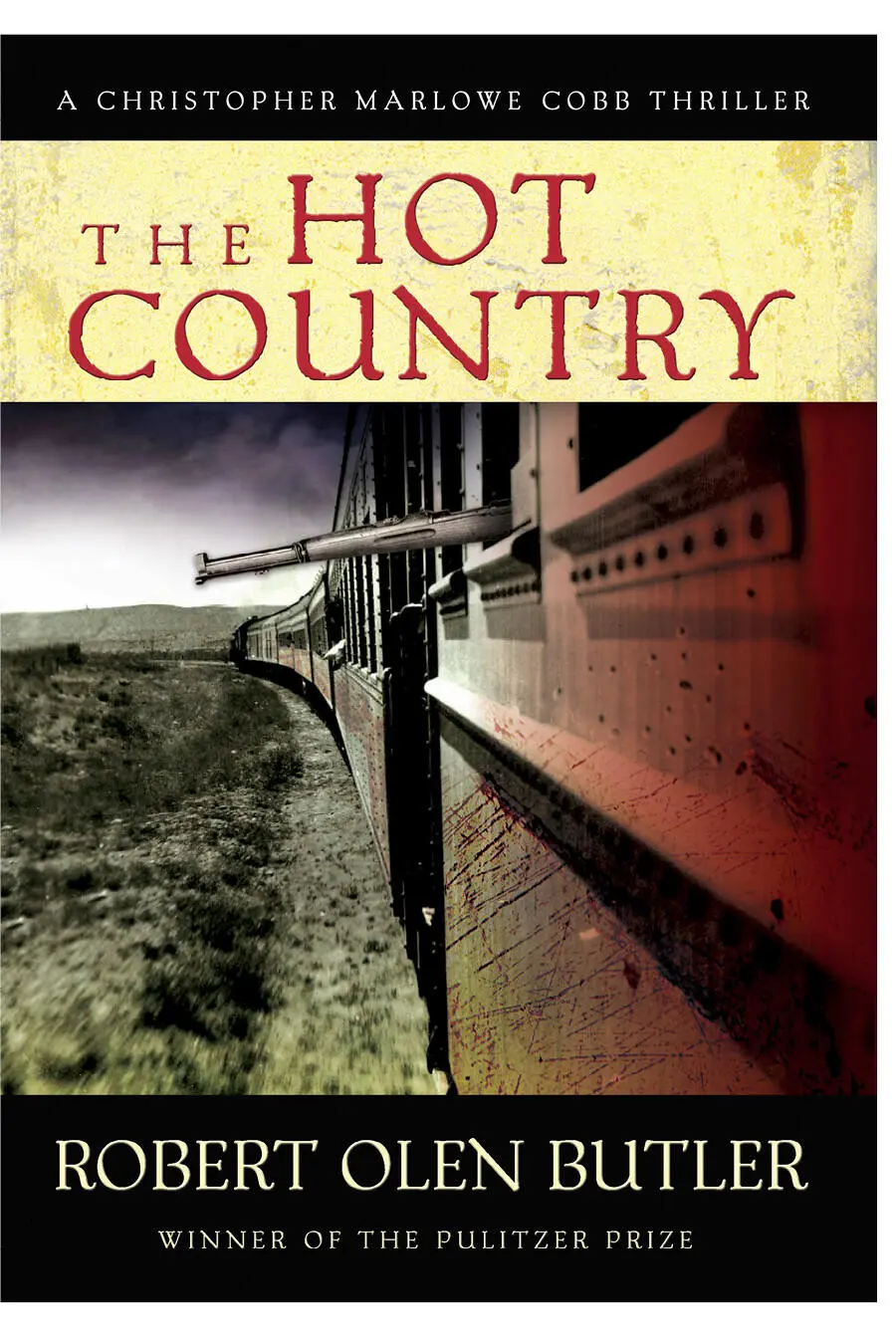
- Название:The Hot Country
- Автор:
- Издательство:Mysterious Press
- Жанр:
- Год:2012
- ISBN:нет данных
- Рейтинг книги:5 / 5. Голосов: 1
-
Избранное:Добавить в избранное
- Отзывы:
-
Ваша оценка:
The Hot Country: краткое содержание, описание и аннотация
Предлагаем к чтению аннотацию, описание, краткое содержание или предисловие (зависит от того, что написал сам автор книги «The Hot Country»). Если вы не нашли необходимую информацию о книге — напишите в комментариях, мы постараемся отыскать её.
, Christopher Marlowe Cobb (“Kit”), the swashbuckling early 20th century American newspaper war correspondent travels to Mexico in April and May of 1914, during that country’s civil war, the American invasion of Vera Cruz and the controversial presidency of Victoriano Huerta, El Chacal (The Jackal). Covering the war in enemy territory and sweltering heat, Cobb falls in love with Luisa, a young Mexican laundress, who is not as innocent as she seems.
The intrepid war reporter soon witnesses a priest being shot. The bullet rebounds on the cross the holly man wears around his neck and leaves him unharmed. Cobb employs a young pickpocket to help him find out the identity of the sniper and, more importantly, why important German officials are coming into the city in the middle of the night from ammunition ships docked in the port.
An exciting tale of intrigue and espionage, Butler’s powerful crime-fiction debut is a thriller not to be missed.
The Hot Country — читать онлайн бесплатно полную книгу (весь текст) целиком
Ниже представлен текст книги, разбитый по страницам. Система сохранения места последней прочитанной страницы, позволяет с удобством читать онлайн бесплатно книгу «The Hot Country», без необходимости каждый раз заново искать на чём Вы остановились. Поставьте закладку, и сможете в любой момент перейти на страницу, на которой закончили чтение.
Интервал:
Закладка:
Of course she made it up. Improvised. Like the patience. Like the gentle hand on my shoulder. But it was the right line and the right gesture at the right moment in the little drama I’d cast her in. I could not be angry with her for that.
33
And Herr Friedrich von Mensinger sat down next to me.
In Mexico City I’d followed him into the waiting room of the National Railway’s Estación de Buena Vista . I was careful not to be noticed. I found a place at the very end of one of the long wooden benches otherwise packed tight with Mexicans in serapes and rebozos, a class of Mexicans I figured would be invisible to Mensinger, as Diego had once observed about him. Being among them, I thought he might not notice me either. I watched him when I could, but there was no pressure to do so. He floated past and out of sight and then floated back again, his head and shoulders sticking high out of the middle of the dense Mexican crowd where he seemed trapped. And he began to float away again. But as he passed this time, he surprised me. I had been imagining him as implacably, aristocratically impervious to anything that did not fit his purposes. But the face that was passing now was pinched in intense discomfort. And for a moment he turned his face in my direction, found me instantly, focused on me as intently as if he were about to thrust with his fencing saber. In the next moment, he was borne away, but I knew he would be back, and when the young man sitting to my right suddenly stood up and moved off, Mensinger was beside me, arriving so quickly and unobserved that I imagined he had somehow scaled the wall and clung to an electric light fixture in the ceiling and had thus dropped down beside me in the instant the space was vacated.
And so here we now were. Shoulder to shoulder. This must have been as discomforting for him as it was surprising for me. That he should have lost his composure in the press of a crowd of heathens. That he felt the compulsion to seek refuge next to the only non-Mexican he could find. And now, to regain his composure, he was not speaking. He was sitting here beside me as if it were simply the only available empty space on the bench. Which gave me time to decide a couple of crucial things.
I found myself calm, though I also found that the impulse to make a wise and prompt retreat was stronger in me right now than on any hot-lead-filled field of combat I’d ever covered.
But I was calm, and it was time to improvise.
I could not be Gerhard Vogel. That much was abundantly clear.
Outside of the occupied zone, it was less likely I’d have to show my passport. And if I did, such a moment would not be in Mensinger’s presence. For documents and tickets, he would be in the Pullman drawing room and I would be in a first-class car.
I could be anyone I wanted.
Except German. Except American.
We could speak Spanish. But since I didn’t know what else he might speak, I figured I better be English-speaking in my assumed identity.
Mensinger cleared his throat.
I was not ready yet.
I held very still, letting him have no cue to speak.
Could I be English? They were high on the list of Germany’s imminent enemies. If I wanted to actually make this a fruitful exchange, I should not be English.
South African. English but not quite English. But possibly a sore point for Mensinger, since the Germans strongly sympathized with the Boers against the Brits, and not so very long ago. Not South African.
Canadian.
Mensinger shifted a little beside me. I could see him enough in my periphery to watch him fake a cough into his fist.
I remained absolutely motionless.
Canadian. The Germans, as far as I knew, never had a thing to do with what was now Canada. The only question was Quebec or Ontario. I could pull off the French. But it was a different French and another layer of complexity. Simple. This needed to be simple. Toronto.
I was ready, and suddenly I was keenly aware of the way things had abruptly changed. The man I’d been observing from afar and delicately following for some days now was pressed hard against my right shoulder and arm and thigh.
I ever so slightly flexed my right shoulder, and with a little head-flip to the left I popped my neck. I glanced for a brief beat in Mensinger’s direction. He sensed it and was turning his face toward mine as I looked back to the front again. The afterimage of Friedrich Mensinger was almost entirely his scar, a fibrous white scimitar running along his left cheek from ear to lip, as wide as a pipe stem. Wider than any dueling sword would leave under normal circumstances. He was one of those who packed his wound with horsehair to keep it agape while it healed. A further assertion of Germanic manliness.
I blinked the image away. I waited. I could sense him pondering how to speak, not knowing my language.
After a moment, he said, in a slightly pinched, slightly nasal voice, aristocratic to my ear, “ Sprechen Sie Deutsch? ”
I looked at him. His eyes were shockingly pale, the gray-green of a scummy pond on a cloudless afternoon. His mustache was his own, not Wilhelm’s; it was full and dust-colored but with no uptwirls, no points at all. He was his own man.
“Deutsch?” I said. “No. Nein . Sorry. Do you sprechen English?”
He narrowed those eyes at me a little.
“I’m Simon,” I said, thinking Legree, in the spur of the melodramatic moment, staring into this face. Now I needed a last name. Canadian-sounding. “Chance,” I said, drawing on the Cubs of my youth, their peerless leader. “From Toronto.” Simon Chance would do.
He was still not unnarrowing his eyes.
“Canada,” I said.
I lifted my right hand from between us and angled it toward him, inviting a shake of sorts in the tight quarters.
“ Nein English,” he managed to say. And then, remembering, “No. No English.”
“Do you speak Spanish?” I said in that language.
He nodded.
“No problem then,” I said. And this became our common tongue.
“I am Friedrich Mensinger,” he said, taking my hand and shaking it firmly enough that I was glad I got the crotch of my thumb into his or this would have been painful.
“We are conspicuous here, aren’t we, you and I,” I said, nodding my head toward the crowd of Mexicans from whose currents he had just washed ashore.
“Yes we are,” he said, letting go of my hand. “We are different.”
“What part of Germany are you from?”
He hesitated for one brief beat. “The north,” he said.
Though he was vague, he did not look away from me. His pond-eyes showed nothing. They were still. He needed to be sitting here next to me, in our little Aryan corner of this world. So he was more comfortable now. Which meant, ironically, he’d recovered his reserve. He was fundamentally a man of secrets, after all.
I had to be careful if I wanted to work even a little something out of him.
Ask nothing. Give something. It didn’t have to be meaningful. “I came up from Vera Cruz this morning,” I said.
He didn’t give a damn, of course.
So I matched his mood. And I showed him I expected nothing. I broke off our eye contact and looked out at the crowd.
Mensinger was feeling like himself again, extracted from this mass of his inferiors. What did Richard Harding Davis call these people a few days ago? He was, in effect, talking of their ingratitude for our occupation of a piece of their country. Spigotties and squaws. There was no German translation for that, but I suspected Mensinger had his equivalents.
I needed to make it clear to Mensinger that I was not going to small-talk him. But before I fell silent, I regretted that I needed to play my gambit once again, to set the political mood. “Couldn’t be witness to that any longer. Schweinehund Americans,” I said. And without looking at him, I added, “I think that’s the appropriate German.”
Читать дальшеИнтервал:
Закладка:
Похожие книги на «The Hot Country»
Представляем Вашему вниманию похожие книги на «The Hot Country» списком для выбора. Мы отобрали схожую по названию и смыслу литературу в надежде предоставить читателям больше вариантов отыскать новые, интересные, ещё непрочитанные произведения.


Обсуждение, отзывы о книге «The Hot Country» и просто собственные мнения читателей. Оставьте ваши комментарии, напишите, что Вы думаете о произведении, его смысле или главных героях. Укажите что конкретно понравилось, а что нет, и почему Вы так считаете.