Robert Butler - The Hot Country
Здесь есть возможность читать онлайн «Robert Butler - The Hot Country» весь текст электронной книги совершенно бесплатно (целиком полную версию без сокращений). В некоторых случаях можно слушать аудио, скачать через торрент в формате fb2 и присутствует краткое содержание. Год выпуска: 2012, Издательство: Mysterious Press, Жанр: Современная проза, Триллер, на английском языке. Описание произведения, (предисловие) а так же отзывы посетителей доступны на портале библиотеки ЛибКат.
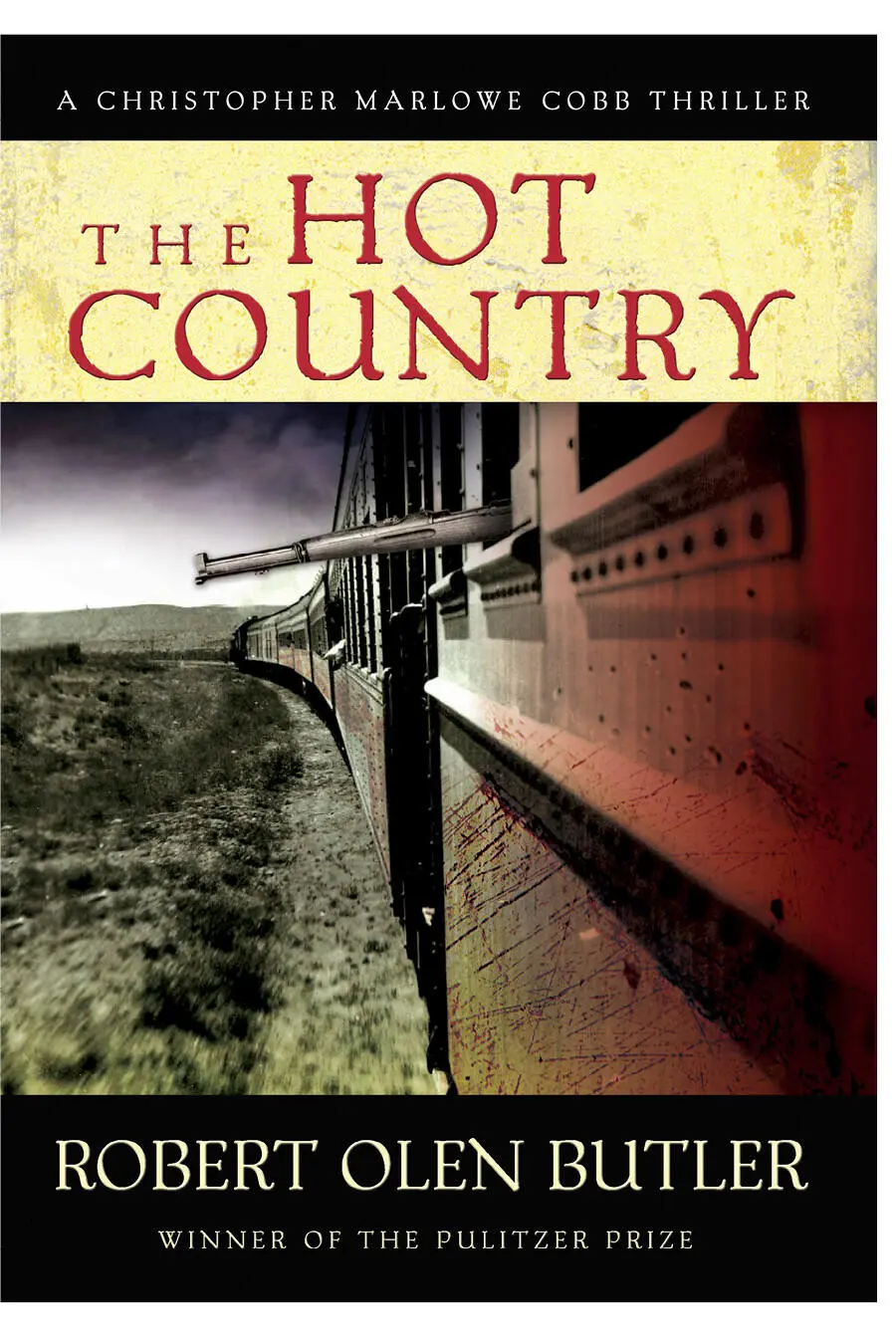
- Название:The Hot Country
- Автор:
- Издательство:Mysterious Press
- Жанр:
- Год:2012
- ISBN:нет данных
- Рейтинг книги:5 / 5. Голосов: 1
-
Избранное:Добавить в избранное
- Отзывы:
-
Ваша оценка:
The Hot Country: краткое содержание, описание и аннотация
Предлагаем к чтению аннотацию, описание, краткое содержание или предисловие (зависит от того, что написал сам автор книги «The Hot Country»). Если вы не нашли необходимую информацию о книге — напишите в комментариях, мы постараемся отыскать её.
, Christopher Marlowe Cobb (“Kit”), the swashbuckling early 20th century American newspaper war correspondent travels to Mexico in April and May of 1914, during that country’s civil war, the American invasion of Vera Cruz and the controversial presidency of Victoriano Huerta, El Chacal (The Jackal). Covering the war in enemy territory and sweltering heat, Cobb falls in love with Luisa, a young Mexican laundress, who is not as innocent as she seems.
The intrepid war reporter soon witnesses a priest being shot. The bullet rebounds on the cross the holly man wears around his neck and leaves him unharmed. Cobb employs a young pickpocket to help him find out the identity of the sniper and, more importantly, why important German officials are coming into the city in the middle of the night from ammunition ships docked in the port.
An exciting tale of intrigue and espionage, Butler’s powerful crime-fiction debut is a thriller not to be missed.
The Hot Country — читать онлайн бесплатно полную книгу (весь текст) целиком
Ниже представлен текст книги, разбитый по страницам. Система сохранения места последней прочитанной страницы, позволяет с удобством читать онлайн бесплатно книгу «The Hot Country», без необходимости каждый раз заново искать на чём Вы остановились. Поставьте закладку, и сможете в любой момент перейти на страницу, на которой закончили чтение.
Интервал:
Закладка:
“But he seems regional. All the rebels seem regional.”
“It doesn’t have to be that way,” Mensinger said.
“What could Villa possibly do to put the whole country behind him.” I didn’t ask it, I said it. And I said it with a scornful, dismissive tone. The dumb Canadian coffee merchant. I wobbled my head and smirked, hoping he would see it.
Mensinger looked at me.
I wobbled my head and smirked some more.
He was thinking whether I was worth instructing.
Wobbled and smirked. Though I knew I’d better stop that. I was overacting.
He was thinking I’d never understand. But part of him liked instructing the ignorant in things they could never understand. How superior he was.
I’d stopped wobbling and smirking. “Permanent chaos,” I said.
“Something bold,” Mensinger said.
I held still. I said nothing.
“He is a very good military man,” Mensinger said. “He can do something bold.”
I shrugged. Very very slightly. “They all just fight each other, the rebels.”
Mensinger hesitated again. Those eyes. Pale though they were, beneath their scummy surface, things rose near and then swam deep again. I tried to read those eyes. I was afraid I’d done all I could do. What I had going now in order to induce him to let down his guard: I could see all that dissipating. He had no reason to feel anxious surrounded by mongrel Mexicans. They were beneath him. He had nothing more to say to this idiot merchant from a marginal country. I was beneath him. But his eyes now gathered a focus that you sometimes see in pedants and preachers and the supremely powerful.
He said, “You bring a country together by finding someone you can all agree to hate.”
34
I knew this was the last thing he intended to say to me. And it was. We’d been hat brim to hat brim all this time, me in my gray felt fedora and him in his slouch hat, and now he took his hat off and laid it in his lap and he ran a hand through his hair, as if he’d just wiped me from the surface of his brain like a trivial thought. And he closed his eyes. Ramrod-straight upright he sat, and he slept.
And later we nodded a good-bye as our new train was called and Mensinger headed for the track and his Pullman. But I lingered a few steps behind and then I stopped. I had such fine quotes. I had a mind for remembering quotes — it was like a facility for memorizing lines in a play — and I would shortly write them all down to preserve them, all the things he said for my exclusive interview with a named German secret agent. In spite of its being largely speculative, I longed to file the story now. But I knew it would never get out of the telegraph office. This was becoming a personal thing. Between me and this man. I had to be careful. A good reporter can never let it get personal.
So I took my place in a window seat at the rear of a first-class car. I let myself think of the next major challenge: The character I created for Mensinger in the station was just the right character for the moment, but now that he knew me as Simon Chance, the Canadian coffee seller, how could I get off the train in the tiny La Mancha and follow him without being instantly noticed? This too had to be improvised. I put it out of my mind. The night train began to move. I slid down a little, resettled my feet on my bag, pulled my hat over my eyes, and I slept, fitfully, awaking to undifferentiated blackness out the window and to the sound of snoring and dream murmurings in Spanish and to the smell of cigarette smoke and pulque and to the smell of old sweat and the Mexicans’ heavy cover-up of soap and perfume, manufactured smells of lilac and rose and jasmine, and I woke to an ache in the side of my neck from the sleeping angle of my head and the ache in my butt and in my back from the rush-work seat.
I stirred. I gently nudged my head upright against the neck pain. I found myself thinking in a new way about how to get this story, in a way that stretched my principles. Why? Mensinger’s mission against my country, of course; the nasty smile and the laugh he gave Simon Chance; those eyes; the deception I’d already played on this man I profoundly disliked, and the remarkable de facto interview it yielded; the darkness outside and the sleeping forms all around me. Even his wife’s letter, that he struck her twice for weeping over his saber wound. All this made me rise and step over the legs of the man sleeping in the seat next to me and into the aisle. I stood straight, stretched my spine, and shook the last remnants of sleep from my head. I saw my job differently now. This was an important story. Important for my country in a world of countries who would despise us. A timely warning needed to be sounded. I would not fabricate my story. I would not casually speculate on it when there were alternative viable speculations. But if I somehow could break-and-enter, with a reasonable chance of not getting caught, and gain access to his saddlebags, I would see what facts I could find, no matter how I did it.
I moved forward along the center aisle of the car.
As gently as I could, I opened the passage door and stepped out, the train-rush of air whipping through the join of the cars and billowing coldly into my shirt, my jacket. I closed the door behind me. The next car was the Pullman. I pressed through the swirls of air and I crossed the shifting steel plates between the vestibules and I approached the Pullman’s door. I put my hand to its handle. I was Simon Chance. I just had to see the Pullman for myself. Perhaps I’d travel that way myself next time. Coffee did well by me, so I should do well for myself. I turned the handle and slowly dragged the door open, but only to the width of my body. I squeezed through sideways and pressed the door quietly shut again. I turned.
A dim, amber-shaded electric light burned to my left, at the beginning of a carpeted passageway along the windows. I stepped beneath the light. The passageway was empty, lined at this end of the car with half a dozen curtained sleeping compartments. Beyond them, the car opened up to its drawing room. I could see only the left half of the room, the ambered electric glow bright upon a setting of overstuffed burgundy wingback chairs. They were empty. The background clack of the rails was the only sound. The Pullman travelers seemed to be sleeping soundly in their affluence.
I moved along the corridor. I paused at each curtain as I passed, listening intently. I could hear a heavy shifting in one. A fleeting basso moan in another. I didn’t think it was him. I could lift a hand, pull back a few inches of the curtain, answer the question. But it made no difference which berth held him. I would run too big a risk of getting caught if I entered his compartment and searched his bags with him sleeping at arm’s length. I moved on and emerged from the passageway into the fullness of the drawing room.
And there, on one of the wingback chairs on the other side of the car, sat Friedrich Mensinger.
He was asleep.
He was not ramrod upright this time. He had sagged deep into the chair, his head angled against one of the wings. His slouch hat hung on a hook next to the window. A whiskey glass, with most of a double left in it, sat on the arm of the chair, which was just wide enough, flat enough for it to maintain a tenuous balance in a sometimes swaying train car. This was not his first tonight. His hand was vaguely surrounding his unfinished drink, but his fingers were slack. The car swayed slightly and the glass trembled. His hand did not move. Perhaps he’d only recently fallen asleep. His mouth was open slightly, though he was making no sounds. His sleep was not heavy enough for him to be snoring.
Most important, however, beneath his feet were his saddlebags.
I sat down in a chair, facing him from across the width of the car. Did he know this of himself, that he was apt to pass out from weariness and drink? Was that why he’d taken the precaution of having his bags beneath his feet even when he was sitting in an overstuffed chair in the drawing room of a Pullman car? Something important, of course, was inside the bags. The Papiere .
Читать дальшеИнтервал:
Закладка:
Похожие книги на «The Hot Country»
Представляем Вашему вниманию похожие книги на «The Hot Country» списком для выбора. Мы отобрали схожую по названию и смыслу литературу в надежде предоставить читателям больше вариантов отыскать новые, интересные, ещё непрочитанные произведения.





Обсуждение, отзывы о книге «The Hot Country» и просто собственные мнения читателей. Оставьте ваши комментарии, напишите, что Вы думаете о произведении, его смысле или главных героях. Укажите что конкретно понравилось, а что нет, и почему Вы так считаете.