Robert Butler - The Hot Country
Здесь есть возможность читать онлайн «Robert Butler - The Hot Country» весь текст электронной книги совершенно бесплатно (целиком полную версию без сокращений). В некоторых случаях можно слушать аудио, скачать через торрент в формате fb2 и присутствует краткое содержание. Год выпуска: 2012, Издательство: Mysterious Press, Жанр: Современная проза, Триллер, на английском языке. Описание произведения, (предисловие) а так же отзывы посетителей доступны на портале библиотеки ЛибКат.
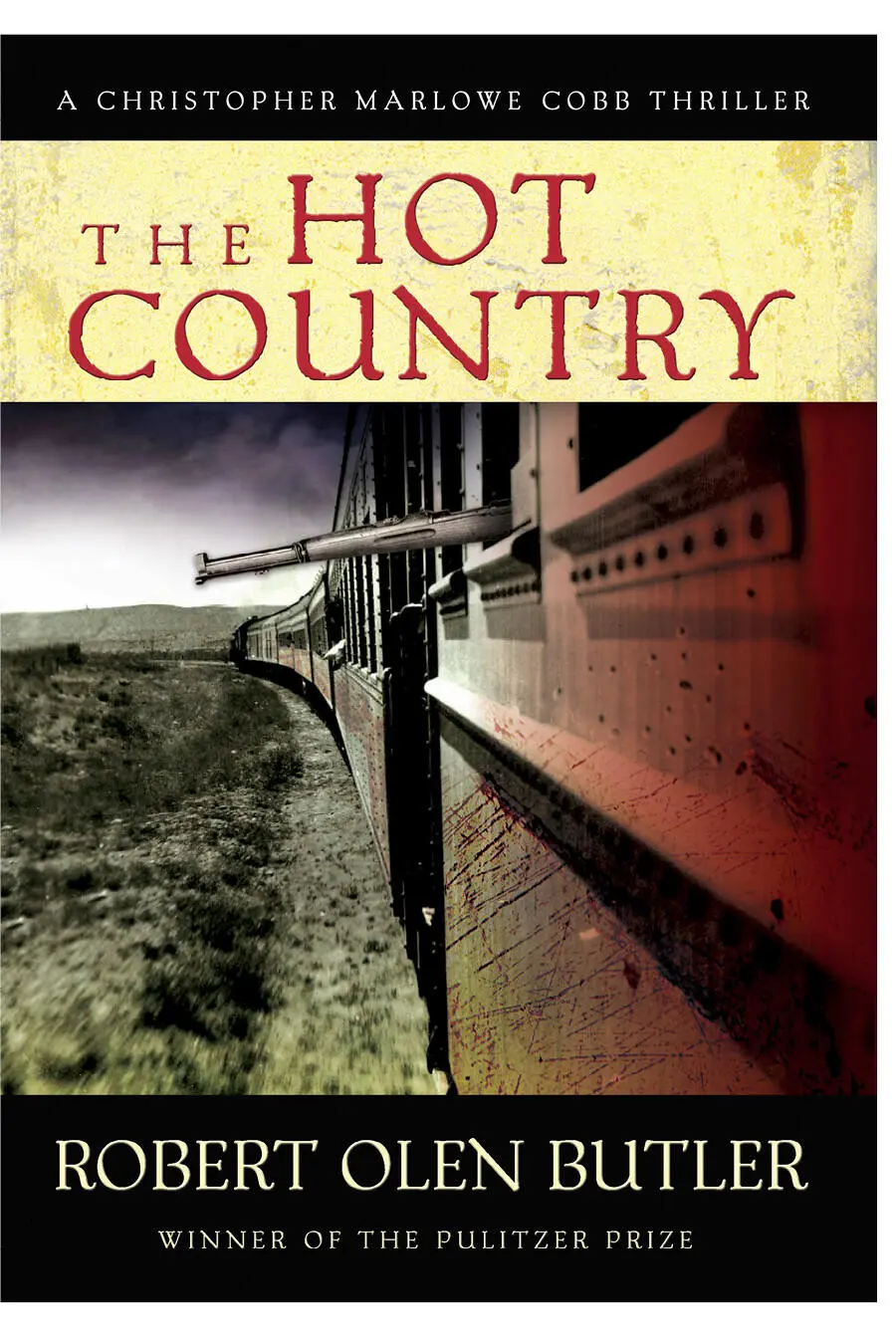
- Название:The Hot Country
- Автор:
- Издательство:Mysterious Press
- Жанр:
- Год:2012
- ISBN:нет данных
- Рейтинг книги:5 / 5. Голосов: 1
-
Избранное:Добавить в избранное
- Отзывы:
-
Ваша оценка:
The Hot Country: краткое содержание, описание и аннотация
Предлагаем к чтению аннотацию, описание, краткое содержание или предисловие (зависит от того, что написал сам автор книги «The Hot Country»). Если вы не нашли необходимую информацию о книге — напишите в комментариях, мы постараемся отыскать её.
, Christopher Marlowe Cobb (“Kit”), the swashbuckling early 20th century American newspaper war correspondent travels to Mexico in April and May of 1914, during that country’s civil war, the American invasion of Vera Cruz and the controversial presidency of Victoriano Huerta, El Chacal (The Jackal). Covering the war in enemy territory and sweltering heat, Cobb falls in love with Luisa, a young Mexican laundress, who is not as innocent as she seems.
The intrepid war reporter soon witnesses a priest being shot. The bullet rebounds on the cross the holly man wears around his neck and leaves him unharmed. Cobb employs a young pickpocket to help him find out the identity of the sniper and, more importantly, why important German officials are coming into the city in the middle of the night from ammunition ships docked in the port.
An exciting tale of intrigue and espionage, Butler’s powerful crime-fiction debut is a thriller not to be missed.
The Hot Country — читать онлайн бесплатно полную книгу (весь текст) целиком
Ниже представлен текст книги, разбитый по страницам. Система сохранения места последней прочитанной страницы, позволяет с удобством читать онлайн бесплатно книгу «The Hot Country», без необходимости каждый раз заново искать на чём Вы остановились. Поставьте закладку, и сможете в любой момент перейти на страницу, на которой закончили чтение.
Интервал:
Закладка:
I looked at his high-laced boots, his spiral tan puttees lapped over their tops. The boots sat on the flaps of the bags, which were folded tightly together. I looked at his slack-jawed face. His eyes were moving beneath the lids. He was dreaming, Friedrich Mensinger. Of what? The touch of a fencing saber to his face? Himself slicing the mark of manhood into another young man? And another? And another? Each night perhaps he dreamed of a different face, a different stroke of his saber. Or perhaps he dreamed of his wife. His own hand like the sword. He struck her. If he struck her twice for her sympathetic tears, how often had he struck her for other things? Or he dreamed of Pancho Villa. Dreamed of mounting a horse and riding hard across the plateau to his bandit.
The train swayed left, smoothly but clearly, and it held this angle for a time. We were taking a mountain curve. I looked at the glass of whiskey. Mensinger’s fingers had closed against it. I looked instantly to his face. I expected the eyes to be open, seeing me. But his head had not moved. His mouth was still slightly agape. The hand had its own reflex, to close on the glass, to keep it from spilling. The autonomics of a lifelong drinker.
The car righted itself.
I rose.
Mensinger’s mouth shut. His lips grew restless, pressing ever so slightly and letting go and pressing again. Perhaps he was speaking in his dream. Attack, he was saying to Villa. Take your men and ride to Vera Cruz. Ride hard. Ride through the night and the Americans will not see you and attack them as they are collecting garbage and trapping rats and swatting flies.
I moved to Mensinger. I stepped to his side, careful not to touch the chair, the saddlebags. Nothing to wake him. But I leaned to him, brought my face close to his. His eyes had stopped moving beneath the lids. The scummy pond was still. I could hear him breathing. Steady. Complacent. Arrogant.
And I whispered to him. So softly I could not even hear it myself except in my head. “I will find a way.”
35
I returned to my dark window and I tried to sleep — I needed to sleep — but I could not, and the dawn came and we were in a level run on a wide landscape of wind-whipped young barley, like a vast uncut yard of grass, and then we arrived in Aguascalientes, a major stop under the vaulted glass roof of the station’s multitrack shed, and I lingered on the platform, ready to become Simon Chance even if just to nod my head to Mensinger and watch him snub me and pass. I suspected Mensinger would have those saddlebags over his shoulder, though I would wait for him so that I could be sure. But after a few minutes it became clear that he would not even emerge. He was probably back in his compartment sleeping off the whiskey.
So I went into the station, to the communal tables of the restaurant, and I ate eggs and mashed red beans and bits of something that once was an animal, all wrapped in a tortilla, and I drank coffee, and we were on the train again and we were running on the great Central Plateau and I was tired of looking at the Mexican landscape. Nothing was there to keep my mind from teeming with the man in the car ahead of me, and I knew that there was nothing my mind could do with him for now, that my mind could only be a hindrance.
I was glad that I’d packed a book. My typewriter and a book or two: These I have always carried, no matter the weight and no matter where I’ve gone in the world. A Standard Folding Number 1 in Nicaragua, my Corona Number 3 ever since, and always a new book, but one that would bear several rereadings. Always these things in my life: to write, to read, to be near the clash of arms, near the life and death of men striving for something and prepared to give everything for it. In some ways this man I was following was not so different from these other men I’d written about. But he was drastically different as well. The world that he and I and our countries inhabited was changing.
I opened my book. A collection of stories by Henry James. I once read him for Mother and I have continued to read him for myself. I was drawn to his voice, though it was far from the voice I must take upon myself to write the things I write. But he was a voice inside me as well, a character inside me. And I opened straight to a passage I’d already marked in a story about a writer that I would reread now as I crossed the Mexican plateau. “We work in the dark — we do what we can — we give what we have. Our doubt is our passion and our passion is our task. The rest is the madness of art.”
I was not creating art. I was simply writing what was happening in the world for men to read over their eggs and their coffee. But my passion was my task. And now my eyes grew heavy and I slept. And I only briefly awoke when we stopped in Zacatecas, and I hardly woke at all through a subsequent flag stop or two, and I only began to struggle into enough consciousness to decide if it was worth it after the conductor’s voice floated into my head with the word “dinner,” and after my brief, veiled glimpse out the window was of cacti and mellowing late-afternoon light and some horsemen standing in the long shadows of the approaching station, I closed my eyes again and I thought I heard the conductor from somewhere forward in the car announce the name of a town called Carlos, and I thought there was nothing that could possibly be cooked in Carlos appealing enough to prevent me from going back to sleep instead.
And then I was surrounded by gunfire and I was fully awake.
36
Ah, this was a familiar sound, for it to be this close. Not since that first hour or two of our boys coming into Vera Cruz did my heart and blood and head and limbs spring to the life of nearby gunfire. But my mind caught up now. This was not a battlefield. I was not doing my classic job. I was sneaking around as a German and these were rebel bandits stopping a train to rob and to kill and I had nowhere to stand apart and I had no weapon of my own and I had only everything to lose and the doors to my right flew open and men stinking of horses and cordite and sweat rushed in and my ears pounded and rang with more shots and my skin pinged with splinters of the ceiling scattering down upon us, and the men, wearing unpinned sombreros and khaki and ammo belts crossed on their chests, were crying out orders for us all to rise and bring any bags we could carry and line up outside and we all were obeying and you could feel the wave of unvoiced fear gather and rush from the passengers’ awkward risings and bendings and bumpings and stumblings. This was a moment like moments from the Balkans and from Nicaragua that I’d been part of, civilians caught in the clash, but never in a tightly closed space, never with the civilians being the sole and focused targets, and I tucked away the feeling of this collective terror — tucked it away so I could put it into words if I got through this and wrote again — this collective terror that you could feel roll over you, like an onrushing pressure on your skin — the sense of a wave was more than a metaphor — these people were putting out a unified, undulant something, a palpable something — and I was indeed standing apart now, even as I moved, I felt very calm pulling my bag up from between the seats to cries of Andale! Andale! and more cracking in my head from the pistols — I was calm but uneasy, too, with not very many options. I was uneasy for my typewriter and I was uneasy for my Henry James — but these were things of no use to the rebels — no use to Pancho Villa — I realized now that these must be Villa’s men — we were in his range of command now surely — and I was in line going into the vestibule bumping a man before me in a spangled sombrero and being bumped from behind by someone else. And I was uneasy about the money belt of gold coins around my waist, hidden beneath my clothes, and I was uneasy that I was calm enough to be thinking of Henry James before the money, uneasy because I might be so calm as to be dangerous to myself.
Читать дальшеИнтервал:
Закладка:
Похожие книги на «The Hot Country»
Представляем Вашему вниманию похожие книги на «The Hot Country» списком для выбора. Мы отобрали схожую по названию и смыслу литературу в надежде предоставить читателям больше вариантов отыскать новые, интересные, ещё непрочитанные произведения.

Обсуждение, отзывы о книге «The Hot Country» и просто собственные мнения читателей. Оставьте ваши комментарии, напишите, что Вы думаете о произведении, его смысле или главных героях. Укажите что конкретно понравилось, а что нет, и почему Вы так считаете.