Peter Buwalda - Bonita Avenue
Здесь есть возможность читать онлайн «Peter Buwalda - Bonita Avenue» весь текст электронной книги совершенно бесплатно (целиком полную версию без сокращений). В некоторых случаях можно слушать аудио, скачать через торрент в формате fb2 и присутствует краткое содержание. Год выпуска: 2015, ISBN: 2015, Издательство: Crown Publishing Group, Жанр: Современная проза, на английском языке. Описание произведения, (предисловие) а так же отзывы посетителей доступны на портале библиотеки ЛибКат.
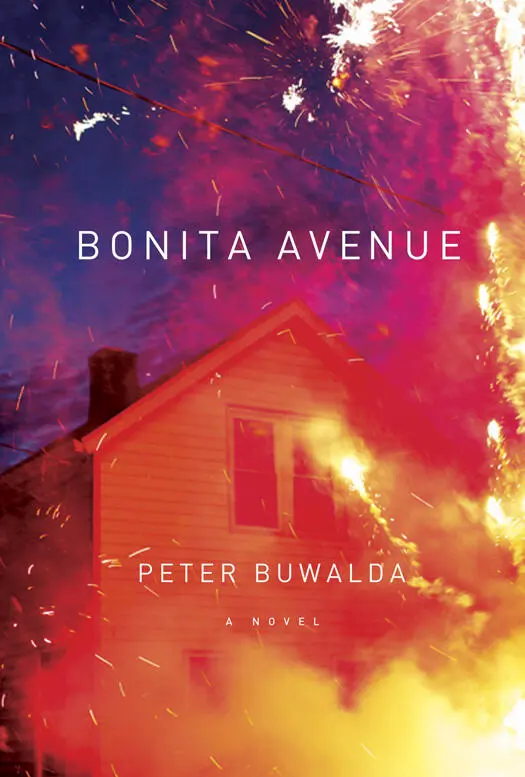
- Название:Bonita Avenue
- Автор:
- Издательство:Crown Publishing Group
- Жанр:
- Год:2015
- ISBN:978-0-553-41786-9
- Рейтинг книги:4 / 5. Голосов: 1
-
Избранное:Добавить в избранное
- Отзывы:
-
Ваша оценка:
Bonita Avenue: краткое содержание, описание и аннотация
Предлагаем к чтению аннотацию, описание, краткое содержание или предисловие (зависит от того, что написал сам автор книги «Bonita Avenue»). Если вы не нашли необходимую информацию о книге — напишите в комментариях, мы постараемся отыскать её.
A riveting portrait of a family in crisis and the ways that even the smallest twists of fate can forever change our lives,
is an incendiary, unpredictable debut of relationships torn asunder by lies, and minds destroyed by madness.
Bonita Avenue — читать онлайн бесплатно полную книгу (весь текст) целиком
Ниже представлен текст книги, разбитый по страницам. Система сохранения места последней прочитанной страницы, позволяет с удобством читать онлайн бесплатно книгу «Bonita Avenue», без необходимости каждый раз заново искать на чём Вы остановились. Поставьте закладку, и сможете в любой момент перейти на страницу, на которой закончили чтение.
Интервал:
Закладка:
Two cameramen and a photographer circled around the Oliver Twist bed. Kristin studied a bird’s-eye view of the set on a laptop. Clint, a guy whose card read “floor assistant,” crouched on the far side of the bed, where Bobbi’s head hung awkwardly over the edge of the mattress. He joked with her some, and occasionally poured a swig of his Red Bull into her mouth.
Vince was completely engrossed in his first job. Despite the chill in the ballroom he was sweating profusely, flooding the beaches on his Hawaiian shirt. With the speed of a catamaran sailor, he brought the rope around Bobbi’s left knee, which rested, like the right one, at the long edge of the bed; he tossed it around the outer left bedpost, threaded it back and pulled it tight, tying it deftly in a sea scout knot. Bobbi’s buttocks glowed like the head of a sphinx in the glaring floodlights. With his back to me: Rusty, monitoring the goings-on in his new office.
No one noticed me. I stood half in the brick doorframe, about twenty yards from Bobbi and Vince, a distance that seemed to fold in on itself, leaving me a total outsider with regard to the bed tableau. Something — perhaps I was hoping for a message from Boudewijn, or maybe it was Bobbi’s last comment, which struck me as arrogant, a tad too much disdain for my taste — kept me utterly detached and unexcited. As much as I tried to get caught up in the moment — I impatiently slapped my legs with the whip Q had given me, trying desperately to work myself into the state of mind needed to perform my duties on that iron-framed bed in a few moments — as much as I tried to concentrate on Bobbi, my brain marched on, a paradox whirling in my head, two contradictory thoughts twisting my consciousness from my body like a wing nut. On the one hand this fort was like a Faraday cage: I was totally blocked from external signals, off the radar, non-existent to my ex and even my son, whose phone calls and messages bounced off the shield. And on the other hand, Bobbi Red lay there waiting for me; like it or not, my thoughts X-rayed her impending fame, which did not yet exist but soon would, a fame whose exact form and scope were still uncertain. The idea that the ingenue who stood at my bathroom sink on Sunset washing her anonymous little ass would become Soderbergh’s new muse, that in six months she’d be traipsing down the red carpet in Berlin with that man, and who knows, might wind up in the Kodak Theater with a gilded statue in her hands — from now on, any thing was possible — made my head spin. The movie would probably disappear into the DVD circuit, I comforted myself, and Bobbi into obscurity; no, it would almost certainly bomb, she would be panned, written off, laughed out of town. But something told me it was going to be a very different story. This was going to be her big break. She’d emerge as a star the likes of which Hollywood hadn’t seen in a long time. Bobbi would become a radioactive twenty-first-century Mae West, a Nicole Kidman that exploded in your face.
Kristin spotted me and signaled. “Joy — three minutes.”
Just say it did happen, I thought as I walked into the ballroom to the hollow click of my heels, what did that mean for the scene we were about to shoot? Her role was clear: this would become a piece of Bobbi footage that contributed to her cinematographic double whammy, a film clip that everyone would want to see, maybe just to satisfy a basic lust, but maybe more to make a study of Bobbi Red, that strange, beautiful geisha whom no one knew how to take. Bobbi turned the brick Barracks into a glasshouse, Bobbi threw open the curtains, Bobbi lifted the manhole cover off the gutter, and then the outside world would see … Mike’s mother?
Rusty had just pulled the Maybach away from the Barracks when Bo’s texts and voice mail messages appeared on my phone, one by one. Cut it out , a voice in my head snarled, leaving Boudewijn was absolutely the right move . The three of us sat on the backseat: me behind Rusty, who despite his manic edge still drove like an old lady, Bobbi in the middle, and Vince on her right, Kristin up front in the passenger seat talking loudly. No post-shoot downer here; the mood, as usual, was congenial and relaxed. We were on our way to Coldwater to catch the end of two other sessions. Leaving was the best thing you ever did . Bobbi slid her slender fingers between mine and pressed up against me, maybe just to be as far as possible from Vince.
I would have died of boredom. Before Mike was born, Boudewijn and I were at least both unhappy in San Francisco. Those months of wandering aimlessly around our new city, wounded and homesick, seeking each other out for comfort and companionship. Misery loves company. But after Mike came, Boudewijn was suddenly contented, he read out loud to Mike (about the only times I heard him speak), enjoyed his hobbies (the only outings we had were long, statewide car trips, sometimes even as far as Nevada, which invariably ended in the barn of some farmer in slippers who pulled a blanket off a half-dilapidated jukebox), and picked fights. Conflicts here, conflicts there, after two years with Boudewijn Stol I couldn’t hear the word “conflict” without breaking into a rash. When I’d get home from Silicon Valley in the evening, he’d already be sitting in his satin pajamas, typing scathing complaint e-mails. To his co-directors at the Golden Gate Park Golf Club, to the personnel at Mike’s nursery school, to his partners at McKinsey, to the divorce lawyer on whom he’d sicced another lawyer. The only person he didn’t fire electronic grenades at from his trench was me.
“F-ing call ASAP” was the first text message I opened. A new jolt of panic shot through me. Mike go-carted a lot recently. Or maybe it had to do with money. Had I missed a payment? No way was I going to call San Francisco from the backseat of this car: I was too chicken, too hung-up, too inhibited, scared to death that Rusty might yank the phone out of my hand and jabber something into it, the kind of thing he’d been jabbering for half an hour already, things he meant as compliments (and, in a sense, were) but would get me barred from parental custody once and for all.
“ Feck , Joy, you are one hard woman,” Rusty exclaimed right after the shoot. He called my performance “fascinating,” almost alarming. He was briefly worried about the bloodred welts on Bobbi’s thighs, hopefully they’d heal before she had to strip for Soderbergh. I was wise enough not to let on how I’d mustered up the requisite sadism; that Bobbi-doll with her cheek resting on my shoulder might not have even understood. What it boiled down to was that I had succeeded in hating Meryl Dryzak for who she was. Out of envy for who she was. I had mobilized all the jealousy in me to hate her for her ambition, her flair and pluck, and the unapologetic way she went out and became, at age eighteen, exactly what she wanted to be, without pretense, without cowardly, costive shame : this is me, take it or leave it. And look where it got her. And, moreover, look where being just the opposite had got me . My half-assed spinelessness had cost me dearly, but I was still leading a double life, I still had everything to hide. I let the New York Times interview me, but without a photo. Try explaining that to Bobbi.
(I hadn’t explained a thing to Boudewijn either. I just buggered off and tendered the fake excuses later by phone. After two and a half comfy years up in our Russian Hill eagle’s nest, the little one tucked under his down covers, I simply up and left.)
His second text hit me like a bullet. “Aaron Bever called us. WTF?!” I jerked my hand out of Bobbi’s and clapped it to my mouth. Startled, she looked up.
“You OK, honey?”
Читать дальшеИнтервал:
Закладка:
Похожие книги на «Bonita Avenue»
Представляем Вашему вниманию похожие книги на «Bonita Avenue» списком для выбора. Мы отобрали схожую по названию и смыслу литературу в надежде предоставить читателям больше вариантов отыскать новые, интересные, ещё непрочитанные произведения.











Обсуждение, отзывы о книге «Bonita Avenue» и просто собственные мнения читателей. Оставьте ваши комментарии, напишите, что Вы думаете о произведении, его смысле или главных героях. Укажите что конкретно понравилось, а что нет, и почему Вы так считаете.