Peter Buwalda - Bonita Avenue
Здесь есть возможность читать онлайн «Peter Buwalda - Bonita Avenue» весь текст электронной книги совершенно бесплатно (целиком полную версию без сокращений). В некоторых случаях можно слушать аудио, скачать через торрент в формате fb2 и присутствует краткое содержание. Год выпуска: 2015, ISBN: 2015, Издательство: Crown Publishing Group, Жанр: Современная проза, на английском языке. Описание произведения, (предисловие) а так же отзывы посетителей доступны на портале библиотеки ЛибКат.
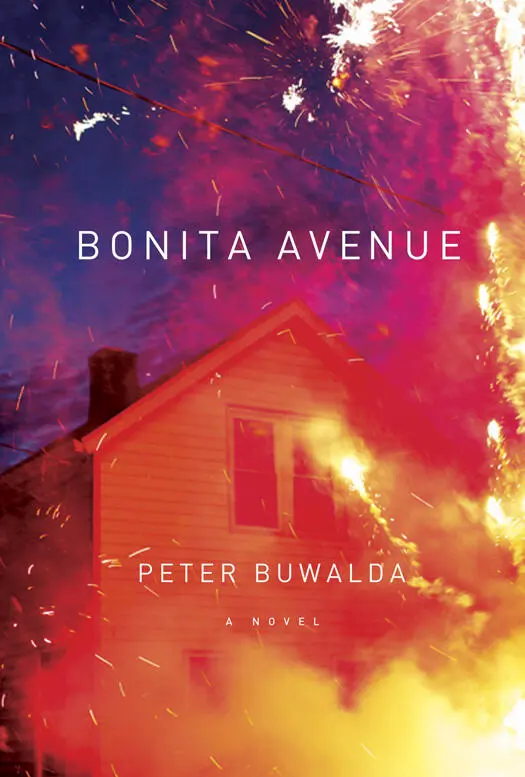
- Название:Bonita Avenue
- Автор:
- Издательство:Crown Publishing Group
- Жанр:
- Год:2015
- ISBN:978-0-553-41786-9
- Рейтинг книги:4 / 5. Голосов: 1
-
Избранное:Добавить в избранное
- Отзывы:
-
Ваша оценка:
Bonita Avenue: краткое содержание, описание и аннотация
Предлагаем к чтению аннотацию, описание, краткое содержание или предисловие (зависит от того, что написал сам автор книги «Bonita Avenue»). Если вы не нашли необходимую информацию о книге — напишите в комментариях, мы постараемся отыскать её.
A riveting portrait of a family in crisis and the ways that even the smallest twists of fate can forever change our lives,
is an incendiary, unpredictable debut of relationships torn asunder by lies, and minds destroyed by madness.
Bonita Avenue — читать онлайн бесплатно полную книгу (весь текст) целиком
Ниже представлен текст книги, разбитый по страницам. Система сохранения места последней прочитанной страницы, позволяет с удобством читать онлайн бесплатно книгу «Bonita Avenue», без необходимости каждый раз заново искать на чём Вы остановились. Поставьте закладку, и сможете в любой момент перейти на страницу, на которой закончили чтение.
Интервал:
Закладка:
The next morning, as they are saying their farewells, they accept the invitation to celebrate Christmas with Hans and Ria in their chalet in the French Alps. Tineke takes the wheel and drives, as they always do when they’re in Utrecht together, down the Antonius Matthaeuslaan — but he hardly bothers to look. Should he go back to Aaron’s house? He compares himself to his father, wonders whether, until that championship jenever, he really was completely in the dark. Of course he knew. He used to see his father’s obstinate ignorance of his judo as pure weakness, as oversimplification and, as the years went on, as the plain indifference of an old fart. For the first time, he seriously tries to step out of that mindset and into the resentment his deeply humiliated father must have felt. This exercise in empathy makes him realize that his father tacitly tolerated his judo, despite his wartime trauma. When his pa died in 1964, Sigerius was secretly relieved — he dreaded facing the man after his training year in Japan, his relief was purely selfish. But in the hectic days after their weekend in Utrecht, that old feeling takes on a new taste; for the first time, he’s glad his father no longer had to put up with it, for the first time, he’s relieved for his father’s sake . Shouldn’t he do the same, just turn a blind eye himself? Just like his father, pretend everything’s hunky-dory. Know but don’t know. Until the neighbor’s kid comes over one evening to say your son is national champion. But what, he wonders, what will they come over to tell him?
Wednesday morning the fireworks disaster commission meets, and at the end of the afternoon he grabs his chance. At half-past four he crosses the administration parking lot with his sports jacket draped over his arm. Humming, he gets in his university car and drives down the Hengelosestraat. He parks in front of the McDonald’s on Schuttersveld and walks over to the hardware center.
A timid, pimply boy in a red polo shirt with the store’s logo leads him to a display of grinding tools and bolt cutters. He buys the next-to-smallest cutting shears, which are still enormous, and drives back to campus. To his satisfaction he finds the farmhouse empty. In their bedroom, he removes his suit and goes into the bathroom. He takes a lukewarm shower. If he inhales deeply, his chest resonates with a pleasant edginess. He dries himself off, walks naked into the dressing room, puts on beige khakis, loafers without socks, and a pale-orange polo shirt. Not too theatrical? He checks himself out in the full-length mirror and decides to put his suit back on after all.
After a certain amount of searching he finds, in the bedroom cupboard, a large tennis bag; he stows the bolt cutter in it diagonally. He leaves a note for Tineke in the living room: “Hi hon, how was it with your sister? Afraid I can’t get out of eating with the guys from that debating team. After that we’ll watch France-Holland together. See you later, S.”
Just after six he drives down the Hengelosestraat for the second time. Evening rush hour is thinning out, he’s got both front windows halfway open and he’s playing a Cannonball Adderley CD. It’s a warm, windless evening, a large, languid sun paints over the city like a damaged maquette. There are lots of people about, bicyclists weaving in and out, men with rolled-up pant legs playing soccer in parks. But it is a film. Cannonball’s elastic alto sax goes with this film — not with him. The warm evening breeze blows through his car, but he is entirely detached from Enschede.
He approaches Roombeek via the Lasondersingel. The fencing looks older than the city itself. He parks the car in the small lot in front of the low-rise apartment block, the bunker that protected Aaron’s street from the shock wave. The athletic bag weighs heavily on his shoulder and grazes the overhanging conifers along the front path. This time the lock opens without resisting.
He enters the hall like in a recurring dream: the faint animal smell, the rustle of junk mail on the mat. He closes the door and listens with bated breath. A million dust particles exchange places, the whirl of silence. In the living room, a familiar tableau: the wall-to-wall curtains at the back are still drawn, the badminton rackets on the coffee table have not rearranged themselves. His mouth is dry, he drinks with long gulps from the kitchen faucet. He stands for a moment at the kitchen window. Aaron’s bike leans up against the wide hedge of conifers.
With soundless adrenaline-laced steps he takes the stairs up to the landing. The smell of dust and washing. He sets down the bag, fingers the cotton of his judo suit superstitiously, and looks up. The eternal patience of objects. Does he dare? His battle plan is simple: snip open the padlock; if he finds nothing then he’s made a monumental error, in which case he will leave this row house in jubilation and what happened to that padlock will remain a mystery forever; if he does find what he’s afraid of finding, then the padlock doesn’t … then nothing matters anymore.
He wriggles the bolt cutters out of the bag. The jaw is made of glistening, virgin steel. The rubber-sheathed grips are so long that he does not need a chair. His heart pounding, he raises the shears and places the jaw on the shiny U. It takes some effort to squeeze the tool, his upper arms quiver, the bolt cutter is heavy. He gives it one good thrust, and the blades glide through the steel as if through a licorice shoelace. To remove the lock from the rings in the trapdoor and molding he has to get a chair from the study after all, his legs tremble as he climbs onto it. With a dull thud the broken padlock drops into the athletic bag. He takes a deep breath and, the hatch crackling hellishly, he pulls down the folding stairs.
The rectangular hole leading to the attic: a soap film stretches between the wooden edges, a stubborn molecular membrane of last-ditch hope. The fervent hope of paranoia, the hope that things will turn out all right, a softly glistening skin that he puts to the test with every creaking rung — until his eyes scan the attic and the film bursts.
What else did you expect?
He mustn’t fall. As though he’s being crucified, he stretches his arms out over the bloodred carpeting, two nails through his palms. In the ensuing seconds he consists only of head and arms: his legs, his torso, the stairs, the house, Enschede — the whole earth has been swept away underneath him.
What he recognizes from the photos unfolds at lightning speed into three dimensions, what in the pictures was odorless, and essentially innocuous, now has the deadly aroma of unfinished wood, of dust, and of something soft, something feminine, expensive talcum powder. What he experiences is perversely akin to a mathematical proof, to what his beloved Hardy meant by revelation coupled with inevitability; to efficiency, elegance: the dazzling lamp that suddenly becomes illuminated when you hit upon a proof. Now everything blacks out.
He becomes aware of a distant, heavy panting — the rhythm of his own breathing. The attic is more spacious than he had expected, the red wall-to-wall carpeting chafes his arms. Twilight falls softly through a closed Velux roof window. In the middle of the room, a wooden bed in romantic country-cottage style, pillows with lace edging, a white duvet puffed up like fresh snow in a Dickens film. On either side, two tripods with flood lamps. The professionalism of those two scarecrows is devastating — this is no attic, this is a studio . The sloping walls are decorated with posters, carefully chosen posters, he appreciates at once, posters that deliberately have nothing to do with Joni and Aaron: a panorama photo of the Grand Canyon, the picture with the two kittens, Celine Dion in Las Vegas. Against the outside wall, covered in pink-and-white-striped wallpaper, he spots the bookcase filled with the American books, he recognizes it from the photos in Shanghai — a wave of bitterness and revulsion jolts through him: the calculated forethought, the devious perfection of that bookcase.
Читать дальшеИнтервал:
Закладка:
Похожие книги на «Bonita Avenue»
Представляем Вашему вниманию похожие книги на «Bonita Avenue» списком для выбора. Мы отобрали схожую по названию и смыслу литературу в надежде предоставить читателям больше вариантов отыскать новые, интересные, ещё непрочитанные произведения.



Обсуждение, отзывы о книге «Bonita Avenue» и просто собственные мнения читателей. Оставьте ваши комментарии, напишите, что Вы думаете о произведении, его смысле или главных героях. Укажите что конкретно понравилось, а что нет, и почему Вы так считаете.