Peter Buwalda - Bonita Avenue
Здесь есть возможность читать онлайн «Peter Buwalda - Bonita Avenue» весь текст электронной книги совершенно бесплатно (целиком полную версию без сокращений). В некоторых случаях можно слушать аудио, скачать через торрент в формате fb2 и присутствует краткое содержание. Год выпуска: 2015, ISBN: 2015, Издательство: Crown Publishing Group, Жанр: Современная проза, на английском языке. Описание произведения, (предисловие) а так же отзывы посетителей доступны на портале библиотеки ЛибКат.
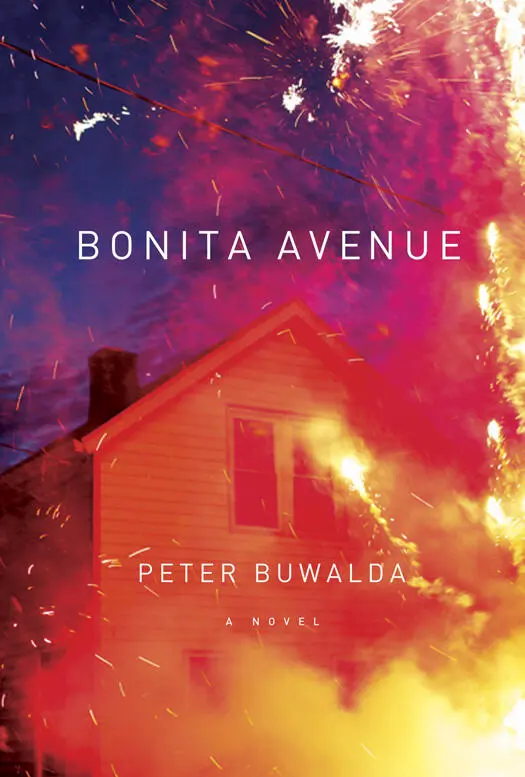
- Название:Bonita Avenue
- Автор:
- Издательство:Crown Publishing Group
- Жанр:
- Год:2015
- ISBN:978-0-553-41786-9
- Рейтинг книги:4 / 5. Голосов: 1
-
Избранное:Добавить в избранное
- Отзывы:
-
Ваша оценка:
Bonita Avenue: краткое содержание, описание и аннотация
Предлагаем к чтению аннотацию, описание, краткое содержание или предисловие (зависит от того, что написал сам автор книги «Bonita Avenue»). Если вы не нашли необходимую информацию о книге — напишите в комментариях, мы постараемся отыскать её.
A riveting portrait of a family in crisis and the ways that even the smallest twists of fate can forever change our lives,
is an incendiary, unpredictable debut of relationships torn asunder by lies, and minds destroyed by madness.
Bonita Avenue — читать онлайн бесплатно полную книгу (весь текст) целиком
Ниже представлен текст книги, разбитый по страницам. Система сохранения места последней прочитанной страницы, позволяет с удобством читать онлайн бесплатно книгу «Bonita Avenue», без необходимости каждый раз заново искать на чём Вы остановились. Поставьте закладку, и сможете в любой момент перейти на страницу, на которой закончили чтение.
Интервал:
Закладка:
At the words “trial lessons” a shudder surged through his father’s body, as though he were in a train changing tracks. “And what might this teacher’s name be?”
He often thought back on what his father once said when Fred had bored all the way through Jet Kolf’s foot with a hand drill, the steel bit went right through her leather boot. Blood spurted out. Someone went to get him, he didn’t know who, his father came running to the Beestenmarkt without his coat. “If I’ve said it once, I’ve said it a hundred times,” he growled as he slapped Fred upside the head, “I should’ve put the lot of you into an orphanage.”
“You mean our sensei , Pa. That’s what the Japanese call him.”
“I asked you what his name was.”
“Mr. Vloet.”
His father shook his head, as though Mr. Vloet wasn’t really named Mr. Vloet. “Boy,” he said, “you shouldn’t believe everything you hear. Wishy-washy nonsense about respect and virtue. That guy has no idea what he’s talking about.”
“Mr. Vloet is a third dan, Pa. That’s a pretty high rank.” He felt someone kick his shin. Daan glared at him, his mouth pulled into a tight little stripe, he shook his head almost imperceptibly.
“I don’t give a shit which damn Mr. Vloet is or isn’t,” his father said, suddenly raising his voice. “What irks me is that know-it-all rubbish about the Japanese. Don’t tell me about the Jap, Simon. Don’t try it on with me about the virtuous Japanese. Or about another man’s happiness. God help me.”
And with the word “God” his father slapped his hand against the edge of his plate. It broke in half. First came the loud jangle, then complete and utter silence. Fred and Daan stared wide-eyed at their sausages, Ankie gawked with a full mouth at her father. As though his plate hadn’t been cleaved in two, their father jabbed a piece of potato from the tablecloth, stuck the fork in his mouth and chewed. After he’d swallowed, he said calmly: “Listen, Siem. You tell that Mr. Vloet your father was a POW in Burma. You tell him: ‘My father did forced labor on the Burma railway.’ You understand? Then he’ll understand why you won’t be coming anymore.”
• • •
Well over halfway along the Moslaan, he and his pa stood blowing on their fingers. It was as though there was a body in the desk.
“Going well, boy.”
Sweat poured down his back — a mixture of exertion and fear. He trusted his sister all right, she wouldn’t rat on him, but he wasn’t so sure about his brother-in-law. Gerrit with his dirty fingernails from the workshop. He was an odd fish, Gerrit, a downright sneak, buttered up his old man until the stuff dripped off him. Had a story about everybody, things no one else ever mentioned. The exact cause of their mother’s death, for instance — Siem had heard it from Fred, and Fred had heard it from Gerrit. His mother — his softhearted, sweet, pretty mother — had died, according to Gerrit, as a result of a furuncle . A furuncle in her nose. “A f’your uncle?” he asked, shocked, fyorunkel, fyorunkel? It sounded like that monkey the Russians shot into outer space. “But you don’t die from it,” he stammered, horrified. “A sort of boil,” Fred explained, “you do so, if the, you know, the pus squirts into your brain.”
He didn’t like Gerrit knowing about him doing judo on the sly. That he was hooked. The afternoon he went by Loes and Gerrit’s to ask if she would launder his judo suits from now on, a conniving frown passed over his brother-in-law’s face. Gerrit sat him down to explain in detail why his father did not approve of judo. He did know about the war, yes? About the Dutch East Indies? What the yellow bastards had done to his pa? No? “Kid,” Gerrit said with a grimace, “they brutalized your ol’ man something awful. First he trudged 200 kilometers to Burma, barefoot, seven days and nights. And then spent two years dragging railroad ties, fourteen hours a day, no coffee breaks. Covered in open sores and lice. And the Jap with his billy club. Ever seen your dad’s back?”
“No.”
“Keep it that way, kid. When you were still in diapers your sister and me, we lived with your folks. Every night at 3 a.m., kid, it started. Bawled like a baby, your pa did. Slept in the alcove so your ma could get a good night’s rest. Under his bed he had a, watchamacallit, one a them wog-cutlasses, a ‘klewang,’ and if your mother or me …”
Loes came in with the coffee. “What all are you telling the boy?”
“… or your sister here, if we went in to calm him down, he’d stand up on his bed waving the damn thing. ‘Out of here, dirty Jap! Ssssss — I’ll slice you to ribbons.’ ” He grinned. “Ain’t that right, Loes?”
His sister held a tin of butter cookies under his nose.
“Your pa went AWOL too, once,” Gerrit said. “Escaped from the prison camp. Two weeks in the jungle. Oh yeah. A hero. Your pa’s a hero.” Maybe because he was only fourteen, had never had lice, let alone been beaten with a stick, maybe because Gerrit’s venomous verbosity made him sick to his stomach, Siem had difficulty paying attention. “The Kempeitai, you’ve heard of that, right?” Gerrit asked. “The Yellow Gestapo, you could say. Your father, he walks straight into their arms. Poor guy. Spent the rest of the war in a metal box, a meter square. Home sweet home. Not sitting, not standing, not lying down. They’d let him out couple times a week so they could beat the crap out of ’im … Yeah, yeah.”
Siem’s head cooled down on his way home, it had iced over with recalcitrance. If everything Gerrit said was true, then it was awful for his father, really and truly, but what did a judo club in Delft have to do with the war in Asia?
He and his pa picked the desk back up, this time both of them holding it by the tabletop, so that they could take the corner with small steps, his father facing backward. Although his arms were trembling from the exertion, he still had time to ponder the whole judo issue. He couldn’t not think about it. They had another twenty meters or so to go when his brother-in-law’s dark-green Volkswagen came rattling around the corner. Gerrit parked across from No. 23. When his father set down his end and turned around, something in Siem’s cranium started careening and crashing about. He watched as Gerrit climbed like a flightless bird from the dark-green dome. Gerrit had recently given his father a lift to Rotterdam. It was enthusiastic indignation that banged around inside his skull. Loes and her husband had a Volkswagen. A German thing, a car thought up by fucking Adolf Hitler. And his father was quite happy to ride around in it! In Hitler’s car!
“I’ll take over for you,” Gerrit called from across the street to Siem’s father, who was leaning with his back against the edge of the desk.
“Pa,” he said, but his father did not turn around. “Pa,” he shouted, “could you please tell me why Loes and Gerrit can drive a Kraut car, but I can’t go to judo?”
It all happened so fast. In two steps his father was around the side of the desk, he’d never seen him so agile and athletic before. And then: exquisite pain. The palm of his father’s hand landed mercilessly against his left ear, the fragile organ not yet cauliflowered by sixteen years of competitive judo. Tears sprang from his ducts, but he gritted his teeth, squeezing back the fluid with his eyelids until he could once again focus on the knotty wood of the desk. His father raised his arm and pointed down the street they had just come from. “Out of my sight,” he said. “ Move. ”
Hans and Ria used to live in a small third-floor walk-up on a side street of the Antonius Matthaeuslaan; now they own a renovated brownstone overlooking Wilhelmina Park that Hans financed with the wholesale import of South African wine. They eat in the shady backyard. After a few glasses of Kranskop red, Sigerius debates the mathematical merits of chess with his host, a club chess player with black-and-white opinions. The obnoxious fanaticism with which he insists on his pet opinion (which he in fact borrowed from G. H. Hardy) — that despite its charm, chess lacks something essential, it is inconsequential as opposed to mathematics: “mathematics is elegant and relevant, Hans, you can’t say that about chess”—makes him realize how much that boat is eating at him. He must find a way to get up into that attic.
Читать дальшеИнтервал:
Закладка:
Похожие книги на «Bonita Avenue»
Представляем Вашему вниманию похожие книги на «Bonita Avenue» списком для выбора. Мы отобрали схожую по названию и смыслу литературу в надежде предоставить читателям больше вариантов отыскать новые, интересные, ещё непрочитанные произведения.









Обсуждение, отзывы о книге «Bonita Avenue» и просто собственные мнения читателей. Оставьте ваши комментарии, напишите, что Вы думаете о произведении, его смысле или главных героях. Укажите что конкретно понравилось, а что нет, и почему Вы так считаете.