Peter Buwalda - Bonita Avenue
Здесь есть возможность читать онлайн «Peter Buwalda - Bonita Avenue» весь текст электронной книги совершенно бесплатно (целиком полную версию без сокращений). В некоторых случаях можно слушать аудио, скачать через торрент в формате fb2 и присутствует краткое содержание. Год выпуска: 2015, ISBN: 2015, Издательство: Crown Publishing Group, Жанр: Современная проза, на английском языке. Описание произведения, (предисловие) а так же отзывы посетителей доступны на портале библиотеки ЛибКат.
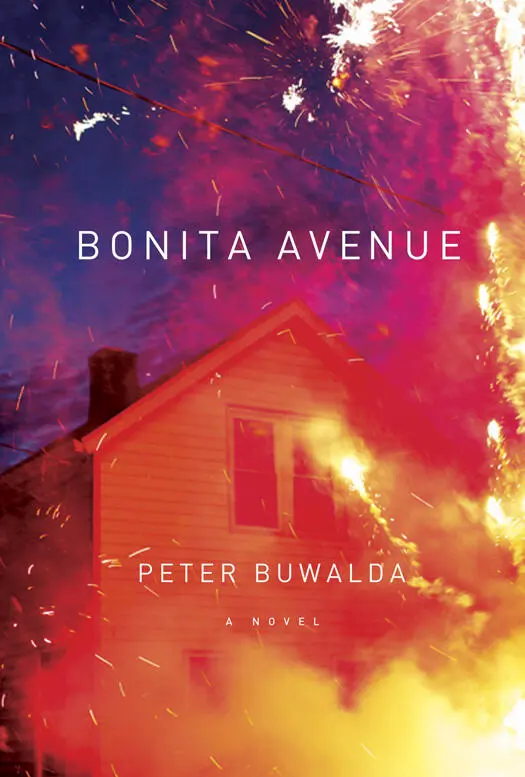
- Название:Bonita Avenue
- Автор:
- Издательство:Crown Publishing Group
- Жанр:
- Год:2015
- ISBN:978-0-553-41786-9
- Рейтинг книги:4 / 5. Голосов: 1
-
Избранное:Добавить в избранное
- Отзывы:
-
Ваша оценка:
Bonita Avenue: краткое содержание, описание и аннотация
Предлагаем к чтению аннотацию, описание, краткое содержание или предисловие (зависит от того, что написал сам автор книги «Bonita Avenue»). Если вы не нашли необходимую информацию о книге — напишите в комментариях, мы постараемся отыскать её.
A riveting portrait of a family in crisis and the ways that even the smallest twists of fate can forever change our lives,
is an incendiary, unpredictable debut of relationships torn asunder by lies, and minds destroyed by madness.
Bonita Avenue — читать онлайн бесплатно полную книгу (весь текст) целиком
Ниже представлен текст книги, разбитый по страницам. Система сохранения места последней прочитанной страницы, позволяет с удобством читать онлайн бесплатно книгу «Bonita Avenue», без необходимости каждый раз заново искать на чём Вы остановились. Поставьте закладку, и сможете в любой момент перейти на страницу, на которой закончили чтение.
Интервал:
Закладка:
“I already called the manufacturer,” Bobbi said, “but they don’t have anything in stock. It might take a few weeks, I’m afraid.”
Her mother was a sturdy woman with thick, lank hair and high cheekbones, and who, despite her jeans and leather jacket, resembled a squaw. To reach her I would have had to wade through thick hunks of broken glass that lay on my flokati rug like hailstones. So I didn’t; we just nodded at each other. In her broad lap and on the floor by her feet lay wads of tissues from the Kleenex box that balanced on the leather armrest of the sofa. In the midst of this former family stood the matt-black aluminum tubular construction that once supported the glass top of my coffee table. At the bottom of the tubular cube, amid mounds of glass, Bobbi’s silver laptop glittered, open and unhinged on one side. Across the room, in front of the open bathroom door, the Louis Vuitton bag lay like a duck shot down in mid-flight; scattered around it the tubes, the jars, the condoms, the enema.
“Joy’s the director of one of the studios where I work,” Bobbi said, more buoyantly than usual. When no one responded, she continued: “Well, I guess we’ll be going.”
Her brother stood up as though he’d been given an electric shock; instead of getting taller, he got broader. He strode over to me in two firm steps and pushed his flattened ravioli-nose almost against mine.
“You’re lucky you’re not a guy,” he said with breath that smelled of sweet potato and fried calamari rings, “or I’d slit you open and rip your guts out. Being a woman and not a man shows that God hasn’t forsaken you altogether.”
After these words he disappeared into the front hall. You could hear his breathing as he waited for Bobbi and her mother to join him.
11
The Saturday afternoon after his pathetic quest through Aaron’s house, they drive to Hans and Ria’s, friends of Tineke from her Utrecht days. They spend two hours in their air-conditioned Audi, he at the wheel, most of the journey in silence. On Radio 2 an MP is debating the issue of fireworks permits with an industry lobbyist and a government inspector, he picks something up about an aerosol theory. Tineke’s quivering thigh presses against his.
“D’you hear that?” she asks.
“Hear what?”
“About the nitrocellulose. Gun cotton. They found it right after the disaster.”
“What don’t they find.” He has no idea what she’s talking about, he does not know what nitrocellulose is, he has other things on his mind. It might be a good idea to listen, though: on Monday he has to meet with the Oosting Commission investigating the fireworks disaster. But he’s preoccupied with that boat. He keeps asking himself what in God’s name he actually knows about his children. A father who hasn’t seen his son in years and whose elder stepdaughter is studying at his own damn university. What does he know?
This morning, while Tineke was at cardio fitness, he dialed the number on the marina receipt (on his cell phone, naturally); the chap who answered did not speak a word of English, it was dreadful, he couldn’t even muster up “I’ll call you right back” in schoolboy French. He raced upstairs to his study and looked up all the key words in a French dictionary, but when he called back the guy of course didn’t answer. After a quarter of an hour he got him on the line again, and first had to lie that he was A. Bever’s father, only to learn, in pidgin campground-French (the man who aspires to be Education Minister has to express himself in pidgin French) that Aaron was the owner of that boat, “ propriété de monsieur A. Bever, né le 8 janvier 1972 à Venlo — oui, c’est ça. ”
It was as though he himself had been side-launched, right into the Arctic Ocean. Following the initial shock, a painful strain on his chest, all sorts of images shooting through his head (drugs, Mafia, female trafficking, Dutch underworld, sex, sex, sex), he scurried into denial — he must have misunderstood, those two couldn’t possibly own a boat worth millions, a boat you rent in Florida for a hundred grand a week? It was insane— he was going insane.
But now he believes it again. Because what do we really know about each other? What do fathers know anyhow? A yacht ? Is it possible to hide a sixty-foot pleasure yacht from each other? What does a father know?
For the answer, he only has to shift the question a generation: what did his father know about him ? He’s just the person to ponder that. Suddenly he is no longer sitting in his car, he is back in Delft, in his parents’ house on the Trompetsteeg, and like most other Sundays he is stiff with muscle pain and bruised from head to toe, and on this particular Sunday he doesn’t give a hoot about the pain, because the previous day he became national champion in the Energiehal in Rotterdam. And his father? He didn’t even know. He sat downstairs, stubbornly not knowing.
1962? 1962. Glowing from his achievement, he stared out of the dormer window in his boyhood room over the alley of a youth he had only just left behind. He most likely played one of his EPs on his Garrard portable gramophone to counteract the Sunday somberness that reached up through the narrow stairway, pawing the attic like a giant’s hand, wishing he were back in the Kromhout army barracks. He and Ankie and their father had just eaten dinner in the kitchen, and following the circus act with oranges and full-fat yogurt their father had been performing for donkey’s years — completely peeling and dismembering the orange, segment by segment, a messy half-hour exercise — he had gone upstairs counting the minutes until he could pack his duffel bag and cycle back to Utrecht. It was around seven in the evening, dusk settling over the alley, when across the way a front door opened and one of the Karsdorp boys crossed the black cobblestone street in his house slippers and knocked on the window.
“Ank,” his father bellowed from the living room; he heard his sister draw aside the black-velvet curtain and squirm past the bikes to the front door. The greeting, voices-turned-murmur, Ankie on the stairs and her dark-brown curls poking around the corner. “Come quick,” she whispered, “you’re on television.”
On his guard, he wriggled his feet into his army boots. Downstairs, in the dim sitting room, a delineated silence. His father sat at the table in his woolen Sunday suit, reading; the copper hanging lamp cast a searchlight onto one of his night school textbooks, bound in marbled paper; he perused the pages through his half-glasses as though the Karsdorp boy, who stood next to the table studying the worn spots in the carpet, was made of thin air.
“So long, Mr. Sigerius,” said the boy, and he and Ankie followed him over the slick cobblestones to his parents’ house. While they seemed even poorer than his own family, they were still the only ones on the street with a television set. “Watch, don’t eat,” his father admonished. Their living room smelled of cauliflower and fatty gravy and was chock-full of children and grown-ups, extra chairs had been brought in, and in the corner near the window the eye of a varnished television cabinet glowed with images of that afternoon’s football match.
“Sit down, kids,” said Mrs. Karsdorp, a mother with pale flesh and unruly red hair. Here too you could hear a pin drop, and afterward he thought he’d heard them go quiet when he arrived, sudden bashfulness, all eyes glued to Studio Sport , it seemed like they were bashful because of him , either because he was national champion or because of his military travel gear.
After the football came an item on a swim meet, but after that they really did see shots of the judo tournament in Rotterdam, the voice of commentator Jan Cottaar as he announced the title defender, Joop Gouweleeuw, also from Delft, the camera zooming on Anton Geesink, the world champion “who passed up the national title bout,” and there he was himself, “the nineteen-year-old Simon Sigerius,” at the edge of the mat for his final match against Jan van Ierland. Mr. Karsdorp, with whom he and his sister were squashed into a two-seater, was the first to open his mouth: “Won’t your pa come watch?” he asked, and Siem could see that Ankie was about to answer, probably something apologetic. He beat her to it: “I don’t think so, Mr. Karsdorp.” His voice sounded heavy and loud. “My father thinks judo’s a sport for traitors. He doesn’t even know I’m national champion.”
Читать дальшеИнтервал:
Закладка:
Похожие книги на «Bonita Avenue»
Представляем Вашему вниманию похожие книги на «Bonita Avenue» списком для выбора. Мы отобрали схожую по названию и смыслу литературу в надежде предоставить читателям больше вариантов отыскать новые, интересные, ещё непрочитанные произведения.






Обсуждение, отзывы о книге «Bonita Avenue» и просто собственные мнения читателей. Оставьте ваши комментарии, напишите, что Вы думаете о произведении, его смысле или главных героях. Укажите что конкретно понравилось, а что нет, и почему Вы так считаете.