J. Ledgard - Submergence
Здесь есть возможность читать онлайн «J. Ledgard - Submergence» весь текст электронной книги совершенно бесплатно (целиком полную версию без сокращений). В некоторых случаях можно слушать аудио, скачать через торрент в формате fb2 и присутствует краткое содержание. Год выпуска: 2011, ISBN: 2011, Издательство: Random House UK, Жанр: Современная проза, на английском языке. Описание произведения, (предисловие) а так же отзывы посетителей доступны на портале библиотеки ЛибКат.
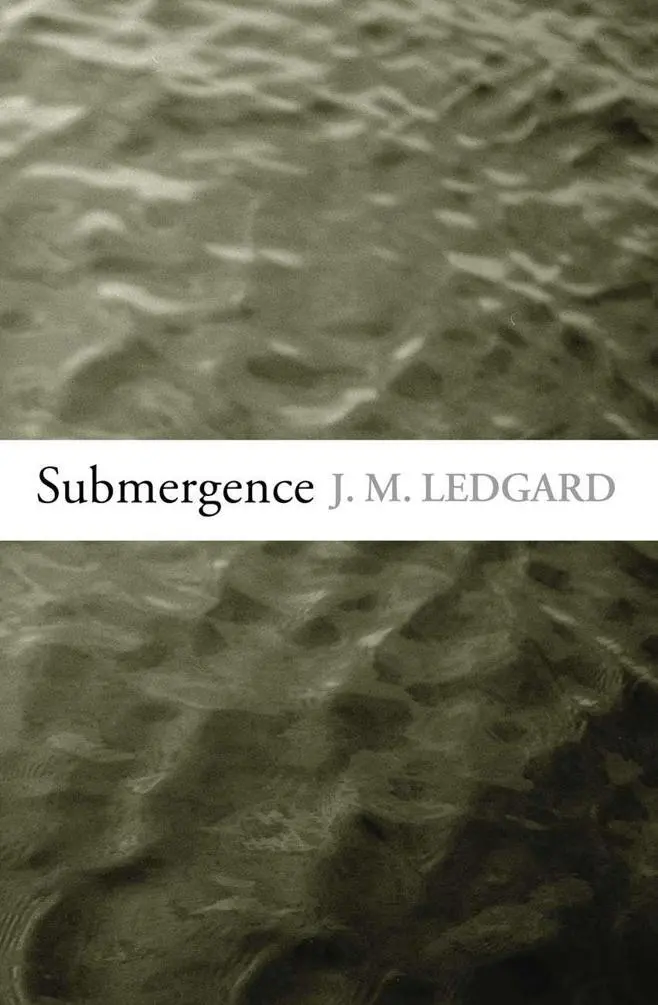
- Название:Submergence
- Автор:
- Издательство:Random House UK
- Жанр:
- Год:2011
- ISBN:9781446496831
- Рейтинг книги:5 / 5. Голосов: 1
-
Избранное:Добавить в избранное
- Отзывы:
-
Ваша оценка:
Submergence: краткое содержание, описание и аннотация
Предлагаем к чтению аннотацию, описание, краткое содержание или предисловие (зависит от того, что написал сам автор книги «Submergence»). Если вы не нашли необходимую информацию о книге — напишите в комментариях, мы постараемся отыскать её.
Both are drawn back to the previous Christmas, and to a French hotel on the Atlantic coast, where a chance encounter on the beach led to an intense and enduring romance. For James, his mind escapes to utopias both imagined and remembered. Danny is drawn back to beginnings: to mythical and scientific origins, and to her own. It is to each other and to the ocean that they most frequently return: magnetic and otherworldly, a comfort and a threat.
Submergence — читать онлайн бесплатно полную книгу (весь текст) целиком
Ниже представлен текст книги, разбитый по страницам. Система сохранения места последней прочитанной страницы, позволяет с удобством читать онлайн бесплатно книгу «Submergence», без необходимости каждый раз заново искать на чём Вы остановились. Поставьте закладку, и сможете в любой момент перейти на страницу, на которой закончили чтение.
Интервал:
Закладка:
The room smelled like a city villa and a sanatorium; Swiss. On little plinths around the room were marble busts of historical figures. He went over to where she was sitting, under Garibaldi’s head. They were cold from their walk and were turned towards the stove. Pastries and hot chocolate were brought to the adjoining table. It was afternoon. They played backgammon.
‘I’ve been reading up on the ocean,’ he said. ‘Is it true that every third breath we take is from oxygen stored in the sea?’
‘I wouldn’t trust it. It sounds like something a journalist would write. Although’ — she rolled the dice — ‘it does speak to a larger point.’
‘Which is?’
‘We’re entering an age when everything will be quantified. What we have thought of as abundant we will understand to be limited.’
‘The seamounts?’
‘I’m talking the world and everything in it.’
‘What about fresh air? Will we quantify that?’
‘Of course. Oxygen will be a proven reserve. It will have to be managed, just as we manage water and minerals and fuels.’
‘The great aqualung in the sky.’
She looked at the board and smiled. ‘You’re blocked in.’
‘I just need a six.’
A three.
‘In Rwanda,’ he continued, speaking as the water engineer, and as himself, ‘they used to have hunting dogs that tracked and killed serval cats in the forests. Princes who lived in grass huts high enough for you or I to stand up in wore the skins. The wicker partition inside the huts spiralled inwards like so’ — he danced his fingertips on the card table — ‘a snail shell, and the only light came in through a hole in the roof, and the smell was naked; dung, cow blood. You wound in to a grass bed at the centre raised up above the rats and snakes and there was a teenage girl on her knees, waiting for the prince to enter, a different girl from the night before.’
‘What’s your point?’
‘My point is that the prince and the girl belonged to a land of plenty. There was enough then, whereas today every hillside in Rwanda is cultivated. The serval cats and the hunting dogs are gone, so are the grass huts. Nearly all the forest has been cut down, and the perpetrators of the genocide and the victims have nowhere to hide from each other. In some places the wells are running dry, in others the earth is washed away in streams. Rwanda has to develop now, or face another genocide. It’s quantified.’
‘Very much so,’ she said.
He could not get the six he needed to put his final piece back into play. She was overtaking him. They talked on through several more games. Towards the end, she spoke about the future. But when he spoke about dead aid to Africa — how the money given out by charities was wasted — her interest wavered and she became intent on the game.
He tracked tiny movements of small people. Here today, still there tomorrow. He ate sandwiches in the canteen, chaired teleconferences, left the office before rush hour. If he was ever allowed to speak to her about the explosive part of his job, he knew he would not have the words. He would not be able to describe to her the adrenaline rush of lifting and aiming a gun. He would have left her only with a description of the noise a firearm makes when it is fired and the smell of cordite, which lingers.
There was defeatism in their conversation which allowed a greater part to Malthus, he decided, and did not take into account the advances of mankind. Among the busts around the room the only Englishmen were Isaac Newton and John Milton. He looked at Milton — impassive, unseeing — and verse crowded in. The greatest privilege of education, he thought, was to renew and clarify your mind through the perception of others. Milton had more than played his part. Secretary of Foreign Tongues to the Republic; a freethinker who stood to the right of Oliver Cromwell, where the Levellers and Ranters stood to the left: ‘Give me the liberty to know, to utter, and to argue freely according to conscience, above all other liberties.’
He thought of how in Paradise Lost the Archangel Raphael sat down in Paradise with Adam and Eve, not in the form of mist, but as a hungry creature who needed to eat. He spoke aloud the last lines of Book XII.
‘Say it again,’ she said. She liked the sound of his voice.
‘Some natural tears they dropp’d,’ he began, ‘but wip’d them soon; The world was all before them, where to choose Their place of rest, and Providence their guide: They hand in hand with wand’ring steps and slow, Through Eden took their solitary way.’
She had suffered from the divide in the English education system, which holds that scientists do not study Milton, and those who love Milton have no comprehension of Newton’s gravity, which brought Lucifer tumbling from heaven. But she had recovered to become a voracious reader.
They played billiards. The cues were stacked against a stone sink, where in days past billiard players would have washed their hands and faces. The emptiness of the room and the echo of their footsteps on the wooden floorboards gave the game a slightly eerie feel. Neither of them knew the rules. They made them up. She bent over the table.
‘Hell!’ she exclaimed. ‘I’m terrible. Isn’t this longer than a pool stick?’
‘Come around this side,’ he said.
He moved in behind, wrapped her up, and it began again. She was a flower about to open. He touched her arms and hands. They pulled back the cue, together they struck the white ball, it clicked the red, and for her his kiss was more than the balls striking; he touched her life, she touched his, their lives so independent and far apart from each other.

There is a dwarf antelope in east Africa called the dik-dik. They are easier to kill from a distance than to catch. In his intelligence reports he called the fight against jihadists in Somalia the dik-dik war.
But jihadists were more like weeds really, he thought. If you left them alone, they grew thick on the ground. If you cut them down, they came back stronger. So the strategy employed in the dik-dik war was no kind of strategy at all, just a periodic spraying from the air.
A bird flew into the surgery on the same day a girl was stoned to death in the square. It entered with furled wings looking to nest and lost itself, battering itself against the walls and windows. He shouted out when the bird struck him and the guards came in. They wrung the bird’s neck and beat him. It lay dead on the floor. Its claws looked like nibs dipped in ink. It was not a songbird. That is also what the cleric declared about the girl who was stoned to death in the town square: ‘She’s no nightingale.’
They dug a pit and buried her in it up to her neck. The cleric called out that he was doing Allah’s instructions. ‘I’m not going!’ the girl screamed. ‘Don’t kill me! Don’t kill me!’
They gagged her, put sacking over her head and a veil over the sacking, so the world was blacked out. They poured perfume over the sacking. Her waters span impossibly fast, she was retching from within and her hearing must have become more acute, so that immediately after prayers were ended she might have heard the men walking across the square — fifty men in all, each of them picking up rocks — and a crowd of hundreds watching, chattering, wailing. She was fourteen years old. She might have heard the men being assembled behind a line drawn in the sand and how each of them dropped their stones at their feet and arranged them in a pile. She might have heard the crowd drawing breath as the men picked up the rocks and at a command hurled them at her head. What a mess they made of it, with their gangly arms, uncoordinated even in the levelling. So many of the rocks missed. And if the girl was never to be saved, if there was no way of going back in time, then the single service that could have been done for her would have been to replace those men with others who could throw and who would choose each stone carefully and throw straight and true, telling themselves the more accurate the throw the more merciful the sentence. That would have ended it. Instead those useless men managed only one strike in the face, smashing the girl’s front teeth. They were ordered to pick up their stones and move closer. The crowd surged in anger and there was screaming from the girl’s relatives. A young boy sprinted across the square. He was one of her cousins. They had grown up in the same house. He almost got close enough to touch her, but was shot dead just short. The men threw more stones. Some of them hit. Nurses were brought in. The girl was pulled out of the pit. She was examined and found to be still alive, so they slid her back into the hole and packed the sand and gravel around her and the stoning continued. The crowd went quiet. The girl was pulled out once more and declared dead. Her body was laid under the sun, on the world. The nurses shielded her from the men who had stoned her. They wiped the blood and fragments from her face and chest with a wet cloth and washed her for burial. They prayed over her. She was buried under a fig tree in a street near where the boys played table football. Her feet were pointed towards the ocean, her head to the square. She had been sentenced for adultery, after reporting to the religious authorities that she had been gang-raped.
Читать дальшеИнтервал:
Закладка:
Похожие книги на «Submergence»
Представляем Вашему вниманию похожие книги на «Submergence» списком для выбора. Мы отобрали схожую по названию и смыслу литературу в надежде предоставить читателям больше вариантов отыскать новые, интересные, ещё непрочитанные произведения.



Обсуждение, отзывы о книге «Submergence» и просто собственные мнения читателей. Оставьте ваши комментарии, напишите, что Вы думаете о произведении, его смысле или главных героях. Укажите что конкретно понравилось, а что нет, и почему Вы так считаете.