J. Ledgard - Submergence
Здесь есть возможность читать онлайн «J. Ledgard - Submergence» весь текст электронной книги совершенно бесплатно (целиком полную версию без сокращений). В некоторых случаях можно слушать аудио, скачать через торрент в формате fb2 и присутствует краткое содержание. Год выпуска: 2011, ISBN: 2011, Издательство: Random House UK, Жанр: Современная проза, на английском языке. Описание произведения, (предисловие) а так же отзывы посетителей доступны на портале библиотеки ЛибКат.
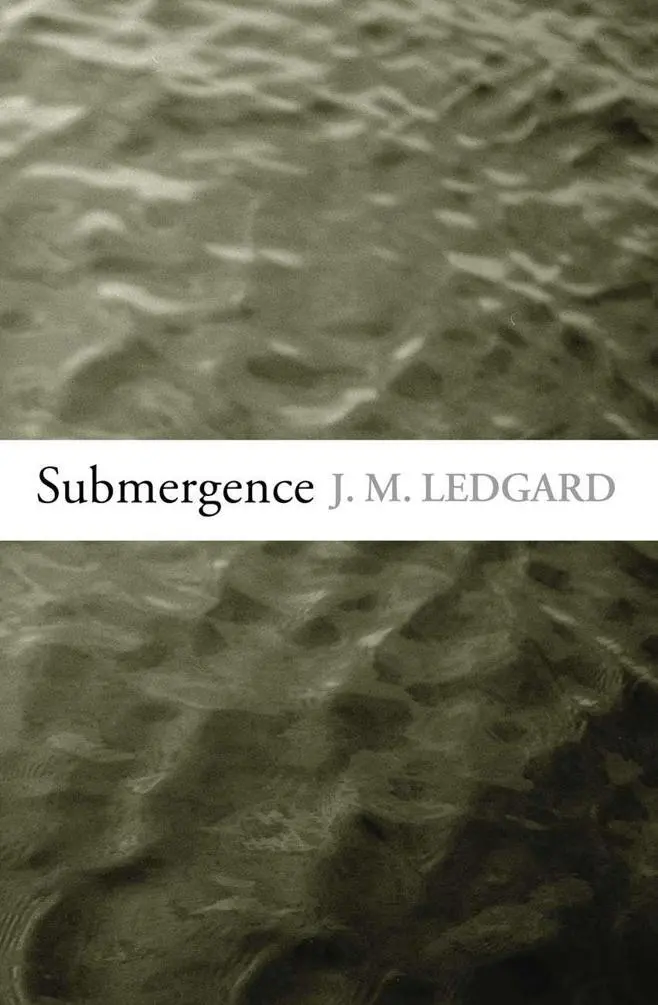
- Название:Submergence
- Автор:
- Издательство:Random House UK
- Жанр:
- Год:2011
- ISBN:9781446496831
- Рейтинг книги:5 / 5. Голосов: 1
-
Избранное:Добавить в избранное
- Отзывы:
-
Ваша оценка:
Submergence: краткое содержание, описание и аннотация
Предлагаем к чтению аннотацию, описание, краткое содержание или предисловие (зависит от того, что написал сам автор книги «Submergence»). Если вы не нашли необходимую информацию о книге — напишите в комментариях, мы постараемся отыскать её.
Both are drawn back to the previous Christmas, and to a French hotel on the Atlantic coast, where a chance encounter on the beach led to an intense and enduring romance. For James, his mind escapes to utopias both imagined and remembered. Danny is drawn back to beginnings: to mythical and scientific origins, and to her own. It is to each other and to the ocean that they most frequently return: magnetic and otherworldly, a comfort and a threat.
Submergence — читать онлайн бесплатно полную книгу (весь текст) целиком
Ниже представлен текст книги, разбитый по страницам. Система сохранения места последней прочитанной страницы, позволяет с удобством читать онлайн бесплатно книгу «Submergence», без необходимости каждый раз заново искать на чём Вы остановились. Поставьте закладку, и сможете в любой момент перейти на страницу, на которой закончили чтение.
Интервал:
Закладка:
‘I’m sorry,’ she said quickly. ‘I can’t go in.’
He already had a foot in the wood. He turned. She was teetering. ‘Are you all right?’
She looked into the wood. The branches and ferns made her nauseous.
‘I’m fine,’ she said. ‘No, I’m not. Oh, I think I’m going to be sick.’
The trees sliced away the day, producing narrows and shadows on the snow and polygons whose angles were irresolvable.
‘Come away,’ he said, and he put his arm around her and walked her out into the field, into the light. He made her drop her head and breathe deeply. Her recovery was instantaneous.
‘I don’t understand,’ she said. ‘I’ve no history of claustrophobia. Not even in a submersible.’
They set off in another direction.
‘When I was a boy,’ he said, as they walked in open space, ‘we had horses that refused to jump. They had cleared hedgerows and ditches without question, then suddenly were afraid of heights.’
‘I’m a horse?’ she said with mock displeasure.
‘I’m saying you might be afraid of the dark.’

Kismayo is famous for its magicians and for the refreshing breeze blowing in off the Indian Ocean at night. The great Muslim travellers visited the town, so did Zheng He and his Chinese fleet. The Portuguese built a fort there, which the Omanis captured. The Somalis drove out the Omanis, then yielded to the Italians.
The town broke down during the civil war and continues to deteriorate. Its population is growing rapidly as a result of the large numbers of internally displaced. Half of its people are under eighteen years old. There are few schools. There are hardly any jobs.
The port no longer has any warehouses. The Taiwanese tuna boats are gone, chased away by the pirates. But the dhows still bring in diesel, cement and crates of bullets, and they still take away fish, bananas, mangoes, coconut matting, and animals, always animals. It is a scene at night. Black waters lap within, lanterns and fires burn on the quay. It is loud, heaving with livestock. The beasts are walked down to the port at dusk from their grazing at the edge of the town. The camels are roped together three at a time and hoisted onto the vessels. It is remarkable to see how the handlers whisper religious verses into their ears to calm them before they are lifted.
They allowed him to walk with them in town one evening to witness a feeding that had been set up for the people sleeping rough in the port. Several men went with him. He was ordered to conceal his face. He felt stronger. He saw things more clearly. It was beautiful to go forwards as if through walls. They went by shattered buildings and others not completed. He looked at one structure and knew from its exterior that it was where he had been held.
A crowd of boys played a game of table football on a street corner. They dropped their hands to their sides and fell silent as the fighters went by. There were candlelit stalls of women who told fortunes, and women who painted henna patterns onto hands and wrists. There was a hair salon called Le Chinoise lit with a single electric bulb. A woman in a veil pushed by him in a narrow street. Her eyes flashed. They turned a corner and there was the overpowering smell of the fish market and the trilling voices of women selling the last of the day’s catch. Girls scavenged through a rubbish heap. Older women sat on a wall further on, not veiled, still wearing their daytime facemasks: red from avocado to protect against pimples, yellow from sandalwood to protect from the sun. There were so many women out in the world. In his captivity there had only been Aziz’s Somali wife, who placed her hands on his broken chest. In one dark alley they told him to kneel and look away while they urinated against a coral wall. There was a stale smell of piss. The alley was a urinal. A cloud of mosquitoes rose up.
They walked by the shore. Fruit bats fell from the palm trees and flew out and touched the sea and other fruit bats circled a minaret, as big and indecent as dogs. It was the same minaret Kismayo’s last Catholic stole up with his trumpet, to protest against the intolerance of the Islamist regime. He was an old man, cogent, certain of himself, who had played in the town band during the Italian period. The band wore a green uniform with gold epaulettes and had a repertoire of military marching songs of the Italian Alpini regiment, anthems, polkas from the Tyrol, and dance numbers of the day. But when the Catholic took his trumpet up the minaret he had a mind to play a piece of jazz. Alas, there was no time. They were already after him, charging up the narrow staircase, so, instead, impulsively, he seized the loudspeaker and spoke ‘Hail Marys’ for all that part of the town to hear, the words clanged on the ears of the believers, until there was a grunt, which was the old man being knocked over the head with a brick. They dragged him down the steps. He was almost beaten to death. To save his life, his family declared him mad and dispatched him to Kenya.
They kept a gun trained on him. They did not speak English or Arabic. It was disconcerting. Their faces were covered and it was not possible for him to interpret their body language. They walked across the beach to the port and that troubled him too. He was a strong man, but the mock execution had traumatised him. He took off his sandals and felt the warm sand between his toes. The fighters would have walked barefoot even in the middle of the day. They had no nerves left in their feet. The wind blew and raised the sand in places into eddies. At the water’s edge there were eels writhing and feeding on washed-up tuna and crabs of many sizes and patterns of shell scuttling sideways back to their holes.
The port was packed. Two dhows were tied up. Dirty goats were being thrown onto them. They bleated in the air and landed on the deck; square on their hooves. They were headed for Mecca, to be slaughtered there by pilgrims.
The famished were all around, pressed in with the animals; weaker than them, more dazed. They had staggered in from the dead country. There was nowhere else for them to go. Some slept under the lorries, or along the coral wall. Their mouths were full of dust. They were hollow-cheeked; in some faces the narrowness produced a rodent-like expression. Several hundred of them were in the overgrown garden of an abandoned villa, waiting to be fed a meal. Other fighters were already there, cudgelling them into a line. The food was cooking in a cauldron on an open fire. A stray dog stepped forward and shat in the dust, then moved back into the bushes. Some people fainted before they reached the food and there was no one to lift them up. The fruit bats went by, brushing low. They had fur bellies and beads for eyes. Their teeth were sharp, overlapped and interlocked.
There was some delay. He could not see what. A rock was thrown. Possessions were thrown up in the air. A baby was trampled, then recovered. The man who threw the rock was pointed out and executed with a shot through the mouth and then there was just the sound of the food being served and the scraping of hands against the bowls.
The bare wooden floor of the billiards room was scattered with sawdust. A stove threw out thick waves of heat, like in the railway station waiting room in La Roche. The unvarnished card tables were inset with leather. Low hanging lights illuminated the billiards tables. He rolled balls across the felt. The japanned reds and whites clicked and the completeness of their colours resembled the sound of their clicking.
Читать дальшеИнтервал:
Закладка:
Похожие книги на «Submergence»
Представляем Вашему вниманию похожие книги на «Submergence» списком для выбора. Мы отобрали схожую по названию и смыслу литературу в надежде предоставить читателям больше вариантов отыскать новые, интересные, ещё непрочитанные произведения.




Обсуждение, отзывы о книге «Submergence» и просто собственные мнения читателей. Оставьте ваши комментарии, напишите, что Вы думаете о произведении, его смысле или главных героях. Укажите что конкретно понравилось, а что нет, и почему Вы так считаете.