Reif Larsen - I Am Radar
Здесь есть возможность читать онлайн «Reif Larsen - I Am Radar» весь текст электронной книги совершенно бесплатно (целиком полную версию без сокращений). В некоторых случаях можно слушать аудио, скачать через торрент в формате fb2 и присутствует краткое содержание. Год выпуска: 2015, Издательство: Penguin Press, Жанр: Современная проза, на английском языке. Описание произведения, (предисловие) а так же отзывы посетителей доступны на портале библиотеки ЛибКат.
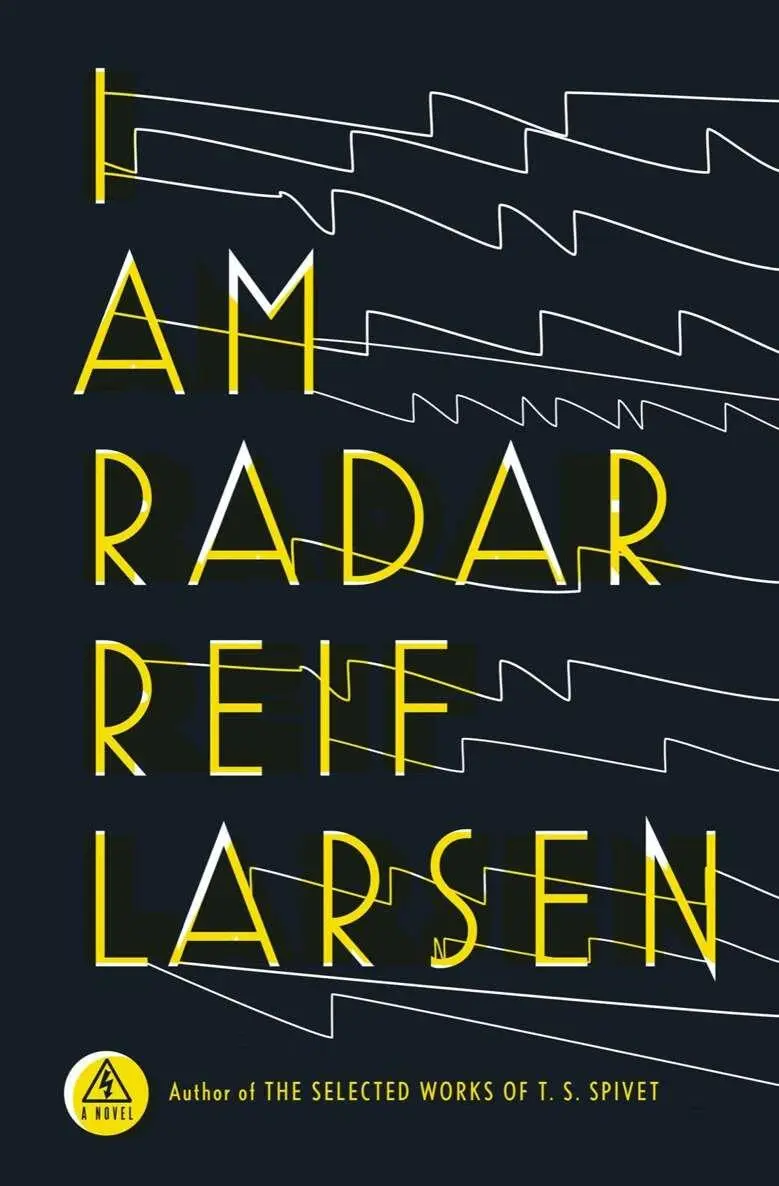
- Название:I Am Radar
- Автор:
- Издательство:Penguin Press
- Жанр:
- Год:2015
- ISBN:нет данных
- Рейтинг книги:3 / 5. Голосов: 1
-
Избранное:Добавить в избранное
- Отзывы:
-
Ваша оценка:
I Am Radar: краткое содержание, описание и аннотация
Предлагаем к чтению аннотацию, описание, краткое содержание или предисловие (зависит от того, что написал сам автор книги «I Am Radar»). Если вы не нашли необходимую информацию о книге — напишите в комментариях, мы постараемся отыскать её.
I Am Radar Deep in arctic Norway, a cadre of Norwegian schoolteachers is imprisoned during the Second World War. Founding a radical secret society that will hover on the margins of recorded history for decades to come, these schoolteachers steal radioactive material from a hidden Nazi nuclear reactor and use it to stage a surreal art performance on a frozen coastline. This strange society appears again in the aftermath of Cambodia’s murderous Khmer Rouge regime, when another secret performance takes place but goes horrifically wrong. Echoes of this disaster can be heard during the Yugoslavian wars, when an avant-garde puppeteer finds himself trapped inside Belgrade while his brother serves in the genocidal militia that attacks Srebrenica. Decades later, in the war-torn Congo, a disfigured literature professor assembles the largest library in the world even as the country around him collapses. All of these stories are linked by Radar — now a gifted radio operator living in the New Jersey Meadowlands — who struggles with love, a set of hapless parents,and a terrible medical affliction that he has only just begun to comprehend.
I Am Radar — читать онлайн бесплатно полную книгу (весь текст) целиком
Ниже представлен текст книги, разбитый по страницам. Система сохранения места последней прочитанной страницы, позволяет с удобством читать онлайн бесплатно книгу «I Am Radar», без необходимости каждый раз заново искать на чём Вы остановились. Поставьте закладку, и сможете в любой момент перейти на страницу, на которой закончили чтение.
Интервал:
Закладка:
2
The transmission site where Radar worked — indeed, the sum of his life — was located in the Meadowlands, a yawning swath of New Jersey marshland crisscrossed by countless highways and train lines and looping, arterial interchanges, all feeding into the great megalopolitan hydra of New York City. The mosquito-laden swamps were a sprawling back stage for the city, the many container ports and truck depots and train yards housing the props that fueled Manhattan’s insatiable appetite for citrus delicacies and all manner of combustible fineries. The Upper East Side bodega could not exist but for the generosity of the Meadowlands warehouse. Enter, stage left: orange juice from Florida, pineapples from Costa Rica, strawberries from California, tulips from Holland, chicken thighs from Colorado, crates of gum and chips and Mango Tango Dragonberry iced tea. The Meadowlands was the triage point for the inevitable daily deluge of Chinese-made trinkets: handbags and wigs and tampons and dog muzzles and yoga mats and mouse pads and tube socks and Happy Meal figurines. A whole warehouse annex devoted to nothing but boxes and boxes of shrink-wrapped Happy Meal figurines. It was all threaded through the odorous palette of these marshes, beneath the cold, wet tremble-cord of the Hudson River, and up into the waiting mouth of the lonely city denizen.
Aside from providing a perfect habitat for bloodsucking insects, the brackish Meadowlands water was an ideal conductor of AM radio signal, and if you drove the turnpike from here to there during a heavy summer night, you might see those morose clusters of radio towers, blinking their lanky presence to any wayward planes. The WCCA 990 AM transmitter site, perched on the shore of a lagoon, hidden from the world by a forest of reeds, was a thirteen-and-a-half-minute bike ride from their periwinkle faux colonial in Kearny and a seventeen-minute ride from the A&P Express where Ana Cristina worked. This velocipedal commute through the swamps was usually his best thinking time of the day, a kind of moving meditation, as he found the forward momentum and solitude of his transit allowed him to carefully inflate the vision of who he was and who he might want to be, even if this vision would inevitably collapse as soon as he stopped pedaling.
Radar had written half a dozen mediocre poems about his bicycle, affectionally named Hot Lips Houlihan, after that temptress nurse on M*A*S*H . Hot Lips was an Optima Stinger double-suspension custom recumbent with low-point tiller steering. He had blown six months’ salary on the rig four years earlier, and it was the one choice in life that he had never regretted, even in his darkest hours. She boasted more electronics than a small airplane: he had installed a reinforced plexiglass dashboard on top of the stem, upon which sat two transceivers, a decommissioned SRC ground surveillance radar dish, a portable shortwave multiband radio, a Shocker DX locomotive horn, an AmpliVox fifty-watt megaphone, and a plastic hula girl. Above the luggage compartment on the back, he had an extended whip antenna and a multidirectional yagi molded into a swivel plate that rattled behind him like exotic plumage.
As he rode to work on this strange day, this day of potential conquest mired in the foreboding of potential defeat, he sought comfort in Houlihan’s shortwave, which he gently tuned to Radio Skala, a distant signal originating all the way from Belgrade. Somehow the station perfectly utilized the ionosphere’s reflective properties to skip over the Atlantic and right into his lap. The song came on and he recognized it immediately as one of his favorites: “Stani, stani Ibar vodo,” about a lovesick country boy who has a conversation with a river about his darling. How fitting. He liked listening to the music of his people as he rode through the damp material excess of the Meadowlands, broadcasting the wisdom of suffering to trucks filled with capitalism’s runoff. No matter if the music tendered a history he was not entirely sure was his own. But whatever. Today he needed all the Balkan armor he could muster.
“Smrt fašizmu, sloboda narodu!” he yelled to the swamps.
As is the case with many children of immigrants, particularly those whose sole immigrant parent married an American, Radar knew only a little of his inherited language, gleaned mostly from when his father would produce an incredible string of Serbian swear words, often in the shower. ( “Da ideš u tri pizde materine!” ) Sometimes his swearing was correlated to his level of annoyance, but more often than not, he swore just because he could. If there was one thing Serbs could never abandon, it was their dangerously poetic and casual manner of cussing. It was not uncommon for his father to toss out the phrase “Jebem ti supu od klinova Isusovih!” which translated roughly as “Fuck the soup made from the nails of Jesus’s crucifixion,” and not think twice about it, even if in English he was unfailingly polite. Radar had never heard him curse even once in English. Serbian remained his language of expression, his private lounge of paroxysms. Thus, after a childhood of exposure to such intricate verbal execrations echoing across his subconscious, Radar could understand the language much better than he could speak it himself.
The Radmanovics had visited Belgrade only once, in 1989, at the invitation of a distant half relation, Julija Maravic, who showered them with kindness and warmth despite having never met them and maintaining only a tenuous familial connection to Dobroslav, Radar’s grandfather. It did not matter: they were part of the family, and she would’ve jumped in front of a train for them. She had said as much on their last night there. This backdrop of extreme hospitality made Radar’s experience with the rest of the population all the more confusing.
“Hej Marko, gle ovog americkog šupka — izgleda ko majmun oboleo od raka,” a pudgy man with a shaved head had said as Radar was lingering with his parents in front of a fruit stand in Žarkovo Selo. Radar’s comprehension of the language was hazy at best, but he knew that this man was talking about him to his friend Marko and that whatever he had just said to Marko was not a very nice thing to say. Clutching his two malnourished beets, Radar was left with that very acrid, mothballed sensation of self-recognition that the Germans no doubt have a word for:
Üblernachredenfremdschämlähmung (n.) — the feeling caused by knowing someone has insulted you even as the slanderer(s) remain(s) unaware that you have seen/heard their insults quite clearly. The consequent self-pity, combined with an embarrassment for the slanderer(s), will often freeze the victim into a state of weary acceptance, such that he or she ends up doing nothing to address this trespass. Ex: While waiting in line for the bathroom at the restaurant, Günther felt a passing sense of üblernachredenfremdschämlähmung when he spotted his waiter spitting into his liverwurst sandwich. Upon returning from the loo, Günther ate his sandwich in silence, despite feeling as if he might throw up at any minute.
Beets in hand, Radar had felt the dull heat of transcultural ignorance wash over him. This fat, odiferous skinhead in his ill-fitting patterned short-sleeve and his sniveling sidekick Marko were supposed to be his people! Still, despite the Serb’s tendency for simultaneous compassion for the family and xenophobia toward the other, Radar felt that there was an ancient knowingness to the Balkan way that he found inexplicably seductive. Yes, yes: he realized he was being just as reductive with his Old World nostalgia as the Serbs themselves. But let us not forget rule #55: Dreaming is the first step to knowing is the first step to dreaming.
Читать дальшеИнтервал:
Закладка:
Похожие книги на «I Am Radar»
Представляем Вашему вниманию похожие книги на «I Am Radar» списком для выбора. Мы отобрали схожую по названию и смыслу литературу в надежде предоставить читателям больше вариантов отыскать новые, интересные, ещё непрочитанные произведения.










Обсуждение, отзывы о книге «I Am Radar» и просто собственные мнения читателей. Оставьте ваши комментарии, напишите, что Вы думаете о произведении, его смысле или главных героях. Укажите что конкретно понравилось, а что нет, и почему Вы так считаете.