Reif Larsen - I Am Radar
Здесь есть возможность читать онлайн «Reif Larsen - I Am Radar» весь текст электронной книги совершенно бесплатно (целиком полную версию без сокращений). В некоторых случаях можно слушать аудио, скачать через торрент в формате fb2 и присутствует краткое содержание. Год выпуска: 2015, Издательство: Penguin Press, Жанр: Современная проза, на английском языке. Описание произведения, (предисловие) а так же отзывы посетителей доступны на портале библиотеки ЛибКат.
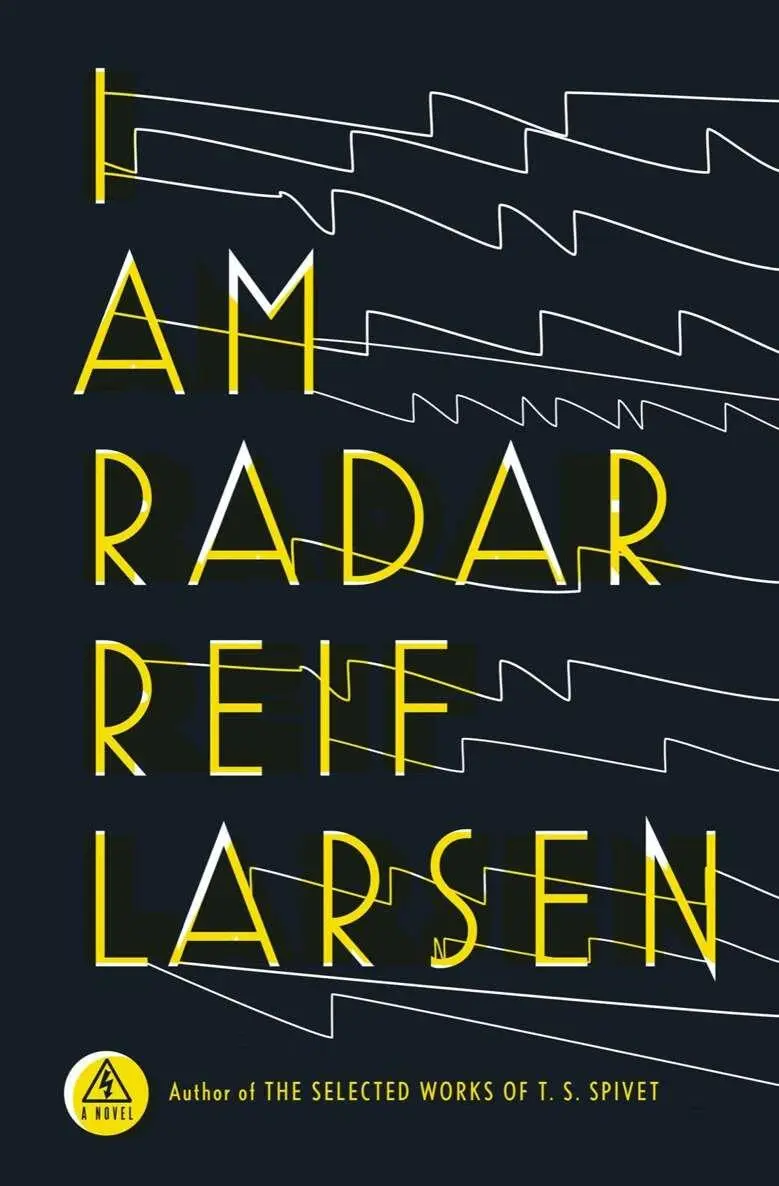
- Название:I Am Radar
- Автор:
- Издательство:Penguin Press
- Жанр:
- Год:2015
- ISBN:нет данных
- Рейтинг книги:3 / 5. Голосов: 1
-
Избранное:Добавить в избранное
- Отзывы:
-
Ваша оценка:
I Am Radar: краткое содержание, описание и аннотация
Предлагаем к чтению аннотацию, описание, краткое содержание или предисловие (зависит от того, что написал сам автор книги «I Am Radar»). Если вы не нашли необходимую информацию о книге — напишите в комментариях, мы постараемся отыскать её.
I Am Radar Deep in arctic Norway, a cadre of Norwegian schoolteachers is imprisoned during the Second World War. Founding a radical secret society that will hover on the margins of recorded history for decades to come, these schoolteachers steal radioactive material from a hidden Nazi nuclear reactor and use it to stage a surreal art performance on a frozen coastline. This strange society appears again in the aftermath of Cambodia’s murderous Khmer Rouge regime, when another secret performance takes place but goes horrifically wrong. Echoes of this disaster can be heard during the Yugoslavian wars, when an avant-garde puppeteer finds himself trapped inside Belgrade while his brother serves in the genocidal militia that attacks Srebrenica. Decades later, in the war-torn Congo, a disfigured literature professor assembles the largest library in the world even as the country around him collapses. All of these stories are linked by Radar — now a gifted radio operator living in the New Jersey Meadowlands — who struggles with love, a set of hapless parents,and a terrible medical affliction that he has only just begun to comprehend.
I Am Radar — читать онлайн бесплатно полную книгу (весь текст) целиком
Ниже представлен текст книги, разбитый по страницам. Система сохранения места последней прочитанной страницы, позволяет с удобством читать онлайн бесплатно книгу «I Am Radar», без необходимости каждый раз заново искать на чём Вы остановились. Поставьте закладку, и сможете в любой момент перейти на страницу, на которой закончили чтение.
Интервал:
Закладка:
Radar sighed. “I wasn’t talking to you, Mom.”
“Oh,” she said. She crumbled an oolong base into the strainer. Some unidentified twigs. After a moment she said, “May I ask whom you were talking to?”
“I wasn’t talking to anyone. I was recounting.”
“You were recounting, ” she said. Half a dozen little red chokeberries disappeared into the strainer. “Recounting what, exactly?”
“Nothing.”
“What kind of nothing?” They had lived together long enough that lying had become an exercise in futility.
He sighed. “I went on a date last night. And I was recounting one of the many ways I screwed it all up.”
“A date?” she said, raising her eyebrows. She sniffed at a jar that looked to contain the remains of a dead bat.
“A date,” she said again. “Well, what makes you think you screwed it up?”
He didn’t want to be having this conversation. “I don’t know — maybe because I say all the wrong things? Maybe because I’m the most awkwardest person on the planet?”
“How long have you known this girl?”
“Uh. . about six months. She works at the A&P.”
“What’s her name?”
“Ana Cristina.”
“And how do you feel about her?”
He rubbed his face. “Mom?”
“I mean, is she worthy of my boy?”
“She’s only the best thing that’s ever happened to me. It’s not a question of whether she’s worthy of me; it’s whether she and I belong in the same galaxy.”
“ Hm.” She considered this. “Well. Be careful.”
“ Be careful? That’s your advice to me? Be careful? Thanks, Mom.”
Time had a funny way of playing its hand. Charlene’s quarter-life audacity had slowly wilted during her middle years into a near constant low-grade anxiety at the various provocations of modern existence. Once upon a time, she had dropped acid and nearly burned down a library, but now just answering an e-mail could be enough to send her into a state of panic that she placated with her teas and dream catchers. As their little family had grown into each other, as life had begun to arrange itself so that it became impossible to escape their own nuclear dysfunction, as the time for Radar to move out had come and gone (and then come and gone again), Charlene still maintained that she was the normal one, that she was the one holding it all together, when in fact the converse was closer to the truth. Yes, she lived with two men caught in varying states of electromagnetic purgatory, but she had chosen this life, and as much as she might have claimed otherwise, she took courage from the stagnation of this purgatory. Every complaint she leveled their way also had the effect of steadying her wobbly rudder. They were her Pleiades. Without them, darkness would overtake her night.
“I only mean that women can be complicated,” she said, breaking off some aspect of the bat body and dropping it into the tea strainer. “I should know. I used to be one.”
“You’re still a woman, Mom.”
“They’ll say one thing to your face, but what they’re really thinking is something else entirely.”
“She’s not that kind of girl, Mom. Seriously, she’s wonderful. And honest. And. . and. . I don’t know. She’s just. . her .”
“I’m sure she is. I’m not saying you shouldn’t go out with her,” she said. On the stove, the kettle had already begun to shudder. “Just know that every time she opens her mouth, it’s an opportunity for her to lie to you.”
“Thanks. I’ll take that into consideration.”
“Not that this is always a bad thing. Sometimes a lie can be just as good as the truth.”
“Uh, I’m pretty sure that’s not true.”
The kettle came to life and whistled its disapproval. Charlene looked surprised, as if this boil did not happen every single morning, scooped up the pot, and layered the water through the strainer in an overly ornate spiral. Her mug of choice featured an orgy of rabbits engaged in various balletic sex acts, though after twenty years of use, the humping bunnies no longer registered as carnal agents, save to the rare houseguest, who could be forgiven for staring at Charlene’s crockery in fascinated horror.
“Oh, I was meaning to ask you,” Charlene said, ushering strainer and mug to the kitchen table. “I have to get a new cell phone this afternoon. What’s that one you recommended again?”
“I didn’t.”
“Didn’t you?”
“I don’t have a cell phone, Mom.”
It was true: despite his clairvoyance with all things electronic, cellular phones had always struck him as a gaudy and unnecessary technology. He did not want to be constantly at the mercy of others. And why pay a cell-phone company ridiculous amounts of money each month when there was plenty of frequency in the 1-to-250,000-MHz spectrum open for the taking? Radio signal felt much more organic — like swimming in the ocean versus swimming laps in a tiny pool, though he didn’t know how to swim, so he couldn’t be sure if such an analogy was entirely accurate.
“And why don’t you have a cell phone?” she said. “What’s wrong with you? You and your father, both of you.” She took a sip of tea and wrinkled her nose. “Oh, God, this stuff is awful .”
“It smells awful. Was that a bat ?”
“Bolivian chinchilla,” she said. “It’s good for bile flow.”
“Chinchilla?” he said, recoiling. “As in those cute little guys with the crazy soft fur?”
“The ones I use are female.”
“How am I supposed to tell that to my friends? ‘Yeah, and that’s my mom, who drinks chinchilla tea .’”
“Which friends are these?”
“Okay, there’s no need to rub it in.”
She took another sip. “But really, why don’t you get a cell phone?”
“I don’t want a cell phone.”
“So then how am I supposed to call you?”
“You can call the station. We’ve managed without a cell phone for all these years.”
“And what about when you’re not there?” she said. “You know, for when something comes up?”
“Like what?”
“ I don’t know . Everyone has cell phones. It’s a part of life now. All the kids — it’s how they communicate. With the text message,” she said. “How are you supposed to talk with this girl if you don’t have the text message?”
He sighed. “Morse code worked just fine before text messages came along.”
“ Morse code? Honey, I hate to break it to you, but that’s not the way to a girl’s heart. This girl you’re seeing — what’s her name again?”
“Ana Cristina.”
“I’m betting Ana Cristina probably doesn’t have a ham radio station in her bedroom,” she said. “You have to adapt . You have to learn to speak her language.”
As much as he hated to admit it, she had a point. Ana Cristina was an avid texter and expert multitasker. She could carry on a perfectly coherent conversation with him while she also navigated through dozens of electronic communiqués on her device.
Charlene took another sip of the tea and grimaced. “I’m going to get you and your father cell phones this afternoon.”
“Please don’t,” he said.
“It will just be for emergencies, but if you like it, then you can start the text messages. I’ll even do the text with you.”
“That’s not how you say it. You don’t do the text with someone.”
“Well, how would you know? You don’t even have a cell phone.”
“Don’t get me a phone, Mom. Please?” he said. “I like my life just the way it is.”
“No. . no, you don’t,” she said, almost ruefully. “No one likes their life just the way it is.”
Читать дальшеИнтервал:
Закладка:
Похожие книги на «I Am Radar»
Представляем Вашему вниманию похожие книги на «I Am Radar» списком для выбора. Мы отобрали схожую по названию и смыслу литературу в надежде предоставить читателям больше вариантов отыскать новые, интересные, ещё непрочитанные произведения.











Обсуждение, отзывы о книге «I Am Radar» и просто собственные мнения читателей. Оставьте ваши комментарии, напишите, что Вы думаете о произведении, его смысле или главных героях. Укажите что конкретно понравилось, а что нет, и почему Вы так считаете.