Sophia Nikolaidou - The Scapegoat
Здесь есть возможность читать онлайн «Sophia Nikolaidou - The Scapegoat» весь текст электронной книги совершенно бесплатно (целиком полную версию без сокращений). В некоторых случаях можно слушать аудио, скачать через торрент в формате fb2 и присутствует краткое содержание. Год выпуска: 2015, Издательство: Melville House, Жанр: Современная проза, на английском языке. Описание произведения, (предисловие) а так же отзывы посетителей доступны на портале библиотеки ЛибКат.
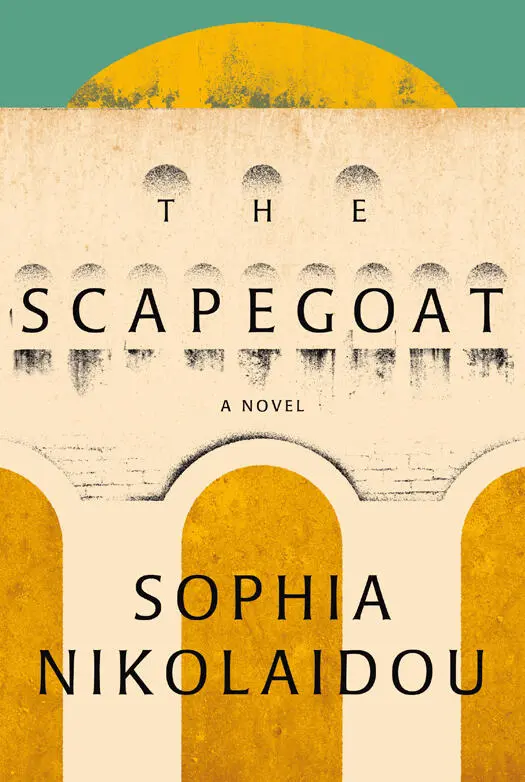
- Название:The Scapegoat
- Автор:
- Издательство:Melville House
- Жанр:
- Год:2015
- ISBN:нет данных
- Рейтинг книги:5 / 5. Голосов: 1
-
Избранное:Добавить в избранное
- Отзывы:
-
Ваша оценка:
The Scapegoat: краткое содержание, описание и аннотация
Предлагаем к чтению аннотацию, описание, краткое содержание или предисловие (зависит от того, что написал сам автор книги «The Scapegoat»). Если вы не нашли необходимую информацию о книге — напишите в комментариях, мы постараемся отыскать её.
Flash forward to modern day Greece, where a young, disaffected high school student is given an assignment for a school project: find the truth.
Based on the real story of famed CBS reporter George Polk — journalism’s prestigious Polk Awards were named after him — who was investigating embezzlement of U.S. aid by the right-wing Greek government, Nikolaidou’s novel is a sweeping saga that brings together the Greece of the post-war period with the current era, where the country finds itself facing turbulent political times once again.
Told by key players in the story — the dashing journalist’s Greek widow; the mother and sisters of the convicted man; the brutal Thessaloniki Chief of Police; a U.S. Foreign Office investigator — it is the modern-day student who is most affecting of them all, as he questions truth, justice and sacrifice. . and how the past is always with us.
The Scapegoat — читать онлайн бесплатно полную книгу (весь текст) целиком
Ниже представлен текст книги, разбитый по страницам. Система сохранения места последней прочитанной страницы, позволяет с удобством читать онлайн бесплатно книгу «The Scapegoat», без необходимости каждый раз заново искать на чём Вы остановились. Поставьте закладку, и сможете в любой момент перейти на страницу, на которой закончили чтение.
Интервал:
Закладка:
The principal never found out what Soukiouroglou said to the German tourist on that fateful first day of the sit-in. The foreigner smiled, jotted down some notes, and headed off with a clearly marked map, courtesy of Soukiouroglou, who went back to the teachers’ office, and to the task of tallying student absences.
Everyone came to the concert. Spiros greeted them at the main entrance, handing out a photocopied program along with a little slip of paper printed with slogans. They had spent all afternoon trying to decide what to write, since they wanted their school to make a good impression. At some point Spiros realized that talking wasn’t going to get them anywhere, threw democratic procedure out the window, and just wrote what he wanted.
The band was tuning up in the schoolyard, testing the distortion. The neighbors were in despair, since they could tell it was gearing up to be a long night. None of the fifty-somethings sitting on the surrounding balconies had any desire to listen to the songs of enraged adolescents late into the night — after all, music had died with their youth. The real revolution had taken place decades ago — or so they believed, these adults who had dedicated years of their lives to demonstrations and occupations. The political activities of their children struck them as a washed-out repetition of an earlier era, which they themselves had lived through in its full glory: the era when they had been building a world, which they’d now cut and sown to their measurements.
Of course they recognized these students’ need to raise fists and banners, to blow off some steam with a slogan or two. But they also thought these underage revolutionaries required supervision and guidance — that it was their responsibility to impart their knowledge and experience, to instruct their children in the ways of civil disobedience.
And then there were other parents whose lives revolved primarily around the workplace, where they tried to be as tractable as they could, and who shuddered at their opponents’ views. Thus parents and students alike split into two camps: those who believed that an occupation could teach an important political lesson, and those who considered the loss of class hours a serious obstacle to the students’ progress.
A school has a duty to remain open regardless of circumstances; its job is to weave a protective cocoon of knowledge and understanding, particularly in difficult times , proclaimed those who supported the rule of law. Whereas experienced revolutionaries and unionists of various stripes laughed in the face of such arguments and gave their all to the struggle.
The students tried their hand at the rhetoric of occupation. Some parents disparaged it as empty jabbering, but their kids didn’t care. They were just glad to have broken the deadly routine of classes. They felt they had assumed an important role, and a kind of power, particularly those who were making decisions on behalf of others — Spiros, for instance. He blurted out whatever he was thinking without taking the time to find the proper words. He loved the applause, fed off of his classmates’ approval. He suddenly felt that he wasn’t the school pariah anymore, the awful speller, diagnosed with dyslexia by the school psychologist. Now he was Spiros from the occupation. The one who’d made the Facebook page for the concert.
Evelina couldn’t stand seeing that moron prancing around as if he were running the show. Taking initiative, making plans. Bringing others over to his side with the worst kind of demagoguery, and to top it all off with arguments articulated in terrible Greek. In her mind, it was high time he learned his lesson. So she shamed him publicly, in front of everyone, even the teachers. Meanwhile, she covered her bases by sabotaging him behind his back, too, with phone calls and secret agreements. It took time, but it worked: the occupation came to a peaceful end.
She had decided that she should definitely show up at the concert. She didn’t want to give way to her opponent so easily. She pulled on a pair of ripped jeans that showed some thigh and a black T-shirt. The outfit seemed simple, but it took her forty-five minutes in front of a mirror to settle on the details that would make the difference. What color bra she should wear, for instance, since it was an off-the-shoulder shirt that revealed one strap. The string on her thong needed to be discrete, a color that wouldn’t show even if she bent over. Clear lip gloss and mascara applied with a special brush, to make each eyelash stand out separately. Then she straightened her hair with a hair iron and set out, ready for battle.
Things in the schoolyard were in full swing. Spiros was running around, making sure everyone saw him. He was looking for Minas. He found him lying on a low wall, all alone. He had headphones on and was nodding to the rhythm; he seemed perfectly in tune with himself. Spiros was jealous of his indifference. He didn’t seem to care what other people thought, he wasn’t trying to make anyone like him.
Evelina didn’t understand that at all: she wanted everyone to love her. Whenever she picked up on even a whiff of dislike, it threw her off completely. She may have seemed strong, but it was just her protective shell. And it shattered easily — or so her mother thought, who worried constantly about her daughter. Minas was of a different opinion. In his view, Evelina had surrounded herself with barbed wire, and wouldn’t let just anyone in. The other girls at school were always going on about lifelong friendships and nights out and summer vacations. Evelina went along with it all, yet remained encased in her coat of armor. She seemed outgoing and friendly, but she was made of steel.
She’d been class president four years in a row. Her father was proud that his daughter was such a fighter. She was that rare combination: an excellent student who also managed to be popular. She shared her essays with the lazier kids, covered up their absences, stood up for her fellow students. Minas was the only one who made fun of her. Usually it enraged her, particularly when she knew he had a point, or if others were listening. She had a great sense of humor, but not about herself, as Minas was continually discovering.
Evelina admired his brain. She’d never admit it in public, even under the most terrible torture. Minas was sloppy and chaotic. But he knew things the others didn’t. His train of thought was always taking some bizarre turn, he never gave the answer you were expecting. He liked to make his mind work, he liked to solve riddles, to pose questions. He was good at whatever he tried. But he always abandoned things in the middle. His favorite word was ennui . Seventeen years old and he spoke like a veteran of life. He observed everything, but rarely acted.
Evelina stood over him and pulled off his headphones.
— Everything okay, fool?
She sat down beside him. Her hair tickled his shoulder. From a distance they looked like a couple. Her girlfriends gossiped that the Evelina they knew wouldn’t deign to be seen with Minas.
The band started with Miles Davis. How pretentious , thought Minas. Nikolas Dokos was on saxophone, and he was obviously driving the music. He had a clean sound and perfect rhythm. They were good, which annoyed Minas even more. Nikolas — with a tattoo on the nape of his neck, a smile on his face, and a ratty T-shirt — was talking into the microphone. His body was loose, he was obviously enjoying himself. He wasn’t dogged by second thoughts, backtracking, or inner dilemmas.
In other words, he was way too cool.
Shortly before he came out onto the stage he’d shut himself in the bathroom with his friends. They pushed the door closed, it smelled of cigarettes, not the normal kind, but the kind that made Fani lose her shit the one time she found the stuff in the house. He promised he would quit and she believed him, but he just got more careful. Fani tried to tell him that she knew all about those kinds of things, she wasn’t like other mothers. She said something about the guys in the band, how they’d destroyed their brain cells. Nikolas wasn’t even listening, he wasn’t like them, he could stop whenever he wanted. They’ve all got one foot in the grave , he shouted at her and stormed out of the room. And you’ve got both hands on a blunt , she wanted to shout back, but fortunately she held it in.
Читать дальшеИнтервал:
Закладка:
Похожие книги на «The Scapegoat»
Представляем Вашему вниманию похожие книги на «The Scapegoat» списком для выбора. Мы отобрали схожую по названию и смыслу литературу в надежде предоставить читателям больше вариантов отыскать новые, интересные, ещё непрочитанные произведения.












Обсуждение, отзывы о книге «The Scapegoat» и просто собственные мнения читателей. Оставьте ваши комментарии, напишите, что Вы думаете о произведении, его смысле или главных героях. Укажите что конкретно понравилось, а что нет, и почему Вы так считаете.