Sophia Nikolaidou - The Scapegoat
Здесь есть возможность читать онлайн «Sophia Nikolaidou - The Scapegoat» весь текст электронной книги совершенно бесплатно (целиком полную версию без сокращений). В некоторых случаях можно слушать аудио, скачать через торрент в формате fb2 и присутствует краткое содержание. Год выпуска: 2015, Издательство: Melville House, Жанр: Современная проза, на английском языке. Описание произведения, (предисловие) а так же отзывы посетителей доступны на портале библиотеки ЛибКат.
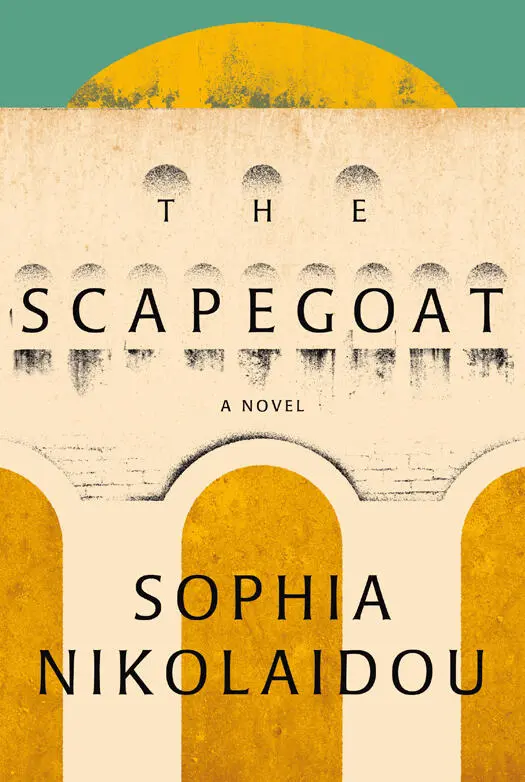
- Название:The Scapegoat
- Автор:
- Издательство:Melville House
- Жанр:
- Год:2015
- ISBN:нет данных
- Рейтинг книги:5 / 5. Голосов: 1
-
Избранное:Добавить в избранное
- Отзывы:
-
Ваша оценка:
The Scapegoat: краткое содержание, описание и аннотация
Предлагаем к чтению аннотацию, описание, краткое содержание или предисловие (зависит от того, что написал сам автор книги «The Scapegoat»). Если вы не нашли необходимую информацию о книге — напишите в комментариях, мы постараемся отыскать её.
Flash forward to modern day Greece, where a young, disaffected high school student is given an assignment for a school project: find the truth.
Based on the real story of famed CBS reporter George Polk — journalism’s prestigious Polk Awards were named after him — who was investigating embezzlement of U.S. aid by the right-wing Greek government, Nikolaidou’s novel is a sweeping saga that brings together the Greece of the post-war period with the current era, where the country finds itself facing turbulent political times once again.
Told by key players in the story — the dashing journalist’s Greek widow; the mother and sisters of the convicted man; the brutal Thessaloniki Chief of Police; a U.S. Foreign Office investigator — it is the modern-day student who is most affecting of them all, as he questions truth, justice and sacrifice. . and how the past is always with us.
The Scapegoat — читать онлайн бесплатно полную книгу (весь текст) целиком
Ниже представлен текст книги, разбитый по страницам. Система сохранения места последней прочитанной страницы, позволяет с удобством читать онлайн бесплатно книгу «The Scapegoat», без необходимости каждый раз заново искать на чём Вы остановились. Поставьте закладку, и сможете в любой момент перейти на страницу, на которой закончили чтение.
Интервал:
Закладка:
— He’s good, huh?
Evelina was moving to the rhythm. Her hips swayed gently.
— Must be hard, being his mother’s son, Minas couldn’t keep from saying.
— What do you mean?
— What I said. The mother’s a singer, so the son gets to be a musician. Life’s all laid out for him, a ready-made career. He’s got nothing to worry about.
— Maybe you’re just jealous?
— Why would I be jealous?
She rolled her eyes, and made a face like Souk in class, when his students pushed him to a point of absolute despair with their idiocy and ignorance.
— Besides, you’re one to talk, the son of a big, fancy editor-in-chief.
His father had gone to great pains to make sure Minas never felt like the son of anyone important, and her insinuation upset him.
— Nice, real nice.
That was all he could come up with. He was angry at Spiros for organizing the concert behind their backs, and for bringing in a bunch of private school kids from Athens to take over their school.
Minas tapped his foot nervously. The habit had first appeared when he was in grade school. It kept up for years. It annoyed his mother, who would slap his knee to make him stop, sometimes gently, with tender admonition, and other times with overflowing irritation. Soukiouroglou had been the first to notice it. The kid was stressed out about school. And that was something he could use to his advantage.
Evelina watched the tremor in his knee, his thigh quivering at a hummingbird’s pace. When she was in a good mood, she would imitate him. When it annoyed her, she would kick his leg to make it stop.
Tonight she’d had a beer and felt the bubbles rising to her head, so she laid her palm on his knee. It was a gesture that could be read either as a more sophisticated version of kicking his leg, or as a caress.
He covered her hand with his. All kinds of thoughts sliced through his brain, emotions seethed in his chest, his body was at full boil. It was dark, and their classmates couldn’t be sure they were seeing properly.
1948 AND MUCH LATER: “A PARANOID IS SOMEONE WHO KNOWS A LITTLE OF WHAT’S GOING ON”
FROSO DINOPOULOS, WIFE OF GRANDPA DINOPOULOS
My mother-in-law — may she rest lightly in the earth’s embrace — called me Frosoula. She was the one who played matchmaker. We knew nothing of love in those days, those were things we only read about later, in romance novels. She taught me how to make a bed the way she liked: pillows under the covers, top sheet tight at the corners. Not the slightest bit of extra fabric, so the lace at the edge wouldn’t crinkle. During those first months she would come and stay at our house for hours on end, teaching me how to wash clothes and iron, how to make all the dishes Nikiforos liked. We boiled water for the wash and I scrubbed the stains with a brush, careful not to tear the fabric. Soon my hands were swollen and peeling from the hot washwater. Other women painted their nails, and had servants and seamstresses to do the work. It didn’t bother me. His mother was pleased with my progress.
A stingy woman, that’s what everyone said. She wore a blue dress to our wedding, with pleats at the waist and a collar. I sewed it for your husband’s baptism , she told me, proud of how long it had lasted.
It seemed harsh to me, yet I acted the same way with my child. I didn’t spend on luxuries, didn’t waste hard-earned money on insubstantial things. I ruled my house, never let things slide.
The night there was that knock on the door, I leapt out of bed in my nightgown. Nikiforos was still up working. I wrapped myself in a robe and went out. Those were difficult times, no one knew what dawn might bring to the doorstep. I had a red robe, the color of tomato paste, I wore it for thirty years until it finally fell apart. In those days it still hadn’t faded from the wash, its buttons still shone. Nikiforos asked me to open the door, and as I reached for the doorknob, I thought, I’m wearing the wrong color, whoever it is didn’t come to do us good, and here I am in bright red, a communist color .
The man came in without apologizing for the lateness of the hour, without any kind of explanation. I’d seen him once before, he’d been walking on the sidewalk across the street from us and Nikiforos whispered in my ear, That man is an excellent lawyer .
There was no way not to overhear what they said.
The district attorney hadn’t slept in days. His notes on the case recorded irregularities, unexplained events, suspicious lapses in logic, naïve reasoning, legal contortions, and arbitrary legal constructions . He had gotten hold of a telegraph in which the ministry asked Tzitzilis whether or not the man in custody was likely to break in the coming days . Tzitzilis wasn’t making any promises. He left a window of fifteen days to close the case.
Unjust, inappropriate, outside the bounds of law . I still remember the words.
The evidence is fabricated, unsubstantiated, unacceptable .
Of course the men also felt a sense of professional solidarity. They were honest and thoughtful. They wanted to sleep easily. Not to be tormented by the pillow under their heads.
But it wasn’t a time for grand gestures. If they stepped down, others would come to take their places. They needed at least to make sure that Gris lived.
Prison was the least of the disasters that could befall him.
If they could just let the dust settle, they’d find a solution.
— So, guilty?
— Guilty .
Panayiotis lived in the neighborhood. Everyone knew him, and knew he was up to his ears in filth. He always looked at your chest, never in your eyes. He had a dirty mouth and no fear of God. He pinched me one day right in the middle of Agia Sophia. His fingers left a bruise on my backside. I rubbed it with rubbing alcohol ten times a day until it faded.
I’d seen him coming home early in the morning, dragging two oars and a bundled-up canvas sail. I was polishing the railing on the veranda with soapy water. Cleanliness shows in the details, that’s how my mother-in-law taught me. No woman kept a cleaner house than I did. I scrubbed the floors with lye, started at dawn to get it all done.
Later I heard him boasting at the market. He said he’d killed a man with his own two hands. There was a circle of lowlifes around him, laughing. You weren’t alive in those days, you don’t know how it was. We all just looked to our own business and prayed that when evil came, it would knock on someone else’s door.
The communists had bombed us, just imagine, they’d turned their cannons on our houses. Tzitzilis had tracked them down and killed them, so we trusted his abilities, he was our protector. People said lots of things about him, that he was a skirt chaser, that he smoked hashish, went with whores, God save him. For us what mattered was that he got the job done. He held the whole city under his wing.
I told my mother-in-law about Panayiotis, what he’d said and done. Not about my backside, I was ashamed. But I told her about the other thing, how he had blood on his hands. Nikiforos was a lawyer, he needed to know.
My mother-in-law told me to confess to the priest, but not to get her son mixed up in other people’s business, he had a lot on his mind as it was. I listened to her, it was good advice. I scattered that shame under the priest’s robes and forgot about it.
After all, it might have been mere boasting, empty words to impress the others. I hadn’t seen any dead man or any blood. God protected me from that. Because if you see the blood, you’re involved, like it or not. Like Sofoula, whose husband’s a lawyer, too, Kyriakos Lolos. She’d gone out for a walk, to light a candle for her husband. She was walking up the street toward Agia Sophia and slipped in blood. They’d shot the teacher three times. I can’t remember his name, but he was a communist, everyone knew. They put three bullets in him and then disappeared. Sofoula’s dress was covered in blood, the stain wouldn’t leave no matter how hard she scrubbed. It was her best dress, too. They kept washing the sidewalk for three days, bringing more and more water. But blood is hard to wash out, wherever it lands it stays.
Читать дальшеИнтервал:
Закладка:
Похожие книги на «The Scapegoat»
Представляем Вашему вниманию похожие книги на «The Scapegoat» списком для выбора. Мы отобрали схожую по названию и смыслу литературу в надежде предоставить читателям больше вариантов отыскать новые, интересные, ещё непрочитанные произведения.












Обсуждение, отзывы о книге «The Scapegoat» и просто собственные мнения читателей. Оставьте ваши комментарии, напишите, что Вы думаете о произведении, его смысле или главных героях. Укажите что конкретно понравилось, а что нет, и почему Вы так считаете.