Sophia Nikolaidou - The Scapegoat
Здесь есть возможность читать онлайн «Sophia Nikolaidou - The Scapegoat» весь текст электронной книги совершенно бесплатно (целиком полную версию без сокращений). В некоторых случаях можно слушать аудио, скачать через торрент в формате fb2 и присутствует краткое содержание. Год выпуска: 2015, Издательство: Melville House, Жанр: Современная проза, на английском языке. Описание произведения, (предисловие) а так же отзывы посетителей доступны на портале библиотеки ЛибКат.
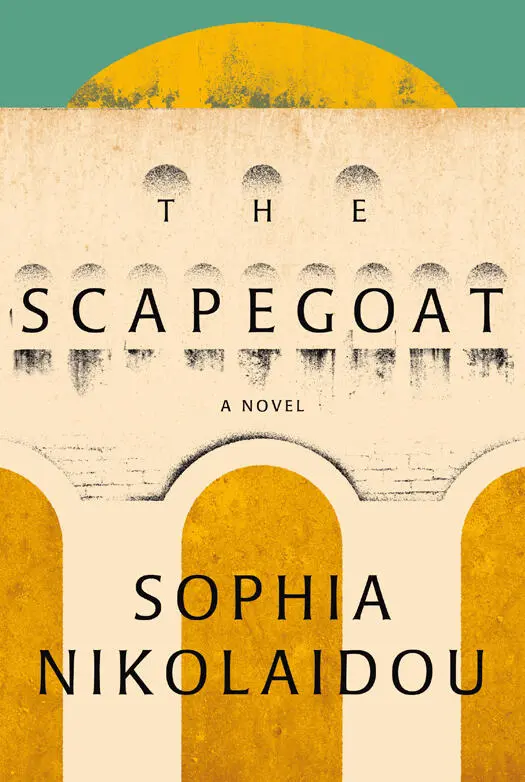
- Название:The Scapegoat
- Автор:
- Издательство:Melville House
- Жанр:
- Год:2015
- ISBN:нет данных
- Рейтинг книги:5 / 5. Голосов: 1
-
Избранное:Добавить в избранное
- Отзывы:
-
Ваша оценка:
The Scapegoat: краткое содержание, описание и аннотация
Предлагаем к чтению аннотацию, описание, краткое содержание или предисловие (зависит от того, что написал сам автор книги «The Scapegoat»). Если вы не нашли необходимую информацию о книге — напишите в комментариях, мы постараемся отыскать её.
Flash forward to modern day Greece, where a young, disaffected high school student is given an assignment for a school project: find the truth.
Based on the real story of famed CBS reporter George Polk — journalism’s prestigious Polk Awards were named after him — who was investigating embezzlement of U.S. aid by the right-wing Greek government, Nikolaidou’s novel is a sweeping saga that brings together the Greece of the post-war period with the current era, where the country finds itself facing turbulent political times once again.
Told by key players in the story — the dashing journalist’s Greek widow; the mother and sisters of the convicted man; the brutal Thessaloniki Chief of Police; a U.S. Foreign Office investigator — it is the modern-day student who is most affecting of them all, as he questions truth, justice and sacrifice. . and how the past is always with us.
The Scapegoat — читать онлайн бесплатно полную книгу (весь текст) целиком
Ниже представлен текст книги, разбитый по страницам. Система сохранения места последней прочитанной страницы, позволяет с удобством читать онлайн бесплатно книгу «The Scapegoat», без необходимости каждый раз заново искать на чём Вы остановились. Поставьте закладку, и сможете в любой момент перейти на страницу, на которой закончили чтение.
Интервал:
Закладка:
— Welcome, the old man says. Elena, do we have anything to treat the kids to?
Evelina looked at him in surprise. In all those years her grandfather hadn’t treated her to so much as a glass of water. Elena brought us orangeade and slices of tsoureki.
The old man was one of the ones who’d been keeping tabs on the sit-in, which gave us something to talk about. He knew more than we did about what was happening in the schoolyard. We spent seven minutes on boring observations. Then I lost patience and got to the point.
— Mr. Dinopoulos, would you mind if I recorded our conversation? I asked as I searched the menu on my cell phone. I knew it had a function for digital recording, I’d just never needed it until now.
— I want to see Evthalia.
Evelina started to say something. I put my hand on her knee to stop her, pushing the button to start the recording.
— Really, young man, did you think I’d talk to you without some kind of exchange? At my age I enjoy the ultimate luxury of being beholden to no one. Though I don’t mind making other people beholden to me, he added slyly.
— That’s precisely what I’m counting on.
— Pretty big for your britches, aren’t you? Just like her.
— Who?
— Evthalia. She always had to have the last word.
I smiled. That was Grandma, all right.
— Well? Will you bring her to see me? he insisted.
— I accept your terms.
The old Methuselah smiled. He leaned his head back on his armchair and squinted against the light.
— Bring that thing closer, he ordered. If we’re going to do this, let’s do it right. I don’t want her complaining afterward that I tricked you. If she decides to give me a piece of her mind, not even God himself can save me.
THROUGH OTHER EYES
On the first day of the occupation, the first-years tossed a plastic bottle over the schoolyard wall. It was a half-empty bottle of water — not a big deal, you might say. It would burst on the sidewalk outside and that would be that. But this bottle happened to fall on the head of a passerby, a tourist, a German philhellene of the old breed, one of those who think the ancient Greeks invented the universe. The bottle smacked him right in the middle of his bald spot. It took the dazed German a few minutes to figure out what had happened. And when he did, he made a beeline for the school, enraged.
The German tourist was not mentally prepared for the sight of a sit-in at a public educational institution. He was obviously suffering from culture shock. And his English, while good, got him nowhere in terms of comprehending the situation. The students were all talking at once, the desks had been dragged into messy rows by the entrance. The German had an open mind, or so he liked to think, but the disorder before him was more than he could understand. It was incomprehensible to him that adult teachers had allowed a bunch of crazed teenagers to occupy a public space. It was even more incomprehensible that the policemen he’d seen right down the street were making no move to intervene. The students’ lack of fear made an impression on him. They acted without any consideration for what the consequences might be. They had no idea what punishment even meant.
These were the thoughts he tried to communicate to the principal, who himself had only a Lower Proficiency in English, and from decades earlier, meaning that he had a sum total of about two hundred words of English at his disposal. The principal immediately sent for Soukiouroglou. When everyone else was drowning in a spoonful of water, Soukiouroglou always found a way out. True, the principal thought he was antisocial, bad luck, and a snob, and generally kept him at arm’s length. Yet he didn’t hesitate to call on him when circumstances demanded.
Soukiouroglou and the German shook hands and started to talk. Soukiouroglou never boasted about his language skills, the way some of the jokers on the faculty did. The principal had even gotten annoyed with stubborn, mule-headed Soukiouroglou for not turning in a résumé, as he’d asked all the school’s personnel to do. What he really wanted was a list of skills that would make it easier for him to distribute extracurricular responsibilities, so he could get them all running around working on projects funded by the European Union, making him look good in the eyes of his superiors — or so his adversaries said behind his back. At any rate, most teachers turned in their résumés as he had requested. These were tricky times, and no one was willing to risk his job.
Soukiouroglou, however, wanted nothing to do with it.
— I choose not to be judged by you. I’ve been judged enough in my life, he said, and walked off.
The principal decided not to push the issue. It was a decision he had congratulated himself on ever since. He’d heard about Soukiouroglou long before he assumed duties as the principal of this school. A good civil servant , that’s what they told him at the Ministry. Some might have considered that an insult, or at least an ironic put-down. For most, being a civil servant meant leading a lazy life of responsible irresponsibility, sitting pretty without having to work all that hard. People offered anecdotal evidence of the worst kinds of abuses, and came to easily digested conclusions.
The civil war between the public and private sectors had been simmering for years. Now that belts were being tightened all over, the situation had erupted into open conflict. These days it was each man for himself, all against all. The first in the crosshairs were the teachers and the university professors. Furious parents and journalists who thought they had the truth in their pockets made sarcastic remarks about the easy hours and long vacations. None of those people really knew what it meant to be a teacher. They just found a scapegoat and loaded it up.
A few days earlier one mother had come to the school to try and get her child’s absences excused. She had on a T-shirt printed with the words, THREE REASONS I WANT TO BE A TEACHER: JUNE, JULY, AND AUGUST . While this fine specimen of motherhood had her back turned, Soukiouroglou said, loud enough that she would hear:
— Some parents are as uncultured as their children. They have plenty of time to paint their nails, but never manage to make it to parent-teacher night. They think the school is there to babysit their children. Meanwhile, they settle in at the hair salon and boast about how they could do the job better. But if you threw them into a classroom for even five minutes, they’d put down their revolutionary banners and run the other way as fast as they could. They can’t even manage their own kids, so how could they ever control an entire class of them?
The mother blushed and turned to leave. The previous year, when her child had been in Soukiouroglou’s class, he asked her to come to the school eight separate times. She was always busy. Her child’s situation was discussed at faculty meetings, and they even ordered an external review of the case, but no solution was ever settled upon. The mother was always absent, never had time to talk to the school psychologist, kept offering excuses and putting up obstacles. At the end of the day, she just wanted the experts to deal with her child. People with degrees who were paid for their time and effort. People whose job it was to shape children’s souls.
In other words, the mother palmed her problem off on the child’s teachers. She expected a solution to drop down from the sky, without her lifting a finger. Her attitude was understandable — even excusable. Most teachers were used to listening patiently to despairing parents singing sad songs about their lot. Soukiouroglou went a step further: he tackled the problem. He tried to move forward toward a solution.
A good civil servant . It wasn’t ironic, and it wasn’t an insult. What it meant was, a person who assumed responsibility. Who finished the job on time. Who gave for free what others sold at a high price. Who taught his class with intellectual propriety and sound pedagogical methods. Students at the school — or rather, their parents — paid out the nose to evening cram schools for services the school provided for free during the day. Soukiouroglou tried to make his students realize how nonsensical that was. Some of them were convinced. They stopped going to cram schools, quit their private lessons, and studied under his tutelage. And in the end they got into university, just like the rest. They saved time and money. Their brains didn’t rot from too many worksheets and mnemonic devices.
Читать дальшеИнтервал:
Закладка:
Похожие книги на «The Scapegoat»
Представляем Вашему вниманию похожие книги на «The Scapegoat» списком для выбора. Мы отобрали схожую по названию и смыслу литературу в надежде предоставить читателям больше вариантов отыскать новые, интересные, ещё непрочитанные произведения.












Обсуждение, отзывы о книге «The Scapegoat» и просто собственные мнения читателей. Оставьте ваши комментарии, напишите, что Вы думаете о произведении, его смысле или главных героях. Укажите что конкретно понравилось, а что нет, и почему Вы так считаете.