Sophia Nikolaidou - The Scapegoat
Здесь есть возможность читать онлайн «Sophia Nikolaidou - The Scapegoat» весь текст электронной книги совершенно бесплатно (целиком полную версию без сокращений). В некоторых случаях можно слушать аудио, скачать через торрент в формате fb2 и присутствует краткое содержание. Год выпуска: 2015, Издательство: Melville House, Жанр: Современная проза, на английском языке. Описание произведения, (предисловие) а так же отзывы посетителей доступны на портале библиотеки ЛибКат.
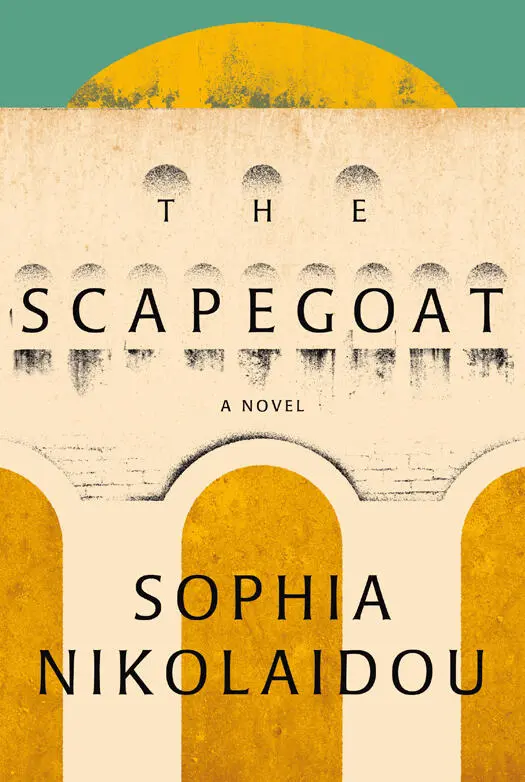
- Название:The Scapegoat
- Автор:
- Издательство:Melville House
- Жанр:
- Год:2015
- ISBN:нет данных
- Рейтинг книги:5 / 5. Голосов: 1
-
Избранное:Добавить в избранное
- Отзывы:
-
Ваша оценка:
The Scapegoat: краткое содержание, описание и аннотация
Предлагаем к чтению аннотацию, описание, краткое содержание или предисловие (зависит от того, что написал сам автор книги «The Scapegoat»). Если вы не нашли необходимую информацию о книге — напишите в комментариях, мы постараемся отыскать её.
Flash forward to modern day Greece, where a young, disaffected high school student is given an assignment for a school project: find the truth.
Based on the real story of famed CBS reporter George Polk — journalism’s prestigious Polk Awards were named after him — who was investigating embezzlement of U.S. aid by the right-wing Greek government, Nikolaidou’s novel is a sweeping saga that brings together the Greece of the post-war period with the current era, where the country finds itself facing turbulent political times once again.
Told by key players in the story — the dashing journalist’s Greek widow; the mother and sisters of the convicted man; the brutal Thessaloniki Chief of Police; a U.S. Foreign Office investigator — it is the modern-day student who is most affecting of them all, as he questions truth, justice and sacrifice. . and how the past is always with us.
The Scapegoat — читать онлайн бесплатно полную книгу (весь текст) целиком
Ниже представлен текст книги, разбитый по страницам. Система сохранения места последней прочитанной страницы, позволяет с удобством читать онлайн бесплатно книгу «The Scapegoat», без необходимости каждый раз заново искать на чём Вы остановились. Поставьте закладку, и сможете в любой момент перейти на страницу, на которой закончили чтение.
Интервал:
Закладка:
In all those years I only heard her voice once. It was raining, a real heavy storm, torrents of water rushed through the streets, a dirty river as high as your knees. The rain snuck in through closed windows, locked doors. The walls were covered in damp. The whole city had taken shelter indoors.
Evgnosia was pressed up against the window, staring out. It was the only time I ever saw her actually looking at anything. Don’t ask me what it was, though. All you could see through the window was sheets of water, the skies had opened. She started to say something, but what came out wasn’t words. She hadn’t spoken in years. No one else even noticed, because just then the plaster in the entrance fell — I’m telling you, there was that much water — and we had to go and check the damage. The guard shook his head. I’ve been saying it for years , he said, if the place isn’t kept up, these things are going to happen .
When we came back, her eyes were blank again. Whatever it was, was gone. There are no miracles in this line of work.
I’ve been taking care of their medications for thirty years. I take them out to walk in the yard. But never Evgnosia. Her chart said it wasn’t allowed, they kept her in the basement with the dangerous ones. Someone signed off on that, took the shame on himself and forgot all about it.
K. M., SECRETARY IN A POLITICAL OFFICE, MINISTER’S RIGHT HAND
I was good at my job. Everyone knew it, even my enemies. I accomplished things and left a good name behind. That was a different era, full of moral imperatives; our decisions affected people’s lives. At Christmas and Easter when I went back to the village everyone wanted to shake my hand. They would stand in a line, each with a gift and a good word. And each with a favor to ask. They were proud that their village had a man in the middle of things. I found people jobs, I attended their baptisms and weddings. I knew exactly how many votes my party could count on, how many each head of household controlled. I took care of the large families and they responded in kind.
I remember when they came to me about Stergios, they wanted me to make him a priest. But the church didn’t want him, his record wasn’t clean, he had some small-time theft on his record, and contempt for the law. The bishop had dug in his heels and was refusing to sign. Stergios’s uncle had eighty votes in his pocket, it was a big family, with plenty of kids and cousins.
— What you’re asking of me isn’t easy, I said, trying to lower his expectations.
— If it was easy, we’d do it ourselves. The kid is a bad apple, you can see for yourself, he’s not cut out for working. So we figured we’d make him a priest. He’ll have his salary, we can find him a wife. His mother wants him to be a teacher, but the boy never took to books. So a priest it is, and we’ll wash our hands of it.
The bishop acquiesced, but he wanted something in return: I had to find a place for one of his men in the gendarmerie. That’s how things happened in those days, you scratch my back, I scratch yours. Our ties were built with actions, not promises.
The minister signed off on it. He had more important things on his mind, was holding evening meetings with people in high places, while we did the dirty work.
That year things at the office were a mess. Foreigners had gotten involved in our affairs and the job was all telephone calls, paperwork, and visits. The case was of the utmost importance, the Minister informed us; there were national issues at stake. His superiors were constantly reminding him that how he handled the situation would determine not only the future of American aid to our country, but also his own career.
The Americans made statements to the press: The nation of Greece will be judged according to how its government handles this case . They’d lit a fire under our behinds, and we needed to find a solution.
The ministers were all at war with one another. No one wanted to be left holding the bag. Each of the suspects had his protector. They drove us crazy with phone calls.
They wouldn’t let Tzitzilis do his job. In the end, though, a suitable solution was found. Tzitzilis should be commended for keeping them all out of the mud.
The case was closed honorably and conscientiously; stamps and signatures rained down from above.
THROUGH OTHER EYES
It wasn’t long before a second-rate American reporter conducted the much-desired interview with the rebel chief. The American listened to his harangue, jotting things down in his notebook. The rebel fighters hadn’t eaten in days, their bodies were emaciated. Yet their eyes still gleamed, the reporter noted. They were nourished by privation and their faith in a common goal. The only problem is, you can’t eat faith , the reporter later commented to his editor. It’s faith that swallows your conscience and good intentions .
The General had a script ready in his head and was determined to say his piece. We’re strong, we will prevail . Truman had tricked the Americans, he said, into aiding the fascists. He repeatedly maligned the President and his underlings in the Oval Office, but made it clear that, in his view, good Americans had no part in these goings-on. And if they were to rebuild their country, the Greeks were in dire need of aid.
The General saw the reporter not for what he was — the representative of a small, regional radio station, a powerless nobody who was simply doing the dirty work assigned to him — but as a chosen representative of the entire American people. We’re ready to stop the Civil War , the General told him, and begin negotiations with anyone. Under one condition: that the members of the Greek government be recognized as the criminals they are .
The American was of course not the proper individual to respond, but he couldn’t restrain himself. He smiled, as much as his good manners would allow, and noted laconically: That’s one way of seeing things .
The General wasn’t fated to be in power long; the Party soon decided to depose him. He was packed off to the Eastern block to be crushed by the Iron Curtain. His old comrades rushed to renounce him, so as not to worry that they might be next. The methods were tried and true, the procedures straightforward — and the General’s name immediately lost its glory. His successor, who had orchestrated the General’s removal, was soon paid in the same coin. They erased him from the official books, too, tossed him into the mire and sent him packing. Others came to fill his shoes. They may have been no better than the rest, but they watched their backs more carefully and kept things in balance.
In the meantime, the interrogations regarding the murder of Talas continued. The absence of forensic evidence left almost everything to conjecture. Tzitzilis and his men tailored the findings to their needs — only their needs kept changing with the circumstances, so that the case skittered this way and that like mercury on the marble floors of the government ministries. Solutions were settled upon in secret, on the basis of phone calls from on high and pressures from all sides.
The foreigners kept expressing their desire for the investigation to follow a particular path. That bothered the Greeks, particularly Tzitzilis, who was used to being left to his own devices. His instincts were never wrong, as everyone in Greece knew. But the foreigners insisted on getting regular reports.
Tzitzilis wasn’t cowed. Those sons of bitches would get what they wanted; his main goal was to close the case. He handed over a file of scattered materials, in a royal mess, as its receivers commented. The case finally reached the courts with sufficient evidence — massaged behind closed doors into proof — though also with plenty of holes that were only filled in during the course of the trial.
Читать дальшеИнтервал:
Закладка:
Похожие книги на «The Scapegoat»
Представляем Вашему вниманию похожие книги на «The Scapegoat» списком для выбора. Мы отобрали схожую по названию и смыслу литературу в надежде предоставить читателям больше вариантов отыскать новые, интересные, ещё непрочитанные произведения.












Обсуждение, отзывы о книге «The Scapegoat» и просто собственные мнения читателей. Оставьте ваши комментарии, напишите, что Вы думаете о произведении, его смысле или главных героях. Укажите что конкретно понравилось, а что нет, и почему Вы так считаете.