Sophia Nikolaidou - The Scapegoat
Здесь есть возможность читать онлайн «Sophia Nikolaidou - The Scapegoat» весь текст электронной книги совершенно бесплатно (целиком полную версию без сокращений). В некоторых случаях можно слушать аудио, скачать через торрент в формате fb2 и присутствует краткое содержание. Год выпуска: 2015, Издательство: Melville House, Жанр: Современная проза, на английском языке. Описание произведения, (предисловие) а так же отзывы посетителей доступны на портале библиотеки ЛибКат.
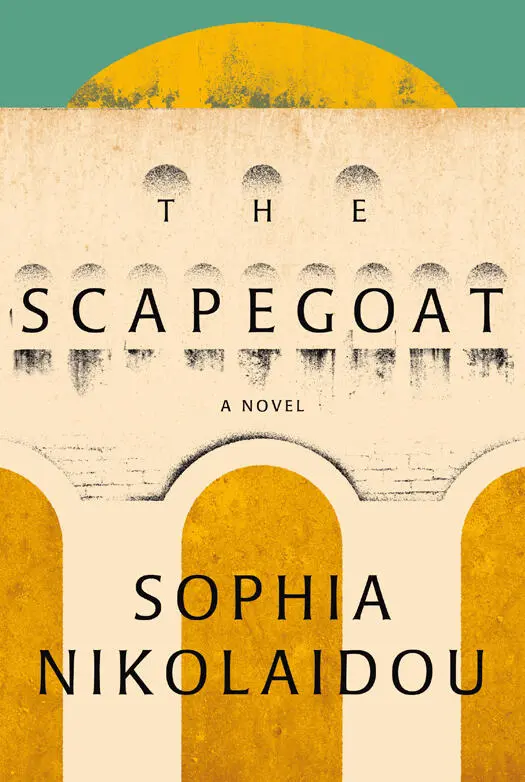
- Название:The Scapegoat
- Автор:
- Издательство:Melville House
- Жанр:
- Год:2015
- ISBN:нет данных
- Рейтинг книги:5 / 5. Голосов: 1
-
Избранное:Добавить в избранное
- Отзывы:
-
Ваша оценка:
The Scapegoat: краткое содержание, описание и аннотация
Предлагаем к чтению аннотацию, описание, краткое содержание или предисловие (зависит от того, что написал сам автор книги «The Scapegoat»). Если вы не нашли необходимую информацию о книге — напишите в комментариях, мы постараемся отыскать её.
Flash forward to modern day Greece, where a young, disaffected high school student is given an assignment for a school project: find the truth.
Based on the real story of famed CBS reporter George Polk — journalism’s prestigious Polk Awards were named after him — who was investigating embezzlement of U.S. aid by the right-wing Greek government, Nikolaidou’s novel is a sweeping saga that brings together the Greece of the post-war period with the current era, where the country finds itself facing turbulent political times once again.
Told by key players in the story — the dashing journalist’s Greek widow; the mother and sisters of the convicted man; the brutal Thessaloniki Chief of Police; a U.S. Foreign Office investigator — it is the modern-day student who is most affecting of them all, as he questions truth, justice and sacrifice. . and how the past is always with us.
The Scapegoat — читать онлайн бесплатно полную книгу (весь текст) целиком
Ниже представлен текст книги, разбитый по страницам. Система сохранения места последней прочитанной страницы, позволяет с удобством читать онлайн бесплатно книгу «The Scapegoat», без необходимости каждый раз заново искать на чём Вы остановились. Поставьте закладку, и сможете в любой момент перейти на страницу, на которой закончили чтение.
Интервал:
Закладка:
As the years passed Evthalia started to wear the pants that her husband had forbidden. She felt beholden to no one, and particularly not to the school inspectors who visited the school regularly and always gave the widow disapproving looks. She stood her ground, though, since at the end of the day she worked as hard as ten men.
— A pair of pants is the most modest thing a woman can wear, she told the principal assigned to the school during the junta, a conservative theologian who dared to comment on her choice of attire. You can bend over as far as you want without worrying that someone might see your underwear, or even a thigh.
The theologian let the conversation die there.
Evthalia was the last of her cohort to retire. She left the school only when she had no other choice. That might have explained why it was so difficult for her to comprehend her daughter’s decision to become a housewife, no matter how hard Teta tried to dress it up with various theories.
— A woman with a literature degree shut up within the four walls of a kitchen, she hadn’t been able to restrain herself from saying, just once, years ago.
Teta refused to let it slide.
— At least I’ll be home for my child, I’ll be there to watch him grow up.
Evthalia silently accepted the jibe. Teta later apologized, but what had been said couldn’t be unsaid. Even if it was unfair, entirely unfair, in Evthalia’s estimation, Teta’s words had rung like a bell in her mother’s head ever since, marking with absolute precision how far Evthalia could go, how much she could say, and where she should take care to stop.
Thus it was that Teta devoted all her time and energy to Minas. The willful solitude of her only child had become something of a family joke. Teta liked to recount with feigned worry and thinly disguised pride a scene that had taken place at the playground. Minas, still a toddler, found a kid his age playing in the sandbox and sat down beside him, but instead of grabbing a bucket and shovel, tried to strike up a conversation:
— Do you like Miró? He’s my favorite painter.
The other kid promptly picked up his toys and left, not bothering to respond.
Teta had panicked. Minas had no social skills, she fretted to Evthalia.
— Is that something people are talking about these days? the grandmother asked, and her daughter launched into a recitation from the parenting manuals she’d been reading.
While her child might have known to use the second person plural for polite speech, there were all sorts of things most people considered self-evident about which he had no idea. The guy at the kiosk, the woman at the bakery, and the man at the corner store all adored him, and showered her with compliments about how fast he was growing and how bright he was. But they belonged to the protected realm of the adult world; they wouldn’t dream of tormenting a child with mean-spirited teasing. Teta was terrified of the day when Minas would enter kindergarten. She went to meet the kindergarten teacher and told her that she was particularly concerned about her child’s socialization.
— He’s been raised among adults, she confided.
The teacher smiled. Yet another spoiled only child.
In the end, though, Minas was fairly easy-going, or at least that’s how it seemed from the outside and from a distance. But Teta’s antennas were always raised. She sensed that Minas was only mimicking behaviors, imitating a child’s whining or funny faces or clumsy gestures, repeating silly phrases. He was pretending to be what he was supposed to be.
The adults in his life fell for his routine, but what did they know? There was no fooling the other kids, who could tell right away that something wasn’t quite right with Minas, that he wasn’t normal . He seemed friendly and outgoing, made jokes, pulled pranks. And yet he didn’t fit in, didn’t conform — that’s what they would have said if they had known the word. But they didn’t, so the issue remained undefined, more of a feeling, a slight breeze that followed Minas around and made the other kids uncomfortable. Time passed and they got used to his strangeness. An unofficial truce developed, though only after plenty of conflict and tears on both sides. Minas wasn’t one to hang back. He met confrontation head-on: he knew that was the only way to resolve things, otherwise the fools just made things worse for you. So when the class bully threw his penmanship book in the trash, a green notebook with twenty-five straight pages bearing the teacher’s Bravo! at the top, Minas lost his cool. He glared at the perpetrator like a bull staring down a bullfighter, grinding his teeth the way Tasos did when things weren’t going well at work, and suddenly made a beeline for the other kid.
— You’re a moron.
Words didn’t frighten the bully, but then words are superfluous when the adrenaline is pumping through a room full of twenty-seven preteens. And so words were followed by deeds. They threw a few awkward jabs. Minas didn’t know how to fight, but he was a big kid. His opponent, a nervous little runt, started landing kicks wherever he could. Minas let loose with a backhanded blow that half missed its mark, but the other half got the job done.
No one ever picked on him again. It was as if an atypical agreement had been signed that day, a secret contract that gave Minas the right to his refuge. He said hi to the other kids and they said hi back. They knew nothing about his life and he wasn’t interested in learning about theirs. Of course the appropriate invitations to parties were exchanged. None of them had any desire for their parents to figure out exactly what was going on. When it comes to things like that, children display complete solidarity, cautious and resilient as steel.
Thus it was that Minas’s “social skills,” as Teta called them, never developed through regular interactions with his peers.
— Let the child be, was Evthalia’s advice. He doesn’t have any real peers at school, he’ll find them at the university.
It was a convenient solution, since it pushed the problem off to a future date, which at the time had seemed fairly distant. At the time. Now, though, when the much-discussed year of exam preparation had arrived and his parents’ high expectations had suddenly flown out the window, Minas’s social isolation presented yet another burden — though at this precise moment such issues paled in comparison to Minas’s provocative declarations concerning the Panhellenic Exams.
Teta watched as the other kids ran their long-distance race. The other mothers never missed an opportunity to update her on their children’s progress. With glee, it seemed to her, though they probably thought they were just being friendly. Teta felt like a turtle missing its shell. Her brief chats with other mothers on the phone and their chance encounters around the neighborhood filled her with a dreadful guilt. No matter how hard she fought it, no matter how many times Evthalia tried to comfort her with the observation that these things happen, just try to adjust , she still felt that she must have done something wrong to make Minas fall apart at the very moment when the other kids were rising to the challenge, even those who were clearly not destined to succeed.
And then there was Evelina Dinopoulou, who always came in second, right behind Minas — until last year. So diligent, so mature , crowed her mother, who was hoping her daughter would score high enough on her exams to enter the faculty of law. Evelina’s mother was discreet enough never to ask after Minas. But even that didn’t seem like a kindness to Teta; it came across as a slight.
— You’re imagining things, Evthalia tried to mollify her.
Teta didn’t listen. She was convinced that everyone was talking behind her back. As Evthalia saw it, even if they were, that was no reason for Teta to dance to the beat of their drum.
Читать дальшеИнтервал:
Закладка:
Похожие книги на «The Scapegoat»
Представляем Вашему вниманию похожие книги на «The Scapegoat» списком для выбора. Мы отобрали схожую по названию и смыслу литературу в надежде предоставить читателям больше вариантов отыскать новые, интересные, ещё непрочитанные произведения.











Обсуждение, отзывы о книге «The Scapegoat» и просто собственные мнения читателей. Оставьте ваши комментарии, напишите, что Вы думаете о произведении, его смысле или главных героях. Укажите что конкретно понравилось, а что нет, и почему Вы так считаете.