Sophia Nikolaidou - The Scapegoat
Здесь есть возможность читать онлайн «Sophia Nikolaidou - The Scapegoat» весь текст электронной книги совершенно бесплатно (целиком полную версию без сокращений). В некоторых случаях можно слушать аудио, скачать через торрент в формате fb2 и присутствует краткое содержание. Год выпуска: 2015, Издательство: Melville House, Жанр: Современная проза, на английском языке. Описание произведения, (предисловие) а так же отзывы посетителей доступны на портале библиотеки ЛибКат.
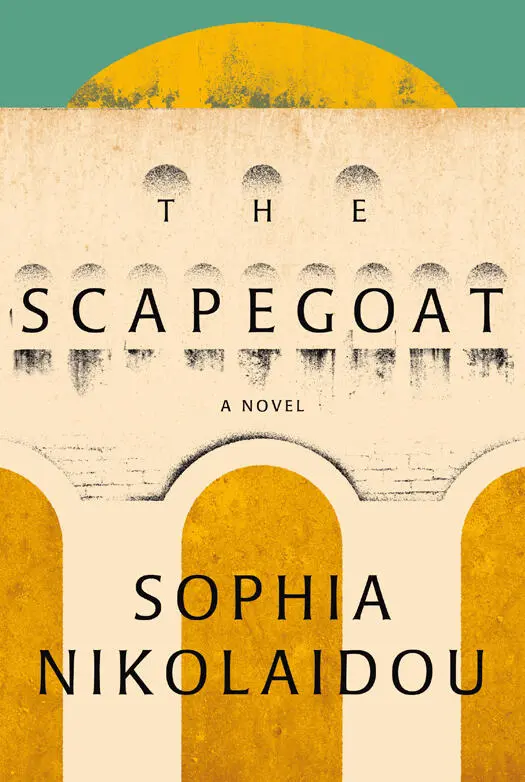
- Название:The Scapegoat
- Автор:
- Издательство:Melville House
- Жанр:
- Год:2015
- ISBN:нет данных
- Рейтинг книги:5 / 5. Голосов: 1
-
Избранное:Добавить в избранное
- Отзывы:
-
Ваша оценка:
The Scapegoat: краткое содержание, описание и аннотация
Предлагаем к чтению аннотацию, описание, краткое содержание или предисловие (зависит от того, что написал сам автор книги «The Scapegoat»). Если вы не нашли необходимую информацию о книге — напишите в комментариях, мы постараемся отыскать её.
Flash forward to modern day Greece, where a young, disaffected high school student is given an assignment for a school project: find the truth.
Based on the real story of famed CBS reporter George Polk — journalism’s prestigious Polk Awards were named after him — who was investigating embezzlement of U.S. aid by the right-wing Greek government, Nikolaidou’s novel is a sweeping saga that brings together the Greece of the post-war period with the current era, where the country finds itself facing turbulent political times once again.
Told by key players in the story — the dashing journalist’s Greek widow; the mother and sisters of the convicted man; the brutal Thessaloniki Chief of Police; a U.S. Foreign Office investigator — it is the modern-day student who is most affecting of them all, as he questions truth, justice and sacrifice. . and how the past is always with us.
The Scapegoat — читать онлайн бесплатно полную книгу (весь текст) целиком
Ниже представлен текст книги, разбитый по страницам. Система сохранения места последней прочитанной страницы, позволяет с удобством читать онлайн бесплатно книгу «The Scapegoat», без необходимости каждый раз заново искать на чём Вы остановились. Поставьте закладку, и сможете в любой момент перейти на страницу, на которой закончили чтение.
Интервал:
Закладка:
— Only the dead don’t go to work, that’s how I was raised, he cut off one guy, a specialist at sick leave, who tried to call in with a cold. He dragged the lazy bum into the office to work on a piece he’d emailed in, hoping the others would fix it up.
Georgiou barked, sure, but he had no intention of biting. When the publisher called a meeting with the staff, he sat on the latter’s side of the room, so it would be perfectly clear whose side he was on. The balance sheets were presented and the numbers shut people up, there was no arguing with the facts. The business side of things hadn’t been going well for a while. The publisher didn’t have much to add. He proposed a forty-percent reduction in wages. The staff accepted twenty percent. The union was pleased with the compromise, the staff relieved that the worst had been avoided.
The publisher wasn’t one to waste words. He was a good guy, all things considered. Haggling with him wasn’t an unpleasant affair: the necessary dirty work happened in a fairly above-board manner, he wasn’t overly greedy for profits, he knew how to be flexible while still getting his way in the end. He pulled strings behind closed doors. He knew how to compromise and how to form coalitions. He was corrupt, of course — how could he not be? — but he would admit it readily enough, with a knowing smile, if you asked, at least to the extent that he could talk about such things. Don’t interfere, you’ll mess up all my work , his father’s accountant had told him when he first assumed responsibilities at the paper. He quickly figured out how private understandings got made, how fat envelopes traveled to and from ministers’ offices, how a person could ask for the most outrageous things and see them actually become a reality.
The publisher had already settled on a twenty-percent wage reduction, as per the advice of his unsmiling and extremely well-remunerated advisors, but proposed cuts twice as harsh so the union leaders would be able to boast that their multi-day negotiations had circumvented the worst.
It wasn’t fun for the journalists, of course — who likes to have money snatched from his pockets? — but they felt as if the sword that had been hanging over their heads had gone to threaten someone else instead. So they all breathed a collective sigh of relief and got back to work. They were perfectly aware that their good luck was temporary, but no one was making long-term plans these days anyway.
Georgiou went out to walk the city streets. He couldn’t stand being cooped up in the office anymore, his closed door made him claustrophobic. But he also didn’t want to leave it open, the way he used to. He planned on walking as far as Dimitris Gounaris Street, where the downward slope of the sidewalk calmed him, even if the place was filthy. He didn’t mind the muddy streets, the trash everywhere, the Pakistanis selling incense whose smell drove Evthalia crazy. All he saw was the sea at the end of the street, the glistening waves, the open horizon. That walk was his painkiller, his tranquilizer, the moments of soothing beauty he allowed himself when the going got tough. He had edited dozens of special issues about the city’s waterfront, he had talked with experts about its potential uses. He’d heard some crazy ideas and some interesting ones, ridiculous modernization schemes as well as more tasteful and sensible approaches. None of the architects brought in from elsewhere had any idea what the sea meant for the city. On a design level, of course, they knew how to present their plans with the appropriate terminology. But on an everyday level, how many of those jacks-of-all-trades with their Ph.D.s from American universities knew what it meant to walk along Proxenos Koromilas Street, one block in from the waterfront, and see the sunset peeking in at every cross street? How many of them had spent their childhoods watching the sunlight dance over the waters of the Thermaic Gulf, at midday, through the windows of their schools? And how many had talent enough to make their architectural plans account for the particular gray of the city, on a rainy day, at the old port? A milky gray, with just a touch of watery blue at the end, a color all Thessalonians know — and though they might curse the dreariness of their city, if you dropped them down in the Maldives, sooner or later they would launch into endless comparisons and complaints about how exhausting all that sunshine was.
On his way he walked by Agia Sophia, where he and Teta had gotten married. Back then, Evthalia couldn’t comprehend how a born-and-bred Thessalonian could want to get married anywhere else, and not because it’s in fashion these days , she’d tried to admonish the couple, but because it’s the heart of the city, the place where so much of its history has taken place , she said, gathering steam. The young couple didn’t want to argue with her — Teta and Tasos, the inseparable Ts , she used to tease them. Tasos had floated the idea of a civil ceremony, which was roundly rejected on the basis of very few actual arguments. It wouldn’t bother you to have a right-wing mayor officiate at your wedding? Evthalia asked innocently. She herself had voted for the man, but she knew perfectly well what would cut her future son-in-law to the quick. And Tasos, who considered all decisions about the wedding minor details and didn’t have time to waste on skirmishes, showed up in the historic churchyard in a salmon-colored jacket and a green satin tie that he’d picked out himself, very proud of his taste. Teta smiled. She liked his wild side, how easily he got fired up, how he squeezed her hand when they were out walking and now at the church as well, the fact that he didn’t give a damn about etiquette and always let his own flag fly.
— You’re marrying a firebrand, Evthalia warned her with a smile.
— That’s part of his charm, replied Teta, who may have seemed like an obedient daughter but always managed to get her way in the end. It was a quality Evthalia admired, though she would never admit it. She had always respected people with strong personalities. People who knew the rules and were willing to accept the consequences of their actions. Anastasios Georgiou unquestionably belonged to that category. If Evthalia had ever had him as a student, he would have been her favorite. True to his word yet mildly intractable. Diligent yet full of questions. Captain Commotion, but without a trace of cockiness.
On their wedding day they had both been radiant with joy, and Evthalia worried that so much happiness might fall and crush them somehow. She decided to light an expensive candle at the entryway to the church, just in case, to ward off the evil eye.
Now, at that same entryway twenty years later, Tasos Georgiou slowed to a stop. Actually, at first he passed by hurriedly, but stopped a few steps farther on, wondering what that ball of something had been, rolled up on the floor of the alcove where the candles were, by the gate to the churchyard.
Then he heard the cry.
For a moment the bustle on the square stopped. Everyone froze: the koulouri man, mothers with kids, passersby laden with bags, Chinese street vendors with their heavy loads.
It was like the cry of a large animal — a wild beast, perhaps — slowly dying. But there was no forest here, no stand of trees, no savannah. The place stank of car exhaust; vast swathes of cement swallowed up everything in sight. Impossible , he thought, I must have imagined it . A minute later the cry was repeated, deeper, as if someone were disemboweling the beast using an iron winch and tossing its guts onto the sidewalk. Georgiou turned around to look.
It was Fendi, a foreigner, a de facto errand-boy whom the regulars at the cafés on the square treated to a coffee every so often; passersby would sometimes buy him a koulouri. Always on their own initiative, since he was ashamed to ask. And now he was flailing on the ground in front of the brass tray of lighted votive candles in the alcove at the churchyard gate. He pounded his head on the cement, howling in despair.
Читать дальшеИнтервал:
Закладка:
Похожие книги на «The Scapegoat»
Представляем Вашему вниманию похожие книги на «The Scapegoat» списком для выбора. Мы отобрали схожую по названию и смыслу литературу в надежде предоставить читателям больше вариантов отыскать новые, интересные, ещё непрочитанные произведения.










Обсуждение, отзывы о книге «The Scapegoat» и просто собственные мнения читателей. Оставьте ваши комментарии, напишите, что Вы думаете о произведении, его смысле или главных героях. Укажите что конкретно понравилось, а что нет, и почему Вы так считаете.