Sophia Nikolaidou - The Scapegoat
Здесь есть возможность читать онлайн «Sophia Nikolaidou - The Scapegoat» весь текст электронной книги совершенно бесплатно (целиком полную версию без сокращений). В некоторых случаях можно слушать аудио, скачать через торрент в формате fb2 и присутствует краткое содержание. Год выпуска: 2015, Издательство: Melville House, Жанр: Современная проза, на английском языке. Описание произведения, (предисловие) а так же отзывы посетителей доступны на портале библиотеки ЛибКат.
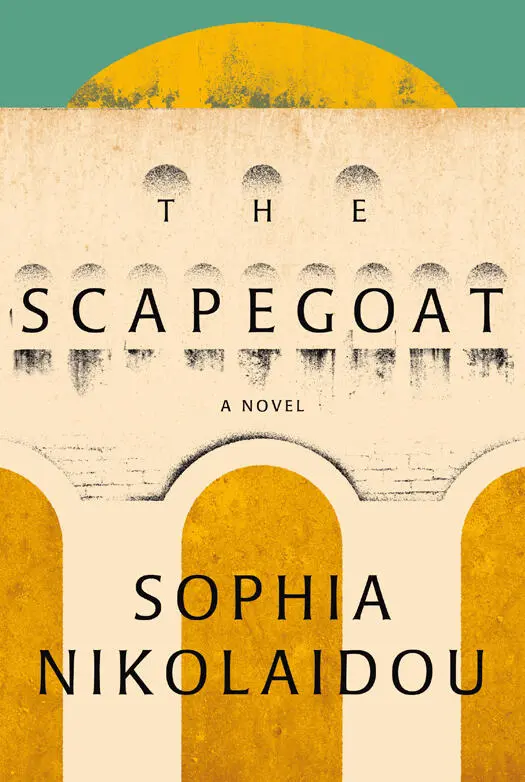
- Название:The Scapegoat
- Автор:
- Издательство:Melville House
- Жанр:
- Год:2015
- ISBN:нет данных
- Рейтинг книги:5 / 5. Голосов: 1
-
Избранное:Добавить в избранное
- Отзывы:
-
Ваша оценка:
The Scapegoat: краткое содержание, описание и аннотация
Предлагаем к чтению аннотацию, описание, краткое содержание или предисловие (зависит от того, что написал сам автор книги «The Scapegoat»). Если вы не нашли необходимую информацию о книге — напишите в комментариях, мы постараемся отыскать её.
Flash forward to modern day Greece, where a young, disaffected high school student is given an assignment for a school project: find the truth.
Based on the real story of famed CBS reporter George Polk — journalism’s prestigious Polk Awards were named after him — who was investigating embezzlement of U.S. aid by the right-wing Greek government, Nikolaidou’s novel is a sweeping saga that brings together the Greece of the post-war period with the current era, where the country finds itself facing turbulent political times once again.
Told by key players in the story — the dashing journalist’s Greek widow; the mother and sisters of the convicted man; the brutal Thessaloniki Chief of Police; a U.S. Foreign Office investigator — it is the modern-day student who is most affecting of them all, as he questions truth, justice and sacrifice. . and how the past is always with us.
The Scapegoat — читать онлайн бесплатно полную книгу (весь текст) целиком
Ниже представлен текст книги, разбитый по страницам. Система сохранения места последней прочитанной страницы, позволяет с удобством читать онлайн бесплатно книгу «The Scapegoat», без необходимости каждый раз заново искать на чём Вы остановились. Поставьте закладку, и сможете в любой момент перейти на страницу, на которой закончили чтение.
Интервал:
Закладка:
When I bring them the accused men who’ve spent time in my prison and signed confessions scripted by others, they’re not pleased by my successful resolution of sinister plots . They just complain about broken legs and bruises. They don’t believe the prisoners fell down stairs and hit their heads on the wall. They don’t realize these are routine techniques used by scoundrels and crooks who want to make the police force look bad.
Gentlemen, the government is treading water when it should be punishing men, and making examples of them. We’re at war. If you’ve got balls, you do what it takes.
Saints speak to the pious. They give you a sign so you know how to proceed. I lit my candle and waited. I sat down in the pew and studied the icon. The saint spoke with his eyes, I saw it clear as day.
I crossed myself and stood. I had my orders.
When they brought him in, I told myself this one would break in two days. Not a real man at all, push him with a finger and he’d stumble. A dandy. A bureaucrat. A sissy. Fragile bones, not much meat on him, boiling him in a pot wouldn’t get you much broth.
He didn’t seem to understand what was happening, he looked at me foggily and kept whining like a schoolboy. He pretended to be naïve, but it turned out he knew perfectly well what was what.
Watch out for the silent types. You think you’ve got them under your thumb, as soft as dough. But they’re cunning. Like water. You wouldn’t think it, but there’s nothing more devious and cruel than water. It wears down even stone.
That’s how he was, silent. Nobody you’d ever pay much attention to. With his clean suit and ironed shirt, the note pad in his pocket, his fancy words and his press pass. Quiet as a mouse in its hole.
There’s no sense betting on a little lizard like him, but my guys didn’t have much else to do for entertainment. After interrogating brutes all day long, they deserved a little fun behind closed doors. One guy bet three days’ wages that he would break.
And lost.
None of us could have imagined how long the lizard would hold his ground. I screamed at my guys until I was blue in the face. I called them incompetent, useless.
— Drop your pants, all of you, none of your cocks is worth a thing.
In the end I had to deal with the situation myself. With words and with deeds — the usual tricks. But he was a dog. He kept his mouth shut tight. We kept roughing him up, then waiting. When he came to, he still wouldn’t confess. And what we needed was a confession. Without his signature I couldn’t move forward.
He didn’t leave me much choice in the matter.
I told them to bring in his mother. If Tzitzilis takes on a case, he puts it to bed. For a true leader, to begin is to finish.
VIOLETA GRIS, SISTER OF MANOLIS GRIS
The well-fed shouldn’t complain. I always got annoyed when my mother said that. Don’t stretch your legs beyond your blanket. Only go as far as your own two legs will carry you .
— Oh, Mother, you’ll go through life with your head down, you don’t ask for much. And that’s why they’ll never give you much, either.
— Don’t disrespect our mother, Evgnosia protested.
I can practically see them now, sitting by the window with their mending in their laps. Needle, thread, thimble. The tin box of spools open, the pins lined up neatly in the pincushion. They would turn the fabric inside out. Evgnosia would hold the needle to the light, lick her fingers and twirl the thread. Then Mother would take over. She never tied knots, that was for second-rate seamstresses who couldn’t do better, or careless housewives in a hurry to be done, who didn’t understand that each action has its time and manner. Mother took hold of the thread with dexterity, smoothed the fabric under her finger and began. There was no better mender than she, you had to look hard to see where her needle had been. With a bit of ribbon and a button she could make a dress look entirely new. She would change the collar and the cuffs, always careful about the details in the finishing.
Mother was a woman of the old style. She knew never to throw out scraps of fabric, one day they might come in handy. Even a torn petticoat would find its way into something else. If it couldn’t be mended, it could be turned into a little curtain or a bag for smelling salts. All it needed was a hand to show it off in its best light.
They never made me do those kinds of jobs, because I was studying at the university. This family’s hard work has paid off , Manolis would say. His hard work, really, only he never drew attention to himself like that. What he wanted more than anything was for someone in our family to study. That had been our father’s goal, too, or so our mother would say, turning her head in the direction of the Pontus.
When I announced that I had been accepted into the faculty of law, Mother left the food on the fire and the wash in the washtub and ran to kiss me. Come here, child, let me kiss you , is what she said. It was a formal kiss, first on my forehead, then on my cheeks, accompanied by a stream of wishes and tears, memories and aspirations. Manolis proudly told her about my scholarship, and our mother said, Oh my, I have to sit down , and collapsed into a chair. With the money from my scholarship she bought Evgnosia a new overcoat, and we decided to make a few repairs to the house that we’d been putting off. We did that as a matter of course: in our house everything was common property, and we certainly weren’t going to make an exception for money.
I wore Evgnosia’s hand-me-downs all through my university days, I never had new clothes. That was fair, if you ask me. They’d taken care of me for years, and now it was my turn to give back. They’d spoiled me since I was a girl. I was twenty, and Mother still boiled an egg for me each day so I’d have energy to study. She would chase me down in the yard and make me eat it.
My last class of the day ended at eight. By eight-thirty I had to be home. I would walk with a fellow classmate named Crete — what a ridiculous name, I can’t imagine how any mother would let her child be baptized Crete. At any rate, her family had money, so Crete could have taken the tram home if she’d wanted, she didn’t have to walk. The first time I ever saw real English pounds was at her house, tossed on top of the piano.
None of my classmates liked her, but Kyriakos, first in our class, was particularly hostile.
— Violeta, he would ask, why do you go around with her? She’s at university just for fun, to have something to talk to her girlfriends about between dances. She and her kind will be ordering you around soon enough. We’re studying so we can work for them one day. Open your eyes.
I had no interest in comparing myself to Crete. My mother had taught me never to compare myself to anyone. My mother, the poor, Pontic, refugee widow, who knew how to dress even if she didn’t have money for new clothes, who thought her children were better than anyone else in the world. She passed that on to us, too, with her praise and her chiding. It was a deeply rooted belief, something that went without saying. She didn’t shout it from the rooftops. She kept both feet on the ground and prevailed in difficult situations. When bad times brought other people to their knees, we dug in our heels and clenched our teeth. We went as far as we could, to the edge of the cliff.
My mother. Harsh and forgiving at the same time. She’d be the first to point out our weaknesses, but she turned into a wild dog if anyone else dared hint at some flaw in her children. There was no job she couldn’t do, no burden she couldn’t bear, no silence she wouldn’t impose if circumstances called for it. She blew wind into our sails. She never touched our souls with dirty hands. She gloried in us from afar and prayed for the best. She believed we could take the moon down from the sky if we wanted. She didn’t care if no one else agreed.
Читать дальшеИнтервал:
Закладка:
Похожие книги на «The Scapegoat»
Представляем Вашему вниманию похожие книги на «The Scapegoat» списком для выбора. Мы отобрали схожую по названию и смыслу литературу в надежде предоставить читателям больше вариантов отыскать новые, интересные, ещё непрочитанные произведения.










Обсуждение, отзывы о книге «The Scapegoat» и просто собственные мнения читателей. Оставьте ваши комментарии, напишите, что Вы думаете о произведении, его смысле или главных героях. Укажите что конкретно понравилось, а что нет, и почему Вы так считаете.