Sophia Nikolaidou - The Scapegoat
Здесь есть возможность читать онлайн «Sophia Nikolaidou - The Scapegoat» весь текст электронной книги совершенно бесплатно (целиком полную версию без сокращений). В некоторых случаях можно слушать аудио, скачать через торрент в формате fb2 и присутствует краткое содержание. Год выпуска: 2015, Издательство: Melville House, Жанр: Современная проза, на английском языке. Описание произведения, (предисловие) а так же отзывы посетителей доступны на портале библиотеки ЛибКат.
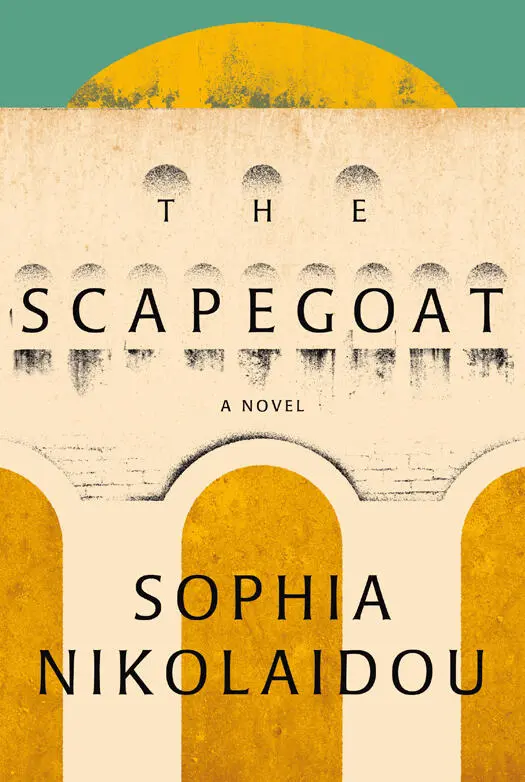
- Название:The Scapegoat
- Автор:
- Издательство:Melville House
- Жанр:
- Год:2015
- ISBN:нет данных
- Рейтинг книги:5 / 5. Голосов: 1
-
Избранное:Добавить в избранное
- Отзывы:
-
Ваша оценка:
The Scapegoat: краткое содержание, описание и аннотация
Предлагаем к чтению аннотацию, описание, краткое содержание или предисловие (зависит от того, что написал сам автор книги «The Scapegoat»). Если вы не нашли необходимую информацию о книге — напишите в комментариях, мы постараемся отыскать её.
Flash forward to modern day Greece, where a young, disaffected high school student is given an assignment for a school project: find the truth.
Based on the real story of famed CBS reporter George Polk — journalism’s prestigious Polk Awards were named after him — who was investigating embezzlement of U.S. aid by the right-wing Greek government, Nikolaidou’s novel is a sweeping saga that brings together the Greece of the post-war period with the current era, where the country finds itself facing turbulent political times once again.
Told by key players in the story — the dashing journalist’s Greek widow; the mother and sisters of the convicted man; the brutal Thessaloniki Chief of Police; a U.S. Foreign Office investigator — it is the modern-day student who is most affecting of them all, as he questions truth, justice and sacrifice. . and how the past is always with us.
The Scapegoat — читать онлайн бесплатно полную книгу (весь текст) целиком
Ниже представлен текст книги, разбитый по страницам. Система сохранения места последней прочитанной страницы, позволяет с удобством читать онлайн бесплатно книгу «The Scapegoat», без необходимости каждый раз заново искать на чём Вы остановились. Поставьте закладку, и сможете в любой момент перейти на страницу, на которой закончили чтение.
Интервал:
Закладка:
The oil had spilled all over the good tablecloth, the embroidered one, which we used to decorate the table. Evgnosia crossed herself.
— Don’t worry, Mother, I’ll put some warm water and soap on it.
She scrubbed it and got the stain out. But a faint shadow remained. Evgnosia put a bottle on top so we could still enjoy the embroidery. Right there, on our good tablecloth, was where they had me write that statement. My letters wouldn’t lie flat, my hand trembled, and of course there was the cross-stitching underneath. Evgnosia made sure ink from the pen didn’t leak onto the cloth. The poor thing was afraid another stain would ruin the piece altogether. Those were the kinds of worries we had. Back then. Before the sky fell on our heads.
Kyrios Tzitzilis wanted to be done with the case, he didn’t like that we were causing him trouble. He smiled when I came in.
— Your Manolis is a good boy, Kyra-Maria, but too quiet. He’s not saying what we want him to.
— What is it you want him to say? I asked.
— We want him to tell us about the communists, about his friends. To admit what he’s done, so we can all go home.
What had he done? That was the trouble: they wouldn’t tell me, no matter how many times I swore in the name of the Virgin Mary and her holy son that my Manolis had no truck with communists, that we were godly people, Greeks of the greater Greece, refugees chased down from the Pontus, but Greeks to the marrow of our bones.
— Fine, fine, Tzitzilis nodded, and kept asking what he’d already asked.
When he saw me rubbing my legs, since it was hot outside and they had swollen something awful, Get up, kyra , he ordered, you’re going to climb the stairs .
A Turk might have cut my legs off right there, but he wouldn’t have put me through that torture.
Forty-three stairs, up and down.
Again. And again. All day.
My lyre can sing and sing and cry
it lets out rivers of tears
and sings of the child away at war
of the unfair, unjust fight
with a heart on fire and rivers of blood .
I didn’t care about the pain. Pain you can bear. You keep saying, now I’ll surely die, but it keeps getting worse and you keep on living.
When your fate has been written, even God abandons you.
O Virgin Mary, who saw your son on the cross, you understand. You understand but say nothing. You won’t come down from your throne to save a body. Your eyes may fill with tears, but you offer no shelter.
They opened the door at the bottom of the stairs and I saw my child lying in blood. As if dead, tossed on the cement floor.
— You have no God, I shouted at them, no mother gave birth to you. May you live with my curse, and die unmourned and unforgiven. May you see all I’ve seen and worse.
I dragged my foot down the stairs, I grabbed the left one, which hurt more, between both hands and pulled. My foot caught on the railing and I tumbled down the stairs, my knees were bruised but what did I care, it was just flesh, flesh and bone, and mine, not my child’s, I could tear myself to shreds and never care, as long as I got to where he was.
— Don’t worry, ma’am, a tall young man said politely, stepping between us. The best doctors will take care of your Manolis. He fell down the stairs, like you.
He waved his hand and they closed the door, closed it before I could see him from up close. And they paid no heed to my pleading, all the tears in the world couldn’t reach their hearts. They stood there in front of the door, men with no ears and no eyes. They knew no pity.
The young man came over, put his hands under my arms and held me up.
— Come, ma’am, and sign the paper. For Manolis’s sake.
THROUGH OTHER EYES
When they brought Gris before the district attorney to sign his confession, he couldn’t even hold a pen. He kept sliding down on the chair. A policeman wrapped his hand around Gris’s fingers and helped with the signature, to speed things along.
In that policeman’s opinion, the American marshals, the Greek military officers, the government ministers, and the guys from Security all owed a moment of silence to the young man who had withstood all he’d withstood for so many days, and had even dared to raise his voice. He’d spoken back to the Minister of Justice, who had made a special trip up from Athens in a hurry — always in a hurry — to close the case, telling Gris that if he would just confess, he would be offering the greatest of services to the government. The country would honor and respect him, his name would go down in history as one of the great benefactors of the nation . At first Gris just stood in his corner like a whipped dog, but in the end he couldn’t hold back:
— Sir, why don’t you ask your son to sacrifice himself? To have his name go down in history as a benefactor of the nation? My family has already paid a high enough price. I lost a brother in the war. My mother can’t bear to lose another child.
Look at the little half-pint , thought the policeman who had been assigned to guard Gris, the same policeman who had lost the bet over how long he would last. The Minister let loose for a while and then stormed out, slamming the door behind him, and Tzitzilis vowed to punish the prisoner’s audacity.
The interrogation methods of the head of the Security Police were infamous in the city. He made prisoners stand for hours on end, deprived them of sleep and water, beat them, hung them upside-down, applied electroshock to their genitals, administered his own special concoction (no one dared mention opium), injections (of calcium, they said), promises, lies, curses, and kicks.
Tzitzilis never imagined that it would require his entire arsenal to bring Gris to his knees. The little lizard seemed like a sensitive type, a man who did the right thing, a pen-pusher with family obligations that strangled any dreams or desires of his own. A widowed mother and two unmarried sisters could unman a chieftain, much less a reporter. Tzitzilis gave him two days at most. The policeman in charge of Gris was the first to bet on the boss — and two days later had already lost.
Tzitzilis promised the prisoner a passport and a ticket to Argentina, as the guys at the Ministry had advised him to. They wanted to close the case as soon as possible, to get their hands on the proper confessions and signatures, to shut the journalists up. To put an end to the rumors once and for all.
Gris smoked a carton of eighty-eight Matsaggou-Stoukas cigarettes a day, equivalent to four normal packs. In other words, this little lizard had balls, though you wouldn’t guess it from looking at him. So Tzitzilis decided to add hashish to the prisoner’s cigarettes; after all, a little relaxation wouldn’t do poor Manolis any harm, and it might even loosen his tongue.
Tzitzilis served him a coffee spiked with his special cognac, banking on the fact that the man wasn’t used to narcotics. He let him light a cigarette, too, one of the ones he himself had rolled. Then he sat back to watch the show.
Gris was confused at being treated so well. He smoked his cigarette, drank his coffee, and suddenly felt his brakes fail. It was as if someone had reached a hand straight into his soul, as if he’d stepped into nothingness, as if the springs that kept his thoughts and emotions in place had all unsprung at once.
— I was just wondering, Manolis, if you might be a communist, Tzitzilis said as soon as he thought the prisoner was sufficiently dazed.
Manolis couldn’t control his tongue, and his mind was stuck like a cart in mud. His limbs seemed to have been poured into the chair. Words seemed impossible — where to find them, how to pronounce them. He wasn’t a communist, and didn’t side with the others, either. All he wanted was to be left in peace, to not be bothered, to do his job well, to provide for his family, to make his mother proud. He certainly didn’t believe that an idea would save the world. He didn’t even believe that God could save him, so why would he put his faith in human beings?
Читать дальшеИнтервал:
Закладка:
Похожие книги на «The Scapegoat»
Представляем Вашему вниманию похожие книги на «The Scapegoat» списком для выбора. Мы отобрали схожую по названию и смыслу литературу в надежде предоставить читателям больше вариантов отыскать новые, интересные, ещё непрочитанные произведения.












Обсуждение, отзывы о книге «The Scapegoat» и просто собственные мнения читателей. Оставьте ваши комментарии, напишите, что Вы думаете о произведении, его смысле или главных героях. Укажите что конкретно понравилось, а что нет, и почему Вы так считаете.