Samantha Harvey - Dear Thief
Здесь есть возможность читать онлайн «Samantha Harvey - Dear Thief» весь текст электронной книги совершенно бесплатно (целиком полную версию без сокращений). В некоторых случаях можно слушать аудио, скачать через торрент в формате fb2 и присутствует краткое содержание. Год выпуска: 2014, Издательство: Atavist Books, Жанр: Современная проза, на английском языке. Описание произведения, (предисловие) а так же отзывы посетителей доступны на портале библиотеки ЛибКат.
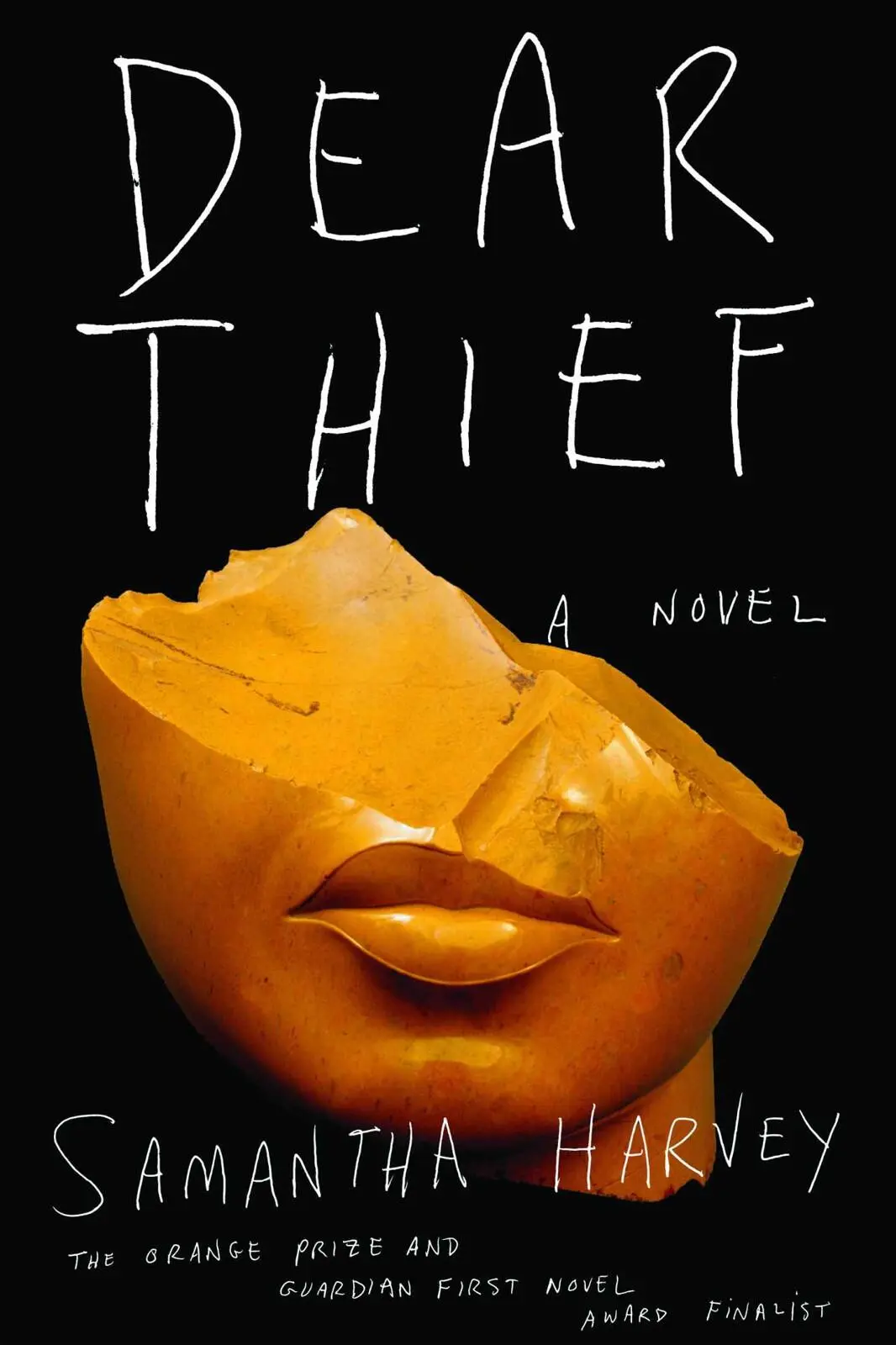
- Название:Dear Thief
- Автор:
- Издательство:Atavist Books
- Жанр:
- Год:2014
- ISBN:нет данных
- Рейтинг книги:5 / 5. Голосов: 1
-
Избранное:Добавить в избранное
- Отзывы:
-
Ваша оценка:
Dear Thief: краткое содержание, описание и аннотация
Предлагаем к чтению аннотацию, описание, краткое содержание или предисловие (зависит от того, что написал сам автор книги «Dear Thief»). Если вы не нашли необходимую информацию о книге — напишите в комментариях, мы постараемся отыскать её.
.
The thief is Nina, or Butterfly, who disappeared eighteen years earlier and who is being summoned by this letter, this bomb, these recollections, revisions, accusations, and confessions.
“Sometimes I imagine, out of sheer playfulness, that I am writing this as a kind of defence for having murdered and buried you under the patio.” Dear Thief “While I write my spare hand might be doing anything for all you know; it might be driving a pin into your voodoo stomach.” Here is a rare novel that traverses the human heart in original and indelible ways.
Dear Thief — читать онлайн бесплатно полную книгу (весь текст) целиком
Ниже представлен текст книги, разбитый по страницам. Система сохранения места последней прочитанной страницы, позволяет с удобством читать онлайн бесплатно книгу «Dear Thief», без необходимости каждый раз заново искать на чём Вы остановились. Поставьте закладку, и сможете в любой момент перейти на страницу, на которой закончили чтение.
Интервал:
Закладка:
On the way home from the class I called in to see Yannis and to get something quick for supper, and to my surprise Nicolas was there. He was just sitting at one of the tables with a coffee, waiting, he said, for me to come home. He and Yannis don’t know one another, so I introduced them and Yannis came from behind his counter and clasped Nicolas’ hand with both of his own. When he realised that it was me Nicolas had been waiting for, he gave me a curious look whose meaning I only discovered a few minutes later, when Nicolas and I left.
‘I have something to tell you and something else to ask you,’ Nicolas said when we were walking along the street to my building. ‘I’m leaving tomorrow for New York for ten weeks and I wondered if you would consider marrying me again sometime after I get back. What is your friend called? Yannis. He suggested I should give you until then to answer.’
Yannis is gregarious and nosy; he will talk to anybody about anything. There he was, counselling a stranger in his shop on how to go about proposing to a woman, probably offering a little oval dish of calamari while his customer chewed over the options. No wonder he was surprised to find that I was the woman in question. Later, when Nicolas and I were eating Yannis’ infamous salted sardines on toast, I told him that he had taken advice from a man whose marriage was itself in a state of crisis, and this seemed to please him, as if it made it all the more authentic. I also told him what I had blurted at the life-class and he sat back, with a piece of oily toast on his fork, staring at the table in thought for a moment. ‘And how does God see you?’ he asked finally. ‘I don’t know,’ I replied, ‘this is what I want them to show me.’
He smiled and touched my cheek briefly, and I know that this act of wry softness said: You mean, you want them to make you look noble. That touch of my cheek was supposed to convey, by way of comfort, that all hopes of nobility were past, and it didn’t matter. Between us we have nothing splendid left, it is lost in all the cowardly little offerings we have made over the years. He looked somewhat triumphant in this loss of burden. I tell you, he chewed long and peacefully on that sardine as if hunger were no longer a reason for eating.
We spent most of the evening talking about New York, and the Brooklyn Academy of Music where he would be working on a touring production of Euripides’ Medea . He laid out his metre-square map of New York City, Manhattan on one side and Brooklyn, Queens, the Bronx and Staten Island on the other. Turning it back and forth, he marked it up with points of interest in his guidebook. He wanted to go to Columbus Park to see elderly people playing Xiangqi, he has wanted to do that since he was a teenager and his erstwhile stepfather told him about it. Also the Public Library Reading Room, the Hunterfly Road Houses in Weeksville, the Chelsea Hotel. All of these places had been put in his mind by his stepfather, whom I have never heard him speak about before in anything but passing. When it was late he folded the map one more time than it was supposed to be folded and said he would not contact me when he was away. He forced it into his back pocket and stood; one of his typically abrupt, proud conclusions to a vulnerable topic. Then he took himself to bed.
Once again it has come to the early hours of the morning and I must get to bed too. I seem to be sleeping so little at the moment and finding myself restless or hungry at strange times of the night, especially when Nicolas stays. Then the urge to come back to this letter is stronger, or at least makes more sense, although I can’t explain how. As it is, he just came in from the next room, half asleep, to find out what I’m doing. I told him I was writing to you. He turned his back quickly. He sends his regards.
April 2002
30
March happened, I forgot to mention it. Forgive me.
But really, if honest, I could have seen Nicolas’ offer coming. Something firm, almost intolerant, came over him when I asked about a month ago if he knew where you might be living. The question was more hypothetical than anything, I had no doubt that he wouldn’t know. He was looking down at a newspaper or, no, dinner. I think we were eating at a cheap Italian place called Ciro’s. He raised his eyes only and said, ‘In the desert.’ Then he went back to eating.
It was the first time he had acknowledged that he knew about the postcard from you to Teddy, a postcard that had dropped through my letterbox ten years before. He speared his food as if he had suddenly had enough of everything and wanted to draw a line once and for all. Enough suffering, enough separation, enough silence. Last week, when he asked me to marry him, he said, ‘I want us to just get back on with our lives’, which made me laugh before I had time to stop myself, because his tone implied that the fifteen-year break in our marriage had been just a bad fortnight that we should forget. And yet I agree, and I want to get on with life too. The question isn’t about whether or not to get on, but what constitutes getting on.
It is curious for a person to think that for a long time they might not really have been living — curious, I mean, for them to not know if they have been living. When do all the activities of living add up to a life? I can tell that Nicolas thinks my flat is an admission of defeat, my job an evasion of responsibility — that I have given up on myself. My letter to you was probably the last straw; she is stuck in the past, he thinks, and not even a wholesome bit of the past. She cannot move on. The more I think about it, the more it feels that he wants to rescue me from my sad unreconciled state and make me add up to something.
At the same time he also seems to tread very carefully around my life as though he sees it as something self-contained and sustaining; he is wary of my independence. I know this because he comments on my hair being short, where short-haired women are for him slightly dangerous creatures who might not need much from a man. When I had my hair like this in the past he always said he preferred it longer, but when he comments now it is to say, with a hint of trepidation, that he thinks it suits me. There is something in this movement from him and what he likes or prefers, to me and what is good for me, that gives me the feeling that he views me now as something separate and worthy of his respect. He said we had each grown and become much more fully ourselves, that this is the basis for a strong marriage. And so I asked him, What will happen if we get together again? Do we remain fully ourselves and, if not, will it be grounds for divorce? He said I was trying as usual to solve the future before it had become a problem. But it seems to me, Butterfly, that men have never really heard of forethought.
One of the few clear things I know about Nicolas’ life these last fifteen years is that he spent some of it in Japan living with a woman he met in the theatre. A year after he met her he moved to Kyoto to be with her, on a visa sponsored by her mother’s theatre production company. And he told me that although he had only just now asked me to marry him, he’d made the decision a couple of weeks ago, while we were walking in the Isabella Plantation. He said the idea had come to him suddenly as more of a suggestion than a proposal, and one he hadn’t planned on having. What I think is that his idea was prompted, consciously or not, by the row of azaleas and Japanese maples we were walking between at the time; he saw those early azalea petals and he thought of his lost romance, just as we are all reminded of romances and losses every day of our lives, and he sought instinctively to fight back against it with the offer of something new. What’s more, I think he either recognised it then or has recognised it since, and he knew I knew he was doing it. He has always been that way, a man whose future is an impulsive reaction to or against a past he has just remembered and cannot accept, with the hope that comes in the absence, as I said, of any forethought whatsoever.
Читать дальшеИнтервал:
Закладка:
Похожие книги на «Dear Thief»
Представляем Вашему вниманию похожие книги на «Dear Thief» списком для выбора. Мы отобрали схожую по названию и смыслу литературу в надежде предоставить читателям больше вариантов отыскать новые, интересные, ещё непрочитанные произведения.












Обсуждение, отзывы о книге «Dear Thief» и просто собственные мнения читателей. Оставьте ваши комментарии, напишите, что Вы думаете о произведении, его смысле или главных героях. Укажите что конкретно понравилось, а что нет, и почему Вы так считаете.