Samantha Harvey - Dear Thief
Здесь есть возможность читать онлайн «Samantha Harvey - Dear Thief» весь текст электронной книги совершенно бесплатно (целиком полную версию без сокращений). В некоторых случаях можно слушать аудио, скачать через торрент в формате fb2 и присутствует краткое содержание. Год выпуска: 2014, Издательство: Atavist Books, Жанр: Современная проза, на английском языке. Описание произведения, (предисловие) а так же отзывы посетителей доступны на портале библиотеки ЛибКат.
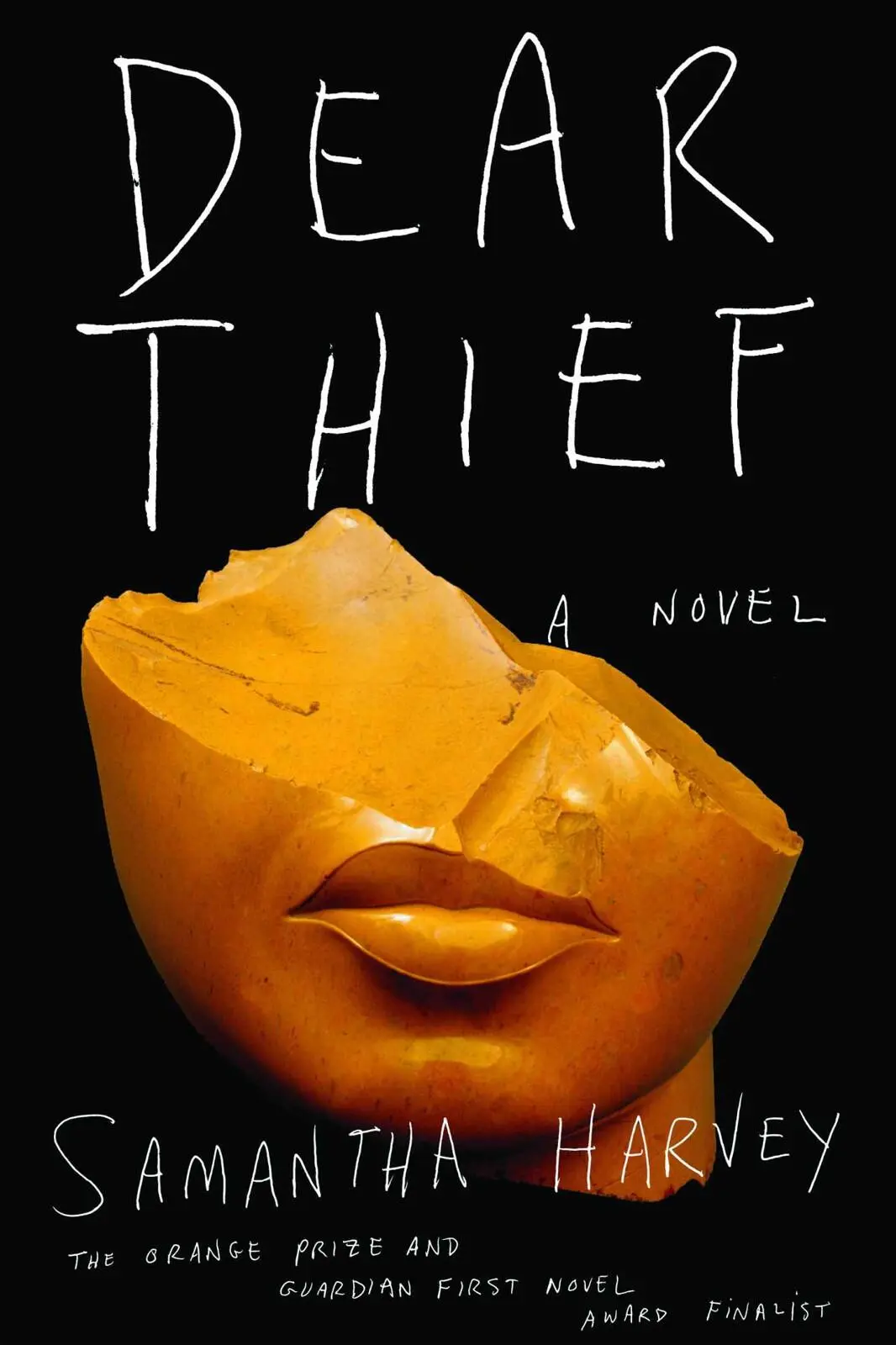
- Название:Dear Thief
- Автор:
- Издательство:Atavist Books
- Жанр:
- Год:2014
- ISBN:нет данных
- Рейтинг книги:5 / 5. Голосов: 1
-
Избранное:Добавить в избранное
- Отзывы:
-
Ваша оценка:
Dear Thief: краткое содержание, описание и аннотация
Предлагаем к чтению аннотацию, описание, краткое содержание или предисловие (зависит от того, что написал сам автор книги «Dear Thief»). Если вы не нашли необходимую информацию о книге — напишите в комментариях, мы постараемся отыскать её.
.
The thief is Nina, or Butterfly, who disappeared eighteen years earlier and who is being summoned by this letter, this bomb, these recollections, revisions, accusations, and confessions.
“Sometimes I imagine, out of sheer playfulness, that I am writing this as a kind of defence for having murdered and buried you under the patio.” Dear Thief “While I write my spare hand might be doing anything for all you know; it might be driving a pin into your voodoo stomach.” Here is a rare novel that traverses the human heart in original and indelible ways.
Dear Thief — читать онлайн бесплатно полную книгу (весь текст) целиком
Ниже представлен текст книги, разбитый по страницам. Система сохранения места последней прочитанной страницы, позволяет с удобством читать онлайн бесплатно книгу «Dear Thief», без необходимости каждый раз заново искать на чём Вы остановились. Поставьте закладку, и сможете в любой момент перейти на страницу, на которой закончили чтение.
Интервал:
Закладка:
So I did not answer, though I could have. Instead I let you speed up our pace to catch Nicolas and Teddy. As we climbed the lane the mist was thinning and the sun spun through the trees in spokes — wet, golden light, and while the hilltops were basking, the mist was still thick down in the valley. Grey, bottomless trees rose from it. Church spires floated in the distance.
‘In Hindu mythology,’ you said to none and all, ‘the sun isn’t the mother of dawn, but the lover. He chases her across the sky and the day starts with a burst of romance. The flowers bloom, the lotus blossoms. . .’
‘The wheat is lovestruck,’ Nicolas said.
‘The bees are drunk.’
‘The streams are laughing.’
‘The monks are hungry.’
‘The clouds are giddy.’
‘The temples are buckling.’
‘The crickets are strutting.’
‘Time is tripping.’
This was evidently a conversation the two of you had had before in some form. You spoke like lovers; you had returning topics and private games. As we walked further, off the lane and up through the fields where the grass was pulled upwards by the vibrating hum of electricity, the light made strange glowing arcs around us. As if it were rucked by the vibration. I had never before and have never since seen this effect of the light. If I looked at it, it seemed to disappear, but if I looked at the ground or at Teddy or you or Nicolas, I could see it, a hoop, glowing. I still have no idea what caused this, but in my memory I see Nicolas a few steps ahead, ringed by this light. He walked tall with the carelessness and ease of a younger man.
33
Today at work Gene spoke for the first time about his Lithuanian roots, though it was me who brought it up. Such a private man, and yet not cold, not at all. He does a lovely thing when he is thinking of an answer to a question — he levitates his eighty-five-year-old hand upwards to demonstrate, I suppose, the rising of the thought from heart to head. Up it goes, shaky and slow. And when it has risen he speaks, but only then.
‘The trees,’ he said, when I asked him what he remembered about the country. ‘The oak, hornbeam and what else? Lindens. Lindens.’
‘Where were you from?’
‘Ariogala.’
‘Where is that?’
‘Oh, central-ish. A small town central-ish, in the middle. But I haven’t lived there since I was a very small child, you know, so don’t trust what I tell you.’
I smiled; I was helping him on with his clothes at the time, pulling socks over his papery ankles. He has asked for a female assistant to do these things and we’ve no grounds to refuse; his notes from the hospital back up this request, which suggests to me male abuse or bullying of a kind as a child, maybe. In his torso, his chest, his arms, he is a big man and still quite powerful for his years, yet so small and crumpled in his underwear — he the child, I the adult. ‘I trust what you tell me implicitly,’ I said, but he wafted away my faith in him. There are times, I suppose, when your lack of authority in a situation is so complete that you must come to doubt your expertise in everything, even the whereabouts of the town you were born in.
‘As fate would have it, I’ve been looking into Lithuania recently,’ I told him. ‘I’m trying to find out about an old friend.’
I expected him to be interested but he wasn’t particularly. He just nodded.
‘Have you heard of the Lithuanian Academy of Sciences?’
He shook his head.
‘My friend’s brother, Petras, had something to do with them, that’s all.’ One white leg into the trousers, the other leg, an awkward hoisting of them up around his waist while he leant on my shoulder. I added, ‘He was investigating something specific, about the effect of radiation on algae in lakes that are used to cool nuclear-power plants. You were not allowed to openly investigate these things then, in case you discovered something the state didn’t like. But I’m sorry, you’ll know all this.’
Naively, I thought that Gene would respond somehow, or find in Petras’ gallant fight a shared cause, but he just pulled himself up from leaning and buttoned his trousers. ‘I wonder if it’s still the way you remember it,’ I said, with one last attempt at engaging him. ‘The lindens and all.’
I have noticed how elderly people acquire an unpredictable, unreliable look, almost impish in some, as though they are slipping between gears. Gene looked at me in that giddy way and then he said, just as you did that day, ‘The Soviets cut most of those down.’ And he said it so readily that I wondered if this was the stock belief, the people’s mantra, perhaps a way of summarising a set of complex losses. But nations can define themselves by their landscapes, this is certainly true; a tree can signify liberty, a tree felled by a foreign hand can crash to the ground as loudly as any army can invade. Sure enough, as he made his silent way into his shirt, he looked out of the window at the trees there as though they had just asked him a question.
‘Gene isn’t a Lithuanian name,’ I said.
‘Nobody could pronounce Juozas. My mother loved Gene Kelly, she thought I looked like Gene Kelly. Well, it was just her opinion. And later in life she started calling me Gene sometimes — perhaps she was confused or just joking with me. So when I came here and needed a name, that was the one I adopted.’
‘When did you come to England?’
‘When I was five-and-a-third.’
‘To be precise.’ I stood to get his wallet, which he always likes to have on him once dressed. ‘But you remember home?’
‘This is home.’
He was working his arms into a cardigan by this point. He asked suddenly, ‘What’s your friend’s story?’
‘Her story? You see, I think she isn’t the kind of person to have a story, maybe that’s her problem.’
‘We were Hasidic Jews,’ he said, as if on a separate plane of thought. ‘Many Lithuanians were. Do you know what Hasidic means? It means loving kindness —and that is what our religion is about. We told stories and sang and prayed. In Ariogala we had a place called the Valley of Songs because there were so many music festivals there; you see, Lithuania is a place of prayer, song, myth and folklore, and stories. Stories.’
‘You remember all that from before you were five?’
‘Of course not — not all our memories are things we remember.’
Again he smiled, or maybe he’d always been smiling, and I made some comment or another about this being true; I think how many memories I have borrowed from my parents, even from you, and built them up as if they were my own. I eased his foot into a dark-red shoe, his favourite pair, that he insists on wearing to the exclusion of all others. He looked down at me so sober and placid.
I asked him, ‘So where would somebody without a story go in Lithuania?’
His kindness remained, but he watched me blankly.
‘I’m looking for my friend.’
Still he watched me blankly. Was this to say, Your question is foolish. Or was it only that his thoughts were already elsewhere?
34
Though unsentimental by nature, a memory comes to you. You are outside your hut when a breeze catches you and takes you back to a time when you were not much more than a baby, in the dunes at Nida with your mother, father and Petras. Petras is around eight or nine, a towering brother tall as the hills, fearfully loved. Your mother and father are burying him in the sand and it makes you screech with laughter. They laugh at you laughing; this is what Petras most often recounted about you when you were older — your baby laugh, which was a cackle of pure joy requiring a mouth open to its fullest and a complete suspension of breath. Even when he emulated it we laughed too, so infectious was it. You were game, as a child. Feral, Petras commented, and your parents countered, Delightful. The foulest temper and the sweetest, most coaxing love of life and adventure, and nothing in between except sleep, which was deep, determined and uninterruptible.
Читать дальшеИнтервал:
Закладка:
Похожие книги на «Dear Thief»
Представляем Вашему вниманию похожие книги на «Dear Thief» списком для выбора. Мы отобрали схожую по названию и смыслу литературу в надежде предоставить читателям больше вариантов отыскать новые, интересные, ещё непрочитанные произведения.








Обсуждение, отзывы о книге «Dear Thief» и просто собственные мнения читателей. Оставьте ваши комментарии, напишите, что Вы думаете о произведении, его смысле или главных героях. Укажите что конкретно понравилось, а что нет, и почему Вы так считаете.