Samantha Harvey - Dear Thief
Здесь есть возможность читать онлайн «Samantha Harvey - Dear Thief» весь текст электронной книги совершенно бесплатно (целиком полную версию без сокращений). В некоторых случаях можно слушать аудио, скачать через торрент в формате fb2 и присутствует краткое содержание. Год выпуска: 2014, Издательство: Atavist Books, Жанр: Современная проза, на английском языке. Описание произведения, (предисловие) а так же отзывы посетителей доступны на портале библиотеки ЛибКат.
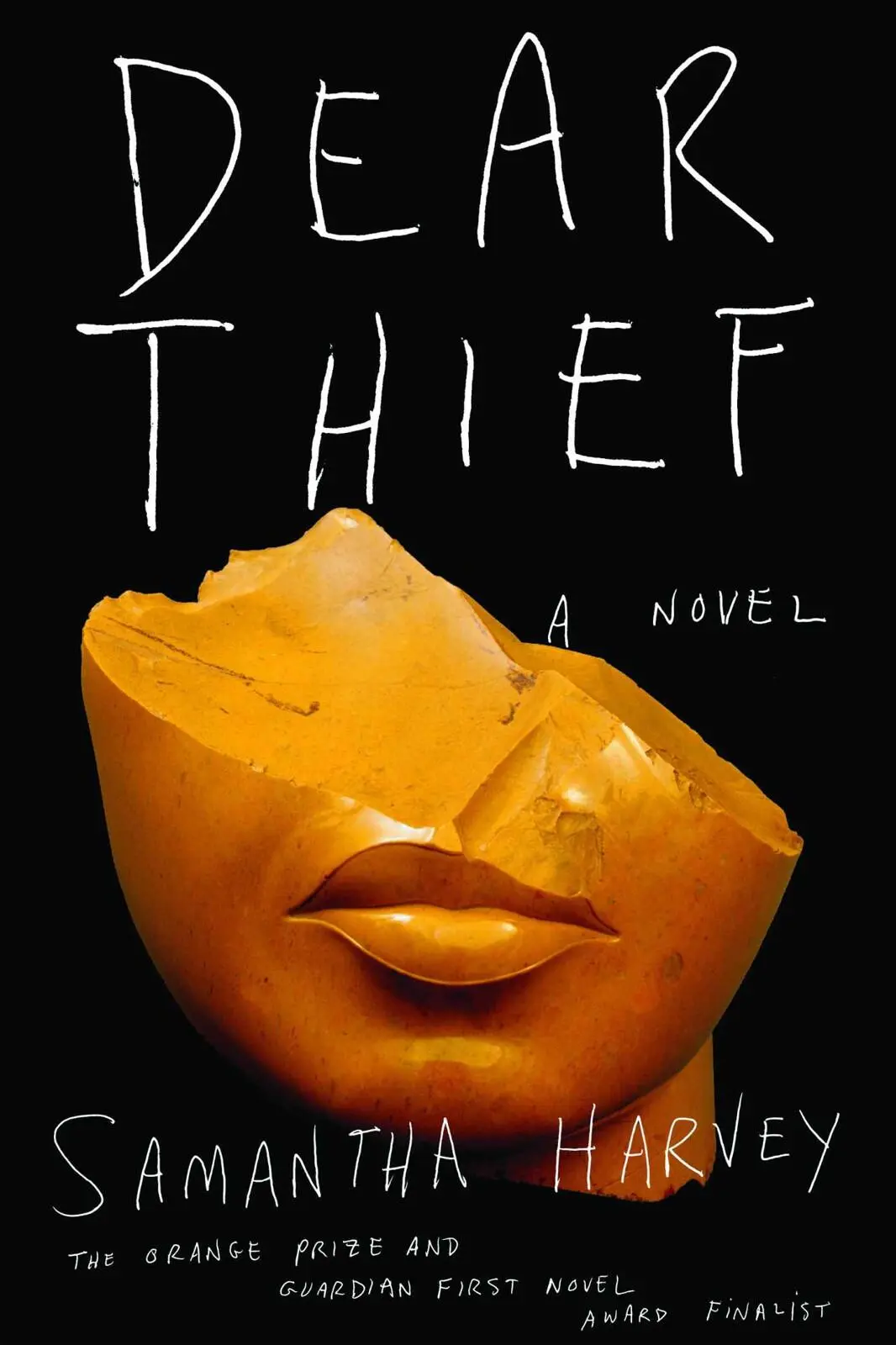
- Название:Dear Thief
- Автор:
- Издательство:Atavist Books
- Жанр:
- Год:2014
- ISBN:нет данных
- Рейтинг книги:5 / 5. Голосов: 1
-
Избранное:Добавить в избранное
- Отзывы:
-
Ваша оценка:
Dear Thief: краткое содержание, описание и аннотация
Предлагаем к чтению аннотацию, описание, краткое содержание или предисловие (зависит от того, что написал сам автор книги «Dear Thief»). Если вы не нашли необходимую информацию о книге — напишите в комментариях, мы постараемся отыскать её.
.
The thief is Nina, or Butterfly, who disappeared eighteen years earlier and who is being summoned by this letter, this bomb, these recollections, revisions, accusations, and confessions.
“Sometimes I imagine, out of sheer playfulness, that I am writing this as a kind of defence for having murdered and buried you under the patio.” Dear Thief “While I write my spare hand might be doing anything for all you know; it might be driving a pin into your voodoo stomach.” Here is a rare novel that traverses the human heart in original and indelible ways.
Dear Thief — читать онлайн бесплатно полную книгу (весь текст) целиком
Ниже представлен текст книги, разбитый по страницам. Система сохранения места последней прочитанной страницы, позволяет с удобством читать онлайн бесплатно книгу «Dear Thief», без необходимости каждый раз заново искать на чём Вы остановились. Поставьте закладку, и сможете в любой момент перейти на страницу, на которой закончили чтение.
Интервал:
Закладка:
Petras is up to his jaw in sand, and the sand keeps falling away from his face because he is laughing at you laughing. Your parents scoop it back but it flows away. Then you feel a breeze — maybe it picks up, or maybe you’ve turned your head into it — and you become quiet at the feel of it over your skin. Grains of sand rush across the surface of the dunes like lunatics, like drunks. Of course you do not think of it in terms of drunks and lunatics at the time, but you think it as you remember. You close your eyes and open your mouth to feel the air touch places it can never usually reach, and the laughter around you stops. The air is on your gums and your handful of new, sore teeth and the insides of your cheek, filling up your mouth as if you have eaten one of those cottony clouds up there.
This breeze, which is warm and balmy, but edged with a northerliness that never allows you to forget where in the world you are, has returned fifty years later. It touches your right side as you bend over the vegetables in your plot behind the hut. Holidays, you think. Holidays! At Nida, in the long spit of dunes where the sand flows like water but is dry as bones. How can bones flow? How can water be dry? You stand up, flick your ash on the soil; good for the pea shoots, they like it. And so they ought; you’ve filtered smoke through your very own lungs to make that ash.
You have taken to watching a video of geese flying, and you go indoors, suddenly provoked by the memory, and switch the video on. You found the video player and the tiny, portable TV in a skip in the village, so you took them. Inside the video player was this short film of geese flying, just a film without commentary, and at first you had it in your mind that the film had no sound. You never checked to see if it was the sound on the TV that was defunct, because you would rather that the film were silent.
Except, after days of watching this film, you realised it wasn’t silent at all, it was rich with the honking and squawking of the geese. You muttered incredulous profanities at yourself for this oversight — it is abysmal, wholly unnerving how deaf, blind, dumb, hubristic and arrogant you can be for assuming that a lack of human noise means no noise. You won’t survive in this world with thinking like that, amazing really that you have survived this long. But I’m telling you, you should forgive yourself. Life is like this; the senses are instruments that go out of tune. You have been surrounded by non-human sound for so long in this forest of yours that only something different and out of the ordinary counts as sound now. The owl-call, the throaty crow, the snorting bison, these are no longer sounds in themselves, but part of the fabric of the air.
Anyway you watch these geese in formation. You have no idea why you find them so interesting but you could sit and peer into the screen all day if it weren’t for the fact that, quite unconsciously, you chain-smoke while you do it. Even someone with only a very scant regard for her own life would baulk at the saucerful of dog-ends these sessions yield. Besides, not enough money to smoke this much. So you watch the geese for an hour or so at night, usually, to get you off to sleep.
On this occasion, though, the memory of yourself and your family in the sand dunes has taken over, and the V of geese sheeting across a chalky sky is not providing much distraction. Neither do the Upanishads have anything to say that can take you out of yourself, because the memory resists and pulls you back. The Upanishads say abstract things about time and about childhood, but what you feel is not abstract and the memory crashes through their verses as a ton weight through mist. So you turn the book aside.
It is peculiar to think of yourself as a child. As an adult you are a one-woman nation state. You do not consider yourself a person with a history and allegiances and moral frailties, but as a set of religious, political, social, physical principles, a stockpile of abstractions that have to be met periodically by base needs like food and sex, and here in the clash of the rarefied and the base you find yourself. It is a gritty little thing, this self, and not worthy of much, but it defends its borders all the same. You never expect perfectibility, you expect to be troubled because, after all, everything complex is troubled.
But as a child, with the breeze on your eyelids and the back of your tongue? Could this simple pound of happy flesh really be you, and is there any road you can take between this self and that and, if you could, what would it achieve?
Your thoughts turn away from yourself and towards those curious dunes, and to Petras. Ironic that he went on to dig himself into the Lithuanian landscape for the rest of his life, throwing his cause against the diggers and drillers and axes and chainsaws, dear old Petras, hero Petras, dear Petras, the drillers, the axes. Your thoughts run together anxiously when you think of him. Who would have thought a love of botany could set you against the state? You look out of your one rectangular window at the woods, what used to be oak and is now quick-growing spruce, larch and pine.
You remember all the battles he fought against the power station at Ignalina, against the deforestation of the countryside, against the obliteration of indigenous flowers, trees, birds, and finally against the oil-drilling at Nida. The Russians might try to stamp out our language, take over our schools and businesses, but — you hear him say, white-lipped — they are not going to ruin our dunes.
And they did not, you say to the geese on the wing. They did not! You pour out the last few drops of steeped nettle tea from the pot and slice a piece of cheese from the rocklike remains of a block. You sit back from your thoughts. Funny how that memory came on the breeze and, now the breeze has gone, how the memory is gone too. What was it about the way the loose sand was speeding across the surface of the dunes, around the legs of your parents and over the mound that was Petras’ buried body? It made you calm and ecstatic; when you think of it now it fills you with electrical energy, and you wonder if your hair is standing on end.
35
This is tantamount to assault, you are now saying. The cheese on my table is not rocklike; I do not even eat cheese. First the imagining of my life, what I eat, how I sleep and what I sleep on, and now of my memories themselves. The air aroud my baby teeth, this preposterous fantasy about geese! Do you not think that you and your letter have gone a step too far?
Sometimes when I look at the drawings at the end of the life-class I see that the bad ones are those in which a student has stopped looking and started making things up; in those drawings I acquire a rigorous little face that isn’t mine and a pair of breasts that belong to somebody and anybody else, and there is a kind of cruelty in the pencil marks, a violence at the way I have been hijacked and misused.
I do not feel bad about inflicting this violence and cruelty on you. If you had not run away I would be able to see you, and would not have to make you up. When I think about it, there are so many sentences I could begin like that: If you had not run away, I would be able to. . .
It is true, you do not eat cheese. I forgot. You came downstairs one morning when you were living with us in Morda and said you had dreamt that a cow was standing before you. You had heard its bell clinking along the lane, then it drew up to the door like the milkman. You shall not drink of me , it said. Its breath crept warmly around its nostrils. So in the morning you made yourself the first of a thousand black teas and dry toast.
But you’ll still eat of it? Nicolas said later, over roast beef. You took a piece of meat in your hand and shrugged: Unless I receive further instruction, yes.
Читать дальшеИнтервал:
Закладка:
Похожие книги на «Dear Thief»
Представляем Вашему вниманию похожие книги на «Dear Thief» списком для выбора. Мы отобрали схожую по названию и смыслу литературу в надежде предоставить читателям больше вариантов отыскать новые, интересные, ещё непрочитанные произведения.








Обсуждение, отзывы о книге «Dear Thief» и просто собственные мнения читателей. Оставьте ваши комментарии, напишите, что Вы думаете о произведении, его смысле или главных героях. Укажите что конкретно понравилось, а что нет, и почему Вы так считаете.