Samantha Harvey - Dear Thief
Здесь есть возможность читать онлайн «Samantha Harvey - Dear Thief» весь текст электронной книги совершенно бесплатно (целиком полную версию без сокращений). В некоторых случаях можно слушать аудио, скачать через торрент в формате fb2 и присутствует краткое содержание. Год выпуска: 2014, Издательство: Atavist Books, Жанр: Современная проза, на английском языке. Описание произведения, (предисловие) а так же отзывы посетителей доступны на портале библиотеки ЛибКат.
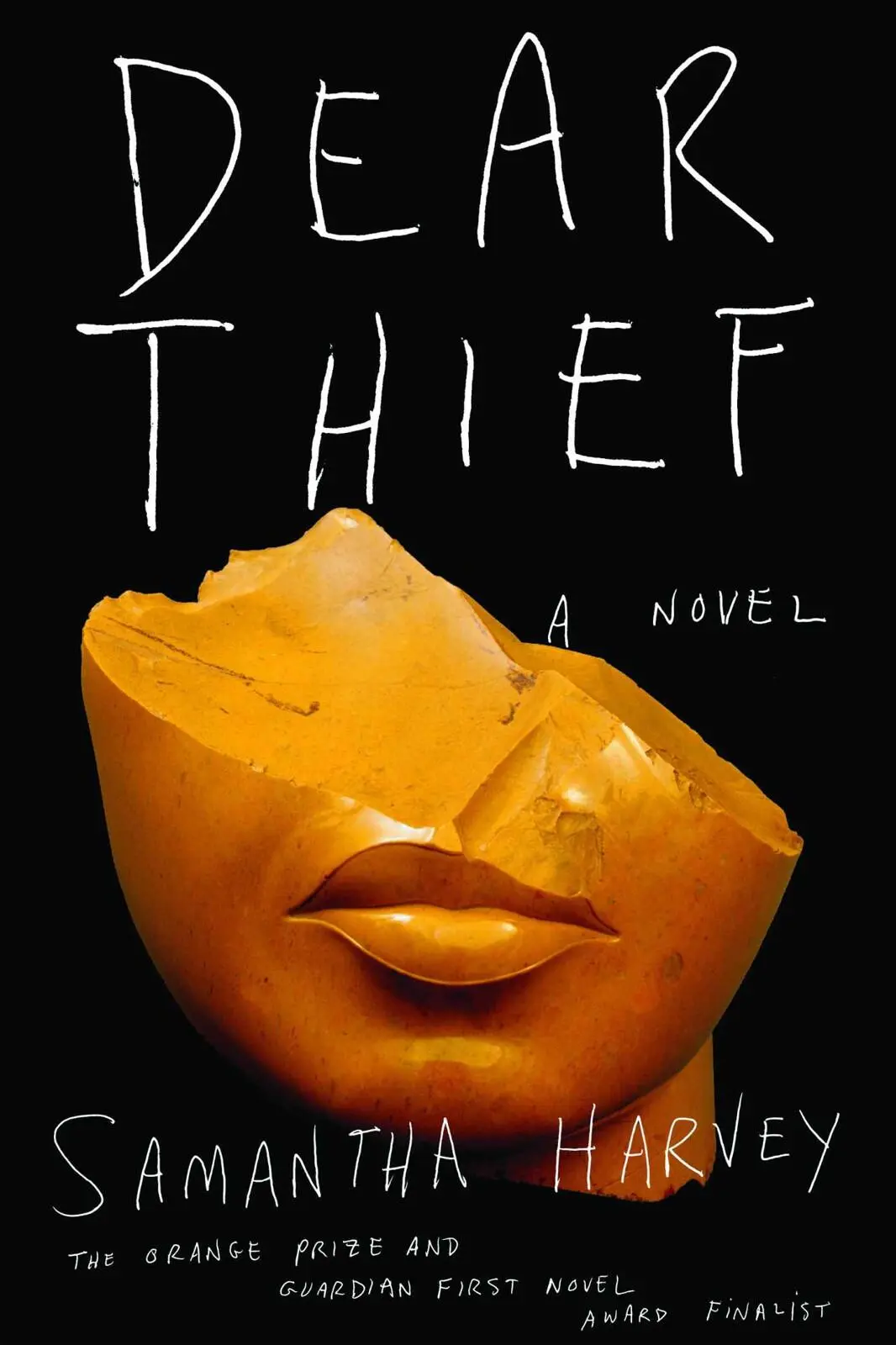
- Название:Dear Thief
- Автор:
- Издательство:Atavist Books
- Жанр:
- Год:2014
- ISBN:нет данных
- Рейтинг книги:5 / 5. Голосов: 1
-
Избранное:Добавить в избранное
- Отзывы:
-
Ваша оценка:
Dear Thief: краткое содержание, описание и аннотация
Предлагаем к чтению аннотацию, описание, краткое содержание или предисловие (зависит от того, что написал сам автор книги «Dear Thief»). Если вы не нашли необходимую информацию о книге — напишите в комментариях, мы постараемся отыскать её.
.
The thief is Nina, or Butterfly, who disappeared eighteen years earlier and who is being summoned by this letter, this bomb, these recollections, revisions, accusations, and confessions.
“Sometimes I imagine, out of sheer playfulness, that I am writing this as a kind of defence for having murdered and buried you under the patio.” Dear Thief “While I write my spare hand might be doing anything for all you know; it might be driving a pin into your voodoo stomach.” Here is a rare novel that traverses the human heart in original and indelible ways.
Dear Thief — читать онлайн бесплатно полную книгу (весь текст) целиком
Ниже представлен текст книги, разбитый по страницам. Система сохранения места последней прочитанной страницы, позволяет с удобством читать онлайн бесплатно книгу «Dear Thief», без необходимости каждый раз заново искать на чём Вы остановились. Поставьте закладку, и сможете в любой момент перейти на страницу, на которой закончили чтение.
Интервал:
Закладка:
You can tell I have thought about this — how you looked, how you were to those boys (although I couldn’t even name any of them now; they don’t warrant remembering). I have thought about it probably too much. The honeycomb, the flocking, et cetera. I have wrestled with ways of explaining you. They tried to draw you out, those boys, but you were undrawable. They thought that your thick cloak of hair was an encouraging, wholesome sign, as if it were flagging up welcoming semaphore. Yes, you were formidable and silent and strange, and yet your flushed skin — your soft hair — serene in the firelight — like warm wax — you were a Mary, a mother, no, a girl, a maiden, a kindly creature, a possibility. I know what they saw. I think of it like this: a herd of wild horses stampeding across a plain throws up a plume of dust, and through this plume the horses’ ferocious and muscular beauty is gentle, almost romantic, the stuff of pleasing paintings in living rooms. You plumed like so; your beauty was so fierce it kicked up its own haze, something dulcet, like a myth. Those boys squinted at you with a giddy sort of look while they tried to work out how to approach you, and tried to balance risk against reward.
You accepted their cigarettes without thanks; you handed out your own without regret; you won or lost at cards with equal indifference. Gradually they became suspicious of you. I say gradually — it was a short time thinking about it, a summer and an autumn, and that was the end of our tentative spell as extroverts. It was ’72, the year that Petras left home for Lithuania, which of course was the real, if unofficial, reason you wore his clothes — because you missed him; or, more rightly, appropriated him — because, seven years his junior, you had finally come of age by growing, almost, into his jeans, by becoming worthy of him, I suppose you could say. Not his equal, but at least worthy.
So the boys began to mock you; you were a dyke, a whore, you were filthy. Of course, we always insult what we do not understand, especially if it has rejected us. When the moon sails out , you quoted, from Lorca, and I misremember and misquote, the waters spill over the earth and our hearts are little islands in the infinite . Poetry was your only response to anything they did or said and you used it as wastefully as somebody emptying a cartridge into grey sky. The poems would leave local indents of silence, like hammer marks on metal. The others might laugh, they might miss a beat and then carry on talking as if you were not there, and you might carry on quoting poetry as if they were a paying audience, or otherwise, likewise, not there.
Then one evening in August or September, in the Morda woods, the matter of what was underneath your shawl was raised and became pressing. ‘What do you think is under there?’ you said with your own languid brand of scorn. You were kneeling by a crude small fire pit that had been dug earlier in the summer, to which we often returned, or anyway if you were not kneeling then — if you were sitting on the ground — you came to your knees fast when you felt the questions strengthen. They beset you with their curiosity. They asked and then demanded and then asked again, and all you said was, ‘What do you think is under there?’
They jumped on you all at once — three or four of them — to wrest your shawl from you. It was not easy, you bent yourself double, your chest pinned to your knees. Finding no way in, they pulled back at your shoulders and tried to hoist your body up, but you had wrapped your arms under your legs and made yourself unopenable. They pulled your head back by your hair, and when they realised that they could get no further without real violence, the kind of violence that would be shameful towards a woman, they instead tried to tug the shawl upwards over your head — not straightforward, because the shawl too was pinned by your body, which had locked itself down.
I stood up, but as I came towards you to help, you turned your face to me and shook your head: left and then right, a short, firm no. I will always remember that. It was an affirmation of all that seemed to define our friendship — the way we asked each other to be left to our own fates; people intervene when they think the other person has no fate, or only a weak one that can be changed — just as those boys supposed with you. You have never purposefully interfered with my fate, nor I with yours. And I knew that by sitting back down as I did I was not neglecting you, but affirming your autonomy, your control, and that at some point in this battle for your shawl you would win; I wasn’t sure what you would do to win, but I knew you would.
Such a strange sight to see them only half laughing as they tried to rid you of this thing they were so afraid of. Two of them were holding you down, one or two trying to pull it up over your head. Of course they would get it if they persisted long enough; you were outnumbered. But your soundless, motionless resistance appalled or disappointed them, I think, and there was a moment, just a moment, when they all seemed to pause, to step away and look at the back of the shawl pulled over your head and spread on the ground in front of you like a pool of spilt cream, and entertain the faintest thought that you were not worth it.
Another moment and they would either have torn it from you in aimless frustration or backed off, sat, drank, concluded: Stupid dyke. Either way, you would have lost. But just as that moment was approaching, you raised yourself up a fraction and straightened your arms in front of you as a child does when being undressed. You offered yourself. There was some laughter and hesitation; one of them stepped forward and rolled the shawl calmly off, then stood, unsure of what to do with it. You sat up and neatened your hair. You were wearing — and I remember it, partly, because it was mine — a white vest top with lace edging that could not have been more feminine or disarming to them, which followed closely the fragile cage of your ribs and the flatness of your stomach and, most crucially for them, I suppose, the great surprise, the ampleness of your breasts, plump and shapely against all the odds. You came to your feet, held out your hand and clicked your fingers for the shawl, which was given. The silver cobra coiled around your upper arm might as well have flicked its tongue at the giver; Petras’ trousers hung at your waist with sudden elegance. It is a beauteous evening , you said, as you eased the shawl back into shape with light tugs here and there, and picked bits of leaf and twig from the wool. It is a beauteous evening, calm and free; the holy time is quiet as a Nun, breathless with adoration.
And you smiled at them, and they — what did they do? I don’t know, I don’t remember. Did they speak to you again, did they watch you walk off? Because you did walk off, into the woods away from home, declaiming Wordsworth; you must have been shouting by the time you had gone from view, because we could still hear you, you will be glad to learn. But they, what did they do? Who can guess. They slide into the shadows as men do when you have had your final say.
38
Iskim back over the last few pages of this letter every so often and I usually wish I could change what I wrote.
When I wrote, for example, about your indignation at my so-called memory of you and your family in the dunes, and the sand blowing across a buried Petras, I implied, I suppose, that I had made the memory up. But something about that memory is true, isn’t it? I can definitely remember you telling me about this once in the red room at Morda, or in the lanes at Morda, or on the trunk of the fallen horse chestnut in the school fields, or in the cottage at Morda, or in the garden, or in the car, or in London, or in Spain. I’m sure you scuttled your fingers to imitate the bone-dry, flowing sand, and you said, How can bones flow, how can water be dry? And didn’t you even put your head back and open your mouth for a long minute while I sat or drove or cooked or tried, with a cheap parasol, to win back a square foot of shade from the Spanish sun?
Читать дальшеИнтервал:
Закладка:
Похожие книги на «Dear Thief»
Представляем Вашему вниманию похожие книги на «Dear Thief» списком для выбора. Мы отобрали схожую по названию и смыслу литературу в надежде предоставить читателям больше вариантов отыскать новые, интересные, ещё непрочитанные произведения.










Обсуждение, отзывы о книге «Dear Thief» и просто собственные мнения читателей. Оставьте ваши комментарии, напишите, что Вы думаете о произведении, его смысле или главных героях. Укажите что конкретно понравилось, а что нет, и почему Вы так считаете.