Samantha Harvey - Dear Thief
Здесь есть возможность читать онлайн «Samantha Harvey - Dear Thief» весь текст электронной книги совершенно бесплатно (целиком полную версию без сокращений). В некоторых случаях можно слушать аудио, скачать через торрент в формате fb2 и присутствует краткое содержание. Год выпуска: 2014, Издательство: Atavist Books, Жанр: Современная проза, на английском языке. Описание произведения, (предисловие) а так же отзывы посетителей доступны на портале библиотеки ЛибКат.
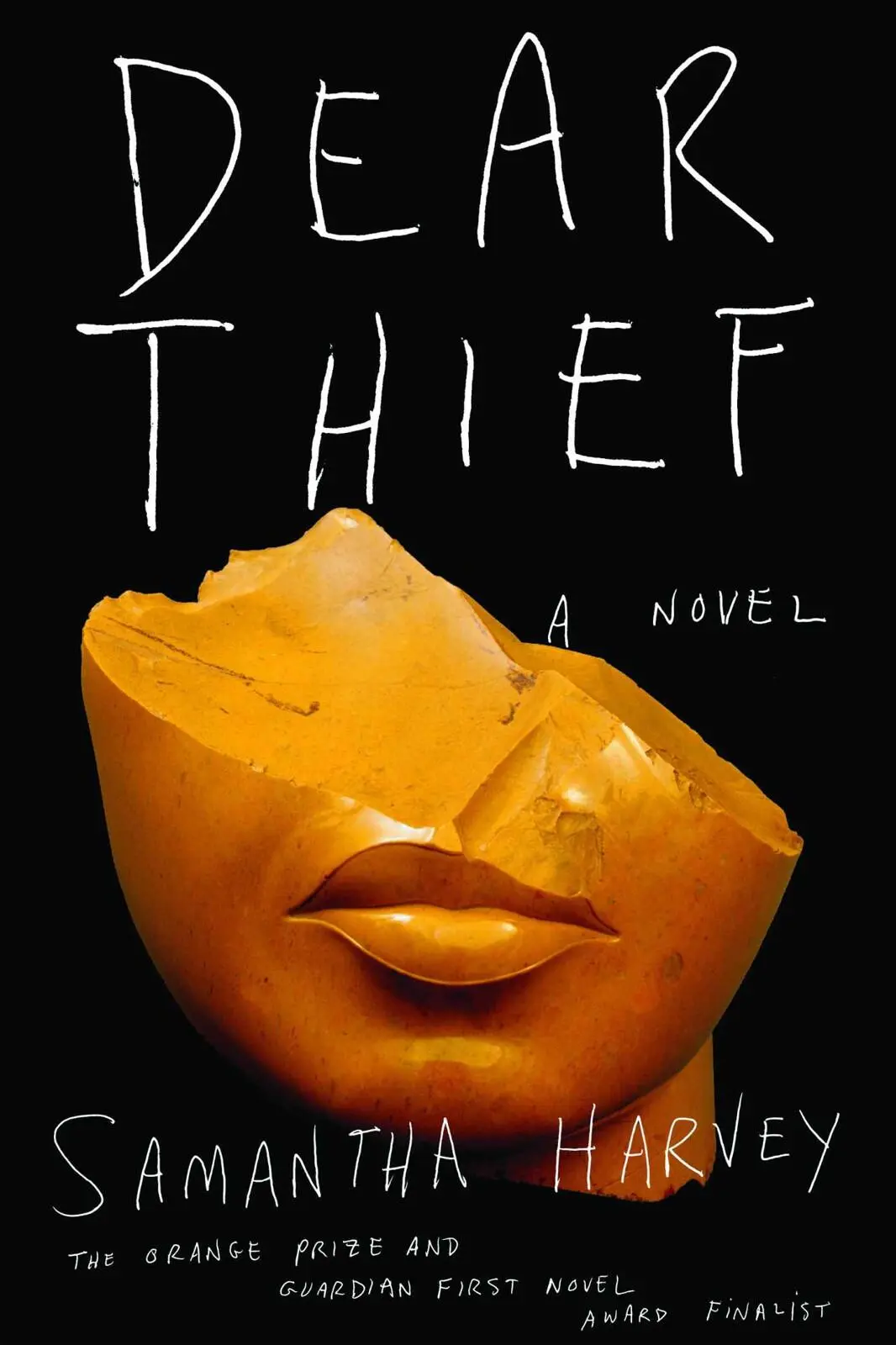
- Название:Dear Thief
- Автор:
- Издательство:Atavist Books
- Жанр:
- Год:2014
- ISBN:нет данных
- Рейтинг книги:5 / 5. Голосов: 1
-
Избранное:Добавить в избранное
- Отзывы:
-
Ваша оценка:
Dear Thief: краткое содержание, описание и аннотация
Предлагаем к чтению аннотацию, описание, краткое содержание или предисловие (зависит от того, что написал сам автор книги «Dear Thief»). Если вы не нашли необходимую информацию о книге — напишите в комментариях, мы постараемся отыскать её.
.
The thief is Nina, or Butterfly, who disappeared eighteen years earlier and who is being summoned by this letter, this bomb, these recollections, revisions, accusations, and confessions.
“Sometimes I imagine, out of sheer playfulness, that I am writing this as a kind of defence for having murdered and buried you under the patio.” Dear Thief “While I write my spare hand might be doing anything for all you know; it might be driving a pin into your voodoo stomach.” Here is a rare novel that traverses the human heart in original and indelible ways.
Dear Thief — читать онлайн бесплатно полную книгу (весь текст) целиком
Ниже представлен текст книги, разбитый по страницам. Система сохранения места последней прочитанной страницы, позволяет с удобством читать онлайн бесплатно книгу «Dear Thief», без необходимости каждый раз заново искать на чём Вы остановились. Поставьте закладку, и сможете в любой момент перейти на страницу, на которой закончили чтение.
Интервал:
Закладка:
It’s unhealthy, he says, that you should be writing to her like this, as if she were a friend .
I wonder if he remembers the comment he made a few weeks ago, about how I live in a draught? The other has left and — what was it he said? ‘They have left, but not shut the door. It must be like living in a room with a draught always coming in.’ This is how he put it, or how I said he put it. So when he takes a sample disc of cacciatore salami from the knife at the Italian delicatessen and asks me why I write to you like this, I say, Do you know, Yannis, that in life there are people who give shelter and people who take it; do you know that the people who take shelter come in from the cold and eat and drink from the cupboards of the people who give it, and sometimes they even make promises about staying and formulate in their minds a future in which they put their dreams to bed, their dreams of long, empty roads leading away from everything that ever tied them down? These people say, to themselves and sometimes aloud, I would like to give up my wandering, finally I would like to be one of the sheltered.
But one day the givers come down from a night of uneasy sleep and see that the door (which, come to think of it, had always been left ajar) is wide open, and the person who takes shelter is gone. Visible through the opening is a cloud that looks like a fast-dissolving highway. The days go on. The weeks go on and the months. Sometimes — this is more common than you might think — the ones who give shelter think about that highway themselves, this highway of freedom. But they have a temperate and cautious way of living, which means that no sooner do they visualise the highway than they see it dissolve. So they stay in the draught of a room whose door has been left open; they live in and endure the draught of somebody else’s escape for freedom.
And then, Yannis, I say (as he handles appraisingly some miraculous edible rocks of cheese), you can see perhaps why one day one of them tries to close the door by proceeding as if the past made no impact and the old course of life can be resumed. And why the other one, entirely unconvinced that the past is really in the past, gets up, stands at the threshold of the door and looks for a shadow. A sound or something moving. And calls after the taker of shelter who has left their life so draughty and stripped; stands there calling out.
What? he says — you are calling for her to come back? No, I tell him, I don’t want her to come back, I just can’t be sure that something of her is not still there. So then I hope your letter is full of abusive swearing, he says; and when I tell him it is perfectly civilised he concludes sadly, Pot plants, you see. I told you. You modern women, pot plants.)
41
I suppose you might think that Yannis is not real. See how often he makes a convenient appearance when I have something I want to confide, something it would be awkward to say directly. What stops me having invented him for that purpose? How do you tell the difference between a person made of flesh and one made of words? I know this thought will have crossed your mind once, if not many times, because that is the way you think, by which I mean you think as if everything is a symbol for something else — like God being a sexual fantasy, or a triangle the symbol of creation. For you, nothing is what it actually is, even the desert you live in is an allegory, even the beetroot you eat is a transcendent notion; the more of it you take in, the thinner you get. No wonder you fell into this unlikely devotion to Hinduism and its purposefully symbolic gods, Brahma, Vishnu and Shiva — but I know I was talking about Yannis and I know I have started to go off-track.
Far from Yannis being made up, almost nothing in my life currently is more real than he is. And there are lots of conversations we have that are banal and trivial and signify nothing, which is why they don’t make it onto the page — in fact Yannis is exactly one of those people who can gossip inanely all day about the racing odds, the unpunctuality of buses, the treachery of women, et cetera. Of course I wish his wife would come back to him, but I also wish it won’t be for a long time, or I wish it would always happen tomorrow — you see, to be complicit with somebody is such a thing. He is the only person I have really talked to about you and he billows with opinions about it with typical Cretan hot-headedness, but when the conversation ends it ends, and he pours wine and makes some injurious remark about the government or the health-and-safety people who are always on his back, then asks me if I — if anyone — has actually read D. H. Lawrence. He has been trying with The Rainbow for over two months and his bookmark — not a receipt any more, but a KitKat wrapper — has found its way just past the middle.
‘Could you give me an idea what it is fucking talking about?’ he asks gently.
Is the flesh which was crucified become as poison to the crowds in the street, or is it as a strong gladness and hope to them, as the first flower blossoming out of the earth’s humus?
He frowns accusingly at the page. ‘Humus?’ He swipes his finger into an imaginary dip and feeds it into his mouth. ‘ Humus? ’ ‘Yes,’ I laugh, ‘the first flower blossoming out of the thick wet chickpea-and-sesame soil.’ He throws up his hands. ‘Oh, I don’t care, Lawrence was a lunatic,’ he says, and he covers the book discreetly with a copy of the Racing Post .
I say this as if it’s what he does in general, but it’s what he did once, this week, when I told him about your job as a photographer of fake weddings. As an immigrant who has done everything he can to abide by the law and respect his host culture and learn his host language, he felt affronted by a livelihood predicated on dodging the law. By your little business that operated from a newspaper booth under the arches off Villiers Street in Embankment, by all the people living in squats and trying to get passports by whatever means. He believes these are the kind of people who give immigrants a bad name.
But I think if he could ever have seen the photographs you took he might have changed his mind, or opened it a little. Those photographs were not the stuff of hasty loveless services in registry offices. They looked pricey, an extravagance the bride’s father had paid for to commemorate what would be a lasting union. No immigration officer could fail to see the sudden, bright and unlikely cross-border love that had sprung up between this louche, wiry Londoner and this lovely young woman from Port Elizabeth or the Karoo, with the luscious orange orchid bursting from her right temple.
Nobody was to know how the one-size-fits-all dress was gathered in at the back with bulldog clips, or that she had no shoes unless she provided them herself, or that the venue was the tiny back garden of a friend who had an arched iron love seat under a quince tree, and behind that a wall running with passion flower, and not much else besides. Out of frame was the washing line and a child’s tricycle. In the frame, though, you made not just a wedding but a marriage; this was how I put it to Yannis, and it seems I stumbled on exactly the right phrase. Your lens married these people. The photographs were devotional and passionate, just like your Still Life , but also the opposite — because while the still life flaunted the gaping hole at the centre of things, your wedding photos disguised it, or even, I sometimes thought, dispelled it. I always imagined that some of those couples must have fallen genuinely in love when they saw how you had photographed them.
‘Then I need a photograph like that of me and my wife,’ Yannis said sadly. And then he added, with renewed objection, ‘But still I think it isn’t right.’ When I suggested that it was different back in the eighties, he began on one of his righteous rants about deference to the law and level playing fields and the sanctity of marriage, all of which come from a place of goodness in his big, honest heart, but none of which I really listened to. I had started thinking about those times, because they coincided perfectly with the three years you lived with us in Morda. I thought about all the trips you took back and forth to London, the diary you used for bookkeeping, the way, for a year or so, this little business gave you purpose, friends of sorts, a notoriety — or so you once said — when you walked through Embankment Gardens.
Читать дальшеИнтервал:
Закладка:
Похожие книги на «Dear Thief»
Представляем Вашему вниманию похожие книги на «Dear Thief» списком для выбора. Мы отобрали схожую по названию и смыслу литературу в надежде предоставить читателям больше вариантов отыскать новые, интересные, ещё непрочитанные произведения.










Обсуждение, отзывы о книге «Dear Thief» и просто собственные мнения читателей. Оставьте ваши комментарии, напишите, что Вы думаете о произведении, его смысле или главных героях. Укажите что конкретно понравилось, а что нет, и почему Вы так считаете.