Samantha Harvey - Dear Thief
Здесь есть возможность читать онлайн «Samantha Harvey - Dear Thief» весь текст электронной книги совершенно бесплатно (целиком полную версию без сокращений). В некоторых случаях можно слушать аудио, скачать через торрент в формате fb2 и присутствует краткое содержание. Год выпуска: 2014, Издательство: Atavist Books, Жанр: Современная проза, на английском языке. Описание произведения, (предисловие) а так же отзывы посетителей доступны на портале библиотеки ЛибКат.
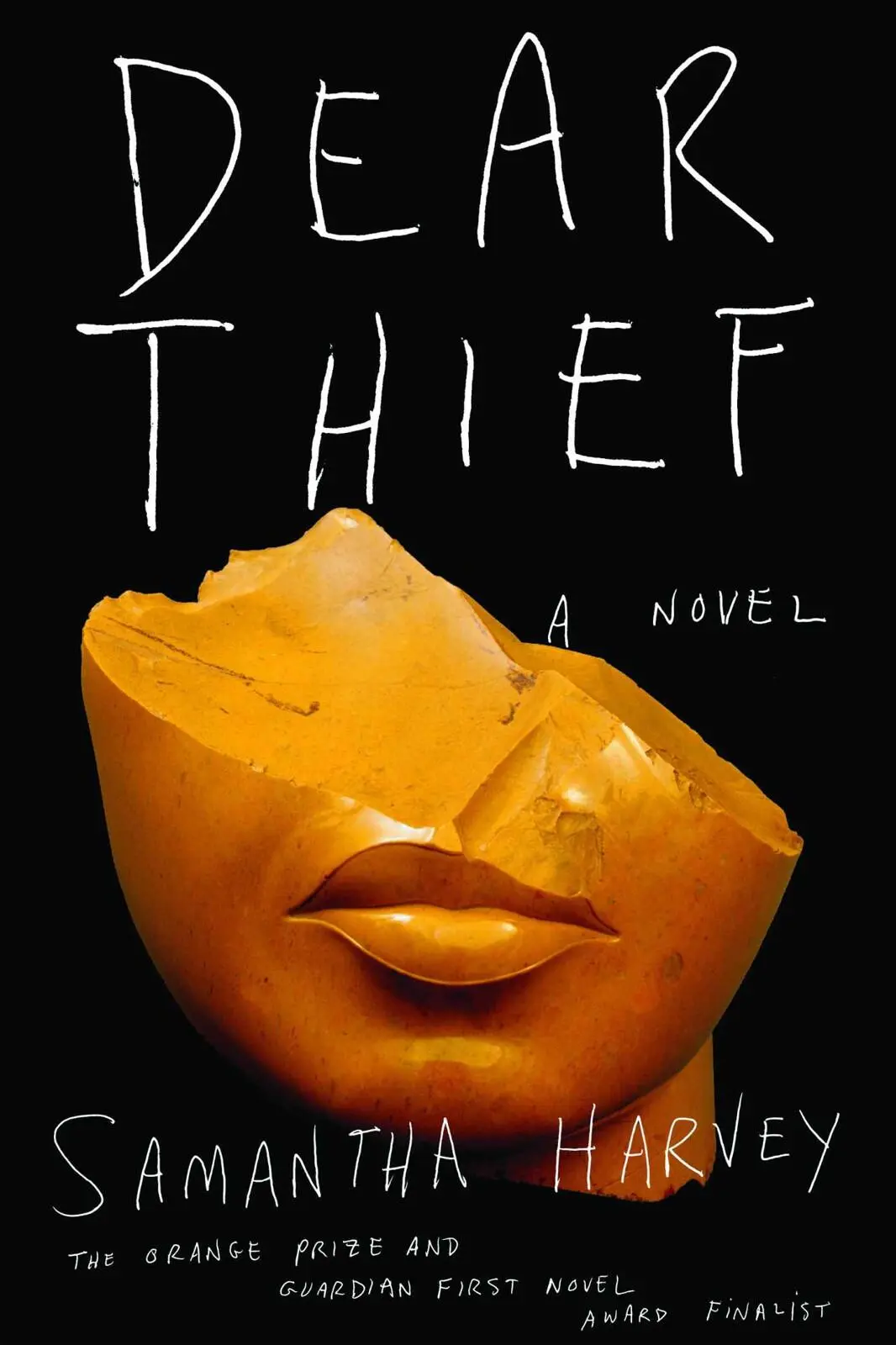
- Название:Dear Thief
- Автор:
- Издательство:Atavist Books
- Жанр:
- Год:2014
- ISBN:нет данных
- Рейтинг книги:5 / 5. Голосов: 1
-
Избранное:Добавить в избранное
- Отзывы:
-
Ваша оценка:
Dear Thief: краткое содержание, описание и аннотация
Предлагаем к чтению аннотацию, описание, краткое содержание или предисловие (зависит от того, что написал сам автор книги «Dear Thief»). Если вы не нашли необходимую информацию о книге — напишите в комментариях, мы постараемся отыскать её.
.
The thief is Nina, or Butterfly, who disappeared eighteen years earlier and who is being summoned by this letter, this bomb, these recollections, revisions, accusations, and confessions.
“Sometimes I imagine, out of sheer playfulness, that I am writing this as a kind of defence for having murdered and buried you under the patio.” Dear Thief “While I write my spare hand might be doing anything for all you know; it might be driving a pin into your voodoo stomach.” Here is a rare novel that traverses the human heart in original and indelible ways.
Dear Thief — читать онлайн бесплатно полную книгу (весь текст) целиком
Ниже представлен текст книги, разбитый по страницам. Система сохранения места последней прочитанной страницы, позволяет с удобством читать онлайн бесплатно книгу «Dear Thief», без необходимости каждый раз заново искать на чём Вы остановились. Поставьте закладку, и сможете в любой момент перейти на страницу, на которой закончили чтение.
Интервал:
Закладка:
But you fall in love, he said. This is the problem. That attraction — and again, when he tried to describe the attraction, it fell to his hands to do the talking; they came tensely towards one another as magnetically loaded things do, and he pulled them apart and they came together — that attraction doesn’t come from nowhere and is not accidental. When you feel that the other person is your missing half, you will fall in love. And then. . .
He let his hands drop to his knees and he let his gaze drop to his hands. They were not charged any more, they were a pair of old man’s hands, which were used, but not used up. The fact is that the affair went on for years, he said, and was full of love. It became, almost, a marriage in itself, one that rode out circumstance and evolved in massive, unnoticeable shifts, and passed with quietly celebrated anniversaries. Where it was most unlike a marriage was in its physicality, which never waned and which changed only in order to intensify. No doubt this was partly down to its ongoing novelty; they once went for over two years without sleeping together. M would enforce laws of celibacy on them once in a while in despair and guilt, and they would see one another every fortnight for a walk, for tea, as if friends. It was like trying to push the rain back up into the clouds. How could it ever do anything but fail? Their bodies were very insistent on one another, and it never waned, never. These were his exact words. Never waned, never. No amount of abstinence or self-control ever did anything but increase the insistence.
He asked me if it was normal to feel like you had died while making love. I told him I didn’t know. He said: To feel like you had died and passed beyond your body into the mind of God. Then he retreated from this line of enquiry, as though speaking these clumsy words had got him only further from the phenomenon they described and which he was trying, somewhere in his old body, to hold onto.
As for M, there were any number of theories about her that might shed light on why she didn’t leave her husband, and how somebody so otherwise loyal and fair had managed to construct a life of deceit. He had his theories, she had hers; they exchanged them. But people are not reducible to theories, isn’t that true? This was more true for M than for any other human being he had met, M who was so curious and oblique and held together by her inconsistencies. M who was very witty and loved a joke, but whose face became almost laughably serious at the smallest thing. She told him once that she had always wanted to be one of those women who threw their heads back in laughter, but that she always forgot, and when something funny happened she instead wrinkled her nose and smiled soundlessly into her lap. It’s very hard to escape who you are, he said, and in saying so he implied that M could not have done or been anything other than what she did and was, and, loving what she did and was, he could never have wanted her to try.
Yet when we slept together, he said, then she threw her head back, then she became fierce and free. Once again he approached the depths of this thought and retreated, and only said — by way of shorthand perhaps for this baffling carnal force that so evaded words — that he had never much wanted to be a father, but that he wanted to be the father of her children. Furthermore, that it made no sense for him not to be and for them to create nothing together. These were things he didn’t tell her, or if he did he told her in diluted and un-urgent ways that were easily dismissed as abstract talk. Which they did, repeatedly, dismiss as abstract talk.
After six years the affair ended; why? Why then? No particular thing happened to force its end and neither did it peter out or drift away. It seemed that it simply buckled to inevitability. The love became too big, the time for it insufficient, and he believed that she felt the same. It sounded so perverse and pitiable a reason. If their love was so big, why didn’t it forge for itself a relationship it deserved? Why didn’t she leave? Why didn’t he insist she leave? Why didn’t he tell her husband? Why didn’t he fall out of love with her for her cowardice? Again he looked at me as if he wanted me to judge them. When I didn’t, he seemed galvanised. It just doesn’t work like that, he said.
Gene is not a weak man. In his room he has a photograph of himself in his thirties or forties and he is strong and sturdy and his skin glows, and he has a smile that shows a mixture of childish pleasure and adult forbearance. In that mix I can see perfectly how he might be the kind of man to hunt treasure with unfading optimism, and at the same time to be able to keep his hands off that treasure with unfading patience. Both characteristics come from the same place, an absolute belief that, one day, the treasure would be his reward, at whatever cost to himself along the way. When he told me he slept with no other women during those six years, and that he waited for her without regret, and that in some way he went on to wait for her until the day she died, he told me as though simply to convey, without sorrow, that this was the structure his life took. He could more easily live with the knowledge that he never quite had her than he could have with the knowledge that he lost her through greed and snatching, which pushed her out of reach.
As it turned out, he did not ever marry. You don’t, he said, it wouldn’t ever feel right. I think I can understand what he means. It is not that you can’t settle for anything less, because you do, several times. I know he has a son because his notes from the hospital say the son had been to visit him there, though only once — and I suppose he must come from a later relationship. Yes, you do settle for less, it’s just that the things you settle for never make sense. Somewhere deeply felt, you can never understand why you couldn’t have that simple thing you wanted so much, and your whole life is pervaded by this incomprehension. You come to look like somebody who is blinking into bright light.
Butterfly, for the first time it occurred to me that you might have felt some of the things Gene felt, that the years you spent on the periphery of Nicolas’ life might have been spent waiting for something that never happened. I have always been so convinced by the notion that in some way both Nicolas and I were victims of you that I have never stopped to consider the possibility that you might have been the victim. Suddenly I wonder if you loved him, and if you ever asked him to leave me, and whether, by the time he did, it was too late. Perhaps you wanted a child. I entertain this thought just for a moment; I try to squint the wrong way down the lens and see you small and consumed, a half person looking for her other half, and there, momentarily, you are. And I feel a compassion for you I cannot describe. And then you throw your head back in laughter in the way M never could and I think: No, this is not how it was. Gene’s story is Gene’s, not ours.
43
Yes, our story is quite different; our story is splattered with the blood of bulls. Gene’s was the quiet emotional aftermath of war, ours is the war, the war itself, one soul grinding repeatedly against another.
You are exaggerating, you say. But I contend that no exaggeration is equal to the task of summing up the battle between us. We are in southern Spain, in Almería’s Plaza de Toros, a Friday evening in July. We watch six bulls die; the rule is that if the bull shows special courage he might be saved and put out to stud, but this is rare and it does not happen for any of our bulls. Each of them is dragged out of the arena and the blood trail is covered with sand.
At the time I thought it was like watching an Argentine tango. You remember the videos my mother had of European dance-hall competitions when she was learning (briefly, before she bored of it) to tango; you remember, specifically, the reproachful magnetism between the two dancers as they flicked their heels up around one another’s legs. I thought — though I need to make it clear I no longer see it this way — that the bull and matador were tentative like this; the matador flicks the cape, the bull advances, the matador toe-steps away, the bull quivers.
Читать дальшеИнтервал:
Закладка:
Похожие книги на «Dear Thief»
Представляем Вашему вниманию похожие книги на «Dear Thief» списком для выбора. Мы отобрали схожую по названию и смыслу литературу в надежде предоставить читателям больше вариантов отыскать новые, интересные, ещё непрочитанные произведения.











Обсуждение, отзывы о книге «Dear Thief» и просто собственные мнения читателей. Оставьте ваши комментарии, напишите, что Вы думаете о произведении, его смысле или главных героях. Укажите что конкретно понравилось, а что нет, и почему Вы так считаете.