Samantha Harvey - Dear Thief
Здесь есть возможность читать онлайн «Samantha Harvey - Dear Thief» весь текст электронной книги совершенно бесплатно (целиком полную версию без сокращений). В некоторых случаях можно слушать аудио, скачать через торрент в формате fb2 и присутствует краткое содержание. Год выпуска: 2014, Издательство: Atavist Books, Жанр: Современная проза, на английском языке. Описание произведения, (предисловие) а так же отзывы посетителей доступны на портале библиотеки ЛибКат.
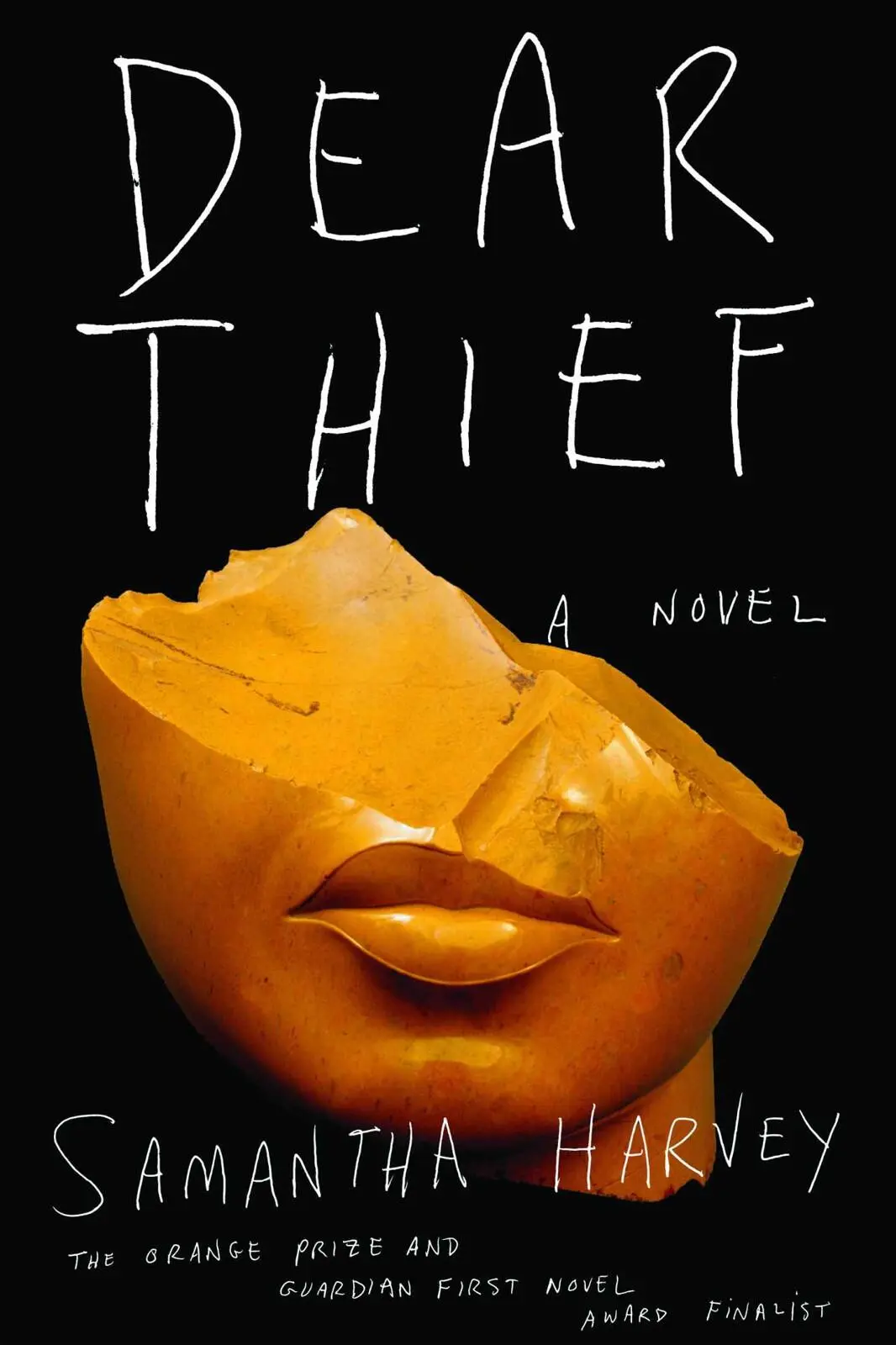
- Название:Dear Thief
- Автор:
- Издательство:Atavist Books
- Жанр:
- Год:2014
- ISBN:нет данных
- Рейтинг книги:5 / 5. Голосов: 1
-
Избранное:Добавить в избранное
- Отзывы:
-
Ваша оценка:
Dear Thief: краткое содержание, описание и аннотация
Предлагаем к чтению аннотацию, описание, краткое содержание или предисловие (зависит от того, что написал сам автор книги «Dear Thief»). Если вы не нашли необходимую информацию о книге — напишите в комментариях, мы постараемся отыскать её.
.
The thief is Nina, or Butterfly, who disappeared eighteen years earlier and who is being summoned by this letter, this bomb, these recollections, revisions, accusations, and confessions.
“Sometimes I imagine, out of sheer playfulness, that I am writing this as a kind of defence for having murdered and buried you under the patio.” Dear Thief “While I write my spare hand might be doing anything for all you know; it might be driving a pin into your voodoo stomach.” Here is a rare novel that traverses the human heart in original and indelible ways.
Dear Thief — читать онлайн бесплатно полную книгу (весь текст) целиком
Ниже представлен текст книги, разбитый по страницам. Система сохранения места последней прочитанной страницы, позволяет с удобством читать онлайн бесплатно книгу «Dear Thief», без необходимости каждый раз заново искать на чём Вы остановились. Поставьте закладку, и сможете в любой момент перейти на страницу, на которой закончили чтение.
Интервал:
Закладка:
A moment later there it was, in the heap of mussels I had just taken out of the bag, a pearl. I laid it on the flat of my hand and our fingertips rolled it around. Like most freshwater pearls it was a baroque — like I mentioned before, an irregularly shaped pearl that is slightly pitted. It was no bigger than a back tooth and had a faint lilac sheen, coloration from the peat, Nicolas said when I called him to the bank. A good lustre, he said. A good pearl.
What you will know about Nicolas is that he has a simple way of seeing. Anybody who has spent any time with him will know this; he sees in images that can be held up on cards, sometimes unobvious but visual and graspable. I used to tell him that he has a mind like Japanese food: simple, yet strange. A pearl appears inside a mussel and we pick it out, killing the mussel. Along the way we squander hundreds of creatures for the sake of this one pearl, and we pile their shells up on the shore without shame. And when I comment blithely on that waste he says that taking a pearl is only like taking a perfect photograph, you get through hundreds just for the sake of one.
Days were always short on those spring trips, but this day got hunted down mid-afternoon by a highway of violet cloud that had come charging over the mountains. As soon as we had found the pearl we looked up and seemed to notice the cloud for the first time. The tent was rippling in a wind we hadn’t even been aware of. Nicolas put the pearl inside a matchbox, which he put in the pocket of his coat. As the rain started we went inside the tent and huddled together with the flysheet open so that we could see the storm. But when the wind began funnelling down the valley, blowing our stove and cups along the riverbank, lifting and shaking the tent, we made a run for it to the car, which was parked fifty yards up the track closer to the road. The rain came and pelted the insects and blossom off the windscreen, the thunder shook the old windows, the sky came down as low as the roof, a tree half a mile away across the river caught fire in a lightning strike. Nicolas rolled the car away from the apple blossom we had parked under, down the track towards the river.
It must have lasted the best part of an hour; the three of us clasped hands and laughed. Teddy cried as well as laughed, in little uncertain bursts. It was a kind of wonderment to watch the trees bend and the river turn mulberry and spin round the rocks. Our tent had collapsed but somehow stayed pegged, and we watched the rain hammer it to the ground. The rain itself was a wall shifting endlessly down the valley, and it was only apparent where the mountains were when the lightning earthed itself at their summits.
When the worst of the storm cleared, the rain continued and the thunder rumbled around quietly. We drifted off to sleep in the car, waiting for it to end so that we could go and assess the damage. I rested my head against the window, thinking, half awake and half asleep, of that small, dented pearl. Inside the pearl was whatever tiny thing got stuck in the mussel, the grit or dirt or parasite. Inside it was a fragment of the life of the river, the life of the river constituted by the salmon and trout, all the particles and the rocks that made the particles, the plants, the eroding mountains, the clouds, rain, sun, the cosmos stretching back through time. May we never, never stop wondering at this world we’re given. An image keeps coming to mind: those iterated shapes, a pentagon within a pentagon within a pentagon, say, and this is the form my feelings take of that trip now. Us inside the tent, the tent inside the landscape, the landscape inside the pearl, the pearl inside the tent, the tent inside the landscape, repeating onwards, iterating and reiterating.
When we woke up I thought for a moment that the river was all around us and we were floating down it inside the tent. And it was only when a man’s voice came from outside the car that I realised we were on dry ground and that he, the man, was impatient. Nicolas wound down the window.
It was illegal to fish for pearls, the man said. He was a salmon fisherman who had come down to the river after the storm and had seen the discarded mussels that the wind had scattered near our pitch. If we didn’t want him to report us we should pack up and go home. Nicolas said he didn’t know of that law, he hadn’t been aware. It was a new law, the fisherman said, and not a day too soon in coming; people like us were destroying the livelihood of people like him, who depended on the salmon, which depended on the mussels. We packed up our soaked things. We swept the pile of mussels into a bag and put it in the car. When we drove off, with the matchbox in the glove compartment, I said that I felt like a smuggler. Perhaps more accurately, a victor. The storm had passed and something of that bright day had come back. It was as if a great door slid closed behind us on that most lovely of lands, but that we had come away with a piece of it, a pre-formed memory. And that then we could take that memory and see if we could go and find the life to which it belonged.
Meanwhile Gene is still sleeping and it has just started raining here, pouring in fact. I can hear an owl-call, that hollow flute of the male, and then the female’s sharp reply, as if she is excited to see the rain drum the mice out of hiding; and Gene’s breath changes every time she screeches, it gathers up at the top of his chest and he looks like a puppet whose strings have been pulled. Then he relaxes, his strings fall around him. I will stop this and turn off the light.
29
Today at the life-class I accidentally said, out loud, ‘See me as God sees me!’
Butterfly, what on earth was I thinking? It was just that the tutor kept asking the students to measure the distance between my neck and my navel or my ear and my muzzle (yes, she calls it a muzzle), until all I could see were twenty people squinting at me with their pencils outstretched. Can my existence really be sized up in this way? When Teddy was born, did I squint at him with a plumb line? In fact I widened my eyes and devoured him in one go! And as I stood there this afternoon with my weight on one leg and my right hand on my left shoulder, gazing at the foot of an easel, I could feel the blood push suddenly through my limbs where they had been half dead and cramping, and my life moving in me — the most curious sensation, when you stop for a moment and fully realise you are alive. That your heart is beating, I mean, and your gut is processing lunch, and you are producing heat.
In the drawings my grandmother did of me I could see I was alive. She could peer at me over her glasses, take up her charcoal and strip me bare of everything I pretended to be. You are not your ego, she would say. And then, tapping my earrings with her fingernail: You are not all this nonsense, you are God’s handiwork. He made your flesh, your blood, your viscera and your soul. I see you as he sees you.
I have never seen anything like my grandmother’s drawings of me. They make me look raw and perfect like the preserved bog people dug up from the peat. So much time dead had made them urgent again. I remember an archaeologist on the radio saying how eerie they were to touch, as if they would sit up and start speaking — so ancient that they were closer to the moment of creation, more surging with life than us. When I walked around the life-room at breaktime today I didn’t see myself once. So when we were twenty minutes from the end and the tutor was telling them to finish off my hands and not to forget my hair, I only meant to say that this might be the time to try for my essence rather than my hair, to see me all at once. I had not meant to say what I said about God, and I sat for the rest of the twenty minutes seeing the distaste on their faces, and tried to suppress laughter.
Читать дальшеИнтервал:
Закладка:
Похожие книги на «Dear Thief»
Представляем Вашему вниманию похожие книги на «Dear Thief» списком для выбора. Мы отобрали схожую по названию и смыслу литературу в надежде предоставить читателям больше вариантов отыскать новые, интересные, ещё непрочитанные произведения.









Обсуждение, отзывы о книге «Dear Thief» и просто собственные мнения читателей. Оставьте ваши комментарии, напишите, что Вы думаете о произведении, его смысле или главных героях. Укажите что конкретно понравилось, а что нет, и почему Вы так считаете.