Samantha Harvey - Dear Thief
Здесь есть возможность читать онлайн «Samantha Harvey - Dear Thief» весь текст электронной книги совершенно бесплатно (целиком полную версию без сокращений). В некоторых случаях можно слушать аудио, скачать через торрент в формате fb2 и присутствует краткое содержание. Год выпуска: 2014, Издательство: Atavist Books, Жанр: Современная проза, на английском языке. Описание произведения, (предисловие) а так же отзывы посетителей доступны на портале библиотеки ЛибКат.
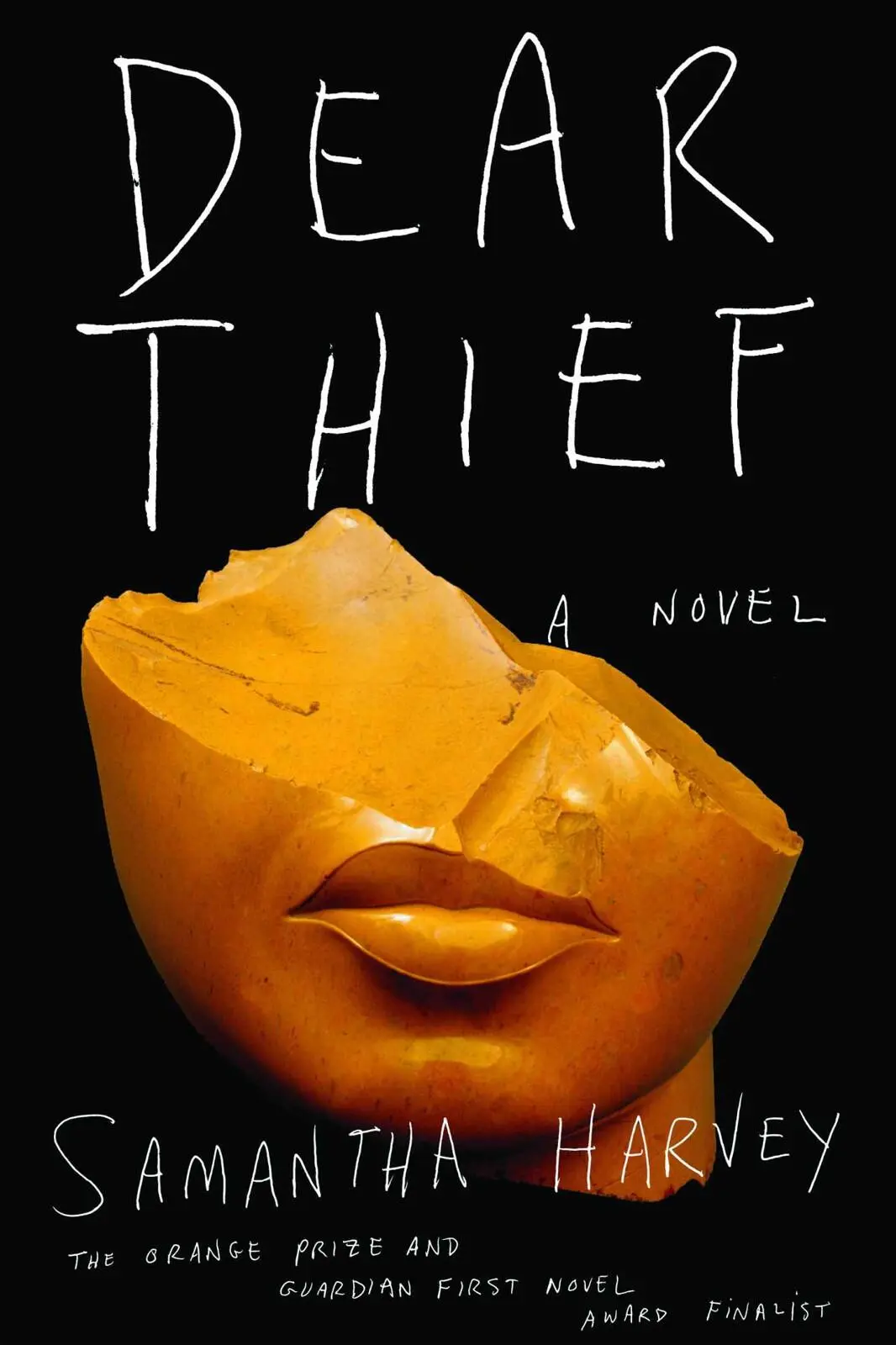
- Название:Dear Thief
- Автор:
- Издательство:Atavist Books
- Жанр:
- Год:2014
- ISBN:нет данных
- Рейтинг книги:5 / 5. Голосов: 1
-
Избранное:Добавить в избранное
- Отзывы:
-
Ваша оценка:
Dear Thief: краткое содержание, описание и аннотация
Предлагаем к чтению аннотацию, описание, краткое содержание или предисловие (зависит от того, что написал сам автор книги «Dear Thief»). Если вы не нашли необходимую информацию о книге — напишите в комментариях, мы постараемся отыскать её.
.
The thief is Nina, or Butterfly, who disappeared eighteen years earlier and who is being summoned by this letter, this bomb, these recollections, revisions, accusations, and confessions.
“Sometimes I imagine, out of sheer playfulness, that I am writing this as a kind of defence for having murdered and buried you under the patio.” Dear Thief “While I write my spare hand might be doing anything for all you know; it might be driving a pin into your voodoo stomach.” Here is a rare novel that traverses the human heart in original and indelible ways.
Dear Thief — читать онлайн бесплатно полную книгу (весь текст) целиком
Ниже представлен текст книги, разбитый по страницам. Система сохранения места последней прочитанной страницы, позволяет с удобством читать онлайн бесплатно книгу «Dear Thief», без необходимости каждый раз заново искать на чём Вы остановились. Поставьте закладку, и сможете в любой момент перейти на страницу, на которой закончили чтение.
Интервал:
Закладка:
All the same I wanted to retract my comment, and I was sorry I had made it. I wasn’t sure it was true at all that God would wait for her; he has always struck me as the life and soul, wanting to be where the action is. But she did look genuinely brighter and less racked, as Teddy once did when I lent him money he desperately needed.
‘You won’t tell my mum I’ve spoken to you, will you?’ she said. I told her no, and I had the sense that we had just shared an entirely asymmetrical conversation in which one person idly muses while the other weighs up their life. All the same, I told her she could talk to me any time and I gave her my number.
It was only when she’d walked away and I was going down the escalator into the Underground that I wondered if there was a man involved in this religious crisis. I remember you saying that everything essentially is about men wanting women and women wanting men, that everything came down to this brute thing, no matter how heavenly it might have reckoned itself to start with. God himself is just the ultimate sexual fantasy, you said. The infinite, ultimate mover and maker and dominator. I thought of that as I rattled along in the Tube, which you also interpreted sexually. I thought of a church full of folk poised like naked bodies on beds waiting to be loved. A funny image, a sad one. A body wide open, and nobody entering.
What I mean (another day now, but I feel like I can’t let this lie) is that Lara, who has never had much to do with me, has singled me out as an ally in her defection from God. Not just God, from religion. And as soon as I left her at the station I began to wonder why I felt uncomfortable in accepting that role. I don’t know. Perhaps it is because I suspect that my reasons for being dismissive of religion are not very good ones.
Let me tell you something. In our house, growing up, God was a celebrity, and my parents threw lavish parties for him, which alarmed the church-going population. There was always red wine, whisky and ginger beer, smoked salmon and crackers, meringues, piles of fruit. I know you know this, but I write it to make a point you do not know. In our house, the question of religion was one of love and an open heart, regardless of denomination; everybody was welcome, whoever they were and whatever they believed. The holy city of the heart . The heart is where God, the infinite, takes his seat without jealousy, but with passion. All creatures can live there, all men, all their beliefs. All conflict is settled there. My mother’s faith was firm, but she practised it with a pot-pourri of rituals. She burnt Indian oils in a little crucible under the rosary that hung from the wall light, and she wore attars of sandalwood and jasmine sambac, or majmua, meditative fragrances that kept the Lord near, she said. They gave the straight-faithed women of Morda dreadful headaches behind the eyes and in the temples — or so I overheard once in the post office. And so, in time, every member of the congregation fell out with my mother and father over their religious promiscuity and their lack of moderation, their winters in India and their drinking of whisky and ginger on the rocks, and their smattering of Sanskrit followed by quotes from the smokiest passages of the Song of Solomon, all of which made them seem vaguely lewd and aristocratic and incapable of an authentic feeling. The falling-out went only one way, though. My parents argued with nobody and continued to throw the parties, and people continued to come because they were fascinated despite themselves.
And so I lived with my open heart that had no religious preferences but was tilted towards God like the Earth is tilted towards the sun; just spinning harmlessly. I was wreathed in his spirituality, I never had to practise devotion because my life itself was the devotion. When I was born I was given to him, my mother said, like a drop of rain is given to the ocean. When did I lose my right to this faith? When did I question it? You imagine we question and lose it gradually, that it seeps away. But not so; I think I can name the moment, on a hilltop overlooking Bala Lake, with you, in the late summer of the year you arrived at our door.
(Ah, it would have to involve me , I hear you say. To which I reply, yes, it all involves you, of course. I see you put your elbows on the table and lean your chin on your fists, to fortify yourself against the coming slander.)
You had been in a buoyant mood all day, which was unnerving at the best of times, but alone with you in the Welsh hills on a fifteen-mile walk while you pranced in those terrible purple loons that you had salvaged from the rubbish after Nicolas threw them away, this was like being visited by a jester on death row. By this point in life your ups never came without downs, nor did they often come naturally.
So you strode about in some suspect interval of high spirits, in Nicolas’ trousers and Petras’ cap, which you said you were not wearing, but storing on your head until he came back. By the time we got to the top of the hill, before our last climb down to the lake, we had been talking about war, which had somehow moved on to religion. It was a hot day and we had drunk all our water and the valleys were stale. I know that you were feeling helpless: Petras in Lithuania, and people he knew being sent off to some or other Russian labour camp for speaking against the state. You never did say where you had been in the years since I had last seen you (you were singularly, bloody-mindedly silent on this subject) but I know there had been one trip to Lithuania because the baggage label had been on your suitcase when I finally — perceiving you were not about to leave — put it in the loft.
But this would have been nothing more than a short, unwelcoming visit. We heard about these things back then, Westerners travelling behind the Iron Curtain, funnelled towards tourist hotels and eagerly encouraged to part with their strong Western currency, and then just as eagerly encouraged to go home. I doubt you ever saw your brother, or anyhow if you did then briefly, over a coffee or brandy in a hotel bar where he came to meet you. Any longer with him and you both would have been considered suspicious; any trips into the countryside to his farm would have had you questioned. I think those times in your so-called homeland, supposing they happened, only confirmed to you your lack of belonging. By anything but birth it was not your country. Britain was, this mannered land that was too small for you and which you were striding across in cap and bright flares.
As we got stickier and more tired you started, with an inversely proportionate enthusiasm, to talk about how little there was to be done about war; it was always and everywhere and man would never learn. I took issue with this, maybe because, in part, we could see from that point the abandoned Frongoch Camp, where German prisoners were kept in the First World War and then Irish dissidents after the Easter Rising. My father had taken me there when I was about ten, when it was redundant and ghostly, and it had left me with a feeling I am proud to own: that we are better now than we were. No longer do we accept war with our neighbours. A childish thought, but as I said, I am proud to own it, it is my one optimistic vehemence: our politics are more peaceful now, we are better than we were.
You dismissed the idea. Politics could never solve war because it created it; asking politics to be peaceful was like asking a gun to shoot droplets of sunlight. And man — man! Man was not better, he was what he was and always would be: frightened and selfish. We were toiling up the hill at the time, you ahead of me. I was surprised by how well Nicolas’ trousers fit you, snug across the hips where they had been looser on him, and tight and long on the thighs before they flooded outwards. I am glad to have had no cause to think of them for years, but now that I do I see you striving up the hill and telling me about the Hindu trinity, Brahma, Vishnu, Shiva. Brahma the creator, Vishnu the preserver, Shiva the destroyer.
Читать дальшеИнтервал:
Закладка:
Похожие книги на «Dear Thief»
Представляем Вашему вниманию похожие книги на «Dear Thief» списком для выбора. Мы отобрали схожую по названию и смыслу литературу в надежде предоставить читателям больше вариантов отыскать новые, интересные, ещё непрочитанные произведения.








Обсуждение, отзывы о книге «Dear Thief» и просто собственные мнения читателей. Оставьте ваши комментарии, напишите, что Вы думаете о произведении, его смысле или главных героях. Укажите что конкретно понравилось, а что нет, и почему Вы так считаете.