Samantha Harvey - Dear Thief
Здесь есть возможность читать онлайн «Samantha Harvey - Dear Thief» весь текст электронной книги совершенно бесплатно (целиком полную версию без сокращений). В некоторых случаях можно слушать аудио, скачать через торрент в формате fb2 и присутствует краткое содержание. Год выпуска: 2014, Издательство: Atavist Books, Жанр: Современная проза, на английском языке. Описание произведения, (предисловие) а так же отзывы посетителей доступны на портале библиотеки ЛибКат.
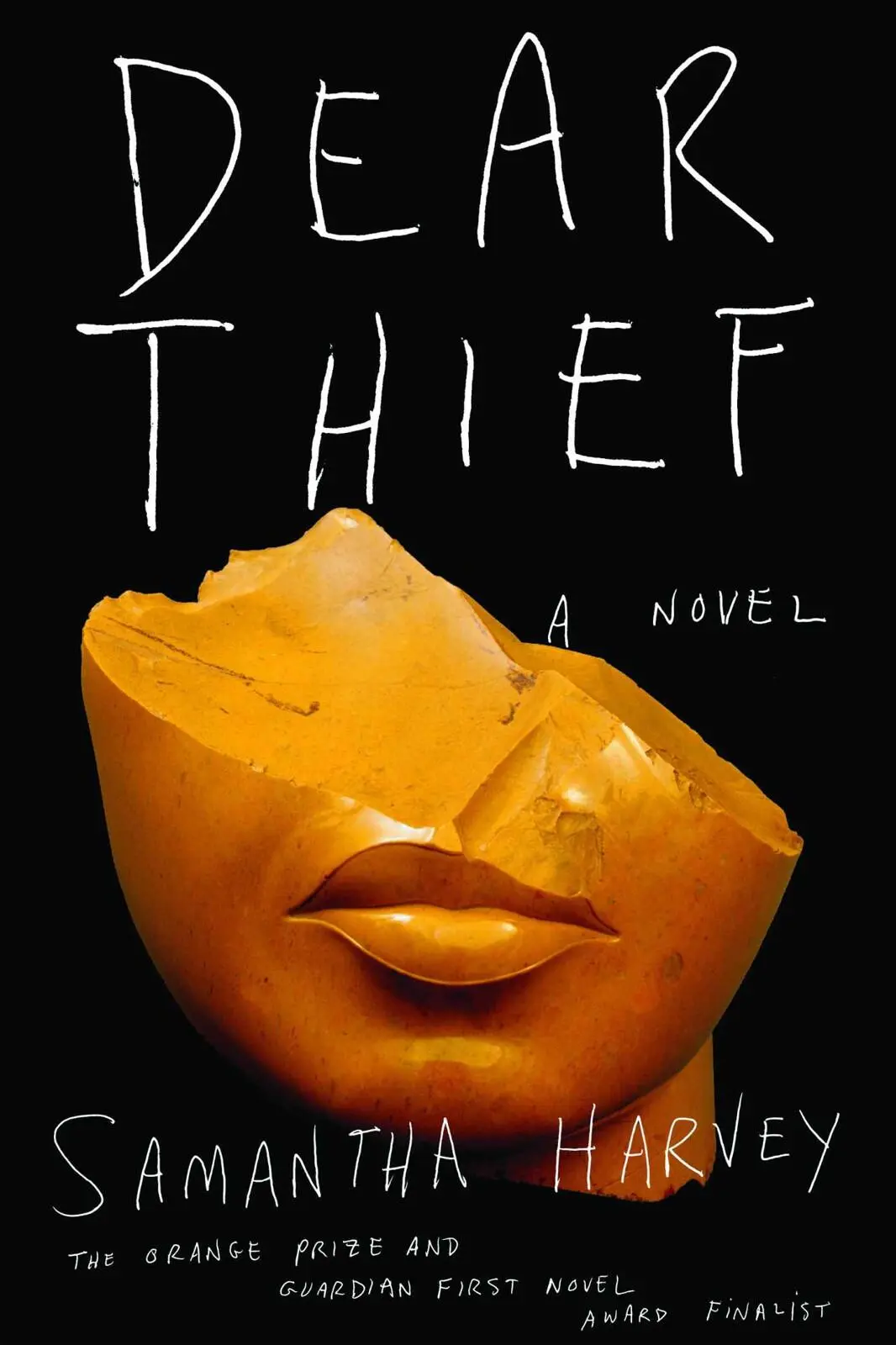
- Название:Dear Thief
- Автор:
- Издательство:Atavist Books
- Жанр:
- Год:2014
- ISBN:нет данных
- Рейтинг книги:5 / 5. Голосов: 1
-
Избранное:Добавить в избранное
- Отзывы:
-
Ваша оценка:
Dear Thief: краткое содержание, описание и аннотация
Предлагаем к чтению аннотацию, описание, краткое содержание или предисловие (зависит от того, что написал сам автор книги «Dear Thief»). Если вы не нашли необходимую информацию о книге — напишите в комментариях, мы постараемся отыскать её.
.
The thief is Nina, or Butterfly, who disappeared eighteen years earlier and who is being summoned by this letter, this bomb, these recollections, revisions, accusations, and confessions.
“Sometimes I imagine, out of sheer playfulness, that I am writing this as a kind of defence for having murdered and buried you under the patio.” Dear Thief “While I write my spare hand might be doing anything for all you know; it might be driving a pin into your voodoo stomach.” Here is a rare novel that traverses the human heart in original and indelible ways.
Dear Thief — читать онлайн бесплатно полную книгу (весь текст) целиком
Ниже представлен текст книги, разбитый по страницам. Система сохранения места последней прочитанной страницы, позволяет с удобством читать онлайн бесплатно книгу «Dear Thief», без необходимости каждый раз заново искать на чём Вы остановились. Поставьте закладку, и сможете в любой момент перейти на страницу, на которой закончили чтение.
Интервал:
Закладка:
‘Has he gone back there to live, then?’
‘Yes, for a time.’
‘Is he safe?’
You shrugged. Because you had looked away and seemed suddenly restless with the subject, I took the tassels of the shawl in my hand.
‘I remember this.’
You rubbed the wool between your fingers for a moment, then nodded. ‘I haven’t taken it off for nine years.’
‘Nine hot years.’
‘Nine difficult-to-play-tennis years.’
‘It’s clean, for something that’s been worn ceaselessly for a decade.’
‘I bathe in liquid wool wash.’
‘Pass me a cigarette, Butterfly . Do you mind, if I call you that?’
You gave a generous shrug. ‘Let’s consider Nina dead.’
‘Surely not dead.’ I took the corner of the shawl idly between my own fingers. ‘Just retreating from view.’ And then dropped it. ‘Are you going to stay for a while — a couple of weeks?’
‘May I stay a longish while?’
‘How long is longish?’
‘A decade or two, I’m clean out of money.’
‘I’d have to ask Nicolas. If I say two decades and he objects, perhaps we could haggle it down to one.’
‘Well, a month or so would do. Put my case forward, would you? Tell him I can darn and iron and cook.’
‘But you can’t.’
‘But tell him.’
You kissed me on the temple and gathered yourself up to standing like you had always done, a cross-legged handless transition that was the only vaguely athletic thing your drawn-out body ever did. You passed the cigarette from your lips to mine and said you were cold and were going to bed. I extinguished the cigarette and came too.
That night you shouted out from your sleep, as you did the next night, and the next. For three days you stalked about the tiny house in your tunic, talking about politics and death and the Four Conditions of the Self. Seriousness was your way, but I don’t think it ever signalled unhappiness as such. Apart from the shouting out at night, my memory of you on that visit was one of a human being at ease with herself, languidly exuberant. It was true that the shawl didn’t ever seem to leave your body, which gave you a curious swaddled, limbless look; only once did I see your arms, when they shot outwards to beckon Teddy to you and the shawl fell back. I saw in the crook of your arm some holes from needle use and some bruising, which I never asked you about. Teddy loved you. You crouched earnestly on the floor of the living room teaching him letters of the alphabet and names of animals with a focus and patience I had never had.
In the evenings you sat outside in the cold and it was me who sat with you, Nicolas only managed it for one evening. He was subdued by you, that was the truth. After you left I thought often of how you had arrived — there at the back of the house, knocking on the open door and raising your arms in unmistakable joy — though I wondered even then on whose behalf you were joyful: your own or ours. You had the grin of somebody who knows their arrival is in some way triumphant, a triumph of surprise, a momentous thing.
23
Increasingly I am aware of life as a kind of dream. I will be thinking or feeling something and the thing appears or happens, and it’s as if the world, like my dreams, is a projection of my own mind. Today while walking I was thinking about what it will be like to be a grandmother, assuming Teddy goes on to have children. He is old enough; I could be a grandmother in a matter of months biologically speaking, and there I will be, not much over fifty, elevated into that final stage of being. As I was thinking it a toddler and her father walked past, and the child pointed at me and said, Nana. That’s not Nana, the father said. Definitely not, I smiled. Afterwards I thought: Did this happen or did I imagine it? The truth is that it makes little difference either way to the experience itself.
That example makes it sound like I’m talking about coincidences, which wouldn’t be true. Not coincidences but manifestations, ideas that resolve into form. I write down our old conversations, fanciful and ill-remembered though they are, as if to pretend that’s exactly how they were, almost as a joke to myself, to take a sketchy memory and write it as if fact. But then, somehow, that sketchy memory takes form in the world. Not long after I wrote that last conversation I heard two men by the banks of the Thames, peeling themselves out of wetsuits, discussing diving in Guatemala. One of them raved about diving down to the extinct crater of a supervolcano, the other said he didn’t even know where Guatemala was. This is what I mean, you see, when I talk about the sense of the world projecting my mind.
And now this week a man called Gene has moved into The Willows, and I saw on his notes that he is Lithuanian, or of Lithuanian descent; so he appears, like the residue of a thought I’d had. Yesterday I saw what I thought was a piece of jewellery on the pavement and it was two green bugs back-to-back, beautiful beyond description, like a piece of gold-inlaid polished jadeite. There was no trenchant message here, only the sense that they had been set in my path as a reminder of the remarkable. The sense that I get, to put it another way, is that far from drifting through a world of arbitrary objects and happenings, I am tuning in through static to a collection of sensory things that have been put there to reveal my mind to me.
On the other hand perhaps it’s the light. We’re finally in spring and the light is as it was that April evening when you arrived at the back door. It’s clean and sudden and at times it confuses me. Or confuse might be too strong a word — sometimes it distracts me, in the way the luminous words in a poem distract me from the poem’s meaning. The ink on the last few pages of this letter is already fading from exposure to these unpredictable outbreaks of light. The first few pages are still unfaded, those from December. It gives the odd impression of the reverse passing of time.
Meanwhile, I keep looking but I do not get the impression you intend to be found. I have been tracing my eyes around the map of Lithuania, wondering where the bee-keeping farm might have been, where Petras was staying with friends. I am reduced to the wildest suppositions. What do I know about Petras, Lithuania or bees? And yet, this is where my mind has decided you are and my mind is not a thing that is easily changed, as I have often lamented. You are not at the farm itself, bees would trouble you, as do all things in large numbers — no, you have found a spot half a kilometre behind the farm where the pine forest deepens and nobody goes.
There: you amble half desperate through the forest and you see it, a hut. Maybe there is a lake after all. For one short interlude the forest thins and gives way to a lake, but a lake that eases from the shore so gradually that you cannot tell where one ends and the other begins. You stay clear for fear of drowning. Inside the hut are his things, his shoes, his writings, his name doodled repeatedly down the margin, Petras Petras Petras , a childlike fascination with himself. You sit at the table and read his notes, but you can’t read his notes. Too faded, simply illegible.
Then in my mind you come back to the Upanishads, which only serves to remind me of the poverty of my imagination. The Self has four conditions , you read, cupping the sides of your head with your hands. Always, just as this tentative, hypothesised you is about to break into action or do something instructive, she starts reading the Vedas, as if the whole of her life and future is snagged on their wisdom, as if she doesn’t know how to operate any more in the world, how to have agency, how to live in time like the rest of us and suffer the consequences of her actions.
Читать дальшеИнтервал:
Закладка:
Похожие книги на «Dear Thief»
Представляем Вашему вниманию похожие книги на «Dear Thief» списком для выбора. Мы отобрали схожую по названию и смыслу литературу в надежде предоставить читателям больше вариантов отыскать новые, интересные, ещё непрочитанные произведения.












Обсуждение, отзывы о книге «Dear Thief» и просто собственные мнения читателей. Оставьте ваши комментарии, напишите, что Вы думаете о произведении, его смысле или главных героях. Укажите что конкретно понравилось, а что нет, и почему Вы так считаете.