Samantha Harvey - Dear Thief
Здесь есть возможность читать онлайн «Samantha Harvey - Dear Thief» весь текст электронной книги совершенно бесплатно (целиком полную версию без сокращений). В некоторых случаях можно слушать аудио, скачать через торрент в формате fb2 и присутствует краткое содержание. Год выпуска: 2014, Издательство: Atavist Books, Жанр: Современная проза, на английском языке. Описание произведения, (предисловие) а так же отзывы посетителей доступны на портале библиотеки ЛибКат.
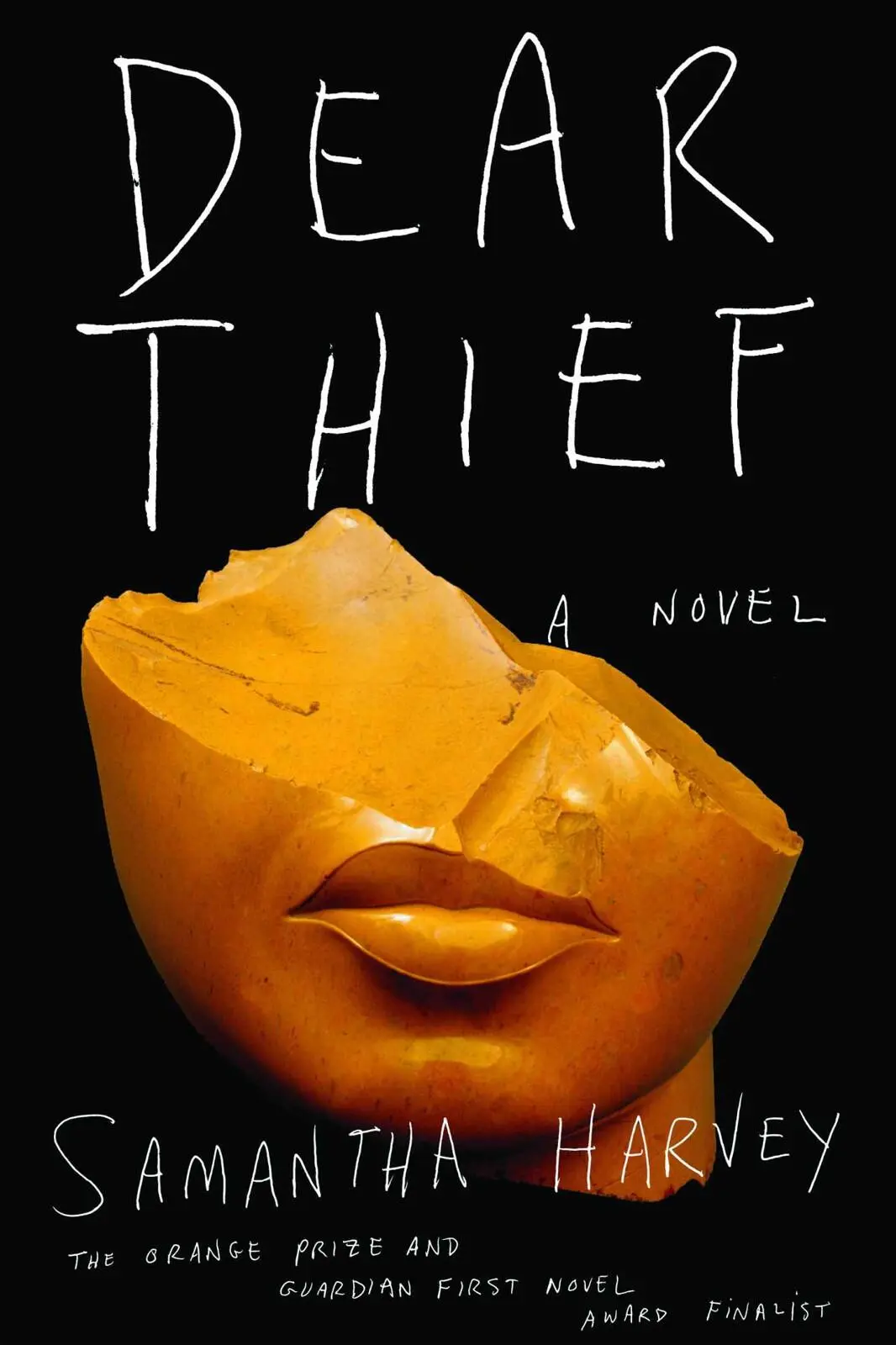
- Название:Dear Thief
- Автор:
- Издательство:Atavist Books
- Жанр:
- Год:2014
- ISBN:нет данных
- Рейтинг книги:5 / 5. Голосов: 1
-
Избранное:Добавить в избранное
- Отзывы:
-
Ваша оценка:
Dear Thief: краткое содержание, описание и аннотация
Предлагаем к чтению аннотацию, описание, краткое содержание или предисловие (зависит от того, что написал сам автор книги «Dear Thief»). Если вы не нашли необходимую информацию о книге — напишите в комментариях, мы постараемся отыскать её.
.
The thief is Nina, or Butterfly, who disappeared eighteen years earlier and who is being summoned by this letter, this bomb, these recollections, revisions, accusations, and confessions.
“Sometimes I imagine, out of sheer playfulness, that I am writing this as a kind of defence for having murdered and buried you under the patio.” Dear Thief “While I write my spare hand might be doing anything for all you know; it might be driving a pin into your voodoo stomach.” Here is a rare novel that traverses the human heart in original and indelible ways.
Dear Thief — читать онлайн бесплатно полную книгу (весь текст) целиком
Ниже представлен текст книги, разбитый по страницам. Система сохранения места последней прочитанной страницы, позволяет с удобством читать онлайн бесплатно книгу «Dear Thief», без необходимости каждый раз заново искать на чём Вы остановились. Поставьте закладку, и сможете в любой момент перейти на страницу, на которой закончили чтение.
Интервал:
Закладка:
‘I can’t believe I’m seeing you.’
‘Nor I you.’
‘After all these years.’
It had been nine years in fact since you had left Morda; you left in ’73 when your parents moved to America, where your father had got a job as a botanist, or botany researcher — I never did quite know what it was he did — at the Smithsonian Institution. Off you went with them to Washington, but when I telephoned you a month later your mother said you had disliked Washington and had left to travel around America; one of your many typically abrupt departures. I can only think they were in temporary accommodation at that time, because by the next time I telephoned, a few months later, their number no longer worked. And neither did you call or write, but then, as we know, that wasn’t exactly your way.
We had been twenty-one the last time we saw one another. And in my mind this was just after you gave me the photograph, although perhaps I have collapsed time a little to fit my memories — but it must have been something like this. You came forward from the table with a bright smile and held your hands out in front of Nicolas. ‘May I?’
He gave Teddy to you. You held him as though you were weighing him for lovability, to see if there really was something in this fleshy little form that could sustain one’s adoration for a lifetime. Teddy was afraid of you. He didn’t often come across strangers. But you were never a person who asked for concessions and you tucked him on your hip in such a way that suggested you were providing a seat that he was very free to leave. He began to play with the great length of hair that fell over your chest and his expression changed from fear to resolve: after all, I will stay here. I will stay right here.
What a thing is this dispassion of yours, Butterfly, that causes everybody to make the same decision?
22
That evening we sat down for dinner. It was you, Nicolas and I.
You looked out of place in the cottage, which I thought was just the awkwardness of the situation. But actually, when I think of it now, you looked out of place almost anywhere substantial. You pulled out a chair and perched on it in a way that seemed to say you weren’t really for chairs, for old oak tables and ranges. I don’t mean to say you were contemptuous or ungrateful, you were just in transit. You looked trapped and as though you wished you could feel differently. Across the table you looked at me as if I were at once beloved and unknown.
‘Is the food okay?’ I asked.
You shook your hair, gestured abundance with your arms, and said to nobody in particular, ‘You were always going to be the most able cook. The most splendid wife and mother.’
I admit to being almost embarrassed as we looked at one another along the table, with a shoulder of beef between us, and Nicolas quietly eating.
‘As for you, Butterfly?’ Nicolas asked, because Butterfly had become, in the space of an evening, what you were called. ‘Do you have a husband or family?’
‘I don’t.’
‘You were never interested in men,’ I said.
‘Is that what you thought?’
‘You always ignored them.’
‘I’m waiting, that’s all.’
‘You might wait for ever,’ Nicolas said.
You put your fork down. ‘Do you mind?’ You pointed at a piece of beef on your plate. When I shook my head you picked up the meat and used your teeth, then licked your fingers. ‘I’m sorry, I was born without manners.’
Your unused knife felt like a betrayal of sorts on my part; I’d forgotten that you ate only with a fork and that if food needed cutting you’d use your teeth. We have these canines for ripping, you used to argue. These are better by half than knives, which require two hands to operate. Man’s overuse of tools is a mark of his stupidity, you’d said.
Nicolas had come to the end of his meal and brought out a pack of cigarettes that he laid on the table. Together we smoked, you whilst still eating. He leant back in his chair and put a hand in his pocket, or at least he probably did, since he always sat like that at the table after dinner, smoking, his face content in an interlude of quiet before he became restless. It seemed possible to me then that he did not see your tremendous beauty. At the most I thought he might see it in the abstract, but find it mistimed with his reality. It was an androgynous beauty of thick brows and strong nose and narrow hips, one that had lateral appeal, but which wasn’t fond or nurturing in the way our lives had become since Teddy’s birth. I’d had something of your androgyny too once, of course, and I’d had it still when Nicolas and I first met. But androgyny is a difficult thing to hold onto when a child has passed through your body, and not a desired thing, either. I worked on the premise — I’m sure very flawed — that people are wrong to believe that we desire what we cannot have. Instead we desire what we aren’t, but can conceivably be. And neither Nicolas nor I could any longer conceivably be what you still were in your absolute lack of ties. If he saw your beauty at all, he saw it as a person sees something at the far side of a field, and then, after a moment of curiousness, carries on with his walk.
Nicolas went to bed soon after dinner; he said he would get up for Teddy in the night if he needed to. You opened a second bottle of wine and took it out into the cold garden, wrapped your shawl around you, thin as you were, and smoked and drank in the darkness. When I realised you weren’t about to come back in I took a coat out and joined you. I spread the coat on the grass where you sat and gestured for you to move off the damp grass. We took half each.
‘I like Nicolas.’
‘He’s tired today, quieter than normal.’
‘You met him in Morda?’
‘No, in London. We lived there for four years after we got married and while he trained. Then Teddy came and we moved back.’
‘Trained for what?’
‘He’s a lighting man, for the stage. It means he goes off here and there to work on productions. Nothing major, we’re always broke.’
‘I thought you’d be in Borneo, Guatemala, America at least — not still here.’
‘I don’t even know where Guatemala is.’
‘It doesn’t matter, you get on a plane and the pilot finds the way.’
‘Where have you been, Butterfly ?’
You put your hand on my knee and squeezed, then let the hand drop back into your lap. I liked the irony of your new name, that of the most fragile and temporary of creatures, and I called you by it as a joke as if to suggest that we’d had no past together to speak of. Teddy had invented you hours before. Did you hate that? If you did you took it with a certain amount of goodwill and collusion, because you responded earnestly enough to the name. ‘It doesn’t matter where I’ve been,’ you said. ‘It doesn’t matter at all.’
‘In America?’
‘No, no, not America, not there.’ You exhaled headily. ‘I was there for a few months but got swept out for working without a visa. They’re very literal, you know, the Americans. Very pedantic.’
‘But your parents are still there?’
You nodded, but had squinted off as if distracted, so I looked up, around us, at the night. ‘It’s beautiful here — better than Guatemala, wherever that is. I know the woods inch by inch, I know the shape of the river and how the sun moves, where the birds nest. We camp out a lot in the summer, even last year when Teddy was a baby. It’s just us, me, Nicolas and Teddy, in the way it was just me and you. I wouldn’t want you to pity my life.’
You tucked my hair behind my ear with resoluteness. ‘Did I say I did?’
A new direction of thought seemed to strike you. ‘My brother is trying to join the Lithuanian Academy of Sciences,’ you said. ‘Just like my father before him. Still trying to protect the place from the Soviets.’ You gathered the surplus of your shawl and wrapped it around me. ‘This time it’s a colossal nuclear-power station in the far east of the country, it’ll have three reactors when it’s finished. The Soviets have cut down all the trees; they’re trying to turn Lithuania into a factory, according to Petras.’
Читать дальшеИнтервал:
Закладка:
Похожие книги на «Dear Thief»
Представляем Вашему вниманию похожие книги на «Dear Thief» списком для выбора. Мы отобрали схожую по названию и смыслу литературу в надежде предоставить читателям больше вариантов отыскать новые, интересные, ещё непрочитанные произведения.










Обсуждение, отзывы о книге «Dear Thief» и просто собственные мнения читателей. Оставьте ваши комментарии, напишите, что Вы думаете о произведении, его смысле или главных героях. Укажите что конкретно понравилось, а что нет, и почему Вы так считаете.