Samantha Harvey - Dear Thief
Здесь есть возможность читать онлайн «Samantha Harvey - Dear Thief» весь текст электронной книги совершенно бесплатно (целиком полную версию без сокращений). В некоторых случаях можно слушать аудио, скачать через торрент в формате fb2 и присутствует краткое содержание. Год выпуска: 2014, Издательство: Atavist Books, Жанр: Современная проза, на английском языке. Описание произведения, (предисловие) а так же отзывы посетителей доступны на портале библиотеки ЛибКат.
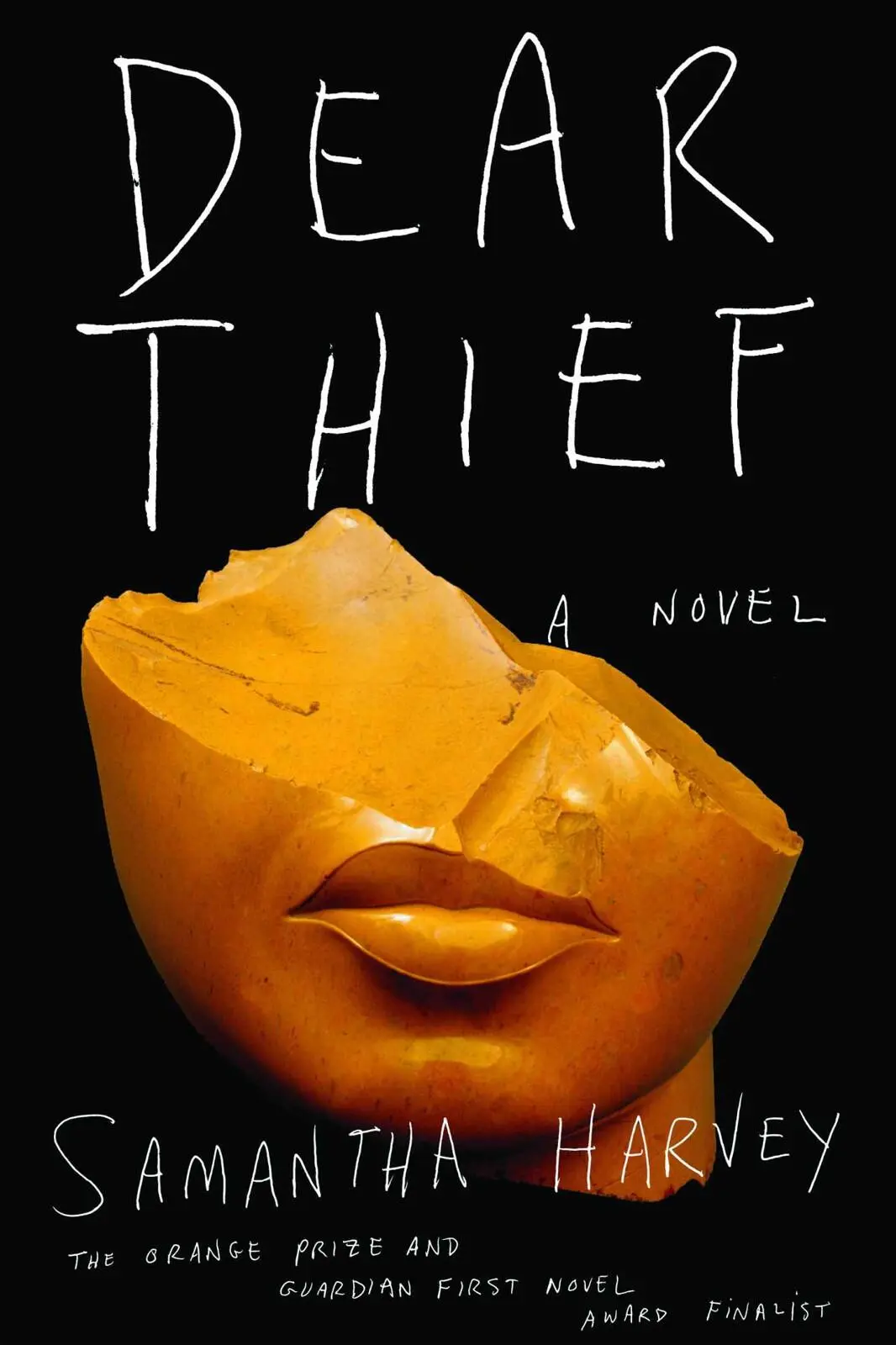
- Название:Dear Thief
- Автор:
- Издательство:Atavist Books
- Жанр:
- Год:2014
- ISBN:нет данных
- Рейтинг книги:5 / 5. Голосов: 1
-
Избранное:Добавить в избранное
- Отзывы:
-
Ваша оценка:
Dear Thief: краткое содержание, описание и аннотация
Предлагаем к чтению аннотацию, описание, краткое содержание или предисловие (зависит от того, что написал сам автор книги «Dear Thief»). Если вы не нашли необходимую информацию о книге — напишите в комментариях, мы постараемся отыскать её.
.
The thief is Nina, or Butterfly, who disappeared eighteen years earlier and who is being summoned by this letter, this bomb, these recollections, revisions, accusations, and confessions.
“Sometimes I imagine, out of sheer playfulness, that I am writing this as a kind of defence for having murdered and buried you under the patio.” Dear Thief “While I write my spare hand might be doing anything for all you know; it might be driving a pin into your voodoo stomach.” Here is a rare novel that traverses the human heart in original and indelible ways.
Dear Thief — читать онлайн бесплатно полную книгу (весь текст) целиком
Ниже представлен текст книги, разбитый по страницам. Система сохранения места последней прочитанной страницы, позволяет с удобством читать онлайн бесплатно книгу «Dear Thief», без необходимости каждый раз заново искать на чём Вы остановились. Поставьте закладку, и сможете в любой момент перейти на страницу, на которой закончили чтение.
Интервал:
Закладка:
At dinner that evening with my parents I brought up the photograph again. I’m speaking here about events that happened almost a quarter of a century ago, so forgive some laxness with the detail — I remember so well the purr and the pout, and they seem to eclipse my memory around the point I’m trying to make. Because I am trying to make a point. I’m trying to tell you that Nicolas found your photograph sordid and that over the years this appraisal has changed, which I think symbolises something, the meaning of which might be too painful to face. It began when I said over dinner, ‘Nicolas finds the photograph sordid, do you think he’s right?’ When my father asked Nicolas in what way, he answered, ‘Well, it’s all juices and holes, is it trying to be funny?’ ‘Perhaps so,’ my father said, ‘perhaps it is trying to be funny in its own inadvertent way, but that would be its secondary function.’ My mother said that more than sordid or funny, it was a waste of fruit, to which Nicolas laughed guiltily in a way people do when caught between the sacred and profane.
I stayed out of this conversation, having provoked it. My father was right, if the photograph was funny at all it was only by default. You rarely made any attempt at humour, more at depreciation, which meant stripping away the borrowed value of something until it was left with whatever was its own. If that deflowering made it funny, then so it was. I saw Nicolas looking at it several times over the course of that weekend, which was his second visit to Morda, with morbid fascination as if something in him were being pulled into the hole at its centre.
I don’t recall him saying anything more about it for the next six years, even as it hung in the hallway of our home in London, and after that the living room of our miners’ cottage near Morda. He only made a comment again after he had met you for the first time, and then he said that as a work of art he suddenly found it quite trite, quite obvious. He meant by that something grave — that any benefit of the doubt he had given it before was annulled by meeting you, in whose context the photograph was now made clear. He no longer called it sordid . Sordid meant that it and its creator might stir him in some way, obvious meant that neither it nor its creator had any such power to stir one way or another.
Do you understand me when I say it is possible to see a change in another person that they do not yet see in themselves? My grandmother said that insight of this kind was the Lord working through one’s eyes, just as he may work through ears, hands and the senses in general, without limit and whenever so called upon. Lord or not, when Nicolas proclaimed your still life obvious I saw him, without knowing it himself, put up his first defence against his love for you. Two decades later and still it goes on. Recently, in a discussion of the photograph with Ruth and another of her friends from the hospital, he dismissed their praise of it and called it quaint. ‘The light’s good,’ he said. ‘But it’s not radical or troubling or even meaningful; if it’s anything, it’s just quaint.’
With this final denouncement of course he turns to you the hard side of his heart, but in the fumbled manoeuvre we see it — the soft part, the part that is still in such need of his protection.
20
I have been thinking increasingly about your sudden reappearance. Today I was shovelling snow from the front door and I looked up from the ground with a notion that you were there. It was just somebody passing on the street, though I note with interest that this someone was a tall person, far taller than you, and a man at that, which suggests that my memory of you has become overly monumental these long years.
We’ve had a winter of fluctuations, first mild and dreary, and then there was a fortnight of light snow after Christmas and into the new year, followed by a thaw that seemed to swill water around the whole city and flush out its spirit. I’ve never known the streets to be as quiet as they were at the beginning of this month. Now, at the end of February, we have a foot of snow in the parks and some verve has returned, perhaps an exasperated energy from all those who thought spring was coming.
At work we’ve lost three residents over the winter. I don’t know what curious biological programming makes a human who never steps outside more likely to die when the outside is cold. We’re such simple life forms, Butterfly, when it comes down to it. We see the days grow short and the branches bare and our enthusiasm for our own lives fades a little. Frances, under whose breast I found no judgement, is only just now recovering from five weeks of pleurisy and looked for a brief time as though she might make the sad tally four, which would be more losses than we’ve had during the last eighteen months put together. I was surprised by how much the thought of her death affected me. But slowly she’s improving. While Bing Crosby and Frankie Laine drone in the background we’re all given to turning our heads towards the big picture window that looks out over the garden and the summer house and waiting expectantly for a sighting of spring.
21
As you’ll remember, then, you arrived at our back door quite literally out of the blue. A lucid, blue evening in April when the light is so glassy that it is almost a thing in itself, a surface, onto which you seemed to condense. Such was your reappearance: a manifestation. You knocked on the open door and I came into the kitchen with Teddy on my hip to see who was there. You raised your arms outwards in apparent joy at seeing us. The sun, which was low behind you and bursting from cloud, spun through the wings of your crochet shawl, and Teddy jabbed his forefinger into the space between us and you and called — almost sang — your new name in an eruption of happy recognition as if he’d known you for years. ‘Butterfly!’ he said, and for a moment I think you hesitated on the doorstep quite humbled, or otherwise cautioned, at having been so instantly assigned a label in this way.
You stooped under the low door and filled the kitchen with a perfume that was more tree than flower.
‘Teddy, Nicolas, meet Butterfly,’ I joked. In truth I imagined you would hate the name, but it was strange how it so instantly became you. You had always been Nina, and suddenly you were something other, reinvented by the light as if it had dematerialised you and rebuilt you into a new existence. Nicolas had come into the room at some point in this and taken Teddy from me. You reached out your right arm to its full extent and I was surprised, almost perplexed, to see that you still wore the silver cobra. You shook their hands, Nicolas’ with a firm, haughty clasp that made something in his expression stand back as if challenged, and Teddy’s with lightness. His one-year-old hand had never known such formality.
Once you had kissed my cheeks and hugged me, you leant back against the kitchen table and folded your arms.
‘You’re still wearing blue,’ you said. ‘You always wore blue.’
I did often wear blue, dark blue, which you once said made me look like an impending storm, like the rainclouds that come in before the monsoon.
‘And you look like a tree that’s gone green for spring.’
You were wearing a peculiar long green tunic, which you had tied around the waist with a piece of twine, and your hair was unkempt but lustrous even so. Once it would have been long enough to become caught under the twine, but now it was slightly shorter, and thicker, and though you were never the kind of woman one could call ripe , there was something in your thinness that passed for slender, something that, in another less self-denying person, might have been described as energetic or radiant.
Читать дальшеИнтервал:
Закладка:
Похожие книги на «Dear Thief»
Представляем Вашему вниманию похожие книги на «Dear Thief» списком для выбора. Мы отобрали схожую по названию и смыслу литературу в надежде предоставить читателям больше вариантов отыскать новые, интересные, ещё непрочитанные произведения.









Обсуждение, отзывы о книге «Dear Thief» и просто собственные мнения читателей. Оставьте ваши комментарии, напишите, что Вы думаете о произведении, его смысле или главных героях. Укажите что конкретно понравилось, а что нет, и почему Вы так считаете.