Samantha Harvey - Dear Thief
Здесь есть возможность читать онлайн «Samantha Harvey - Dear Thief» весь текст электронной книги совершенно бесплатно (целиком полную версию без сокращений). В некоторых случаях можно слушать аудио, скачать через торрент в формате fb2 и присутствует краткое содержание. Год выпуска: 2014, Издательство: Atavist Books, Жанр: Современная проза, на английском языке. Описание произведения, (предисловие) а так же отзывы посетителей доступны на портале библиотеки ЛибКат.
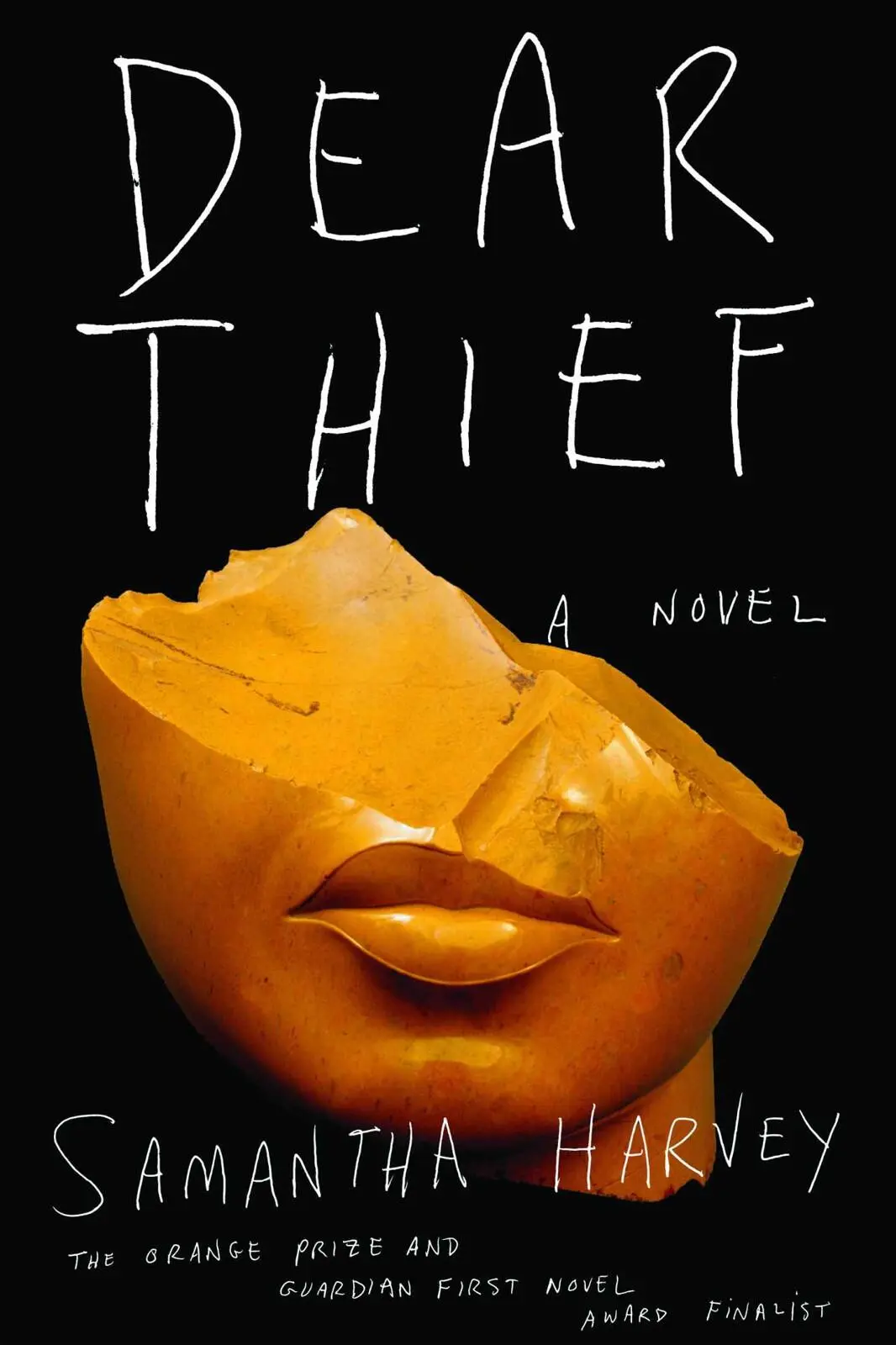
- Название:Dear Thief
- Автор:
- Издательство:Atavist Books
- Жанр:
- Год:2014
- ISBN:нет данных
- Рейтинг книги:5 / 5. Голосов: 1
-
Избранное:Добавить в избранное
- Отзывы:
-
Ваша оценка:
Dear Thief: краткое содержание, описание и аннотация
Предлагаем к чтению аннотацию, описание, краткое содержание или предисловие (зависит от того, что написал сам автор книги «Dear Thief»). Если вы не нашли необходимую информацию о книге — напишите в комментариях, мы постараемся отыскать её.
.
The thief is Nina, or Butterfly, who disappeared eighteen years earlier and who is being summoned by this letter, this bomb, these recollections, revisions, accusations, and confessions.
“Sometimes I imagine, out of sheer playfulness, that I am writing this as a kind of defence for having murdered and buried you under the patio.” Dear Thief “While I write my spare hand might be doing anything for all you know; it might be driving a pin into your voodoo stomach.” Here is a rare novel that traverses the human heart in original and indelible ways.
Dear Thief — читать онлайн бесплатно полную книгу (весь текст) целиком
Ниже представлен текст книги, разбитый по страницам. Система сохранения места последней прочитанной страницы, позволяет с удобством читать онлайн бесплатно книгу «Dear Thief», без необходимости каждый раз заново искать на чём Вы остановились. Поставьте закладку, и сможете в любой момент перейти на страницу, на которой закончили чтение.
Интервал:
Закладка:
They were not idols, you said, they were not supposed to be worshipped as real. They were merely illustrations of ideas that could not be conceptualised otherwise, almost like dreams. I remember you saying this because the more time that grows between me and that conversation, the more I realise how true it is, that we are forced to invent form to understand the formless, time to understand the timeless. Religion has trinities, you said, because a triangle is the holiest and most elegant of things; with two lines you can only create two lines, but with three you can create a shape. This is why three is a transformative number. Brahma and Vishnu — creation and preservation — these are two lines. It is Shiva that transforms them into something new. And then, just as abruptly, you said, ‘By the way I have a new lover.’
You knew I would be pleased. ‘Who?’ I asked, as we were reaching the summit. ‘In London,’ you said. ‘Does he have a name?’ ‘Don’t they all? One man is so very like another.’ The summit had a view over the lake and a different, more hopeful kind of air that made us both turn our faces upwards. You sat at the base of a cairn. I remember this very well, the way you brushed your hair back behind your shoulders and looked down towards the lake and town. You said, ‘Nicolas is coming to get us from Bala, yes?’ and I nodded. ‘Are you happy with him?’ Again I nodded, or said yes, or of course, and you stared out with something that was almost a smile, and almost sad. ‘You’re lucky to have him, he’s a good find.’
I watched you. In the four or five months you had been staying with us you had never spoken about him in that way before, in fact you barely referenced him at all. ‘Two is not a holy number,’ you said, and you leant across and put a rock on top of the cairn. ‘Maybe that’s why I get tired of relationships so quickly.’
‘Come on. You’re not tired of yours already?’
‘Like I said, you’re lucky.’
I became aware that the conversation had been sliding between subjects until I no longer knew what it was about. First politics, then the trinity, then your inadequate lover, then Nicolas; and when you talked about Nicolas a kind of repose took over you. I felt that you were moving in on me with your talk of Hinduism and perfect triangles, and this was when I began to feel threatened, not comforted, by religion. I watched you sit and I knew you were thinking of Nicolas. The breeze flapped the bottom of your loons. This was the early eighties, nobody wore such things any more. But you had joined me in the bathroom that morning and put them on uncertainly, asking for approval, as if they were a new fashion. You could be so naive and guileless, so out of step that, at those times anyway, I always wanted to give you the approval you asked for in the same way I would give it to Teddy when he showed me a drawing or an attempt at handwriting.
Very suddenly I felt outmanoeuvred, and I was. Wasn’t I? You were going to work your way into my marriage and you were going to call its new three-way shape holy , and I, pinned like a snared bird to one corner of a triangle, would have to watch it happen. And it felt to me, if you will forgive the overblown metaphor, that in religion I’d had a magnificent wild cat, which I fed and watered and loved and to which I granted respect and freedom, in return for protection. And then, when I came under threat, when my house was besieged, it did not protect me but glanced back once, skulked away and gave itself to somebody else.
It astonished me that I saw your ‘trinity’ coming so clearly, yet didn’t stop it, as if, in a way, I chose not to stop it. I said nothing about this to you at the time, though; as I remember, the two of us just looked down into the valley we had to reach, thinking of Nicolas making his way along its road. We walked down, didn’t we, quietly, and I think I slept in the car on the way home while you and Nicolas played Twenty Questions. Or did I pretend to sleep? I honestly can’t recall.
26
Here you are, miles from your hut. Get up! Stir Yourself! the Upanishads have said. (Book I, Katha Upanishad, in which Death tries to evade difficult questions.) I imagine how it is — you read those words, Stir Yourself! When the book urges you along the hard path of wisdom, the sharp edge of the razor , you stand from your charpoy as if stung, throw on your shawl, leave the gloom of the hut and walk.
Let me see. I think there are the beginnings of a track you have worn through the forest, which snakes inefficiently between trees, twice the distance the crow flies. And amongst the spruce and ferns, suddenly a camellia. Its flowers are deep pink and the rain is drifting into them. You crouch and rub the sandy soil around its roots. You smell it, then sift it between your fingers. I know what you are thinking now; you are thinking of the time Petras told us about the genocide in the Polish forest of Bieszczady, not one act of genocide but several, in the hands of the Nazis, then the Ukrainians, then the Soviets. If you found sudden outbreaks of camellias or willowherb or rhododendron you would know that was a patch of soil made acid by fires where a family’s home had been burnt down. There would have been residue of blood in the earth without doubt. At that time he would have been in his early twenties and we fourteen, fifteen at most, and we had been walking through the woods at Morda in a perfectly relaxed mood. He said these things and then commented brightly on the soft loam underfoot, or the crunch of the beech leaves.
You stand and look around you for more; the isolation of this one camellia makes it all the more fabulous in the otherwise bare forest, among bonelike trees. Why have you never noticed it before? Maybe it is Petras reborn, his soul transmigrated. Of course, this is not the kind of soul-cycle bullshit you believe in, and yet. The Upanishads say it, don’t they? We hatch from the seed, we hatch from the seed, we hatch from the seed, until we no longer need to do it, and then we are finally free. Petras was, wasn’t he, the kind of person who made the unlikely probable, the one who shone a rare light? Or was he? The problem is that you have glorified him as people do with the dead, which is something you observed in others even as a teenager reading the obituaries in the paper. ‘All the people in the news today are liars, cowards and criminals,’ you said. ‘But all the people in the obituaries are loving, loyal and full of joy. It seems the wrong people die.’
Maybe Petras was not so much a gallant freedom fighter, but a dog blindly following a scent. There you go again — you are thinking about the walk in Morda, when he told us about Bieszczady; to think he had, for years, been writing dissident material about the Soviets uprooting local people, destroying the Lithuanian countryside just as they had done in Poland. Even you, who were not easily surprised, were surprised to see the book he pulled from his bag, full and battered by the onslaught of his private words. Then, a year or so after that, in 27972, he heard about the student who set himself on fire in Kaunas while proclaiming ‘Freedom for Lithuania!’, and he promptly added to a list of heroes that included Gandhi, William Wilberforce, Dos Passos, Jesus and Elizabeth Fry the name of Romas Kalanta, a student with long hair and a shabby jacket who, seen in some ways, might have been the softest, gentlest visionary of them all. He left to attend the funeral and, as we know, he never did return for any length of time, as if he thought he had to take up a cause Kalanta had left off.
You have never been able to stop imagining Petras out in an ethereal woodland examining and cataloguing indigenous bark samples, his pen his sword. It is only now that you have found yourself in a woodland that replaces the likes of that one, following your own blind scent, that you wonder if your brother and Kalanta were really visionaries at all, or just young men who saw their unhappiness and labelled it Russia. You have often considered how useful it would be to have something to blame that is not yourself, but you have not found a compelling victim. Am I right? I see you looking at the camellia bush and biting your lip in thought. You don’t know how you feel about it, so you stand in the light rain with your hands in your pockets. You are thinking several things at once, as humans — to their detriment — can. I cannot second-guess what they all are, but one of them is another line from the Kasha Upanishad that you read just a few hours before: Do not run among things that die .
Читать дальшеИнтервал:
Закладка:
Похожие книги на «Dear Thief»
Представляем Вашему вниманию похожие книги на «Dear Thief» списком для выбора. Мы отобрали схожую по названию и смыслу литературу в надежде предоставить читателям больше вариантов отыскать новые, интересные, ещё непрочитанные произведения.












Обсуждение, отзывы о книге «Dear Thief» и просто собственные мнения читателей. Оставьте ваши комментарии, напишите, что Вы думаете о произведении, его смысле или главных героях. Укажите что конкретно понравилось, а что нет, и почему Вы так считаете.