Mary Keane - Fever
Здесь есть возможность читать онлайн «Mary Keane - Fever» весь текст электронной книги совершенно бесплатно (целиком полную версию без сокращений). В некоторых случаях можно слушать аудио, скачать через торрент в формате fb2 и присутствует краткое содержание. Год выпуска: 2013, Издательство: Scribner, Жанр: Современная проза, на английском языке. Описание произведения, (предисловие) а так же отзывы посетителей доступны на портале библиотеки ЛибКат.
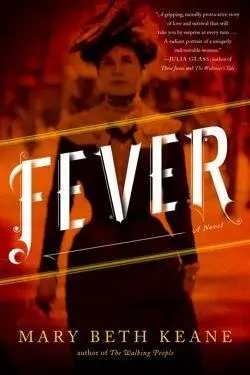
- Название:Fever
- Автор:
- Издательство:Scribner
- Жанр:
- Год:2013
- ISBN:нет данных
- Рейтинг книги:3 / 5. Голосов: 1
-
Избранное:Добавить в избранное
- Отзывы:
-
Ваша оценка:
Fever: краткое содержание, описание и аннотация
Предлагаем к чтению аннотацию, описание, краткое содержание или предисловие (зависит от того, что написал сам автор книги «Fever»). Если вы не нашли необходимую информацию о книге — напишите в комментариях, мы постараемся отыскать её.
In order to keep New York’s citizens safe from Mallon, the Department of Health sent her to North Brother Island where she was kept in isolation from 1907–1910. She was released under the condition that she never work as a cook again. Yet for Mary — spoiled by her status and income and genuinely passionate about cooking — most domestic and factory jobs were heinous. She defied the edict.
Bringing early twentieth-century New York alive — the neighborhoods, the bars, the park being carved out of upper Manhattan, the emerging skyscrapers, the boat traffic — Fever is as fiercely compelling as Typhoid Mary herself, an ambitious retelling of a forgotten life. In the hands of Mary Beth Keane, Mary Mallon becomes an extraordinarily dramatic, vexing, sympathetic, uncompromising, and unforgettable character.
Fever — читать онлайн бесплатно полную книгу (весь текст) целиком
Ниже представлен текст книги, разбитый по страницам. Система сохранения места последней прочитанной страницы, позволяет с удобством читать онлайн бесплатно книгу «Fever», без необходимости каждый раз заново искать на чём Вы остановились. Поставьте закладку, и сможете в любой момент перейти на страницу, на которой закончили чтение.
Интервал:
Закладка:
When Mary passed Nation’s again, she took a better look. The window next to the door was clouded, but yes, she thought she saw him, slumped at the end of the bar. Yes, that was the posture he would have after so long sitting. She had no plan except to pass by and confirm that he was there, that he was safe, that he wasn’t in any trouble. Once she found him, she planned on going back to their rooms to wait. Or to pack her things and leave. Or to go about her business and sleep, pretending there was no Alfred, and that she was obligated to no one but herself.
But on her third pass, the bright blue door swung open, and a man stepped out. Mary looked past the open door at the man she thought was Alfred — a blond man, she saw now, heavyset, his nose a bit like Alfred’s, yes, but nothing else. Then the door slammed shut. He’s told them about me, Mary supposed. Our arrangement. Might have said how much it suits him. Might have had a laugh about it. He was cruel when he drank, but then when he drank more he was kind again. It all depended on the dose, and sometimes Mary hoped that if he had to drink at all that he would drink past cruelty and into the Alfred she loved, the one who loved her and told her that he would never have lived so long without her, and my God, she was beautiful. Did she know? Why didn’t he tell her all the time? Just one or two drinks past kind Alfred was helpless Alfred, and this was the Alfred she feared she’d meet later on that night. There was no arguing with helpless Alfred, no high horse to ride out into the city streets and away from him. Helpless Alfred would get home around three or four in the morning and would call for her from the bottom of the stairs. One by one, doors would open from the first floor to the sixth. He’d sit on the very first step, head in his hands, and shout for her without pause, and when every person who had a door onto the stairs woke up from his shouting, they’d shout for her, too.
“Where were you?” he’d ask when she finally ran down the six flights. She used to bother with tying her robe, but not anymore. “Why didn’t you hear me?”
“I was all the way upstairs,” she’d say in a whisper, hoping to shush him. “I was asleep. I didn’t hear you.”
“Jesus Christ, Mary,” Mr. Hallenan on the first floor would say. “Where the hell were you? Why didn’t you hear him?” Mr. Hallenan didn’t care who in the world saw the graying hair on his belly.
Then Alfred would put an arm around her shoulder, his other hand on the railing, and she’d haul him up the six flights. In their rooms, she’d take off his shoes, his stinking socks, his pants and shorts. Sometimes he’d realize he was naked and he’d cry: long ugly sobs full of phlegm that shocked and embarrassed her every time. Sometimes, when she was lucky, he just sank into their bed and went to sleep. The worst nights, even worse than when they fought or when she had to strip him, were the nights when she finally got him upstairs and he sat by the window for an hour or so, looking at the quiet below, before staggering to his feet and going out again. More than any other kind of night, those were the ones that drove her to the agency to ask for another situation, one that would keep her away full-time, somewhere far away, where the train back to their rooms would be too long, too expensive for a day’s journey. It was a night when he came back home only to go out again that had driven her to Oyster Bay.
Standing outside Nation’s Pub, she tried to think of what else she could do to pass the time and stop herself from wanting to see him, but it was no good. She needed to know what he’d made of his weeks away from her. And she needed to know how he was faring. A body could not hold up long against such an assault, and all summer long, before leaving for Oyster Bay, she’d observed him becoming weaker, his pants drooping around his hips, his broad chest narrowing inside his shirt. His face had taken on a gray-green tinge, and the skin at his neck had loosened, become slack.
“Sometimes I think about when we met,” she’d said to him on that early-August morning when they last fought. Even in a weakened state he was no fool and knew the ultimate point she was driving at. Once upon a time, not so long ago, he’d worked, he’d been strong, he’d been handsome. Years ago, she had an employer who held back two weeks’ wages because he thought she was in league with a tutor who’d stolen jewelry from his wife, and Alfred had gone directly over to that grand, glossy black door on West Eighteenth Street, the entrance the family and their guests used, and put the man straight. When Alfred came back and handed over her wages, Mary was so relieved that she sobbed into her hands like the kind of woman she considered her opposite.
“What could you have said to him that I didn’t already say?” she’d asked, looking at the bills fanned out on the table.
“Nothing,” Alfred had said, and then grinned. “I guess I had a different way of putting it.”
She’d been over the story before, hoping to shame him into seeing the difference between now and then, hoping to light the fire that would drive him back to the way he was. On that morning in August, the day she left for Oyster Bay, Alfred wouldn’t even humor her.
“Leave then, why don’t you, if you’re so disgusted. Go on.”
Mary knew women were supposed to be the softer sex, a species so warm and nurturing that God granted them the gift of bearing children, caring for them, looking after a home, nursing the sick to health. But sometimes Alfred made her so angry that all the warmth went out of her body and instead her thoughts became murderous, if she managed to have thoughts at all.
Mary pushed open the door to Nation’s and took one step inside. One man glanced up and then nudged the man next to him, who nudged the next man, and so on. There was a plate of crackers, cheese squares, and a few slices of bread on a table near the back, and Mary’s quick eye told her they’d been out since morning; the cheese had gone hard at the edges. The man behind the bar tucked his apron into his belt and came around. “I’m sorry, but—”
“I’m looking for Alfred Briehof. Have you seen him? He hasn’t been home.”
“Jesus,” one of the men at the bar muttered. “Briehof has a home?”
“Are you…?”
“I’m his—”
“You’re Mary.”
“I am.”
“He left a while ago. Did you check with the chestnut man on Thirtieth Street?”
“Was he…” Mary hoped he wouldn’t make her say it. “All right?”
The bartender shrugged. “He was all right, I guess.”
Mary tried to decide what to do.
“I think you should go home,” the bartender said as if hearing her thoughts. “He had that mopey look that means he’s homeward bound.”
What do you know about his looks, Mary wanted to ask. I’ll kill him, she vowed. I’ll stand behind the door and get him before he even enters the room. Fran had killed a man in Jersey City a few years back. Robert was on nights at the time and the man had broken into their rooms, was standing at the foot of her bed, and she’d grabbed her husband’s spare gun from under the pillow — the one he’d left for her for exactly that sort of crisis — and shot him dead.
“Thank you,” Mary said to the bartender, and left.
What Alfred did when Mary was away was never clear to her. She wanted to ask Jimmy Tiernan, who lived on the third floor and went to Nation’s himself sometimes, but whenever she thought she had her chance, Patricia Tiernan appeared over his shoulder and gave her the daggers. Fran didn’t have a door on the stairs and claimed to never hear Alfred on the nights he howled. Joan had a mind the size of a thimble, and all that thimble contained were thoughts of future babies she’d have with her husband. Once, when Joan mentioned that they’d been married going on six years and hoping all that time, Mary had snapped, “My God, Joan, do you need the formula written down for you? Do you know what goes in to making a baby?” But as she watched Joan close her eyes against her question, keeping one long, delicate finger on the lid of the coffeepot, Mary realized Joan would never have a baby. “I’ve heard it takes a long time for some women,” she offered by way of apology. Joan must have forgiven her because she continued to wave Mary inside whenever she caught her passing.
Читать дальшеИнтервал:
Закладка:
Похожие книги на «Fever»
Представляем Вашему вниманию похожие книги на «Fever» списком для выбора. Мы отобрали схожую по названию и смыслу литературу в надежде предоставить читателям больше вариантов отыскать новые, интересные, ещё непрочитанные произведения.












Обсуждение, отзывы о книге «Fever» и просто собственные мнения читателей. Оставьте ваши комментарии, напишите, что Вы думаете о произведении, его смысле или главных героях. Укажите что конкретно понравилось, а что нет, и почему Вы так считаете.